

Part 2
From the earliest sketches to the finished piece, what does your current production workflow/process look like?
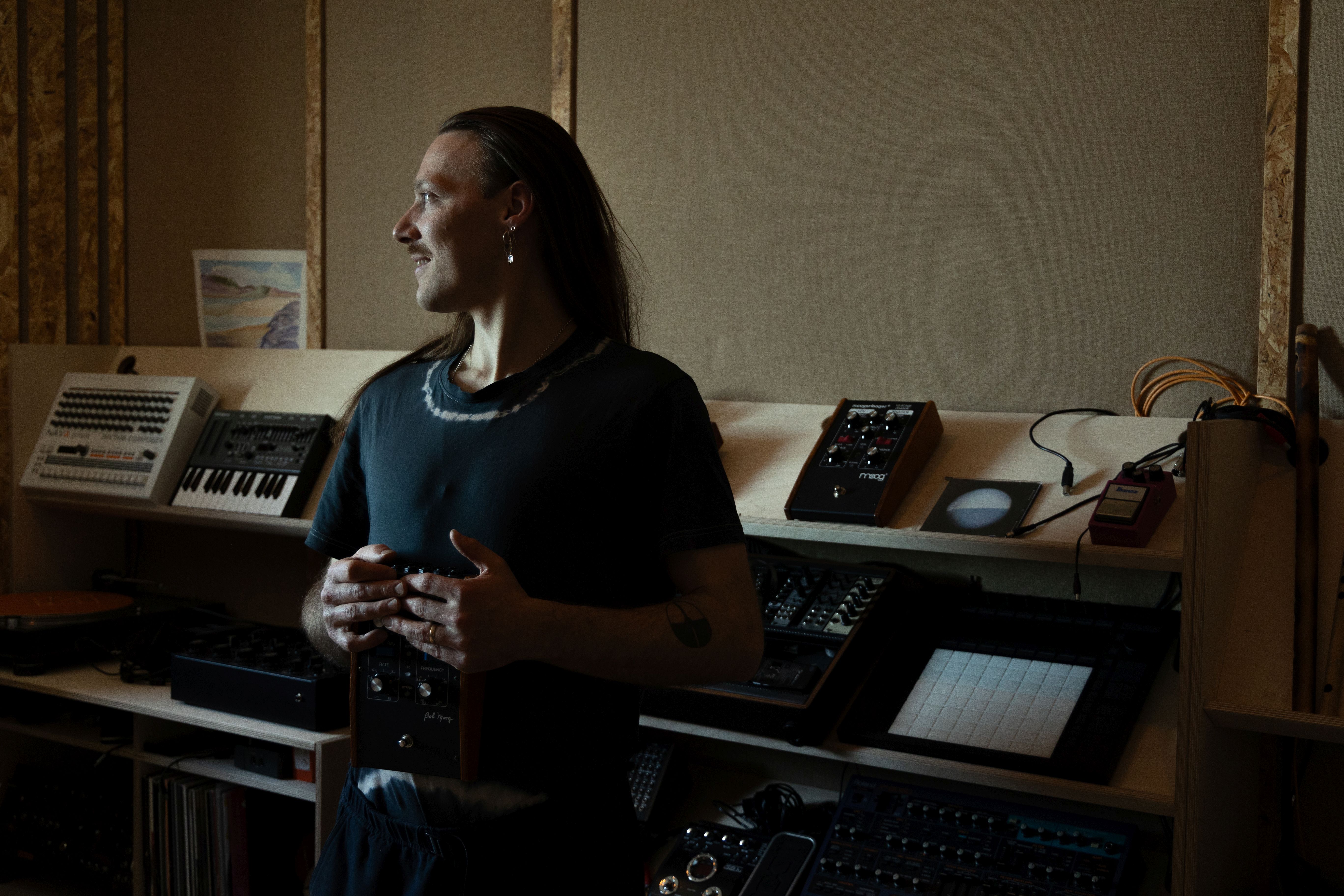
I start by jamming on a physical machine. Usually this is my modular synthesizer. It is designed in a way to make one or two musical riffs / melodies / voices. No traditional drum sounds, just synthesis and processing. I have a module that makes it easy to clock the sequencers from Ableton, and record directly into it. As long as I have a USB cable and laptop I can record music in a hotel, my home in the night, or in the studio.
These jams are 5-15 minutes of short repetitive rhythmic motives, that, through effects and repetition, provide for a strong harmonic vessel. I perform the piece while recording, actively manipulating the sound, effects and telling the story with the filter. Another day I listen through jams like this and mark those I like. I pick one and make a short loop or use a tracklong part, and start creating drums.
Drums I make out of sounds already in the melody, changing them and making percussive sounds. For kick, bass and hats I use 909 in Ableton. I use alot of internal audio devices in Ableton and design the fine details of all drum sounds and let them grow out of each other. This gives the drums an integral coherency, and using the melody to make some of the percussion makes the whole track into one music.
At the late part of the process I send out some of the sounds in the song into an external effect or two, usually my Tube Tape Echo from Fulltone + Tascam Portastudio for distortion. I record a take with dubmixing on the effect on the melody or drums or single part of the track, and use it to massage and holistically summon the finalized arrangement and mix. Having a feedback-y effect always running with the hands riding the knobs gives a strong personality and sense of risk in a track. I love that.
The whole process will take around 3 - 5 days, but it's not in a row, always time between the work days. All tracks on my new album Flex Core were made in this way.
Rhythm, sound design, melody/harmony, something else – when do the different elements of a piece come into play for you?
Everything starts with a pulse. I make music because I like rhythm and dancing. I usually start a track by jamming free and finding riffs, rhythmic short melodic or percussive motifs with a strong character. Uplifting and with a sense of drive and power.
I like to keep melody and harmony very simple, and instead work on making them more subtle and mysterious later in the process with sound design and mixing in the DAW. I like to clock sequencers and machines from Ableton because then it's easy to chop and warp it a later point.
I try to let the track grow out of itself, letting as much as possible in the track being digitally processed elements of the source material (initial modular jam) and 909 core kit.
In relation to sound, one often reads words like “material”, “sculpting”, and “design”. How does your own way of working with sound look like? Do you find using presets lazy?
It's like building a bonfire. The attention and amount of active work to keep the fire thriving is only possible because I have learned the craft. The fun lies in doing it with the pieces of wood we find laying around, all of them personal and unique, rather than using standardsized planks and process for making the fire.
I don't find using presets lazy. I love the 909 preset in Ableton. It's a great jumping off point for me to make unique, weird and wonderful drum sounds. No reason to start from a single oscillator and noise source every time.
In my experience it's so much more fun to make music when you actually make the music, rather than legoing together big blocks of other people's sound. I think most producers come to this conclusion after a few years. For those who dont, I think it will be very hard for them to connect with me and touch me through their music.
I use the same tools and similar process again and again. You could call my entire process a preset. But it's so flexible and turns out a different result every time. Ableton Live with 909 core kit, modular synth, tape echo and cassette recorder and monitors.
With these tools I can design the fine details of drums and the broad strokes of distortion and delay on single elements and the whole track.
What, to you, are the respective benefits of solo work and collaborations and do you often feel lonely in the studio? Can machines act as collaborators to you?
I never feel alone in the studio as long as I have electricity. Machines definitely are collaborators, that's why it's so important to find the machines you really love and stick with them for a long time. Good relationships flourish with the time and love invested into them.
The benefit of solo work is to go into depth in a process and a sound over many years. I love solo production over time because there are no compromises. I want to keep developing a personal artistic style and a deeper technical skill.
Working in bands or collabs is good for learning and the social aspect. But balancing on the edge is easier done as a sovereign and free musician.
If you could make a wish for the future directly to a product developer at a Hard- or Software company – what are developments in tools/instruments you would like to see and hear?
They are doing a great job already. I love Soma Labs and a lot of small eurorack companies.
I love tape, and it makes me happy to see modern gear producers include tape in their instruments and machines.