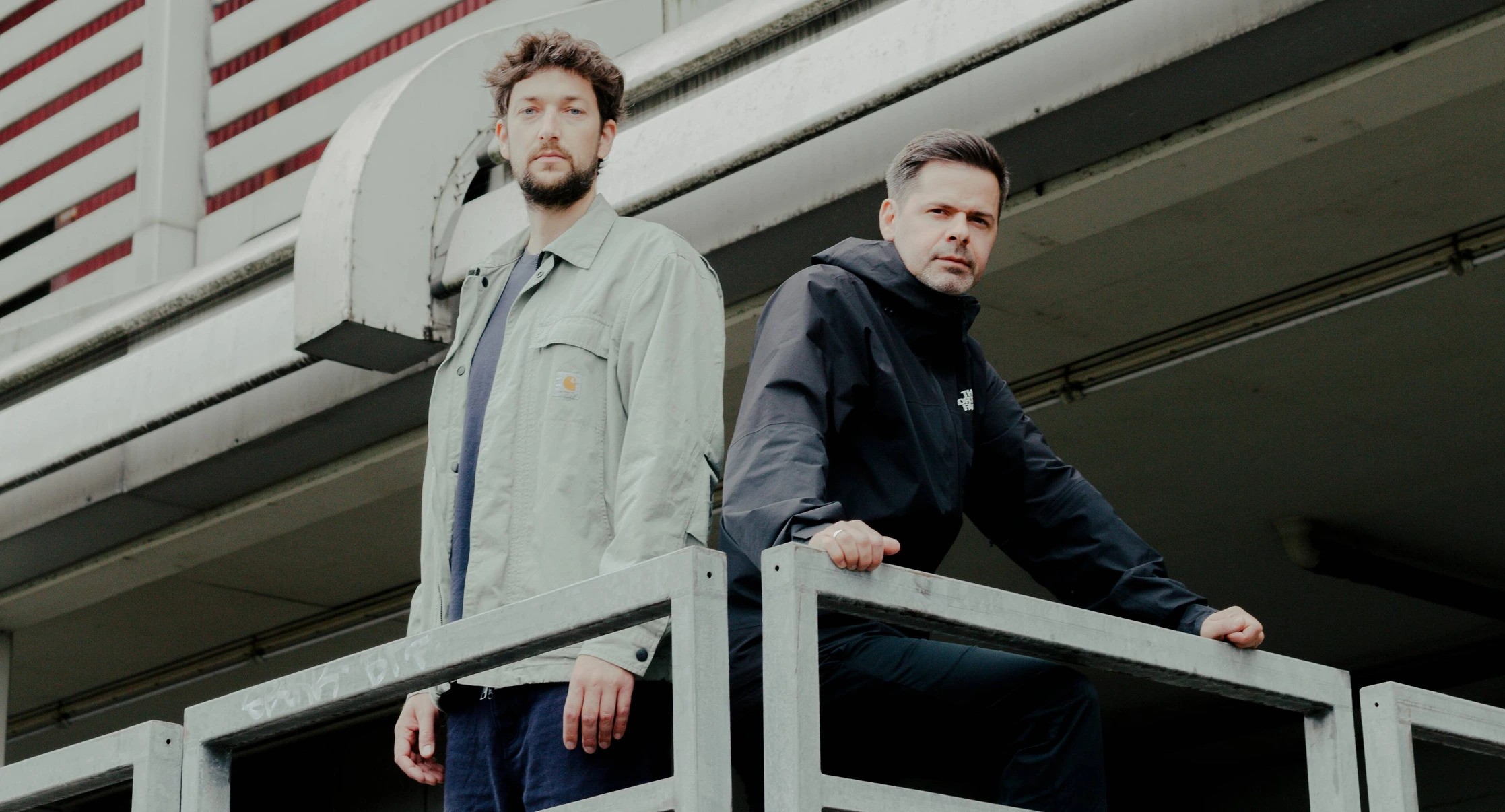


Part 1
Name: Patrick Gräser aka Answer Code Request
Occupation: Producer, composer, DJ
Nationality: German
Recent release: Answer Code Request teams up with Jan Wagner for their debut album as DEFTR, Run Away, out now via npm.
Recommendations:
Piece of Art: Beat Street (1984 Film)
Beat Street is a seminal film that encapsulates the vibrant hip-hop culture of the early 1980s, showcasing the elements of breakdancing, graffiti, DJing, and MCing.
Piece of Music: Music Has the Right to Children by Boards of Canada
[Read our Jan Wagner interview]
If you enjoyed this Answer Code Request interview and would like to find out more about his work, visit him on Instagram, Soundcloud, and Facebook.
For an interview with one of his collaborators, visit our Amotik interview.
Do you think that some of your earliest musical experiences planted a seed for your interest in production and technology?
I didn’t have much musical experience when I was younger, aside from learning about notes and rhythm in school. However, through DJing, I developed a strong sense of rhythm and especially improved my ear for music. At some point, I started producing, which allowed me to gain a lot of experience.
I can say that my early involvement in recording and collecting music really sparked my interest in the end.
What were your very first active steps with music technology and how would you rate the gains made through experience?
My very first active steps with music technology started with DJing. I began by learning how to mix tracks, which helped me understand tempo, rhythm, and song structure in a more hands-on way. Using equipment like turntables and mixers was my first exposure to the technical side of music. It gave me the foundation I needed for a more intuitive sense of timing and flow in music.
Later, I transitioned to music production, experimenting with software like DAWs like magic Music maker or Cubase or Logic but then started with Ableton . I learned to create beats, manipulate sounds, and arrange tracks. Through trial and error, I began understanding how different elements come together to form a cohesive piece of music.
Each step was a learning process, and I’d say the experience I gained was invaluable. It gave me a deeper understanding of music beyond just playing it – I learned how to shape it. The gains from this experience were immense, both creatively and technically, as it broadened my musical perspective and skillset.
Were/are you interested in the history of production and recording? If so, which events, albums, artists, or insights stand out for you?
Yes, I’ve always been interested in the history of production and recording, especially as I dove deeper into music creation. Understanding how different artists and movements shaped the evolution of sound has been inspiring and insightful for my own journey. A few specific artists and albums stand out for me:
Boards of Canada – Their album Music Has the Right to Children is a landmark in the world of electronic music, blending nostalgia with innovative production techniques. The way they manipulate samples and textures to evoke emotion is something that has always fascinated me. They brought a very human, almost organic, feel to electronic music, which was groundbreaking.
Massive Attack – Mezzanine was a huge revelation in terms of atmosphere and mood. The album’s use of dark, dub-influenced basslines and layered production set a new standard for trip-hop. The way they mix live instruments with electronic elements has influenced many producers, myself included, to think outside the box and experiment with hybrid approaches.
Aphex Twin – Albums like Selected Ambient Works 85-92 and Richard D. James Album were pivotal in redefining the boundaries of what electronic music could be. Aphex Twin’s complex rhythms, unconventional melodies, and his manipulation of sound on a granular level continue to influence my view on production. His fearlessness in pushing technical and creative limits stands out to me.
Modeselektor – I’ve always admired their genre-bending approach. Albums like Happy Birthday! show their versatility, combining everything from techno to hip-hop with such fluidity. Their playful, boundary-pushing sound design and unpredictable arrangements were important for me as I explored how to break out of rigid genre structures.
Shed – His take on techno, especially with albums like Shedding the Past, opened my eyes to the power of minimalist, stripped-down production. Shed’s focus on atmosphere, space, and tension within his tracks taught me a lot about creating depth and subtleties with fewer elements.
Making music, in the beginning, is often playful and about discovery. How do you retain a sense of playfulness and how do you still draw surprises from tools, approaches, and musical forms you may be very familiar with?
At the beginning, making music is often playful and about discovery, and I think it's essential to keep that spirit alive even as you become more experienced and familiar with your tools.
For me, one way I preserve that sense of playfulness is by constantly experimenting with samples and sounds, even those I’ve used before. I try to "deform" or transform them in unexpected ways—whether through manipulation, layering, or simply pushing effects to extremes. This keeps the creative process fresh and allows me to stumble upon surprising results, even with familiar tools.
One technique I find particularly helpful is to start a session by selecting five of my favorite records that inspire me at the moment. I’ll listen closely to what makes them stand out, whether it’s a unique rhythm, a specific atmosphere, or the way they combine sounds. By surrounding myself with music that excites me, I enter a mindset of exploration and curiosity. This often leads me to approach my own production in new ways, trying to capture that same energy or spirit.
It’s also important to break routines. Sometimes, changing your approach— like using a different workflow, trying new instruments, or even limiting yourself to certain tools—can lead to unexpected creativity. These constraints push you to explore options you might not consider in your usual comfort zone. I think the key is staying curious and not being afraid to "play" with sound, no matter how familiar you are with your setup.
For your own creativity, what is the balance and relative importance between what you learned from teachers, tutorials and other producers on the one hand – and what you discovered, understood, and achieved yourself? What are examples for both of these?
For my own creativity, the balance between what I’ve learned from external sources (teachers, tutorials, other producers) and what I’ve discovered on my own is crucial, but each plays a different role.
On one hand, learning from others gave me the technical foundation I needed to begin shaping my sound. For example, tutorials and advice from other producers helped me understand how to use a DAW, sculpt sound with synthesizers, and get the basics of mixing and mastering right. This technical knowledge was essential to get to a level where I could start expressing myself freely without being held back by the tools.
However, I think self-discovery has played an equally, if not more important, role in shaping my creativity. Once I had the basics down, it was about experimenting, making mistakes, and finding my own style. For instance, I discovered how to manipulate samples and create dark, atmospheric textures by experimenting with unconventional effects chains and pushing the boundaries of tools in ways that aren’t always taught in tutorials. This is where I found my unique sound – by stepping outside of the conventional approaches and trusting my ear and intuition.
One example of learning from others might be understanding compression through tutorials or watching how a specific artist like Shed layers his drums to create a driving yet atmospheric rhythm. On the self-discovery side, something like finding new life in an old sample by heavily distorting and re-pitching it, turning it into something entirely different, comes from trial and error, and that’s where the most exciting creative breakthroughs happen.
The key is blending both – the technical knowledge acquired from others allows me to push my creativity further when experimenting and exploring on my own.
How and for what reasons has your music set-up evolved over the years and what are currently some of the most important pieces of gear and software for you?
Over the years, my music setup has evolved in response to both my growing experience and the desire to refine my sound. Initially, I started with a fairly basic setup, relying heavily on my laptop as my central tool. This simplicity was key for me when I was still learning and experimenting, but as my music became more sophisticated and I honed my style, my setup gradually expanded to meet my creative needs.
At the core of my setup have always been Ableton and Logic, both of which provide different strengths. I find Ableton ideal for live performance and sound design, thanks to its intuitive workflow and flexibility with effects. Logic, on the other hand, is excellent for arrangement and more detailed mixing work.
However, what’s really driven the evolution of my setup is my increasing use of effects. I’ve been focusing on manipulating sounds in ways that create deeper atmospheres and texture, so having a broad selection of effects plugins has become essential.
Some of the most important pieces in my current setup include:
Ableton Live: I use it for sketching ideas, experimenting with loops, and live performances. Its Session View is particularly useful for spontaneous creativity and exploring different ideas quickly.Logic Pro: For more detailed work on track structure, complex automation, and final mixes. I switch between both DAWs depending on the phase of the production I'm in.
Effect Plugins: This is where a lot of my sound manipulation happens.
Tools like: Soundtoys Decapitator for saturation and distortion.
My setup has evolved to prioritize workflow efficiency and sound design flexibility, allowing me to shape and mold my music quickly while maintaining creative control. The use of effects plays a huge role in defining the sonic identity of my tracks, helping me achieve the darker, atmospheric textures I’m drawn to.
Even though my setup has expanded, I still try to keep things relatively minimal—focusing on mastering a few key tools rather than overwhelming myself with gear.