

Part 2
Late producer SOPHIE said: “You have the possibility with electronic music to generate any texture, and any sound. So why would any musician want to limit themselves?” What's your take on that?
I completely agree! Why limit yourself to a traditional palette when electronic music offers infinite possibilities?
That said, while sound design is crucial, I think it’s just one piece of the puzzle. Composition—creating something emotionally compelling or memorable—should come first.
What I love about early 90s music, like the Warp Records era or catchy trance tracks, is that they balance texture with melody. They make you feel something. That’s what I aim for in my work: a mix of innovative sound design and emotionally resonant composition.
From the earliest sketches to the finished piece, tell me about the production process for One Way Trip To Gaia, please.
For this album, I started with a conceptual vision: I imagined a world where aliens live among us, not as adversaries but fully integrated into society. It’s almost an activist perspective, advocating for the acceptance of “strangers” and the unfamiliar. Over time, this idea evolved into a futuristic, sci-fi fairytale, which is reflected in the arc of the album and the decisions I made regarding the track selection and order.
The production began with a huge folder of sketches. These sketches typically come from sound design experiments, focused sessions with specific instruments, or explorations of compositional techniques. For example, I often played with variations in chords over a consistent bassline or pedal tone.
For One Way Trip To Gaia, the Korg ARP2600 was a major player, helping me craft drum sounds and intricate, otherworldly sci-fi bleeps that add texture and atmosphere. I love this reissue of the ARP2600 because you can just throw MIDI at it through USB, it’s so easy.
One of the defining features of this project was the deliberate use of my voice. Although I’ve always enjoyed incorporating vocals, I’ve been hesitant in the past. This time, I consciously leaned into it, creating sketches and songs that showcased my vocal work and let it shape the album’s identity.
Arranging the tracklist was an iterative process. I’d upload demos to my iTunes (or “Music,” as it’s called now—though we all know what I mean!) and spend time rearranging them, listening to different orders to find the perfect flow. This process often led me to adjust existing tracks or create entirely new ones to fill in gaps.
As I refined the songs to fit their specific spots in the album, I handled much of the mixing as I went along. Once the tracks felt cohesive, I sat down for a final dedicated mixing session, ensuring everything was polished and balanced. Afterwards, I’d upload the full album to private Soundcloud playlists or my iTunes library to experience it as a whole and make any last tweaks.
What does your own way of working with sound look like? Do you find using presets lazy?
I’m not judgemental about using presets, it depends on where in the song you are using them, like if you use a pad that’s just somewhere in the background. Or if you want some iconic 90s sound that just sound like it does, why would you want to synthesise that yourself.
However, I think personality in your sound comes from experimentation, and using presets is not experimentation. So yes, I guess you could say it’s lazy.
That said, overcomplicating things might definitely not be lazy, but also not guaranteed to be better.
Richie Hawtin, speaking about semi-modular equipment, has stated that a deeper understanding of sound synthesis can lead to “life lessons that go beyond what we can hear.” Can you relate to that statement?
I definitely do, I think when you start out learning music production you don’t necessarily dabble into synthesis in the beginning. But then you start to explore what’s beyond.
After I purchased an ARP2600 (the recent remake), which is a semi-modular and an absolute sound design beast, I’ve learned so much about sound design and synthesis and this has influenced my productions greatly.
It’s about being so hands on with experimentation that you start to introduce little variations, small imperfections, or create things so complex you cannot even fathom afterwards how you made that sound.
What were some of your most positive collaboration experiences? How did this "human element" enhance your solo approach? Did you record via filesharing or in the same room and if so, what did the recording process look like?
I’ve recently had the chance to meet some truly inspiring people.
Since music production can often feel like a solitary pursuit, I’ve come to cherish working alongside others. Most of my favorite sessions involve jamming together in the same room, free from expectations—sometimes just for the pure joy of it. Two people I’ve specifically enjoyed working with are Nikos, a fantastic live performer from Rotterdam, and Marijn S., a Machinedrum wizard and a very interesting producer.
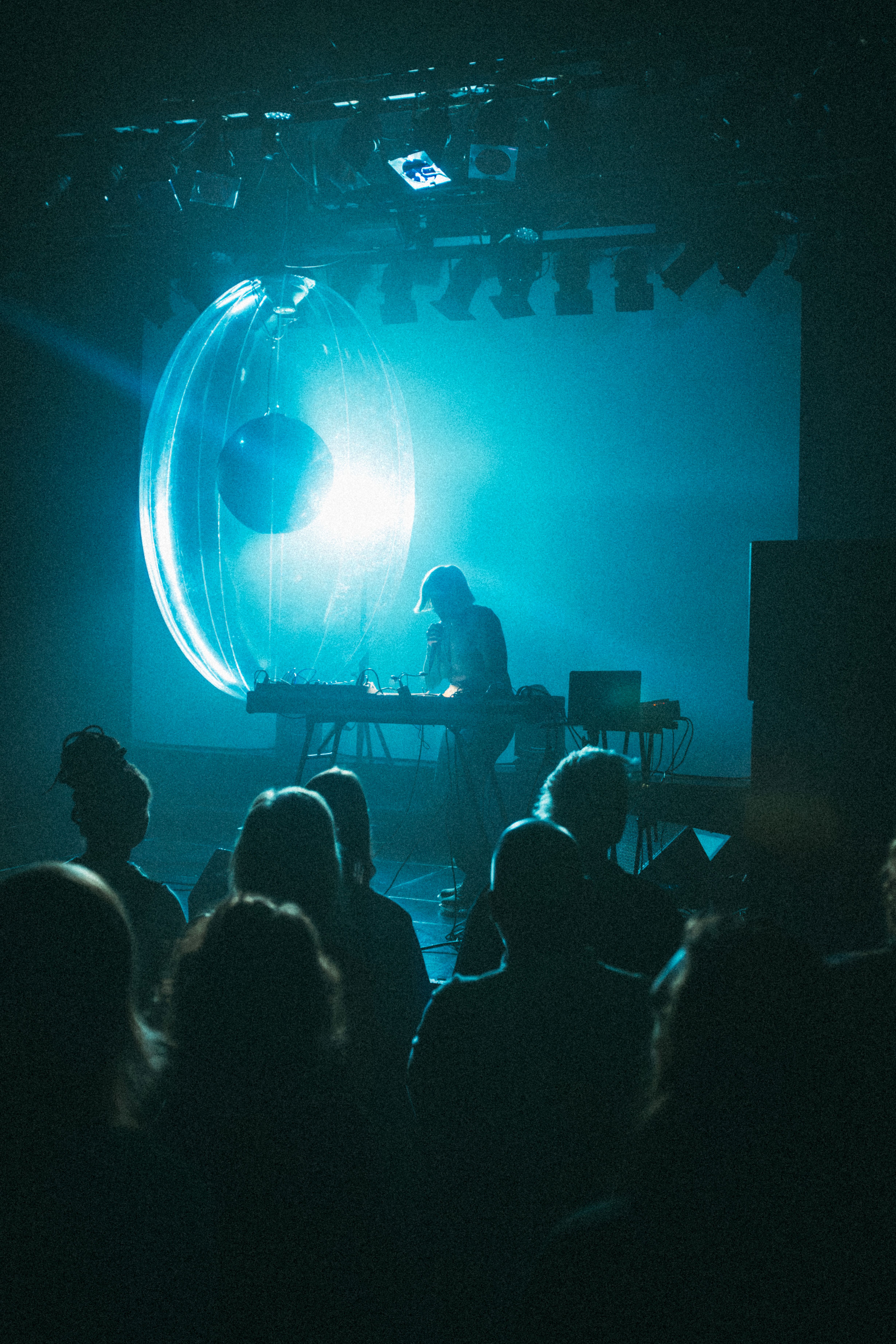
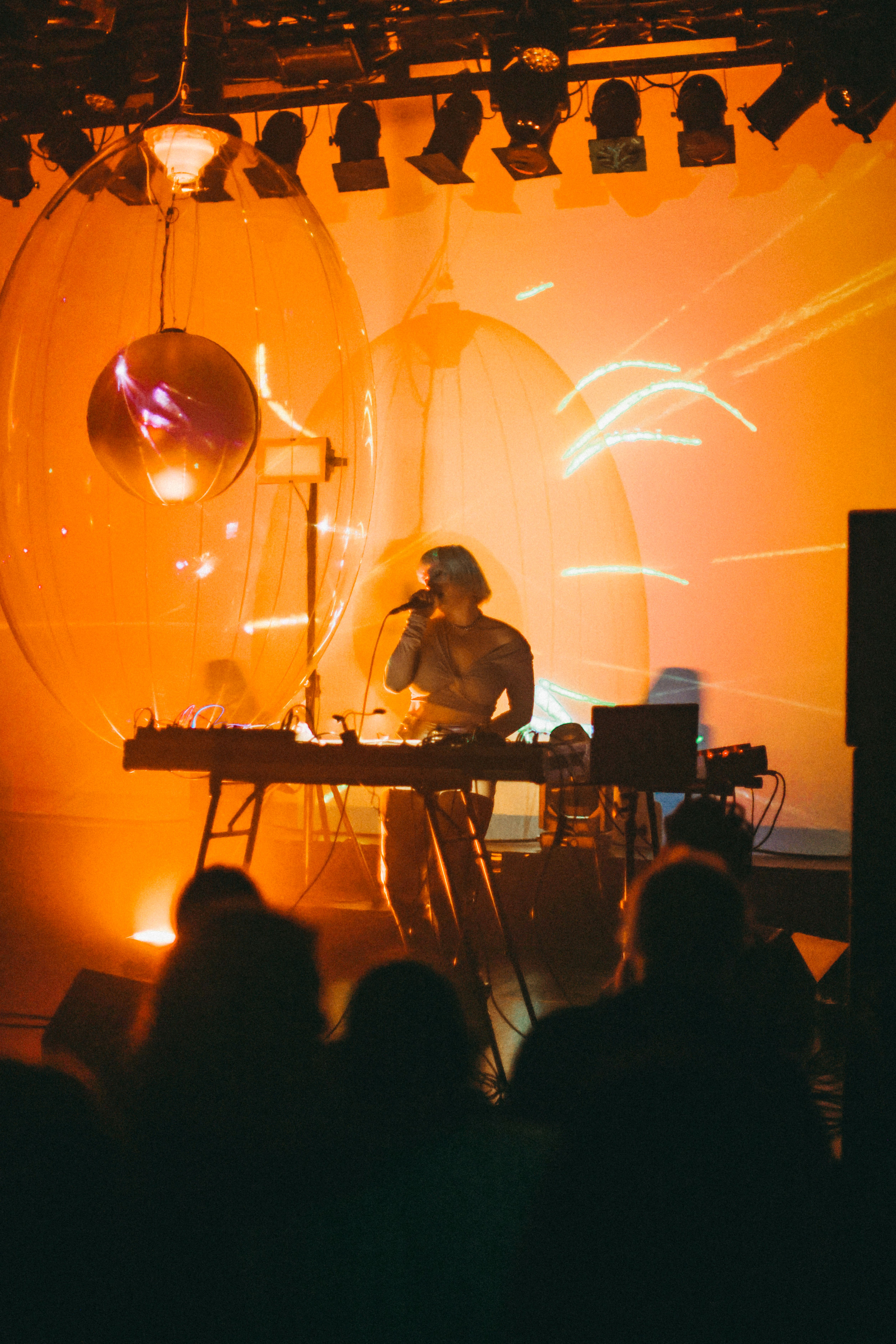
On a more structured level, I’ve joined forces with French II, Milio, and Bastian Benjamin to form a live electronic performance collective called A#. Together, we’ve embraced a fully improvised approach to performing live, and we even had the chance to showcase this at Draaimolen Festival this year. One of our recent collaborations is a track we produced as a group, set to release later this year (I can’t say much yet, but it’s massive!).
The process started with us jamming, recording stems, and bringing everything into Ableton for further refinement. I also recorded some vocals for it, and once the structure was in place, one of us took the lead on mixing and finalizing it. 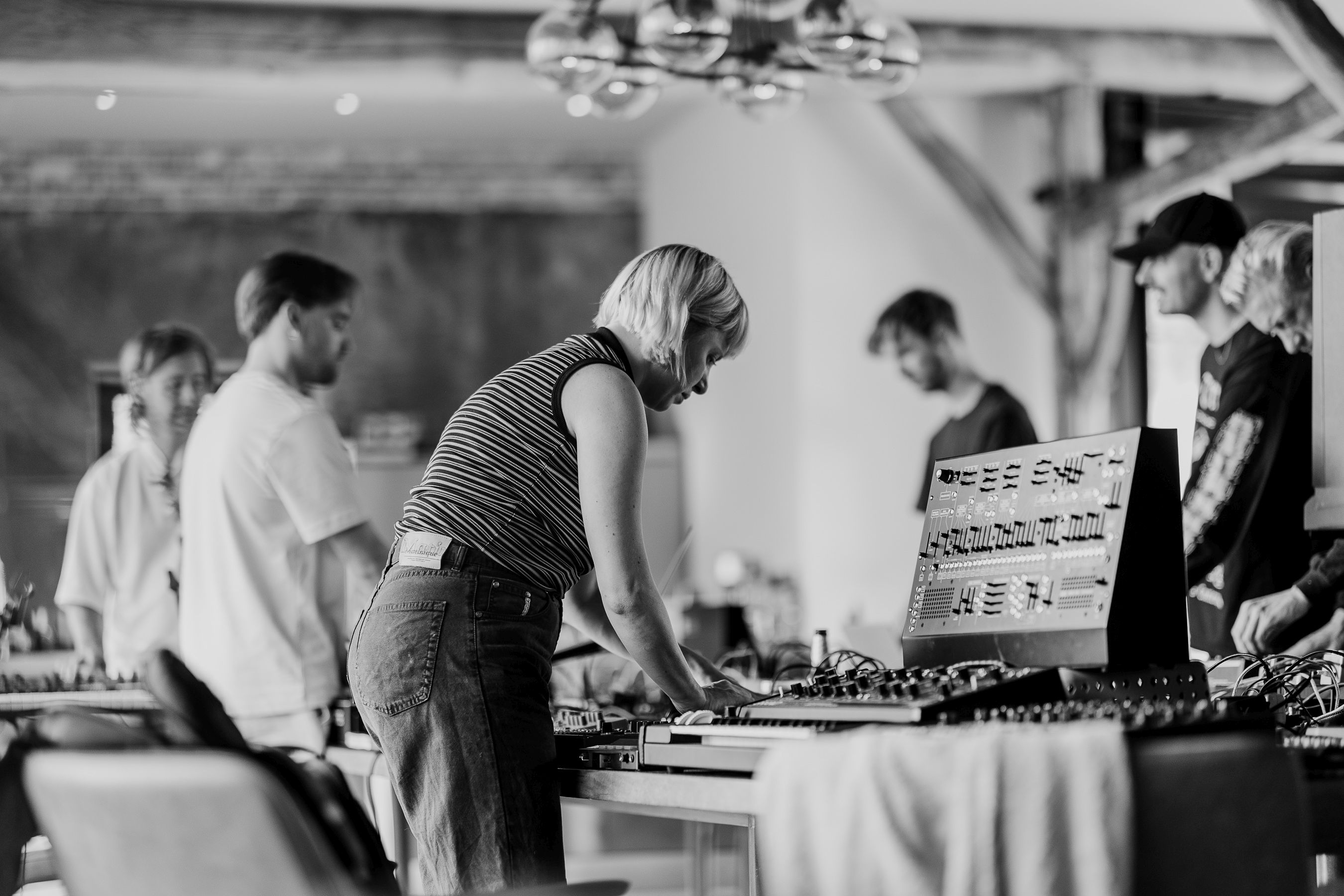
A# Live Performance Photo (c) the artists
Another collaboration close to my heart is “The Energy,” a track on my debut album with Mathilde Nobel.
Mathilde is a dear friend and a hugely talented musician and producer. We began by recording her vocals and running them through my modular effects setup, which includes tools like the Data Bender and Mimeophon. We sculpted and processed those into the track’s foundation, then layered a choir section on top.
While I handled the more “technical” aspects, like editing and mixing, we made sure to keep tweaking together until we were all happy with the final version.
To some, the advent of AI and 'intelligent' composing tools offers potential for machines to contribute to the creative process. What are your hopes, fears, expectations and possible concrete plans in this regard?
AI opens up fascinating possibilities but also some daunting questions. On one hand, AI could simplify labor-intensive tasks like arranging and mixing, which could free up time for creativity. On the other hand, it risks over-saturating the music world with formulaic tracks, making it harder for truly original work to stand out.
Personally, I enjoy the creative process too much to hand it over to AI. The satisfaction comes from figuring things out yourself—experimenting, failing, and discovering.
I’m curious to see how artists like Lee Gamble push AI’s potential, but I’d rather use it as a tool for inspiration than as a replacement for creativity.
What is a music production related question that you would like to add to this interview for other artists to respond to – and what's your own answer to it?
How do you translate your studio sound to stage and vice versa? As in, your studio setup can never be the same as your stage setup, on stage you need to be able to improvise. So how do you deal with this?
For me, it’s about finding a balance between preparation and improvisation. In the studio, I have the luxury of using all my gear and exploring intricate sound design, layering, and detailed arrangements. However, on stage, I focus on the essence of those tracks, it’s easy to overcomplicate things and it can go wrong easily.
I prepare stems or key loops from my tracks to bring into my Octatrack, which becomes my main tool for live sets. These allow me to manipulate, layer, and remix elements of my songs in real time. To keep the live show exciting, I leave room for improvisation, I use the Analog Rytm, Perkons or Machinedrum for freaking out on the drums.
Vocals are another consideration. The Kaoss Pad is the first piece of kit I bought, and it’s used extensively for looping and processing. If I use vocals in my studio tracks, I decide whether to sing them live, process them in real time, or use pre-recorded snippets depending on the vibe of the performance.
Translating stage experiences back to the studio is equally inspiring. During preparation and after a show I tend to record certain parts, especially the parts that I felt resonated well. It’s a circular process where both sides influence each other, keeping my creative process fresh. And then consequently I use those parts in my tracks.
I am not really a record a jam and release it person, I am too much of an editor for that, wanting to control how every element sounds.