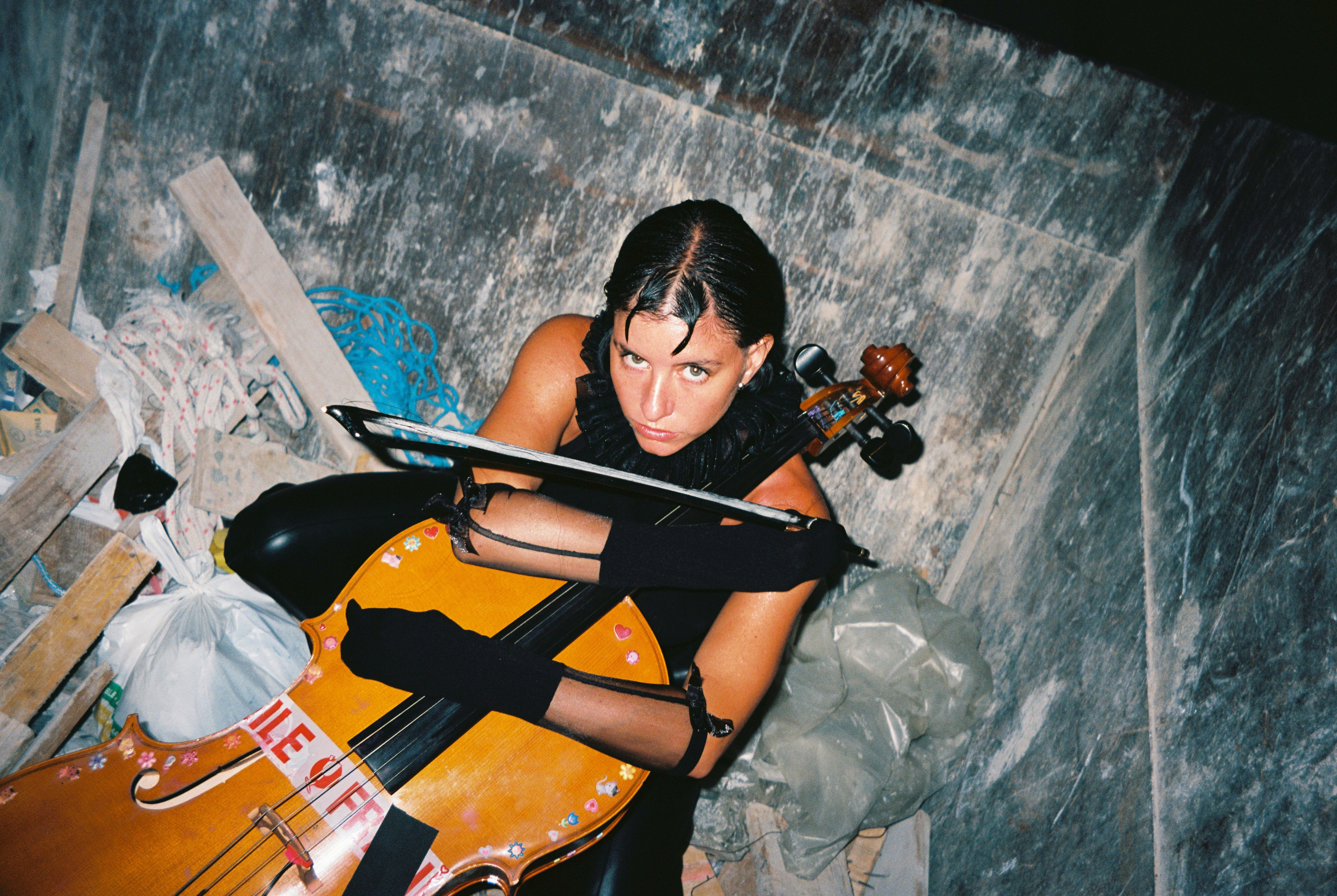


Part 1
Name: Violeta García
Nationality: Argentinian
Occupation: Cellist, composer, curator
Current release: Violeta García's new album IN/OUT will be available March 7th 2025 via Bongo Joe.
Global Recommendation: Cafe “La poesía,” Buenos Aires
Topic I rarely get to talk about: It’s difficult to discuss some of the topics I want to talk about because, generally, they’re not often brought up in European or first-world contexts. I’m deeply interested in how musical genres and creative processes are shaped by conditions of colonisation or “whitening.” I’m also very concerned about the rise of the far-right and conservatism, and how this is affecting festival curation and cultural programming.
What really strikes me is how these movements influence access and representation within culture, especially in festivals that are meant to be inclusive spaces.
Additionally, I’m fascinated by how radically different the experience of being an “artist” is when you are European, cisgender, and heterosexual, compared to those of us who don’t fit into those categories. The invisibility and barriers are still very pronounced for many of us.
If you enjoyed this Violeta García interview and would like to know more about her music, various projects, and upcoming live events, visit her official homepage. She is also on Instagram, and Facebook.
Where does the impulse to create something come from for you? What role do often-quoted sources of inspiration like dreams, other forms of art, personal relationships, politics etc play?
From a very young age, I felt the need to create. Since it has been such an intrinsic part of me, the impulses and stimuli that drive me to create are constantly shifting. I formed my first band at the age of 12, and from that moment on, I never stopped making music and composing for my own projects.
I find it difficult to pinpoint a single creative impulse; what drives me the most is constant stimulation and the adrenaline of the process itself. I am particularly drawn to encountering the great horror-vacui.
At this stage in my life, my biggest influences are my peers and my personal experiences, deeply connected to the political and social context. I travel extensively for tours across different continents, and what inspires me the most is meeting artists, friends, and my artistic family—whether from specific disciplines or transdisciplinary fields. Sharing creative processes, discussing the complexities of the world, and thinking collectively about strategies to navigate this dense and terrifying historical moment deeply fuels my desire to keep creating.
Growing up in South America and having had the privilege of studying in different countries has allowed me to experience migration to Europe from a less hostile and brutal perspective than many other migrants and refugees face. Yet, it remains a complex and strengthening process. This has instilled in me a sense of responsibility—every creative process becomes an obsession-driven research journey, inevitably shaped by resilience.
I am inspired by the cities I live in, nature, the extreme noise of Buenos Aires, and the dense, almost oppressive silence of Europe. In every project and collaboration, I engage with both sonic and physical materialities, exploring the expressive possibilities that emerge from these contrasts.
For you to get started, do there need to be concrete ideas – or what some have called a “visualisation” of the finished work? What does the balance between planning and chance look like for you?
In recent years, I have been composing with open scores or undetermined compositions, allowing the work to surprise me. For me, music is alive—it evolves and is created in dialogue with the acoustic space and the context where it is performed or recorded.
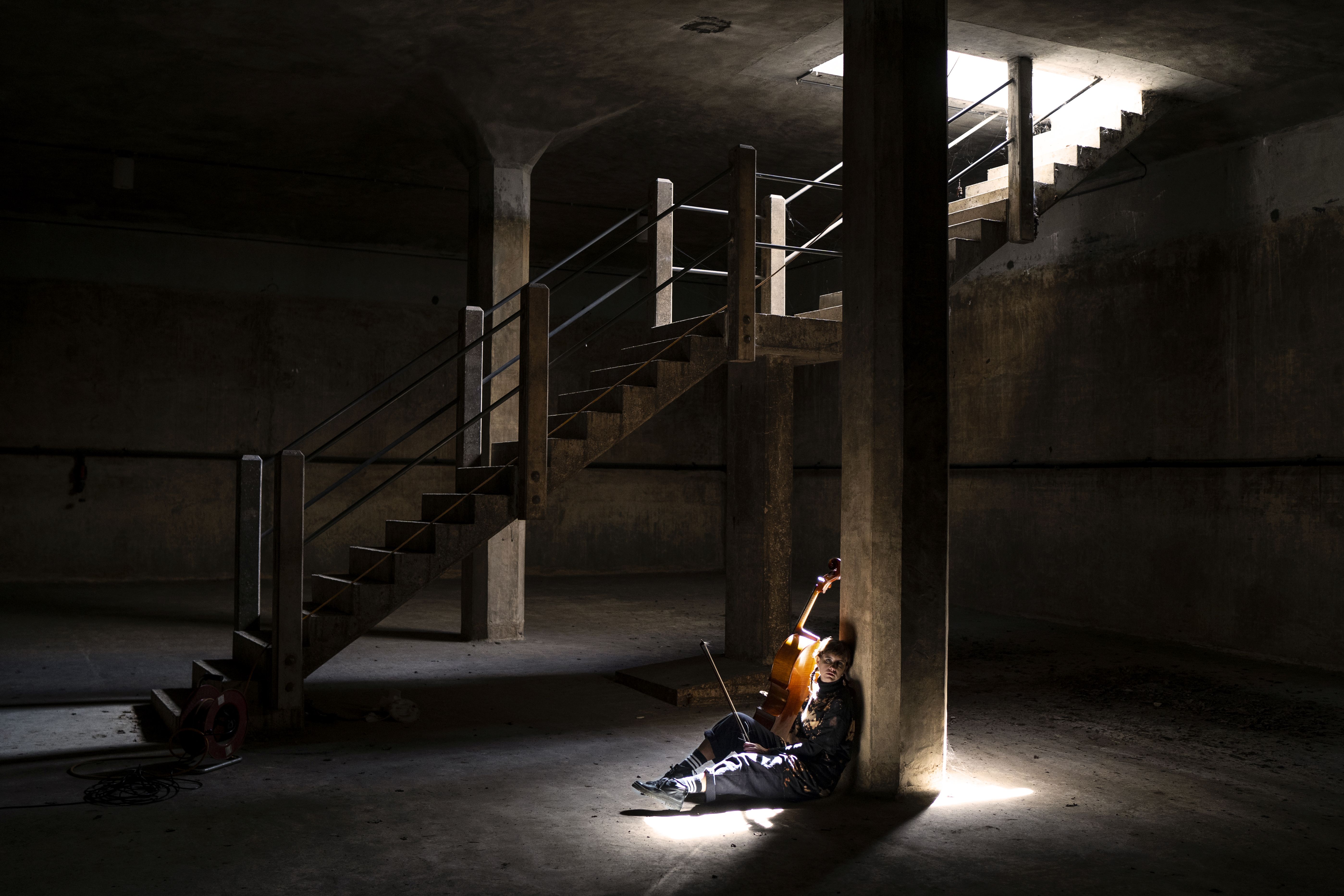
On IN/OUT, although the pieces are composed for solo cello, the resonance of the former underground water tank where I recorded the album, became a key element. I improvised with durations and timbres, allowing the space itself to shape the orchestration and development of the pieces.
Even external sounds, such as animal noises, naturally integrated into the process, expanding the interaction between the music and its surroundings.*
Is there a preparation phase for your process? Do you require your tools to be laid out in a particular way, for example, do you need to do “research”; or create “early versions”?
It depends on the context and the type of work I am developing.
Whether in composition or performance, I like to take the time to thoroughly research the concept I am exploring. This involves a a theoretical research process through reading, listening, and experimenting, as well as a work-in-progress phase where the material is shaped and evolves before reaching its final form—if there is one at all.
In every creative process, I tend to be deeply involved, almost obsessively researching different parameters. For this album, for example, I became fascinated by how the silence of my everyday life in Switzerland was affecting both my work and my perception of sound. It shifted my perspective on the extreme noise I had been working with digitally and through prepared cello techniques.
I also immersed myself in the works of Éliane Radigue and Jürg Frey, which strongly influenced my approach.
Do you have certain rituals to get you into the right mindset for creating? What role do certain foods or stimulants like cofee, lighting, scents, exercise or reading poetry play?
Yes, absolutely. For me, the creative process is a ritual in itself—a space where the boundaries of reality begin to blur. I used to have very specific rituals, but since adopting a nomadic life due to touring the world, they now change constantly depending on where I am.
In recent months, I have discovered that movement itself is a source of inspiration: working while travelling—on a train, plane, or in a car—helps me sketch out ideas. Then, once I arrive at a fixed place, I begin to shape and refine them in greater depth.
For IN/OUT, what did you start with? If there were conceptual considerations, what were they?
This album was a completely new and special personal experience. Since it was recorded outside a traditional studio, the resonance of the space itself became a central compositional element which I had to study and explore to work with it.
The process began with an exploration of the location: an old underground water tank, above which there was a small zoo with farm animals. I spent time there, immersing myself in the humidity, resonance, darkness, and solitude of the space, as well as its acoustic memory. I also took long walks through the surrounding natural environment, absorbing its atmosphere before starting to record.
Conceptually, I worked with the idea of memory, recollection, and the relationship between what is inside and what is outside, expanding this to different scales—not only sonic but also spatial and sensory
Tell me a bit about the way the new material developed and gradually took its final form, please.
It was a process fllled with very special anecdotes.
I recorded for three full days, starting early in the morning. It was spring in Switzerland, but still cold—I remember the grass remained frozen at dawn. The team was very small. We placed eight microphones strategically around the space to capture its natural reverberation and tonal nuances. Once the recording engineer hit play, everyone would leave, leaving me completely alone, because the space was so resonant that every sound—even my breathing—was picked up. I recorded in solitude, stepping outside every half hour for fresh air, as the humidity was overwhelming.
Two days after finishing the recording, I travelled from Switzerland to Portugal for a tour. When I returned, the airline had completely destroyed my cello. It was a strange, almost magical feeling: the album had just been recorded, and suddenly, this very special instrument was completely broken. Fortunately, a luthier was able to restore it.
While I was selecting the takes for the album, another unexpected blow came: four months later, during another tour, my backpack was stolen, along with my laptop and all my external hard drives. I had no cloud backup. The album was completely lost. I had to inform the label that we would not be able to release it, and I mourned it for days.
But three months later, one of the external hard drives was returned. I recovered the material and was able to resume working on the album until it was finally completed. It was as if both the album and the cello had embarked on their own journey, going through their own story, only to return when I was truly ready to present them.**