

Published
Part 1
Name: Schande
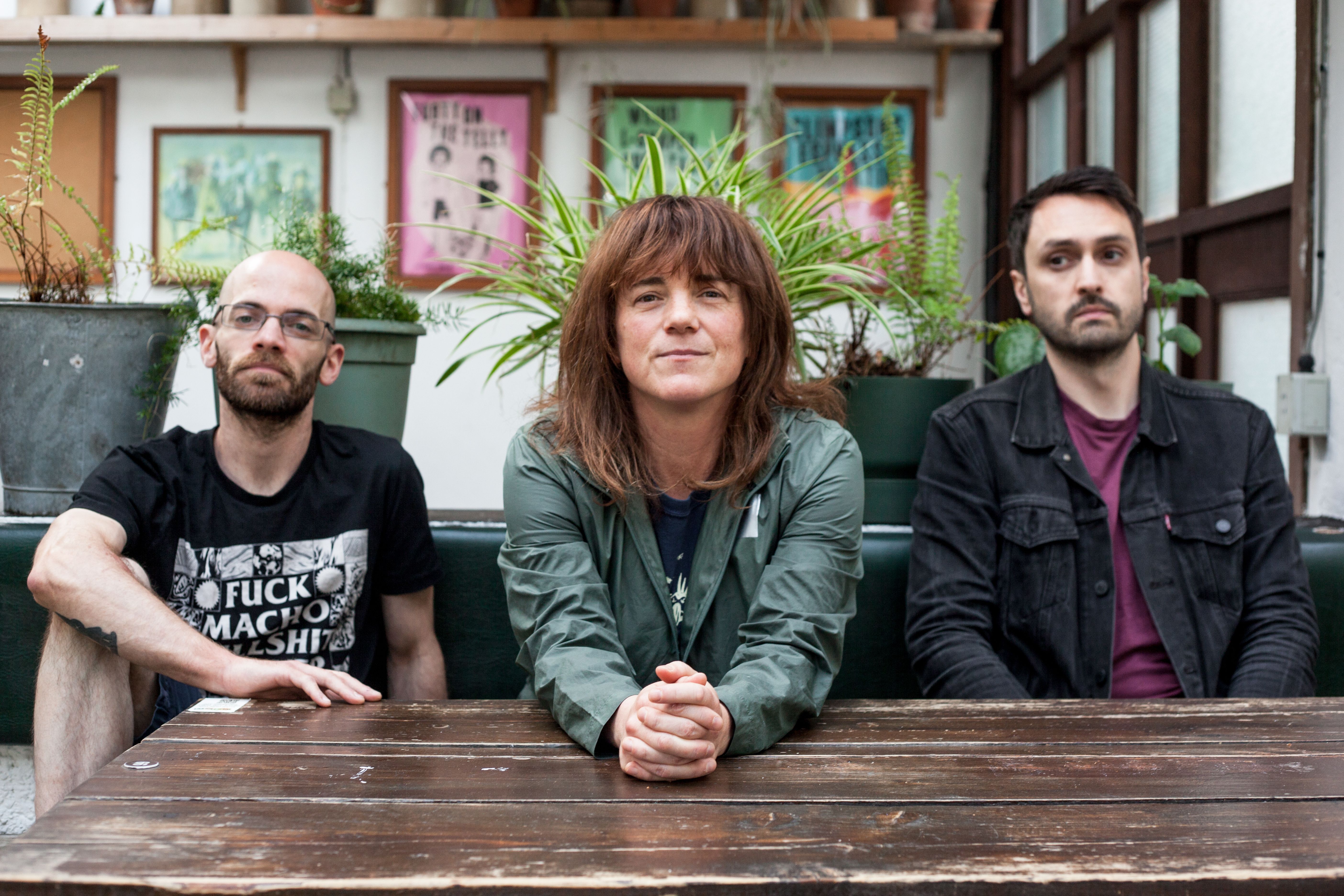
Members: Jen Chochinov, Giovanni Villaraut, Ryan Grieve
Interviewee: Jen Chochinov
Nationality: British
Current release: Schande's album Once Around is out via The Daydream Library Series.
Recommendations:
Film: Israelism. I wish this was mandatory viewing for everyone. It’s such a vital documentary. Nothing else right now matters other than ending the genocide and freeing Palestine.
Book: Telex from Cuba by Rachel Kushner. If you haven’t read this already, buy it immediately. The writing is just truly stunning prose that transports you through space and time.
If you enjoyed this Schande interview and would like to know more about the band, visit them on Facebook, and bandcamp.
For a while, it seemed as though the model of the bed room producer would replace bands altogether. Why do you like playing in a band rather than making music on your own?
Nothing can replace the creative energy and bond that comes from making music as a collective.
I’ve done loads of solo bedroom recording, and the whole having complete and total artistic control over everything to realise what’s entirely your vision can be really liberating and empowering. For me though, that was fun for a bit, but ultimately what inspires and excites me the most are the unexpected moments that come with creating with others - the unpredictable dynamics that come when everyone is adding their voice to the conversation.
Like, even songs like “Relevant Campaigns” and “Last Horse,” which I wrote and recorded alone at home- it wasn’t until my friend Nopse mixed the songs and added his own touch that they truly came alive.
Ultimately, I personally way prefer the connectivity and community of a band. Schande aren’t just people that play together but share and contribute to whatever we create.
What, to you, are some of the greatest bands, and what makes them great?
First and foremost you have to credit the bands that opened your ears to worlds of sound, images, and ideas you never knew existed and never knew could exist. For me in my preteen and early teen tears that was bands like Siouxsie & the Banshees, The Smiths, the B-52s, Throwing Muses, Sonic Youth, Pavement, the Breeders – these were the bands that after I listened to life wasn’t the same.
[Read our Fred Abong (Belly, Throwing Muses) interview]
[Read our Tanya Donelly (Belly, Throwing Muses) interview]
Something about my perspective and my grasp of how sound could exist was forever altered.
Brilliant bands also emit an effortless intelligence. To throw some new names into the mix other than the above, Hospitality and Wye Oak instantly come to mind. Every instrument, vocals included, contributes so much to each song in a way where each part never steps over or interrupts another or limits what another can do.
I listen to Trouble and Civilian in particular and every time just feel like I’m listening to the most interesting conversation between experts in the field.
Before you started making music together, did you in any form exchange concrete ideas, goals, or strategies? Generally speaking, what are your preferences when it comes to planning vs spontaneity in a collaboration?
Our goals - don’t be dicks. So far we’re nailing that one pretty solidly. I hope …
But seriously we never had any “we want to sell 100,00 records” or “by the time next year we’re gonna be playing X sized venues” kind of goals. We’re proud of our music and want to play for as many people as possible but our main priority is to have fun creating together and everything else is secondary.
As for the collaboration process, I am a way bigger fan of spontaneity. Come to think of it, it’s actually been a while since I’ve come to practice with a song fully written and structured. I’m at my best and most inspired when I get to plug in and explode in the moment. Once you’ve played music long enough, on one hand, a wonderful thing is that you develop your sound, your craft, whatever is idiosyncratic to you. On the other, at least for me, it becomes hard to surprise yourself because you know what you do so you also kind of know what’s coming.
So, while I prefer collaborating anyway, I genuinely love the element of the unknown that comes when everyone else joins in and that process seems to work best for us creatively.
There are many potential models for creativity, from live performances and jamming/producing in the same room together up to file sharing. Which of these do you prefer – and why?
Riffing together in the same room as well as live performances are my absolute preferences because it’s the energy and the connectivity between the music and whoever else is in the room that I live for.
Not to redefine cheesy but music is so much about community and shared experience that unless you are in a band living in separate towns / states / countries or you have life commitments that make playing together in person really difficult to arrange not being in the same room isn’t something I can wrap my head around. Not in a judgemental way, like if file sharing works for you that’s awesome, especially depending on the kind of music you make as well. But I find myself less moved by it.
I also don’t have great gear and am inept at making anything sound good when filesharing. So, there’s the whole being technologically challenged part of things that might bias my opinion ...
How do your different characters add up to the band's sound and in which way is the end result – including live performances – different from the sum of its pieces?
Personally, I’ve always been more comfortable playing guitar as a way to communicate – at least emotionally. So whereas in person I can be incredibly shy and awkward with people I don’t know or am just meeting (in a totally charming way, ahem …), behind the guitar just feels like home.
Gio and Ryan are far more assertive than I am, but I think that similarly there is an aspect of communicating through their instruments that supersedes how they are in their day to day. We can each take turns being the quieter one or the more social one but neither of us are particular spotlight seekers or interested in being the centre of attention.
You’d have to ask people who aren’t us, but my guess is that I think people who know us would be/are surprised by how loud we can get, which in turn kind of commands people’s attention and is only the result of being the sum of our parts.
Is there a group consciousness, do you feel? How does it express itself?
Hmmm, that’s a great question and one that I don’t think I have a great answer for. We’re not really a band with an overt message that would translate into an identity or consciousness that would be lucidly communicated. Between us you have leftist and queer identities but I think that is something that again isn’t necessarily an overt expression or projection – it’s just part of our day to day and who are as individuals.
Honestly, I think if we had any group consciousness or identity as a band it again would probably be not being dicks. It would also be of me conspiring ways to get Gio and Ryan to do shots with me, and them having the common sense to say no more often than not.
Nottingham though, we’ll always have Nottingham … you’re welcome for the hangover, m’dudes.
Tell me about a piece or album which shows the different aspects you each contribute to the process particularly clearly, please.
I mean, I think the entire album really showcases what we’re each bringing.
Each song is a non-standard tuning that I was experimenting with, which may or may not have involved a 12-string guitar I was also newly exploring; Ryan’s drums were finding really creative ways to ground the guitar while creating unexpected syncopations; and Gio’s bass is the glue that binds the guitar and drums but does so while throwing in brilliantly placed melodies so that all instruments are interlaced like a triple helix.
I think our last single ‘Palimpsest’ is a perfect example of this - a I’m playing a 12-string guitar in a non-standard tuning which is both controlled and yet all over the place, Ryan thunders the beat and takes the song in a new direction during the bridge, and Gio turns everything into a well-stitched melodic tapestry.