Name: Reagan Grey
Nationality: Canadian
Occupation: Producer, engineer, DJ
Current Release: Reagan Grey's Kinetic EP is out via Wolf Music.
Recommendations for Toronto, Canada: Geary Avenue. It’s a cool industrial strip in my neighbourhood with something for everyone - great restaurants, coffee shops, galleries, bars, and nightlife venues. I’d also recommend walking the streets of Kensington Market in the summer.
Things I am passionate about but rarely get to talk about: I can spend hours wandering through garden centers. I love having plants in every room of the house, fresh cut flowers on the dining table. And during the summer, I’m often out in the garden working. It’s very calming and regulating for me, I absolutely love it. We moved to a new house this past year, so I’ll be starting my outdoor garden from scratch this summer. It's another creative outlet.
If you enjoyed this Reagan Grey interview and would like to know more about her music, visit her on Instagram, Soundcloud, and bandcamp.
What were some of the musical experiences which planted a seed for your interest in electronic music?
There was always a strong emphasis on the arts in my home growing up, along with a general love and appreciation for music.
I studied piano, ballet, and drama, but my music interest really picked up in the 90s through clubbing, warehouse parties and buying records. I was magnetically drawn to club culture.
After university, I directed a documentary about women in electronic music, which was the strongest push for me, to finally cross over into actually making music myself.
Most genres of music make use of electronic production means. What does the term “electronic music” mean today, would you say?
It can mean many things, but my definition in the simplest form would be the use of drum machines, synthesizers, and samplers, as the foundational elements creating the sound.
Disco, house, techno, drum n bass, IDM and many other genres were about a lot more than just music. For you personally, is electronic music (still) a way of life – and if so, in which way?
Yes, it's still a way of life.
House music culture has always occupied a space where diversity and difference is welcomed and celebrated. Those values are really important to me.
Debates around electronic music tend to focus on technology. What, though, were some of the things you learned by talking to colleagues or through performing and/or recording with other musicians? What role does community play for your interest in production and getting better as a producer?
Working with other people can help you expand and grow, it pushes you to step out of your comfort zone. There have been a handful of people whose critical feedback truly pushed me to improve. I’m always open to change if someone can convince me it will be better.
Collaboration has also taught me the importance of speaking my mind, even when it’s uncomfortable. I’m more confident in my abilities as a producer.
The role community plays in terms of me getting better, is that I’m always listening to new releases and the work of peers.
I don’t go out as much these days, but when I do, I get supercharged with inspiration after a night of dancing. It keeps the fire burning.
What are examples for artists, performances, and releases that really inspired you recently and possibly gave you the feeling of having experienced something fresh and new?
I’ve been listening to releases on Ryan Elliot’s label Faith Beat, and artists like Sweely, Cinthie, Garret David, Rochelle Jordan, Delano Smith. WOLF has been a major point of reference for many years, they have a very high caliber of artists and a consistently strong catalog.
Generally, I make it a point to stay current with new music and the next generation coming up. The minute you start saying “things were better back in the day” it’s over. I’m very mindful of that, I want to actively participate in the music scene of today. There’s a clear 90s influence in music right now, but it’s being reimagined for a completely new audience.
[Read our Cinthie interview]
What kind of musical/sonic materials, and ideas are particularly stimulating for your own work right now?
I love the warmth and tone of Rhodes keys, which have remained central in my work.
I don’t have an actual Rhodes, but I’ve built up a very good sample library, and with processing, can achieve some really incredible-sounding results.
[Read our feature on the Fender Rhodes]
Where do most of your inspirations to create come from – rather from internal impulses or external ones? Which current social / political / ecological or other developments make you feel like you need to respond as an artist?
Inspiration happens in cycles where I feel compelled to create. When those creative windows are blocked, I’ll work on technical aspects of production instead.
We’re living in an extraordinarily distressing time. Writing and playing music is like a refuge from the chaos.
Tell me a bit about the sounds & creative directions, artists & communities, as well as the colleagues & creative hotspots of your current hometown, please. How do they influence your music?
I have always lived a parallel existence to the artists here in Toronto, largely because I didn't come up as a DJ and was never in those circles. My history here is as a clubber, and I’ve enjoyed that anonymity.
Toronto is an amazing music city, and I’ve always felt a strong Chicago and New York influence, which has definitely shaped my sound.
For the most part, my connections are abroad. This past summer I released an EP on Toronto Hustle’s label Selections. It was cool to work with a hometown label for a change, and make a few new connections with the house community here.
Today, electronic music has an interesting relationship between honouring its roots and exploring the unknown. What does the balance between these two poles look like in your music?
My job as an artist is to create something new from that foundation, honoring the history without falling into the nostalgia trap.
I’m all about creating for this moment in time. I think that is achieved, in part, by constantly exposing myself to new music.
What were some of the recent tools you bought, used, or saw/read about which changed your perspective about production, performing, and making music?
I recently started using BandLab and its production counterpart, Cakewalk, for a youth program I work with. I love that these are high-quality free tools capable of delivering a professional sounding result.
The idea of access has always been really important to me, the tools you can access can determine the trajectory of your career.
On the performance side, I’ve recently started DJing. After months of technical set prep, a lot of that went out the window when I was in front of a crowd because I knew I needed to respond to the room.
It taught me that DJing isn't about perfection, it’s entirely about vibe and track selection.
How do you see the role of sampling in electronic music today?
I think sampling is a wonderful creative tool, and an essential component in electronic music.
Certain chords sound more club-effective when they’re mapped out and played on a sampler. I use a lot of drum samples, and have many collections of amazing kits I replay and add my own processing to.
I would guess the vast majority of dance music makes use of sampling, versus all those artists owning the original, rare and expensive drum machines and synthesizers.
What are some of the most recent innovations in sound design for you - and what are currently personal limits to realising the sounds you have in your mind?
For my set-up, the biggest innovation is the quality of plug-ins. I use many from Fab Filter and Waves. I’m always trying to create as much of an analog feel as possible, and this generation of plug-ins are getting us much closer to that warmer sound.
A limit is not being able to execute an idea as quickly as it forms in my mind. I’ve gotten better at mapping out an idea quickly, and fine-tuning it later. Another factor is that my process takes time. But I’m okay with that, because I can execute an idea to its fullest, exactly how I want to sound.
In as far as it is applicable to your work, how would you describe the interaction between your music and DJing/DJ culture and clubs?
They are intertwined, the music I make is club-focused music and it's made for dancing. It's the product of house music culture.
DJ culture and clubs are at the beginning of my love for dance music, and I have an emotional connection to the experience of dancing and our need for collective release. My entire sound is informed by years of dancing all night with large groups of people.
How, would you say are your live performances and your recording projects connected at the moment? How do they mutually influence and feed off each other?
I only recently started performing, I’ve always been a producer first. For a long time, DJing didn't feel particularly accessible to me, especially after having children, whereas producing was something I could do from home on my own time.
Since I’ve started DJing, there are elements from my work as a producer that are helpful in how I approach the flow and structure of a set. The same concept of keeping the energy moving through a song, applies to a set.
Even if AI will not entirely replace human composition, it looks set to have a significant impact on it. What does the terms composing/producing mean in the era of AI, do you feel?
The use of AI has forced me to think about my definition of art and music. And for me that generally means it’s made by people, real singers and musicians and writers, and they are credited for their contribution.
If AI is used to create music, then it isn't writing, it’s generating, and should be labelled as such. My main issue with AI is that it mines art without giving credit.
I also stand by the idea of art taking time, and the value of that. Having a session to write for an hour and map out a song, or record 30 takes with a singer and spend a week on vocal production before even getting to the song assembly, these are critical elements of composing and producing.
Hitting a button and generating a complete work, or prompting it a few times to get a final song, is not the same as building a musical work from scratch.

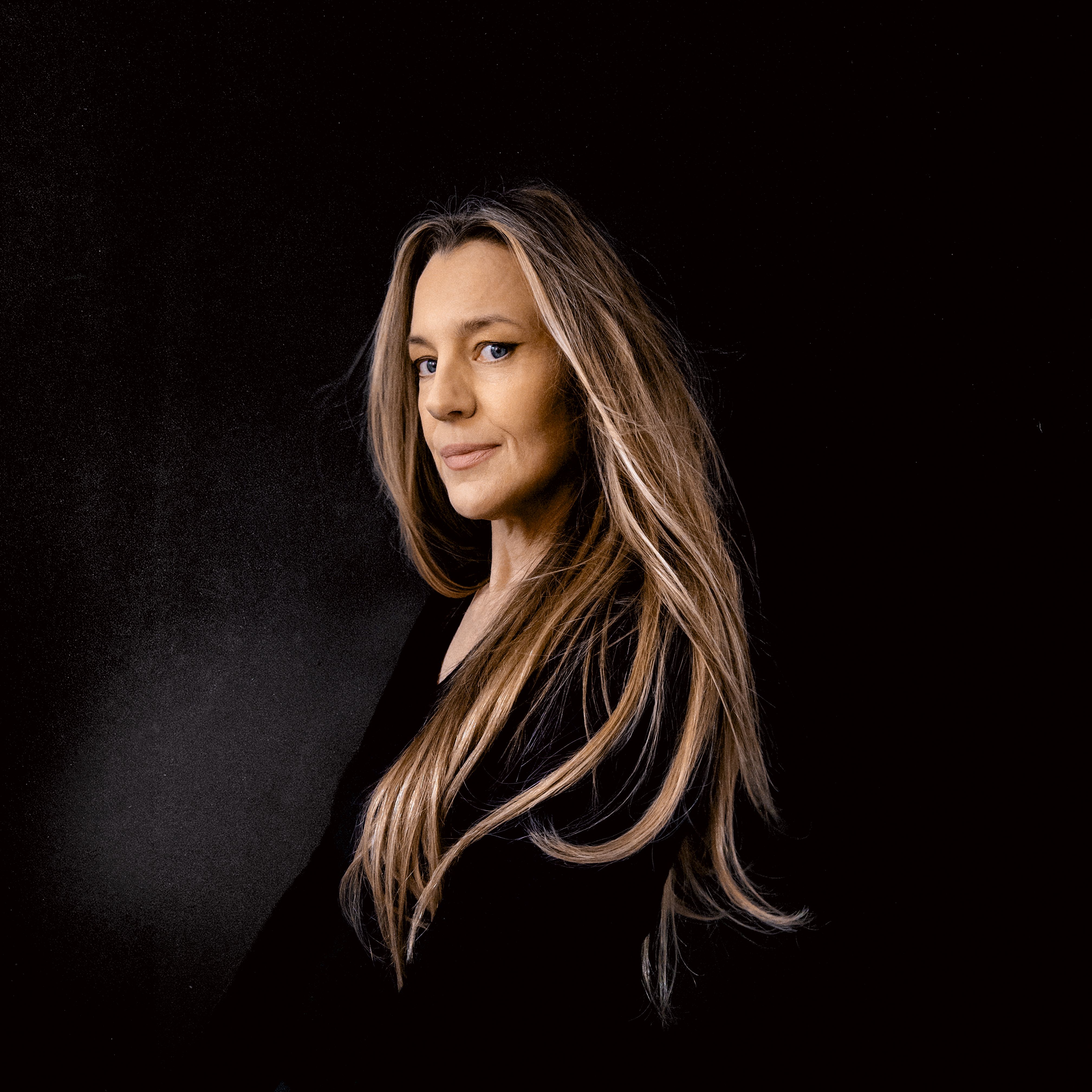 Reagan Grey Interview Image (c) the artist
"I don’t go out as much these days. But when I do, I get supercharged with inspiration after a night of dancing."
Video