

Part 1
Name: Katherine Anne McVeigh aka Kate Pending
Nationality: British/Northern Irish
Occupation: Producer, songwriter, vocalist, visual artist
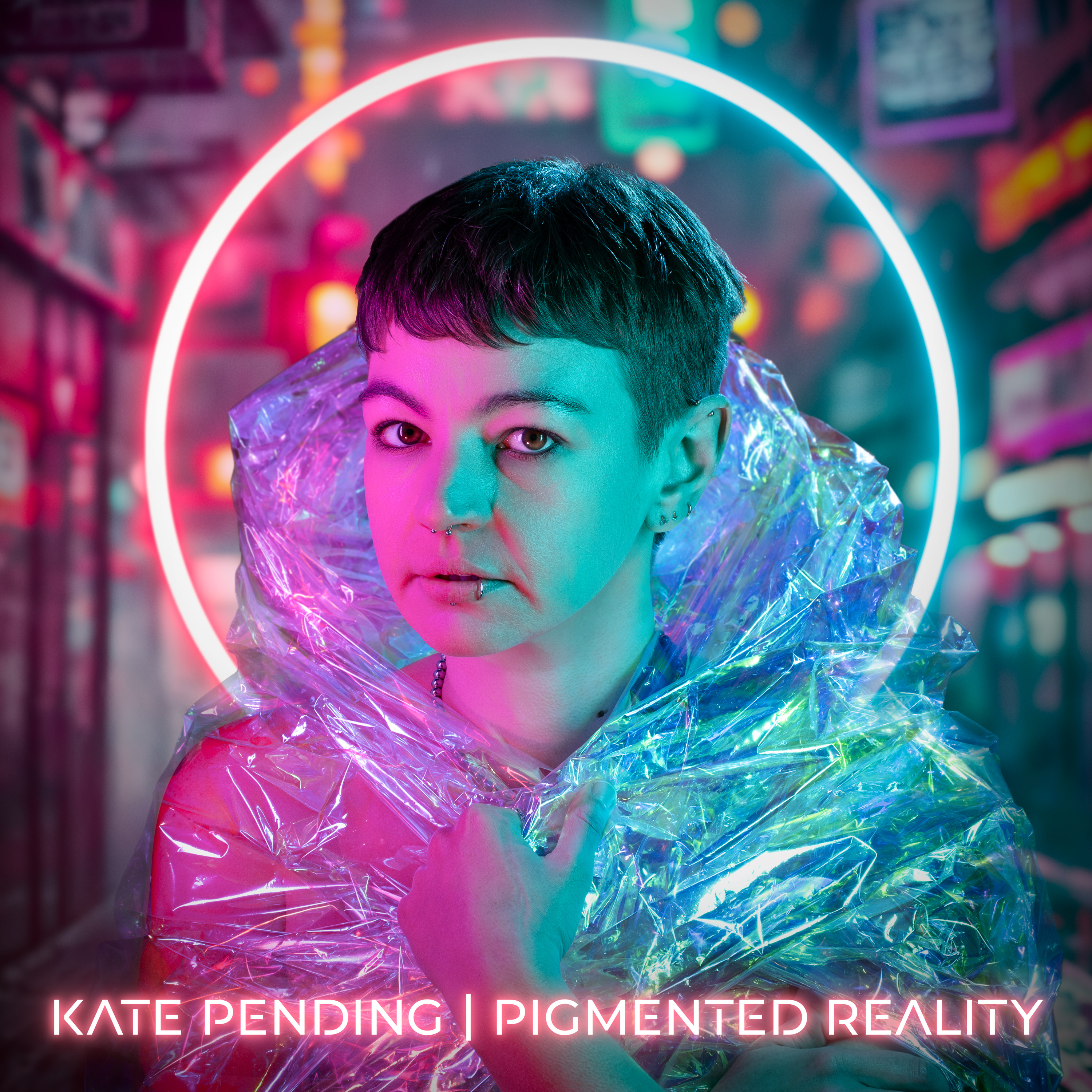
Current release: Kate Pending's Pigmented Reality is out now.
If you enjoyed this Kate Pending interview and would like to stay up to date with her music, visit her on Instagram, and Soundcloud.
Do you think that some of your earliest musical experiences planted a seed for your interest in production and technology?
My fascination for electronic sounds was sparked around the age of 12.
Discovering the BBC Essential Mix on BBC Radio One was a pivotal experience for me. It was my first real exposure to dance music, and I instantly fell in love with it. I spent countless hours recording songs from the radio and creating my own mixtapes. I found myself drawn to the beauty of synthesisers, captivated by their potential to create otherworldly sounds.
This experience opened a new door for me, igniting a passion not only for the music itself but also for the DJs and producers behind it. I found myself dreaming about creating music and playing gigs of my own one day.
What were your very first active steps with music technology and how would you rate the gains made through experience?
It began for me when I got Ableton. Despite its initially intimidating appearance and array of possibilities it offered, I wanted to dive in and explore its capabilities. With the help of online tutorials and later guidance from friends who also used the software, I began experimenting, making mixes of songs I loved and seeing what I could create on my own.
I was listening to a lot of Max Cooper at the time, and made a mix called Maximal Cooper, which included a lot of early works and collaborations he had been involved in. I contacted him with a link and after taking the time to listen to it, he wrote a lovely reply, making my day and inspiring further mixes.
Following this, I was offered the space to play a set on Passion Radio Bristol, which was also encouragement to keep working on developing further mixes, as well as stimulating the desire to see what I was capable of producing.
[Read our Max Cooper interview]
The early tunes were definitely raw and somewhat undercooked, but over time, as I could see the skillset developing, I slowly expanded my setup. I gradually acquired a number of software plug-ins and hardware such as synthesisers, MIDI controllers, a sound card, field recorder and a microphone.
Were/are you interested in the history of production and recording? If so, which events, albums, artists, or insights stand out for you?
Moderat is a good example of an artist group that inspires me with each and every album they make. Similarly, Bicep, from my hometown of Belfast, has had a profound influence on my musical sensibilities. Their euphoric compositions and infectious rhythms really resonate with me. I could literally listen to ‘Glue’ on repeat all day. It’s such an anthem.
Grimes, with her innovative approach to electronic music production, has also left a lasting impression. Her recent creation of a voice software enabling artists to create an AI-generated rendition of her voice, likely to make her the first self-replicating pop star, was the inspiration for my ‘White Rabbit feat. GrimesAI’ track. It was a proud moment for me when her team chose to distribute it and a driving force to work towards further releases.
In addition, artists like Christian Löffler, Max Cooper, Four Tet, Bonobo and many others have also shaped my understanding of production and recording through their work and unique creative approaches.
[Read our Christian Löffler interview]
Making music, in the beginning, is often playful and about discovery. How do you retain a sense of playfulness and how do you still draw surprises from tools, approaches, and musical forms you may be very familiar with?
For me, experimentation and curiosity are key. I approach music-making with an open mind, always eager to explore new sounds and techniques. One way I maintain playfulness is by embracing spontaneity in my workflow. Rather than adhering strictly to predefined structures or formulas, I allow myself the freedom to follow wherever inspiration leads.
Sometimes this involves experimenting with unconventional sounds, trying out new production techniques, or incorporating unexpected elements into my compositions. For example, the sound of the Berlin S-Bahn and train announcements that are a part of my daily life, became the inspiration for the outro track on the album, ‘Waiting Game’.
Additionally, I find that collaboration can be a powerful catalyst for creativity. Working with other musicians and producers brings fresh perspectives and ideas to the table. Whether it's jamming with friends in the studio or collaborating remotely with artists, the exchange of ideas provides a fresh perspective and inspires the creative process.
Working on the remixes with Iron Curtis and Void Loop ( ) were really fulfilling experiences. They both inspired me in ways I didn’t expect. The little touches and ways of adding finesse to the sound, is something I want to take forward and use in my future productions.
For your own creativity, what is the balance and relative importance between what you learned from teachers, tutorials and other producers on the one hand – and what you discovered, understood, and achieved yourself? What are examples for both of these?
While guidance from tutorials and other producers has been invaluable in shaping my understanding of music production, much of my growth as a musician has come from hands-on experimentation and self-directed learning. Through trial and error, I've discovered new sounds, techniques, and approaches that resonate with my artistic vision.
Ultimately, it's the freedom to explore and innovate on my own terms that allows me to uncover new possibilities in my music.
How and for what reasons has your music set-up evolved over the years and what are currently some of the most important pieces of gear and software for you?
Initially, my setup was modest, consisting primarily of having Ableton on my computer. However, as my skills and aspirations grew, so did my collection of software and gear.
One of the most significant additions to my setup has been Pigments, a software synthesiser made by Arturia. Its versatility and vast array of possibilities have made it an indispensable tool in my creative process. The sounds it produces and possibility for modulation, have made it a source of endless inspiration and has become a defining element of my music, inspiring both the name of my album and title single, ‘Pigmented Reality’.
In addition to Pigments, I've also incorporated hardware synths, like the Moog Mother-32 into my setup. I love the raw analog sound, its rich, warm tones and tactile interface bringing a hands-on element to the music-making process.
Have there been technologies which have profoundly influenced, changed or questioned the way you make music?
One tool that has changed the way I make music is the RePitch plugin, a vocal processing software. Initially, none of my tracks included vocals, but I felt that something was missing and wanted to integrate my own vocals into the music. However, singing isn't my strong point, and I often struggled to hit the notes I desired.
This tool allowed me to adjust the tones of my vocals to fit the music. This was a game-changer for me because without the plugin, achieving the desired vocal performance would have been challenging and incredibly time-consuming. It enabled me to overcome the limitations of my singing ability and helped me to add the element of my own voice, which I didn’t think I would be able to do in a way that I would be happy with.
Already as a little kid, I was drawn to all aspects of electronic/electric music but I've never quite been able to put a finger on why this is. What's your own relationship to electronic sounds, rhythms, productions like – what, if any, are fundamental differences with “acoustic“ music and tools?
Unlike acoustic music, electronic music offers boundless opportunities for exploration and experimentation.
One fundamental difference being that acoustic music relies on physical instruments and natural sound sources, while electronic music offers the possibility to generate new sounds and manipulate them in interesting ways.
I’ve found that adding textures to the sound and experiment with rhythms, has been incredibly liberating and inspiring.
Late producer SOPHIE said: “You have the possibility with electronic music to generate any texture, and any sound. So why would any musician want to limit themselves?” What's your take on that and the relevance of limitations in your set-up and process?
This statement definitely resonates with me, as it encapsulates the essence of what makes electronic music so compelling—the freedom to explore and create without constraints. The vast palette of sounds available within the realm of electronic music offers so many opportunities for artistic expression and innovation.
While I enjoy the freedom to experiment with unconventional sounds, I’ve found my limitations tend to stem from time constraints or that of my setup. It takes time to learn to use the various pieces of software and hardware, and to maximise what can be achieved with them.
However, I try to see the limitations not as hindrances, but as motivation to continue learning and exploring what new tools can add to the production process.