Name: Christian Löffler
Nationality: German
Occupation: Producer, composer
Current release: Christian Löffler's new album A Life is out via Ki. He is also about to embark on a European tour. 
If you enjoyed this Christian Löffler interview and would like to stay up to date with his music, visit his official homepage. He is also on Instagram, Facebook, and Soundcloud.
Over the course of his career, Christian Löffler has worked and collaborated with, remixed and been remixed by a variety of artists, including Dominik Eulberg, Moby, Malou, Martin Kohlstedt, Robag Wruhme, Johannes Brecht, Parra for Cuva, Joris Voorn, Francesco Tristano, Max Cooper, Roman Flügel, Aparde, and Mind Against.
[Read our Dominik Eulberg interview]
[Read our Moby interview]
[Read our Robag Wruhme interview]
[Read our Johannes Brecht interview]
[Read our Parra for Cuva interview]
[Read our Joris Voorn interview]
[Read our Francesco Tristano interview]
[Read our Max Cooper interview]
[Read our Roman Flügel interview]
[Read our Mind Against interview]
What was your first studio like?
My first studio wasn’t an actual studio. It was a very basic bedroom set up with a desk, desktop PC, and a tiny 25 keys Korg Midikontrol.
I still have and use this keyboard which has a similar design to the microkorg which is pretty cool.
How and for what reasons has your set-up evolved over the years and what are currently some of the most important pieces of gear for you?
At first, I was changing DAWs from Reason to Cubase and then to Ableton Live, with a short episode in Logic in between. After a while, I felt the need to touch something real and twist some knobs, so I bought my first synth, a used Korg Polysix, which I still own, and my first drum machine Elektron Machinedrum, which I also still own but honestly never really used.
[Read our feature on the Elektron Machinedrum]
With playing more and more live shows, I could buy more hardware gear like a Prophet 6 and NordLead which I used in David August‘s studio back then, and a Minimoog and more Elektron machines. Just recently I bought a Roland Juno 60 but I also sold things like a MS20 for example.
[Read our David August interview]
[Read our feature on the Roland Juno 60]
My most important tools are Ableton Live obviously but also the Elektron Rytm, Faderfox PC12, MX12, and Novation Launchpad, since I use them in every live show, as well as in the studio
Some see instruments and equipment as far less important than actual creativity, others feel they go hand in hand. What's your take on that?
That’s what I just found out again while working on the new album and what keeps me excited about creating new music. It’s not about expensive vintage synthesizers, it’s only about the ideas.
But I think good ideas come if you enjoy and have fun while making music and for that, it’s necessary to use whatever makes it more fun. As I said, there was a certain time when it was more fun for me to use analog hardware synths and record myself jamming on them.
A studio can be as minimal as a laptop with headphones and as expansive as a multi-room recording facility. Which studio situation do you personally prefer – and why?
Generally, I tried to reduce my hardware lately since I went back to the early days when I started producing and just used a computer more or less. This minimalist approach helped me to simply the process of creating my new album 'A Life‘ and made it come to life because I enjoy making wherever and whenever I want. I continuously buy new plugins which keeps me excited about trying them out and automatically leads to new ideas.
Once, I had the approach to master my tools. But this changed to a more child-like approach. Which is a lot more fun somehow.
From traditional keyboards to microtonal ones, from re-configured instruments (like drums or guitars) to customized devices, what are your preferred controllers and interfaces? What role does the tactile element play in your production process?
For beginning a new piece and finding melodies and moods, I almost always rely on the piano. It fits my way of searching for ideas in a quiet and focused manner.
I like playing a few notes softly that go nicely together to find a certain progression and mood. From there I can add anything that may lead me to a happy accident, like granular delays for example.
In the light of picking your tools, how would you describe your views on topics like originality and innovation versus perfection and timelessness in music? Are you interested in “music of the future” or “continuing a tradition”?
The ultimate goal I’m aiming for is to create original music with a certain amount of innovation and timelessness.
I usually like songs that have a classic vibe to them, but also bring in something new that you haven’t heard in combination before.
Most would regard recording tools like microphones and mixing desks as different from instruments like keyboards, guitars, drums, and samplers. Where do you stand on this?
I would agree but I think about this actually from a perspective of having a budget when starting to make music. You want to get a tool that makes sounds before having a mixer for example.
But a microphone or a mixing desk can be used like an actual instrument. I‘m reminded of a recording process I used to do where you re-record a synth playing in the studio, so you will get the room of the sound and a certain distance in the sound as well.
How would you describe the relationship between technology and creativity for your work? Using a recent piece as an example, how do you work with your production tools to achieve specific artistic results?
It was always connected to me and that’s why I‘m a big fan of the evolution of technology in terms of using it to make music. The first thing I had to learn was how to use a computer and the software before I was able to make my music. So both things can’t go without one another in my opinion.
A specific example is that I‘m using super long chains of plugins combined in Ableton, which wouldn’t be possible without the strong CPUs we have today.
Within a digital working environment, it is possible to compile huge archives of ideas for later use. Tell me a bit about your strategies for building such an archive and how you put these ideas and sketches to use.
Whenever I feel like I’m starting a new chapter / album / project, I create a new folder where I'll start from folder 1 as the first project to usually 50, 60, or sometimes even 80 ideas overall. In the last ten years, I created around 10 of these folders, which amounts to a total of around 600 song ideas. Writing this right now, it doesn’t feel that much for a time span like this.
Whenever an idea feels good, I bounce it out of the DAW and upload it privately to my mp3 archive. So whenever I‘m stuck with new ideas or get a collab / remix request I go through that archive to see if there is something that could work as a starting point.
How do you retain an element of surprise for your own work – are there technologies which are particularly useful in this regard?
As soon as I reach a certain point of progress with a new idea, I bounce simple stems off it and play it on my live shows. Usually, I improvise on the NordLead while playing it live and I also add drums with the Elektron Rytm and Digitakt on the fly.
Sometimes this leads to undesired results (haha). But many times I also find something within the sketch I missed out on in the studio.
Production tools can already suggest compositional ideas on their own. How much of your music is based on concepts and ideas you had before entering the studio, how much of it is triggered by equipment, software, and apps?
I will not usually have a specific picture of a new track on my mind when I start working on something new.
Normally I browse through my sample folder, where I collect snippets I recorded from movies, TV, audio memos from my phone, or field recordings from my travels or surroundings. That’s where I set the mood of the new piece which is usually an ambient underlay.
Have there been technologies which have profoundly changed or even questioned the way you make music?
I‘m not sure but I would say as long as I have fun doing it and I’m happy with the result, I must create something. So I was never at a point where I would fully question my way of creating music, but I had moments where I knew that I had to step up a bit.
One important eye-opener was when I played live with a string ensemble for the first time. It added so much more texture to the music, and it was also a very different and inspiring feeling to not be on my own on stage. It always helped me and my music when I opened myself and worked with others, for example, singers who also joined me live.
To some, the advent of AI and 'intelligent' composing tools offer potential for machines to contribute to the creative process. Do you feel as though technology can develop a form of creativity itself? Is there possibly a sense of co-authorship between yourself and your tools?
I think there is always a co-working with your tools. I’m also painting and in painting the choice of color, material and brush makes a huge difference in the actual outcome. It’s always about your tools and how you use them.
We‘ve been using AI already for years. I don’t feel like it’s a new thing. The tools are just getting more complex with more possibilities to use them individually, which actually will lead to more individual results the more these tools evolve.
I think now we are in a phase where pretty much every producer is using the same tools and plugins similarly. But I think with the evolution of software that is bound to come in the next few years we can bring in our personalities.
What tools/instruments do you feel could have a deeper impact on creativity but need to still be invented or developed?
As I have a very visual approach to sound, I would love to see a highly developed version of colors, photos, videos, or drawings to sound.
I would love to use a tool where you can paint an idea of what could be a bassline on my iPad for example and then convert it to sound and then change the sound by continuing the painting.
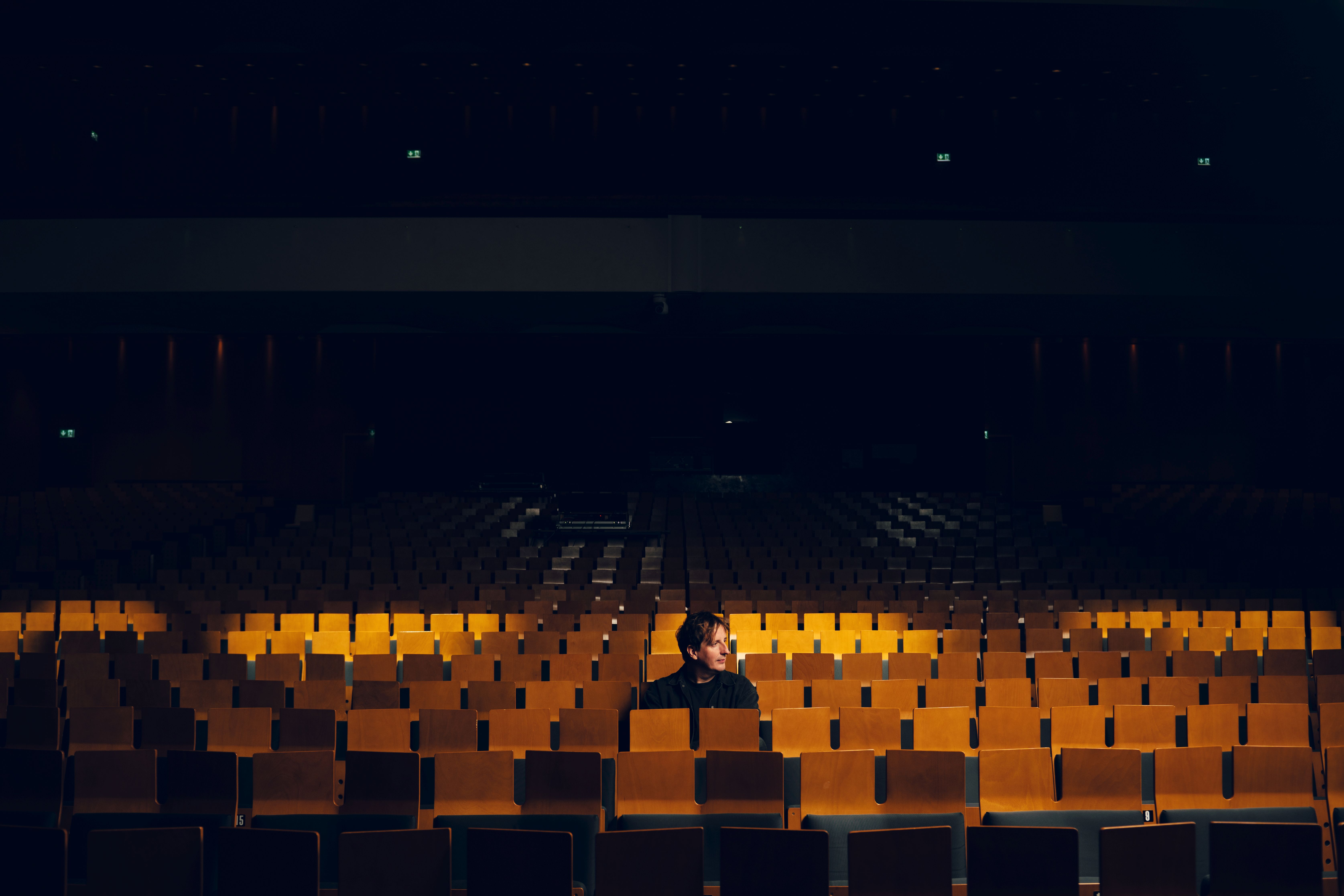 Christian Löffler Interview Image (c) the artist
"Once, I had the approach to master my tools. But this changed to a more child-like approach."
Video