Names: Kasiva Mutua, Christian Mohr Levisen
Nationalities: Kenyan (Kasiva), Danish (Christian)
Occupation: Percussionist (Kasiva), multi-instrumentalist, educator (Christian)
Current release: Kasiva Mutua and Christian Mohr Levisen were among the artists picked for Making Tracks 2024, a project inviting eight musicians from around the world for a two week residency at Cove Park, Scotland, "to create groundbreaking music that transcends cultural and even species boundaries." After writing the music, the participants then went on a tour to present and play the material live.
If you enjoyed this Kasiva Mutua interview and would like to know more about her music, visit her official homepage, and Instagram account. For Christian Mohr Levisen, visit his official homepage and Instagram profile.
Tell me about your participation in Making Tracks, please. What were your considerations going in?
CML: I was beyond excited when I was told that my application was accepted! It seemed to be the perfect opportunity for me and just the right timing having just finished my music studies. I looked forward to getting out of my musical bubble through encounters with musicians from other countries and musical traditions.
Also, I was excited about the interspecies aspect, which was really nicely facilitated and introduced by Merlyn, the director of the project.
KM: I was excited about being considered for Making Tracks. The idea of musical collaborations satisfies my curious mind, knowing that I get an opportunity to learn more musical traditions, human cultures and get one more opportunity to experiment, unlearn and relearn.
Tell me about the music you made through these collaborations, please.
KM: I collaborated on two pieces but got to immerse myself in several others. I'll explain.
In the first week of our residency, we did these sessions called ‘musical speed dating sessions’, where we got to know each other for 10 minutes in rotation. One of my sessions, with Christian from Denmark, was a spark from the start. After watching him playing the hurdy gurdy, I noticed the rhythm he was tapping with his feet reminded me of the Agikuyu tribe from Central Kenya. We ended up creating a piece called ‘Hurdy Che’, a pun for "hadi che" which means "until morning".
My second collaboration was a storytelling percussion piece with Ossi from Finland. Ossi is a drum-maker and a percussionist who plays many percussive instruments, but majorly, the tama, (‘talking drum’), which he has studied over the years in Dakar. We composed ‘Jegeje’, a piece that tells the story of a giant who cleverly survives a drought by tricking the children to tell him the secret passcode to the village food store.
[Read our Ossi Raippalinna interview]
I was also able to sit through all the performances and see first hand the beauty of different cultures marrying into each other, and the conversations the different musicians were having on stage.
Now you’ve been on the road with the project, what were some of your favourite moments?
CML: I learned a lot through the collaborations with the other artists, much more than I could have hoped for coming into it.
Not only though the collaborations we performed at the concerts, but also all the smaller projects that didn't end up on the stage. A third thing was being able to listen to the other collaborations on stage, that I myself didn't participate in, what a privilege!
There were many good moments throughout the month, but my favourites were being on stage, listening to the other musicians that I have come to know so well.
Working with or in other cultures can make you more aware of how your own cultural background influences your creativity. Was this the case for you and, if so, what did you discover?
CML: This was definitely the case for me. You learn so much about your own tradition when you see it reflected in others. It is always interesting to see the musical foundation that you take for granted, being perceived as something from another planet by your colleagues and vice versa. It is one of my favourite experiences, to have everything fundamentally questioned or reinterpreted by equally qualified musicians.
You discover similarities that you can collaboratively build upon, like I did with Kasiva Mutua, as she explained before: She recognised a common rhythmic pattern between a specific Kenyan ethnic group and a Swedish dance tune I played. Suddenly a new groove grew out of the two. 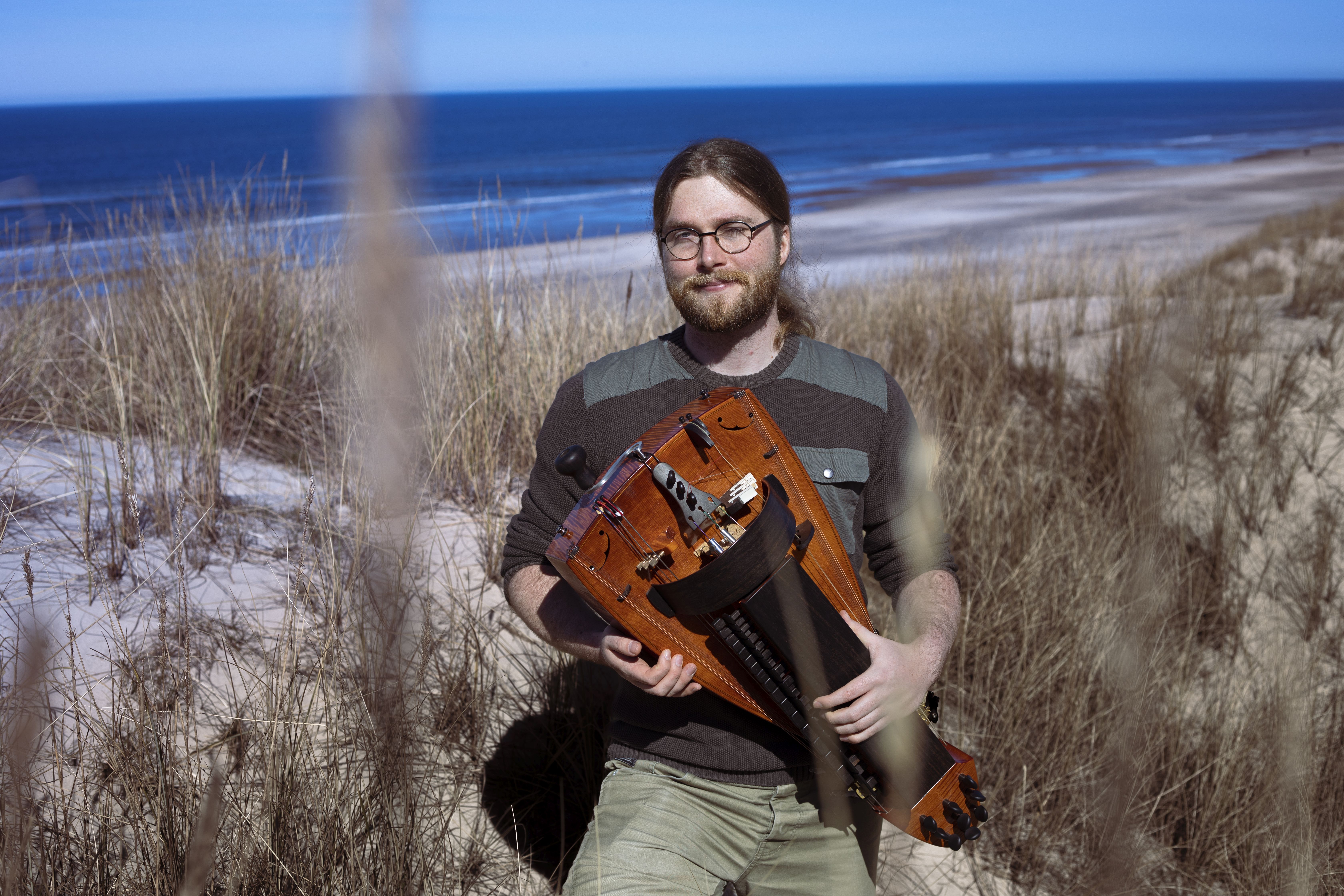
Christian Mohr Levisen Interview Image by Siri Anna Flensburg
The reverse can also be the case, this is much harder and rare in my experience, but you can also combine two musical elements that are fundamentally different in some way, and the collaboration grows out of the strong contrast.
KM: Working with Ossi on ‘Jegeje’ reminded me one more time of the importance of listening, and the beauty of making space for each other.
My drums, the nyiduonge from Western Kenya, are made from cowhide and recycled barrels. They would detune quickly because of the cold weather in England, and every night, Ossi would tune his bodhran to my drums. This is a beautiful practice of musical empathy which is much reflected on ourselves as human beings and how we should co-exist together.
Being exposed to the richness of the world of animal sounds can be an intense experience. How has listening to animals changed your views on various topics?
CML: I had very limited experience with interspecies music, but it is an immensely fascinating field that my eyes have been opened to.
For me the most interesting part is recognising patterns in the sounds, rhythmic, phrasal, formal. Learning to listen to it on its own terms, not putting it in a procrustean bed made from, for example, Western classical music. And then from there trying to mimic it and all its nuances. In my opinion it is a question of being able to look at it without any presuppositions.
If there is one thing that has changed for me during this, it is that I have yet again come to realise how much of music is culture-specific and learned.
KM: In Making Tracks, I was particularly exposed to seals and whales, which I'm quite unfamiliar with. Coming from Kenya I’ve mainly interacted with the sounds of cows, goats and insects; animals that live on land. To hear the sounds of whales and even hear melodies within their calls has further proven to me that nature is our first composer, and the greatest musician!
Witnessing Helen Anahita Wilson at work, a sound artist who makes music from plant biodata, was absolutely incredible. To hear sound is to hear life.

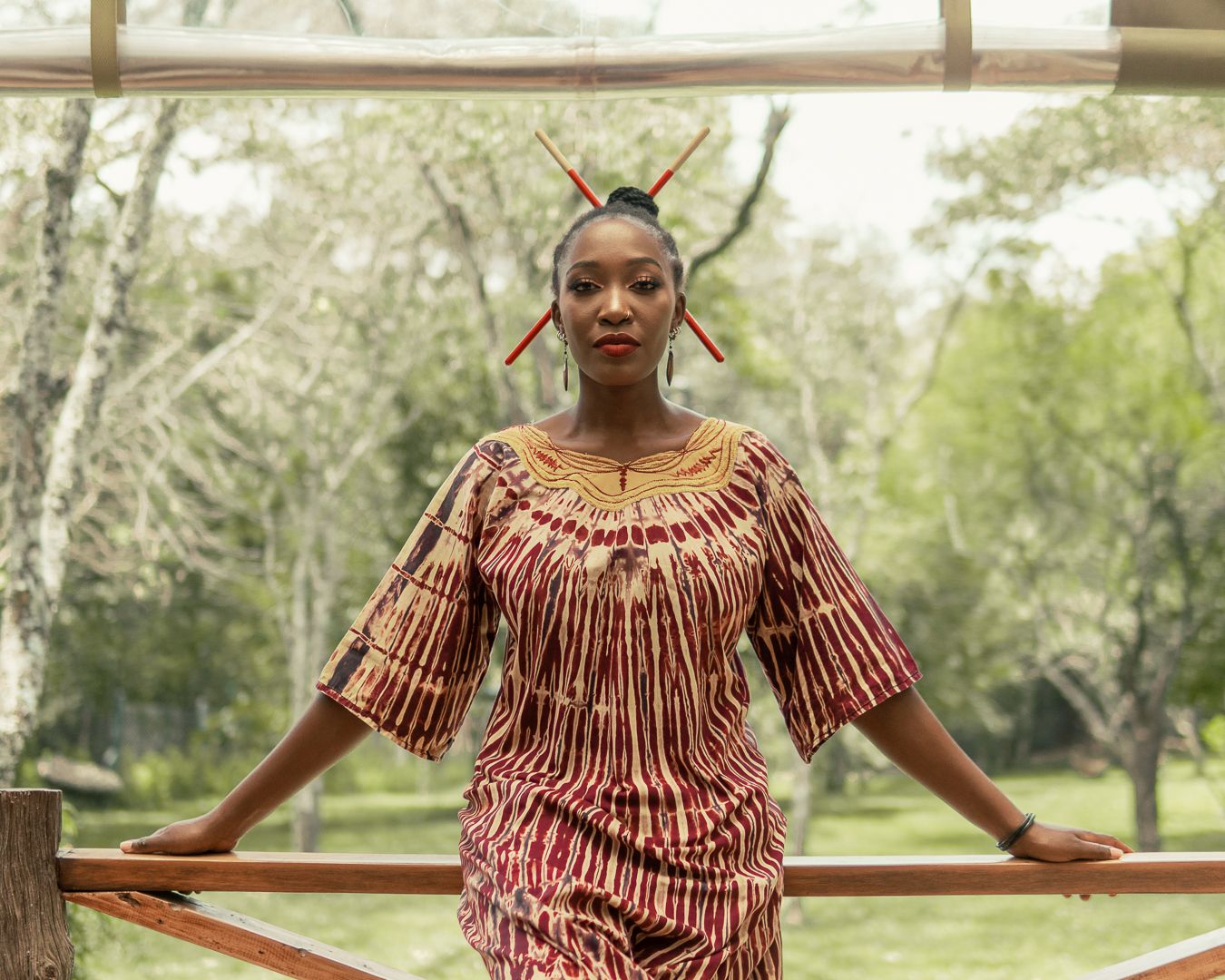 Kasiva Mutua Interview Image (c) the artist
Christian Mohr Levisen: "You learn so much about your own tradition when you see it reflected in others."
Video