

Part 1
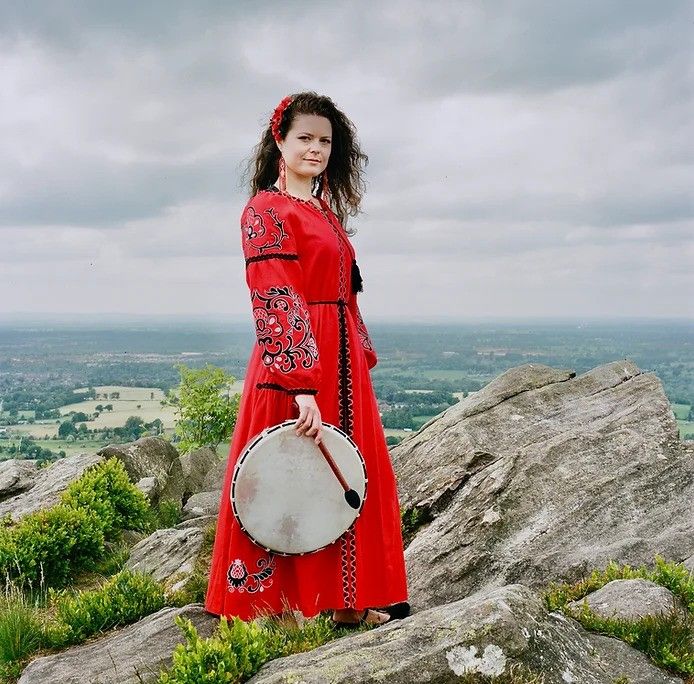
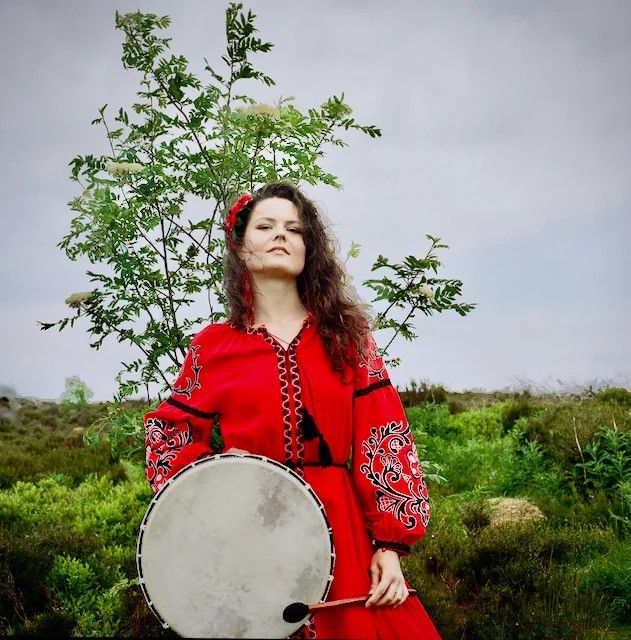
Name: Karolina Wegrzyn
Occupation: Musician, singer, music teacher
Nationality: Polish, UK-based
Current event: Karolina Wegrzyn is among the artists performing at the Musicport Festival 2024. Under the headline of “A Magnet for World-Class Musical Diversity,” the festival will take place at Whitby’s landmark Pavilion - Friday October 25 – Sunday October 27 2024. Get tickets here. Other acts at the event include Afro Celt Sound System, Chahat Mahmood Ali Qawwal Group, Divanhana, Fulu Miziki, Rokia Koné, Qadasi & Maqhinga, as well as Jah Wobble and The Invaders of the Heart.
Current release: Karolina Wegrzyn's full-length Oy Vesna Krasna is due soon. The first single off the album is “Rozczesała Rozpuściła (Wedding Song).”
[Read our Rokia Koné interview]
[Read our Divanhana interview]
[Read our Qadasi & Maqhinga interview]
If you enjoyed this Karolina Wegrzyn interview and would like to know more, visit her official homepage. She is also on Instagram, and Facebook.
Do you think that some of your earliest musical experiences planted a seed for your interest in your voice and singing? How and when did you start singing?
Certainly! I always loved to sing and dance around the house ever since I remember. My family was musical and artistic despite not having opportunities for education in those areas.
My grandmother was the primary influence in my life, we always sang and danced together. Those are also my fondest childhood memories, she was always full of joy and energy. When she was younger, she set up a folk dance group in our village, they started around 1950s, all the way up to 1990s. Those were very hard times in Eastern Europe, people lived in poverty and fear, but they had each other. Together with local youngsters, they performed traditional songs and dances from our region, Przeworskie in Subcarpathian vovoidship, South Eastern Poland.
My parents met in that group. My father’s dream was to be a musician and a footballer, but his family was too poor and isolated from any opportunities. He told me he used to walk barefoot in the winter to get to a dance party in another village. When Communism collapsed, free Music Schools started opening, so he signed me up for piano lessons. And that’s how it all started.
If you're also playing other instruments, how does the expressive potential of these compare to your own voice?
I definitely feel that I can express myself most through singing; I play instruments for accompaniment. I don’t consider myself a great instrument virtuoso, but I feel honoured to perform with amazing musicians here in the UK.
I play the piano, accordion and a Polish hammered dulcimer, but I prefer to share stories enchanted in songs, especially traditional ones not only from my native country. They are the most beautiful things in the world to me; I often cry when listening to archaic tunes; they tell the deepest truth about life. Some are full of sorrow, others full of joy and energy - just like the most important things in our lives.
I feel so thankful to be able to know and perform those songs; I feel responsibility and gratefulness for sharing the heritage of my homeland.
Singing is an integral part of all cultures, and traditions. Which of these do you draw from – and why?
My home village was where I first encountered performing arts. When I was a teenager I joined a music group in the nearest town. Sometimes if I couldn't catch the bus, I cycled 11km through plough-fields there and back at night. It was there where I was first exposed to folk music from other Eastern European cultures. I fell in love with Balkan and Roma people’s music - their rhythms and soulfulness just force you to dance.
Later I also became fascinated with singing of my neighbours from Ukraine and Łemko (Rusyns) from North Carpathian Mountains. During the "Operation Vistula" in the late 1940s, Rusyn people have been brutally resettled from their homelands by the army of the Communist regime. Their folk traditions, language and music was what kept their identity alive. Nowadays they proudly present their songs at various festivals throughout Poland.
Singing is part of people’s identity; their songs are inseparable factors of important rituals, from weddings to funerals; or celebrations of seasons and crops. There wasn't a year without a harvest festival in my village, or Christmas without caroling. My recording debut is a song for a specific part of a Polish wedding - the unveiling and cutting the bride's hair as a transition into a married stage in life:
My upcoming debut album Oy Vesna Krasna is a mixture of songs from different cultures. There are songs from Poland, Carpathian minorities, Ukraine and Macedonia. I also often sing traditional Roma songs of Northern Carpathian Mountains. Those songs are just too beautiful not to share them!
What were some of the main challenges in your development as a singer/vocalist? Which practices, exercises, or experiences were most helpful in reaching your goals – were there also “harmful” ones?
In Poland there was, and definitely still is, a huge gap of opportunities in arts available for children born in towns or cities and children from the villages - this was the most harmful thing.
There are as many different methods and techniques of singing as there are people on Earth. And also, there are many not very good singing teachers; at one school I was discouraged from performing because I wasn't interesting enough. I feel very grateful for the music education I received, however in terms of singing - there wasn't much available to me.
I had to discover myself in my own way, it was a journey of experimenting and self-discovery. When I became fascinated with traditional Ukrainian singing styles, I searched for workshops in other parts of Poland; discovered some fascinating and fun exercises, for example running around pretending to be a "Zombie". Even today I still attend various choirs and singing camps where I always learn something new, even if not from the teacher but from another participant.
The one universal advice everyone always give is to take a deep breath from the bottom of your belly, or even lower; never produce the sound just from your throat.
Our modern lives are very different to what they were 50 years ago, even in the countryside. People don't sing much these days, most jobs and chores are based on sitting; children in schools are told to keep quiet most of the day; from a healthy voice point of view this is not helpful. Elderly people from my village sing louder than youngsters; when they worked in the fields with loud machinery next to them - they still had to communicate; or when they danced in crowded taverns - they had to shout to each other.
How do you see the relationship between harmony, rhythm and melody? Do you feel that honing your sense of rhythm and groove has an effect on your singing skills?
I think it comes naturally with emotions, with the story of a song. I only perform songs I love, I sing straight from my heart, otherwise there is no point. If it’s an upbeat song I unconsciously start dancing at the same time, they’re inseparable!
In traditional music, tunes and songs to dance to are a huge part. I often attend trad dance parties in Poland, where the band will completely stop playing in the middle of a performance just to sing, often the dancers join in - it’s an amazing experience!
There is also archaic polyphonic group singing in some Eastern European countries, particularly in those where Orthodox or Greek Church was a primary religion. When you hear or sing with those groups - it’s like entering a different state of mind, it’s magical!
You should listen to groups such as Drevo (Ukraine), Werchowyna (Poland) or Bulgarian Voices - absolutely incredible!
How would you describe the physical sensation of singing? [Where do you feel the voice, do you have a visual sensation/representation, is there a sense of release or tension etc …]
Singing and sounds are made from vibrations in our bodies; I feel those vibrations in every part of my body and mind.
This is useful from a technical point of view when warming up. I often close my eyes and imagine I'm a on a flowery meadow or in the woods hugging the trees, bees buzzing around me; or that the sun is warming up my face.
We have this exercise with the choir, one person gets in the middle of the circle, sings or just listens to others singing around; when you're that person in the centre you really feel those vibrations, then emotions - joy and a wonderful connection.