

Part 2
Have there been technologies which have profoundly influenced, changed or questioned the way you make music?
Ten years ago I would have said the computer. But now I would say modular synthesis.The trap of the computer is the visual influence. It can be quite distracting from what you’re actually hearing. Don’t get me wrong, it’s an incredible tool that can help overcome many problems but it can also get in the way sometimes. It depends on your process of course.
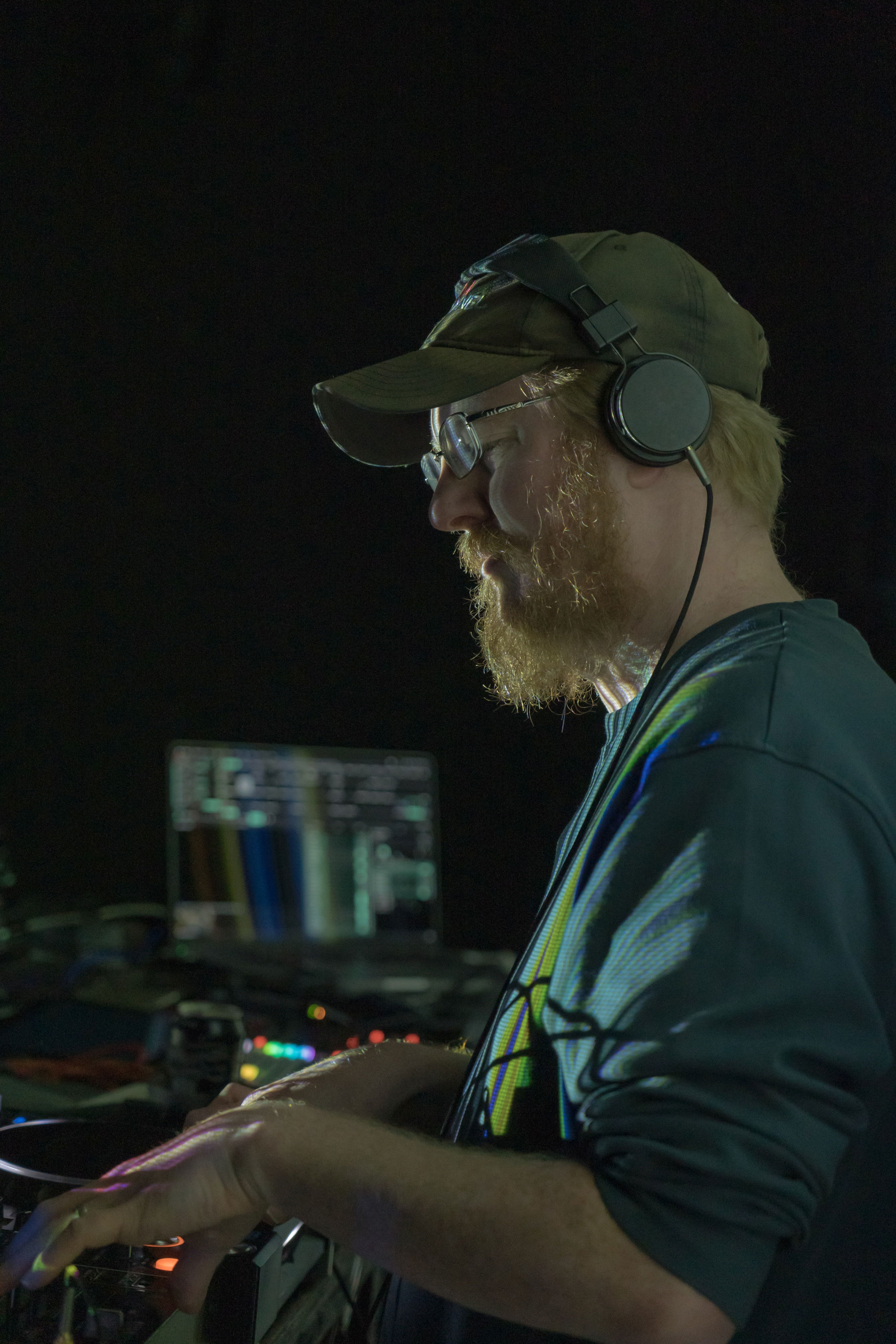
The great thing about modular synthesis for me is the tactile element combined with the absence of a screen. Well, a screen of overpowering influence at least. Also, I can take one of my cases into a different room and just noodle about without an agenda. This very often leads to a good idea and I end up grabbing a recording device to grab a jam or a laptop to get the individual parts if needed.
The more I’m just using my ears the better I feel about the music I’m making. Like I have more trust in what I’m doing. That might sound obvious - but if you’ve been making music on a computer for as long as I have then you’ll probably know what I’m talking about.
Already as a little kid, I was drawn to all aspects of electronic/electric music but I've never quite been able to put a finger on why this is. What's your own relationship to electronic sounds, rhythms, productions like – what, if any, are fundamental differences with “acoustic“ music and tools?
I was born in ’79 so the sounds of the 80’s were a massive deal for me. My parents listened to stuff like Michael Jackson, Fleetwood Mac, Yes, Genesis, Pink Floyd, Kate Bush, Van Halen etc. The production on this stuff was always just as important as the music itself. It stamped an identity on it and gave a chronological reference point, so much so that when I hear these songs it takes me back to when I first heard them.
[Read our Steve Hackett of Genesis interview]
All that interesting sound design that Trevor Horn was doing. I didn’t know at the time how important people like that were, how pioneering they were, but now I do. How it shaped my aesthetic as I moved into my teenage years and actually started buying music for myself.
[Read our Trevor Horn interview]
[Read our Trevor Horn interview about the Balance between Song and Arrangement]
I was obsessed with drums, guitars and aggressive music. So quite early on I got into metal, hardcore and punk. Speed and technical proficiency was a thing but the record had to sound good. I remember hearing Machine Head’s Davidian for the first time and thinking I had to get my guitar to sound like that. So I started to learn about gain staging, tone, pedals, amps and speakers etc.
It wasn’t until later, when all my electric guitars had been stolen, that I understood the intricacies and beauty of acoustic guitar and folk/world music. That you can’t hide behind distortion and effects. It’s just you and the instrument and you have to play with skill and feeling and if you mess it up there’s no safety net.
I think this is when I really became a musician.
Late producer SOPHIE said: “You have the possibility with electronic music to generate any texture, and any sound. So why would any musician want to limit themselves?” What's your take on that and the relevance of limitations in your set-up and process?
Sadly I don’t know SOPHIE or her work so I couldn’t comment on that ethos, specifically regarding her work as a reference to it. But I can say what I think about limitation. It’s vital! Well it is to me anyway. I need to challenge myself but also to limit myself so that I maximise my creativity.
For instance, I’ll say ‘can I make a track with just one machine’ or ‘how far can I get with just one instrument’. This stops me looking at it as a source of one or two specific sounds. A drum machine can be an awesome bass machine for example.
I think part of my reason for this comes from being frozen by indecision. Staring at a blank canvas with every possible sound available to me. Where to start? It can be overwhelming. This is more of a thing if you just make music in a computer but you can limit what plugins you use.
Some people have way too many and it can be debilitating. Jack of all, master of none etc.
From the earliest sketches to the finished piece, what does your current production workflow/process look like?
I guess quite often I start in the middle and work outwards.
I’ll spend some time working on a feature sound, something that is either the main event or the glue. From here I’ll try and get into the section I’ve just made or I’ll try to get out of it, continuing the process until I have a bunch of sections transitioning in and out of each other. Then I’ll zoom out and decide what’s actually good and move sections I’m less interested in to one side and focus back down on the thing that has caught my ear. So I’m curating myself as I go.
I learned to actually press stop and sit back in silence for a while. For me, listening to the same loop and trying to figure out where to go next can scupper the creative flow. Other times, if I feel suitably trapped, I’ll just move to a blank space and start a completely new idea using the same sound set. I like to record lots of passes in the clip window in Ableton so that I have a decent audio pool containing different melodic modulations and timbre shifts. I know I’m going to draw on these later down the line and it’s better to grab them at the start while it’s all still fresh and exciting.
The jamming and arranging heads are different beasts so I try to keep the arrangement head away from the jamming head for as long as possible so that it doesn’t lead the process until it’s actually necessary. However I do seem to mix as I go but it’s a fluid part of the creative process and doesn’t get in the way as I’m not doing the surgical stuff yet. That comes later.
Rhythm, sound design, melody/harmony, something else – when do the different elements of a piece come into play for you?
There’s no fixed method for me here. It depends where I start.
In relation to sound, one often reads words like “material”, “sculpting”, and “design”. How does your own way of working with sound look like? Do you find using presets lazy?
It depends on the instrument or machine. The interface can dictate the outcome. How I play with the Peak is totally different to the MS20. I can dive into the Peak and really make something complex and evolving in multiple dimensions. The MS20 is more immediate and expressive and because of that I come at it as more of a musician than a sound designer.
I tend not to use plugins unless they are for mixing or production purposes. It comes back to that challenge of limitation again. How much can I get from one bit of gear etc. I have a bunch of hardware and instruments so I feel I have to justify having all this stuff lying around.
Plus I’m just generally curious about how things work so I don’t really find myself using presets unless I’m in a massive rush to get a melodic idea down or something.
What, to you, are the respective benefits of solo work and collaborations and do you often feel lonely in the studio? Can machines act as collaborators to you?
No more than a hammer is to a carpenter. I’m under no illusion about what machines are. The studio is a lonely place if you are a solo artist and I’ll be honest, I’m desperate for collaboration and interaction so I’m often seeking it out. I envy visual artists as at least they can listen to music or a podcast as they work.
My days are often solitary with intense concentration and this takes its toll week after week. Having a family obviously breaks this up but yeah, mental health is a thing. Loneliness is a thing. I’m a social person at heart so I’ve made really positive steps to remedy this by having a new band, A Brief Utopia, which is sounding great (EP out on Scene Unseen and album immanent on Earthly Measures).
We rehearse every Tuesday at my house. Six piece madness. I’m also doing a regular electronic music jam with some friends. There’s normally about eight of us in this great space in Leeds. Shout out to Open Source Arts.
There are other collaborations upcoming and I started my own label, Making Friends, as both a way to release my own music but also as a prompt to work with others. Hence the name.
To some, the advent of AI and 'intelligent' composing tools offers potential for machines to contribute to the creative process. What are your hopes, fears, expectations and possible concrete plans in this regard?
I think (and this is obviously just my opinion but …) people will eventually get sick of it and crave human authenticity just as people are now starting to wake up to the harms of social media, doom scrolling and phone addiction. What’s the point of art if it’s not a reflection of the human condition? It’s a mirror to society.
I know you could argue that AI is becoming part of society therefore it is part of the reflection. But the digital world is so massively corruptible and in turn I believe it will ultimately corrupt our humanity unless we recognise it for what it is. When we lose control, and we will unless we pay attention, I doubt we’ll ever get back what we lost.
I know this sounds alarmist but you only have to look at recent history to understand how massive societal shifts can happen when profound technologies are introduced: the printing press, radio, television, the internet. Or look at it another way: the bow and arrow, gun powder, tanks, ICBM’s … it only takes one bad actor to use it in a negative way, if indeed it doesn’t figure out how to do so itself.
Still it could make a great baseline right? Maybe you can get that dream vocal you always wanted. If making music becomes so easy that all you have to do is write a prompt, then what’s the point?
If you could make a wish for the future directly to a product developer at a Hard- or Software company – what are developments in tools/instruments you would like to see and hear?
To stop re-inventing the wheel and for Behringer to stop ripping people off.