

Part 2
What was your own learning curve/creative development like when it comes to improvisation - what were challenges and breakthroughs?
I just like to improvise. It feels very much like an expression of my life experience and I gravitated to it at a very young age. Improvisation to me felt like freedom within and an opportunity to respond to what I heard and felt. There is no other part of my life that exists in the same way. My day to day life is organized and fairly structured based on the demands of my time. I’m improvising within that structured life time too, but it is a very different feeling.
The challenge for me within improvisation that I work to improve is the ability to tell a story and create an emotional connection. For me improvisation is so much about finding that emotional presence and awareness with the confidence to express it.
The major breakthroughs for me have come from playing with improvisers who are on such a high level and feeling their story telling. Drummer Andrew Cyrille once made a comment to me about improvising: “… just breath and listen.” That is some sage advice from a master. When I started to own that idea, I could come into more of my own.
When I think about the recording Live in Carrboro I did with Matthew Shipp and Ivo Perelman earlier this year, that is completely improvised. We don’t talk about the music and there is no prep, we just go and play. Our dynamic feels like a natural conversation to me. That idea of improvisation as conversation and playing within that conversation was such a huge lesson and breakthrough for me.
Derek Bailey defined improvising as the search for material which is endlessly transformable. Regardless of whether or not you agree with his perspective, what kind of materials have turned to be particularly transformable and stimulating for you?
Derek’s idea of searching is very close to the way that I look at things and have been taught to look at things. It comes down to how you value what you have within you to create.
I could hit the same cymbal four times in a row with different intent and each time it would feel and sound different to me. The vibrations within my body would react differently each time.
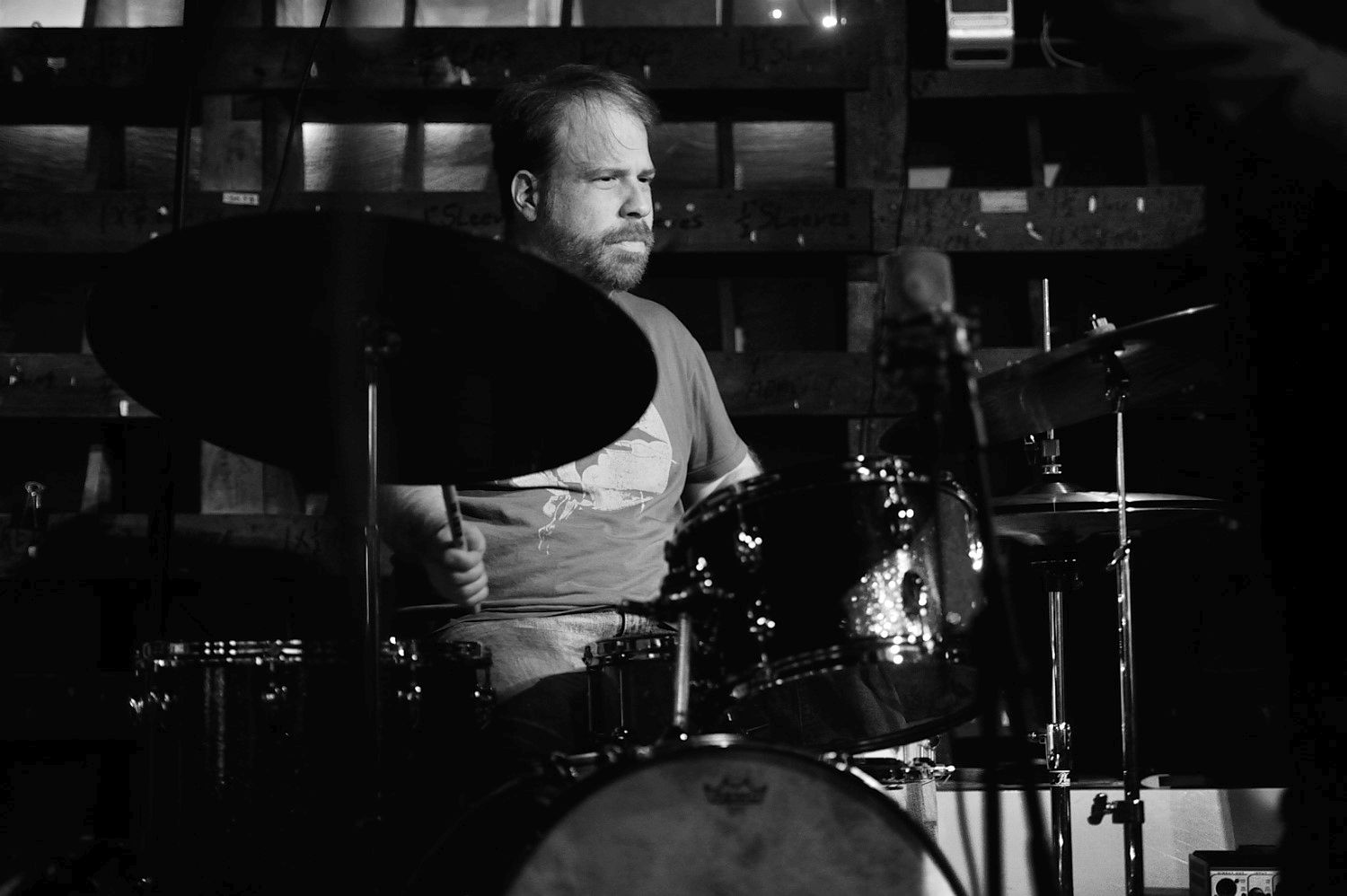
I love to express sound. With my drums, I use the same basic set of instruments every time – 4 drums, 3 cymbals, sticks, brushes, mallets, my hands; it is up to me bring it to life through my transformation of the sound presentation.
To you, are there rules in improvisation? If so, what kind of rules are these?
I think the only rule for me in improvisation is listening. Without listening, it just feels like an ego experience running amuck.
Not to say, this is cool or this isn’t cool, but for me, I want that experience of conscious listening and conversation within improvisation that I participate in as a listener and/or musician.
When you're improvising, does it actually feel like you're inventing something on the spot – or are you inventively re-arranging patterns from preparations, practise or previous performances?
When I’m improvising and in the flow of the music, I am creating on the spot. It is as though the music bypasses my brain and there is no conscious thought, I am totally consumed by that musical moment and it is just happening. I love that feeling and want more of that feeling in my own life.
There are definitely patterns that appear in my playing but they’re not consciously put in any particular place, they just seem to come out in the music where they need to. Understanding and knowledge give you freedom and I work to apply that within my musical improvisations every day.
From many conversations with musicians, improvisations seems to be both about forgetting and remembering. With regards to this balance, where is your own focus when it comes to performing and listening?
For me, it’s about both remembering and forgetting while being present. They both can exist simultaneously within a single moment. So much of it revolves around being within the flow of the conversation happening and listening.
It all comes back to listening for me so I can remember and forget.
Do you feel as though you are able to express yourself more fully in solo mode or, conversely, through the interaction with other musicians? Are you “gaining” or “sacrificing” something in a collaboration?
I can most fully express myself within a group collaboration and feel the most part of a whole. I’m not a fan of my own soloing and while I solo as part of the musical experience, I have to imagine myself in part of a duo with the audience.
I get weirdly self-conscious when I solo and have a hard time maintaining that through-journey. There are so many great musicians that I love to hear solo because they just are captivating – Andrew Cyrille, Joey Baron, and Matthew Shipp are a few of my favorites.
I like to be part of that collective sound. My playing seems to be more of a supportive nature and being part of a full expression through a collective. If I’m playing solo, there is too much of my internal thought process that goes into it, it’s hard for me to let go.
In a live situation, decisions between creatives often work without words. How does this process feel like and how does it work?
This is really about how much trust the musicians have with each other. I’m really fortunate to lead most of my groups or play in collectives that have a very similar mindset.
The less we talk about, the more open to the moment we can be in my opinion. If everyone is listening, lets go of any kind of expectation, and we show up to make music together, it’s all going to be cool or a really fun disaster story. So much of this evolves through the hang before / after the performance and just living some life together. As trust develops and everyone is listening in everyday life, that then gets transferred to the creative process.
I want to open up more so I can help people feel more comfortable to bring the best of themselves into the music.
How do you see the relationship between sound, space and performance and what are some of your strategies and approaches of working with them?
The ideas of space and sound are the cornerstones of my approach to performance and improvisation. I love to hear the end of each note that I play.
It is an idea I got from drummer Jeff Ballard who talks a lot about the width of sound that is produced within a performance. How notes end are like how words end in a conversation. The space creates drama and intensity. It gives you an opportunity to pull the audience and collaborators into you. You have to hear that space within your internal sound, as well as, your external sound.
When I hear how drummers Paul Motian or Joe Chambers create so much intensity by letting the end of their notes die out into silence before coming back in, I just get so excited. There is a comfort and calm that happens with an intensity and little anxiety that happens within the space. It feels freeing to have all of those things co-exist within this microcosm of a moment.
In a way, improvisations remind us of the transitory nature of life. What, do you feel, can music and improvisation express and reveal about life and death?
The moments I am in my music and improvisation, if I’m playing or listening, I feel like my truest self. When I am connected to that flow, intrusive thoughts get quiet and I can be free. It is a rare beauty and something I am trying to take these tools that have emerged within my music and work to apply them into my everyday life. It is about not taking things for granted, being present, and showing up for others – that is what I want to express with my music and in my life with others.
When we are alive, there is a deep sense of the vibration that makes up all of our lives, music brings a greater awareness of that for me. How we attune ourselves to that vibration helps us balance.