

Part 2
Take us through a day in your life, from a possible morning routine through to your work, please.
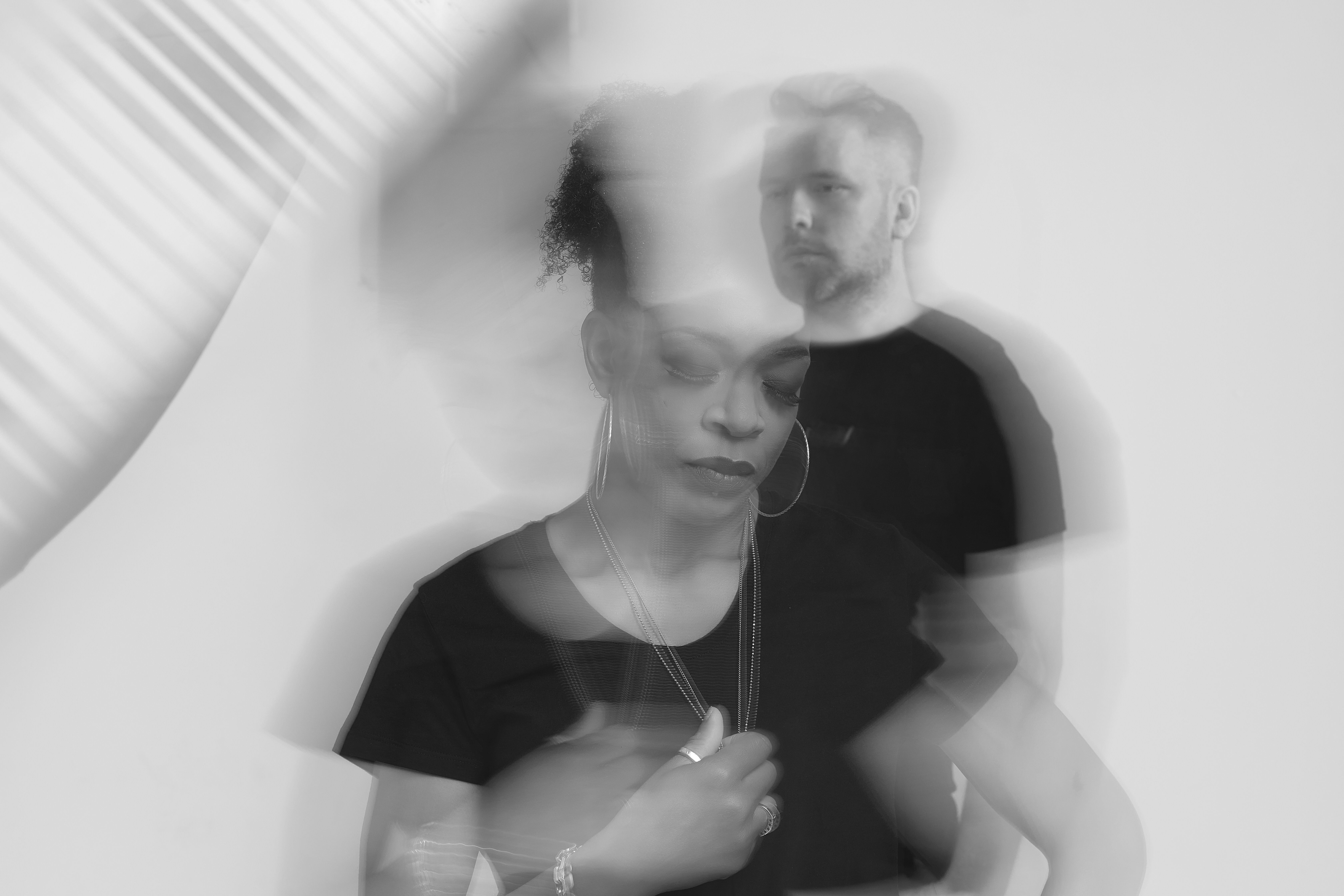
Charlie & Isha: If Charlie isn’t gigging or on tour, it’s nothing ground-breaking. We both like a decent coffee in the morning and then most of our work is done from home, as the studio is here ...
With how the industry has gone, both our days consist of several jobs; production, mastering, events, running a record label and The Degrees - There’s always a bunch of plates spinning.
Could you describe your creative process on the basis of a piece, live performance or album that's particularly dear to you, please?
Charlie: The track "Nothing Else" from our album is a good example of a track I really enjoyed making.
Starting from a rare random sample found in the basement of a record shop in Bristol that sparked the idea of a groove. Isha laying down her vocal took it to a next level, and then layering up stacks of harmonies is always something I really enjoy.
Isha: The process of making 'Of The Night' was a bit different to some of the other tracks on the album.
I wrote a demo version of the track in my studio complete with vocals and backing track. I sent this to Charlie and he liked the track enough to have it on the album. I gave him the stems along with a list of things I wanted him to add to the track. He changed the bassline and added some strings, Mason (our guitarist) recorded some amazing guitar parts. I re-recorded the vocals and additional percussion.
Listening can be both a solitary and a communal activity. Likewise, creating music can be private or collaborative. Can you talk about your preferences in this regard and how these constellations influence creative results?
Charlie: They both have their pros and cons, and I’ve done a lot of both. I couldn’t really say which I prefer, it really is apples and oranges.
The freedom on your own to create whatever you want, with no compromise or disagreements is really liberating. On the other hand, bouncing ideas off other people, getting input and talent from collaborators is amazing and the comradery of nailing something together is awesome. Same thing applies to listening too.
Isha: I like both, I find when you collaborate you have to compromise, but in doing so, you create something completely unique. I love creating by myself as anything goes.
How do your work and your creativity relate to the world and what is the role of music in society?
Charlie: Having Dj’d in clubs for 20 years, the release and positive mentality that a crowd enjoying music can have is often amazing and really feels like an essential human need. But the same can be said for music in your headphones getting you through your day. Obviously, the message in music can be so important and inspiring to people too.
I can’t imagine life without music, it really is a barrier breaking miracle for humans.
Isha: I take my experience of the world and I channel it through my creativity. A lot of my songwriting is almost like therapy where I make sense of my emotions.
The role of music in society is to allow people to experience the feelings of the artist in a safe space.
Art can be a way of dealing with the big topics in life: Life, loss, death, love, pain, and many more. In which way and on which occasions has music – both your own or that of others - contributed to your understanding of these questions?
Charlie: It’s hard to pinpoint any specific moments or pieces that align to an occasion from memory. Even though there are lyrics that mean a lot and stand out to me, I’m more tuned in to the music element myself.
For me music is more of an accompaniment to those moments’ life in the way that it is in a movie I guess. And as in a lot of good movies if you took away the music you probably wouldn’t cry.
Isha: Whenever I have a problem or an issue, I put pen to paper. I try and write in an ambiguous way, so the song is relatable to as many people and situations as possible.
How do you see the connection between music and science and what can these two fields reveal about each other?
Charlie: For the House music we make our band name is Degrees Of Freedom, which came from watching a documentary about string theory.
Vibrations play a key part in science and music so on a fundamental level they are both intertwined. We’ve always found that intersection interesting. I guess they can reveal the importance for balance of intelligence and emotions, both important aspects of human existence.
Isha: For me they are totally relatable, music is frequency and frequency can be measured by science. Everything is made up of vibrations, we're all vibrating at different frequencies and sound waves can have an effect on your body and mind.
Creativity can reach many different corners of our lives. Do you feel as though writing or performing a piece of music is inherently different from something like making a great cup of coffee? What do you express through music that you couldn't or wouldn't in more 'mundane' tasks?
Charlie: In another documentary about creativity, I learned the theory that slightly altering the execution of a mundane task can lead to more original creative choices later in the day. It’s something I try to remember to do.
On the other hand, I’m a big fan of mastering and perfecting a technique to achieve the best results. I guess once mastered you can then play around with that technique, but with music it always feels like there’s still a way to go.
Isha: It might sound pretentious, but any form of creativity whether that be music, engineering or literature is the highest form of human expression in my opinion. Creating something out of nothing is really difficult and it's something I find really challenging but also rewarding.
Music is vibration in the air, captured by our ear drums. From your perspective as a creator and listener, do you have an explanation how it able to transmit such diverse and potentially deep messages?
Charlie: Short answer no! It still seems like a miracle … in the same way that sound coming off a tape or record does to me. The combination of those frequencies and harmonics does stuff to humans, I’d love to know why … but I’m also still happy not knowing.
Isha: I think it's a combination of emotion, sentiment and intention. As a creative, you have these things in mind at some point when you make a track and they become embedded into it. Everyone experiences music in a different way and depending on your mood or situation etc. you may perceive these objectives at some point.
That's the wonder of music, you can experience the loss expressed within a piece of music without knowing the story behind it.