Name: Zoe Kypri
Nationality: British
Occupation: Singer, songwriter
Current release: Zoe Kypri teams up with 40D and MSHU for "Holding On," out via Sondela.
Recommendations for London, UK: Go and check out Ronnie Scott’s.
Things that I am passionate about but rarely get to talk about: Sports and the gym are huge parts of my life. I think people were shocked that I have ended up choosing music over sport but it doesn’t mean it isn’t still a huge part of my life. I am fortunate to have a lot of family and they are my why mostly. I am big on meditation and Ram DAS's “here and now” podcast has got me through the last 10 years.
If you enjoyed this Zoe Kypri interview and would like to stay up to date with her music, visit her on Instagram, Facebook, and bandcamp.
When did you first consciously start getting interested in singing? What was your first performance as a singer on stage or in the studio and what was the experience like?
Perhaps I was 5.
There was a small group of us huddled in a circle singing a popular song at the time and I was the only one who could sing the ‘big part’. They would ask me do it each time we would sing that song.
I think that was the first time I felt that pull.
What was your first performance as a singer on stage or in the studio and what was the experience like?
I was no older than 6 at Coppermill, Walthamstow. After all fall on stage in a play, I was afraid to go on stage alone.
When I joined my second primary school Selwyn, I joined the school choir, led by Miss Mcardy. She would stand by me a lot longer than she would the other kids and listen. And by the 5th or so choir rehearsal she picked me out to sing a few lead lines and really encouraged me. I still hid at the back at this time.
Shortly after that I started going to a drama club on a Tuesday night and the lady who ran the choir there, Nicola Bright Thomas, gave me my first ever full solo that I performed alone on stage with a mic. She has played an instrumental part in my life ever since.
Fortunately, I had people around me encouraging me through the stage fright the few times I did get on stage then. My mum put me in every environment she could do as she wanted me to find my thing. I felt the fear and did it anyway as I did feel the pull massively.
If you're also playing other instruments, how does the expressive potential of these compare to your own voice?
I can only play a few chords on the guitar, but I have written hundreds of songs with them. However I’ve never felt limited by that.
I feel so free when I am playing and singing. The complete control over the phrasing and the tempo. Not having to try and telepathically let your producer know what you need in that moment. I mean, I’ve been extremely fortunate to work with people who I feel can actually read my mind somehow but there is a real peace in creating alone. It’s my favourite way to create.
Despite not being the great at guitar it is such a companion when I’m writing.
Singing is an integral part of all cultures, and traditions. Which of these do you draw from – and why?
It brings people close and unifies. It’s an avenue to god I feel. That’s where the magic is. Its undeniably powerful. I think that’s how somehow people form idols out of the artists themselves as that feeling can be confusing when it moves you so much.
When there is an intention behind the vibration that creates the sounds we make, healing can really take place. I’ve even witnessed that healing even when people are not consciously seeking it. Watching complete strangers become friends shouting loud in a pub. Down the Football. All sorts.
You’re locked in. I love including chants in my music. My song “I am enough” really leans into what I’ve spoken about here.
What were some of the main challenges in your development as a singer/vocalist? Which practices, exercises, or teachers were most helpful in reaching your goals – were there also “harmful” ones?
I assumed louder was better when I started out. Understanding that forcefully pushing a note not only damages your voice but sounds tighter, compared to less force, more control with proper closure.
There’s no story when you start at 100 out the gate. I had to learn to trust my journey when being witnessed. Relaxed. Sliding E’s really helped me with my closure. Also Lucinda Allen taught me about re-learning primal sounds. That’s helped me massively with vocal closure too. As an alto I’ve also accepted my range and I’m good dropping a key now. There's no shame in that.
That’s my advice. Play the cards you’ve been dealt. Not the ones you wish you had been. Lean into your tonality and storytelling always as that’s where your soul and the feeling is.
Even now sometimes if I’m on stage and I am super excited or really vibing with the crowd I will have to be so so conscious to not get carried away and push hard which sometimes lands and sometimes doesn’t aha. It’s easier said than done but I do my best to stay relaxed and in the calm feeling.
Stay hydrated, nebulise and warm up proper. Also alcohol and cigarettes can be fine for some people but that doesn’t mean your voice is going to be okay with them.
What are the things you hear in a voice when listening to a vocalist? What moves you in the voices of other singers?
Tonality. Intention. Vulnerability and power in equal measure. Someone who is not afraid to take their time and be seen. Storytelling gets me. Rich tones.
Singers like Luther Vandros, Sade, Franky Beverly, Mary J, Lisa Fisher, Imaani Saleem, Madison Ryan Ward, Ǫendressa.
We have a speaking voice and a singing voice. Do these feel like they are natural extensions of each other, ends on a spectrum or different in kind?
I feel they are so connected.
My talking voice changes a lot depending how relaxed I am. If I’m super excited, anxious, auto pilot or tense my talking voice seems higher to me. Tighter, higher larynx.
If I’m relaxed and calm / comfortable with the person, my voice is lower. My larynx feels neutral. Same goes for when I’m singing.
As a singer, it is possible to whisper at the audience, scream at the audience, reveal deep secrets or confront them with uncomfortable truths. Tell me about the sense of freedom that singing allows you to express yourself and how you perceive and build the relation with the audience.
The songs always come first. And they are never created with the audience in mind. My writing is an extension of me. (I won’t take the credit as still to this day I feel they are things my antenna gathers from the ether.)
I am willing to pour my soul into my music, the delivery and the lyrics as it is healing for me. It gives me best from this world while allowing me to fully experience and embody it, wholeheartedly. It is in my showing up that the rest follows.
The performance comes last. The audience can only meet me where they’re at and I never expect anything from them. Applause is nice of course but I mostly want them to feel okay about feeling and being.
I'd love to know more about the vocal performances for "'Holding On," please, and the qualities of your voice that you wanted to bring to the fore.
This song is about the thin veil between reality and dreams / imagination. The delivery needed to mirror that.
There are also parts of the song that some may interpret as a love song but I initially wrote it about how intense dreams can be. Visceral. Needing something to hold onto in time.
In the studio they expressed they wanted something relaxed and hooky that still had soul. I tried few different deliveries, but my mixed register worked best for this more dream like record. Toward the end I use my chest voice for the adlibs.
When you're writing song lyrics, do you sense or see a connection between your voice and the text? Does it need to feel and sound “good” or “right” to sing certain words?
Most of my songs come from freestyles. If I’m singing something deep I will try and convey that with my delivery. Pronunciation is important. As an east London girl it’s something I’ve definitely had to keep an ear on.
After I’m done freestyling, I'll listen through the voice notes and choose the parts that move me. Sometimes the whole song is there, sometimes there’s a few lines. There will always be a feeling that provokes where I take it. Sometimes I will write things down during my travels and they later turn into songs.
There's no right way for me. Mostly it’s to get something off my chest so I don’t think too much about the words until after. It’s more like a stream than bricks.
What's your perspective in this regard of singing someone else's songs versus your own?
I enjoy singing covers as the song takes on a new meaning depending on what you’re going through.
I really love singing other people’s songs. It can be fun to experiment with also.
Strain is a particularly serious issue for many vocalists. How do you take care of your voice? Are the recipes or techniques to get a damaged voice back in shape?
First of all, REST.
Stop forcing notes out. Learn how to get the bigger notes with a relaxed body and with real support and closure. And please don’t sing when you’re sick.
Nebuliser - straw exercises. And stop talking in loud rooms. And generally, try not to have too many social events around your big shows.
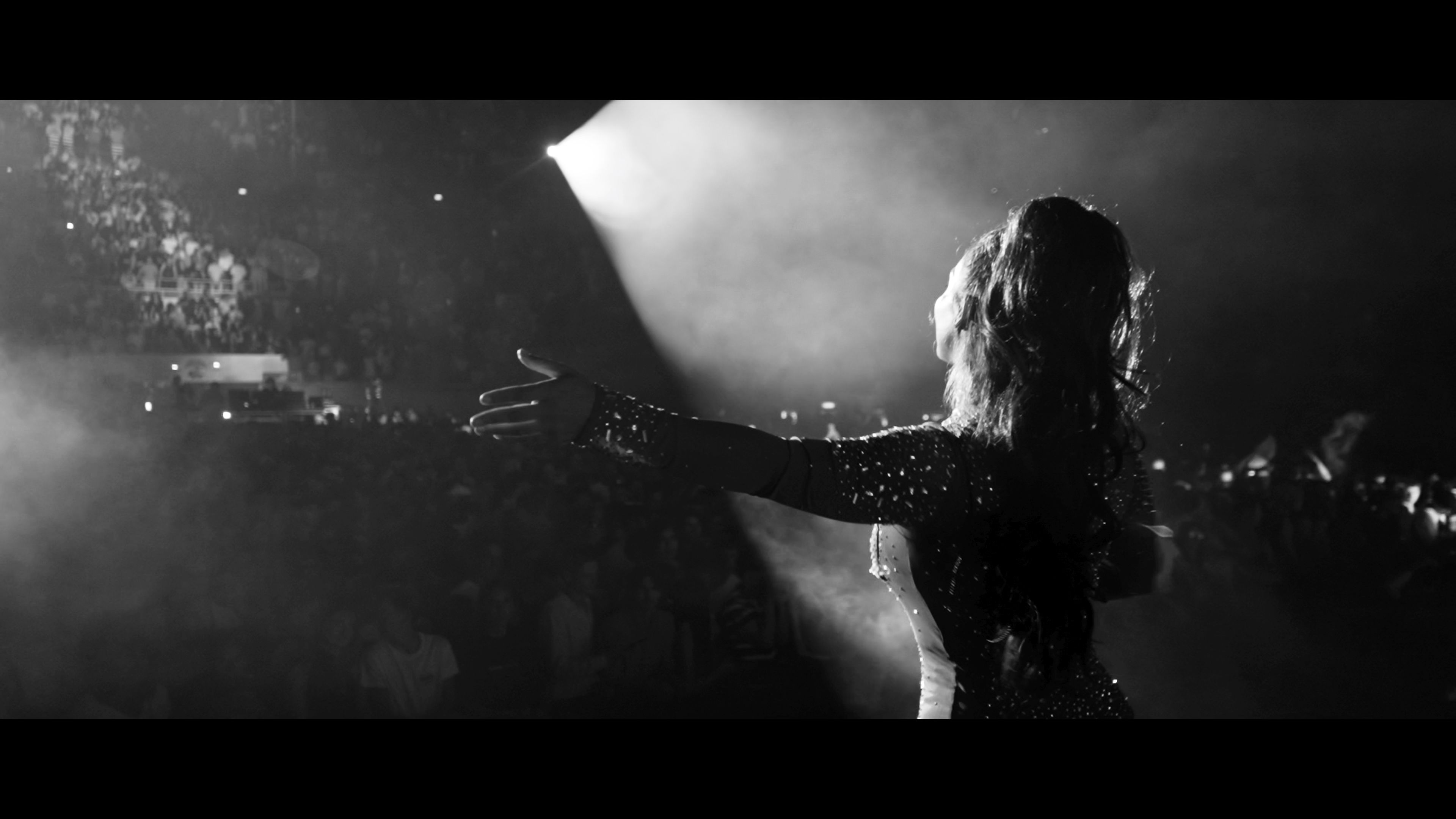 Zoe Kypri Interview Image by Archie Elliott
“When there is an intention behind the vibration that creates the sounds we make, healing can really take place.”
Video