Name: Zak Scerri
Occupations: Guitarist, composer, improviser
Nationality: Australian, UK-based
Current release: Zak Scerri's new album In Case I Don’t See You is out now. It features eight tracks composed by Zac and performed by him on guitar and a band comprising Ross Anderson (double bass), and Billy Pod (drums). Stream it here, or support him by buying a physical copy from his bandcamp store.
Recommendations: Painting - The Evening Star by J.M.W Turner; Song - DNA by HENGE
If you enjoyed this interview with Zak Scerri and would like to know more about his music, visit him on Instagram, and bandcamp.
Do you think that some of your earliest musical experiences planted a seed for your interest in improvisation?
Absolutely. I have always been drawn to live performances of bands because there is this energy you can’t quite capture in a studio and I think that comes from the fact that when you improvise live, there is no going back. You have to fully commit and I find that really exciting.
For me experiencing that made me want to be a part of it.
When did you first consciously start getting interested in musical improvisation? Which artists, teachers, albums or performances involving prominent use of improvisation captured your imagination in the beginning?
I think almost immediately I was consciously improvising and that comes from my drive to want to create.
In the early days of learning I loved watching and listening to live performances of Jimi Hendrix, Led Zeppelin and The Red Hot Chili Peppers. When they played live they really went for it with long extended solos and jams and I just wanted to be able to do that.
Later when I got into jazz that appreciation for improvisation deepened and a whole world of possibility opened up.
Tell me about your instrument and/or tools, please. What made you seek it out, what makes it “your” instrument, and what are some of the most important aspects of playing it?
I am a guitarist. It was a sound I was always drawn to and I’ve always gravitated towards guitar driven music.
In terms of important aspects, I’d say its essential to know the fretboard inside and out. Unlike something like a piano, the guitar isn’t a ‘linear’ instrument and that can be very daunting.
But deepening my understanding of the fretboard is always central to my practice and probably something with no end.
How would you describe your own relationship with your instrument – is it an extension of your self/body, a partner and companion, a creative catalyst, a challenge to be overcome, something else entirely?
For me I would say that the guitar is all of those things. The end goal has always been for it to just be an extension of myself and my creativity.
But to get to that point you have to overcome the challenges that present themselves. It is something that there really is no end to and constantly chasing that goal is part of the joy of playing.
Do you feel as though there are at least elements of composition and improvisation which are entirely unique to each? Based on your own work or maybe performances or recordings by other artists, do you feel that there are results which could only have happened through one of them?
I’ve heard a quote that composition is improvisation slowed down and improvisation is composition sped up. For the most part I do think this is true.
When we write music we want something that is compelling and tells a story, and the goal is the same for improvising. Of course the settings in which each are done will provide different outcomes. Composition I suppose is ‘cleaner’ whereas improvisation will always have an edge to it due to its fleeting nature.
In my own writing a lot of it comes from improvising on the guitar and then following an idea to see where it goes. Two songs of mine that come to mind that are written in that way are “In Case I Don’t See You” (the title track of my new album) and “Coming Down”.
When you're improvising, does it actually feel like you're inventing something on the spot – or are you inventively re-arranging patterns from preparations, practise or previous performances? What balance is there between forgetting and remembering in your work?
I think inventing something on the spot is quite a difficult thing to do and would be like trying to create a new language on the fly.
Realistically, improvisation is the distillation of everything you have practiced and listened to. Much like talking to other people, the aim for me is to not think about what I’m doing but to just be in the moment and react to what's going on around me.
The more you try to think, the harder it can be to be in the moment.
Are you acting out parts of your personality in your improvisations which you couldn't or wouldn't through other musical approaches? If so, which are these? What, would you say, are the key ideas behind your approach to improvisation?
For me I think the ultimate form of improvisation is self expression and I hope that my personality in some form is coming through the music.
I have always endeavoured to be as honest as I possibly can be in my playing and improvising and am constantly chasing a sense of authenticity.
In terms of your personal expression and the experience of performance, how does playing solo compare to group improvisations?
I have always preferred performing in a group. When playing with people I’m super comfortable with musically it can feel like such a wonderful experience. Communicating in a way that words never could convey, it can be a magical thing.
Having said that, I do enjoy playing solo and would like to get more comfortable doing that.
In your best improvisations, do you feel a strong sense of personal presence or do you (or your ego) “disappear”?
I definitely feel a sense of letting go when I’m really in the zone.
A sort of flow state where in a way you do disappear and just let things happen.
In a live situation, decisions between creatives often work without words. From your experience and current projects, what does this process feel like and how does it work?
It can be hard to describe, but when you play with musicians you know well and trust on a musical level things just happen.
You come to learn certain quirks and musical cues and in the moment you just react.
Stewart Copeland said: “Listening is where the cool stuff comes from. And that listening thing, magically, turns all of your chops into gold.” What do you listen for?
Ideally I am trying to listen to the other musicians around me, more than listening to myself.
This is easier said than done, but being able to step outside of your own head and really tune into the other players is where great things can happen.
There can be surprising moments during improvisations – from one of the performers not playing a single note to another shaking up a quiet section with an outburst of noise. Have you been part of similar situations and how did they impact the performance from your point of view?
Something that can happen that is certainly surprising is making mistakes and then trying to turn it into something meaningful.
There is a spot in the solo section of my tune “Another Door” where I hit a note I absolutely did not intend to play.
I remember in the moment thinking “Well this take is going pretty good lets see if I can save this mistake”.
What I ended up doing was repeating that ‘mistake’ and worked it into an idea that upon listening back makes musical sense in that moment.
I have always been fascinated by the many facets of improvisation but sometimes found it hard to follow them as a listener. Do you have some recommendations for “how to listen” in this regard?
It can be a tricky thing sometimes, especially if you are new to improvised music. As a musician there are certain things I listen for and having a musical understanding definitely influences the way I experience the music.
But in terms of a recommendation I would say listen with the understanding that you are listening to a conversation between musicians. Perhaps pick an instrument and really focus in on what they are doing and then zoom out and hear it in the broader context of the band.
Also, just try to be in the moment - the music you are hearing is just a snapshot of a period of time.
In a way, improvisations remind us of the transitory nature of life. When an improvisation ends, is it really gone, just like a cup of coffee? Or does it live on in some form?
It really depends. For me if it is the kind of improvisation where you hit that flow state it can stick with you for a time.
But like any conversation it will fade with time, and you’ll be chasing the next one.
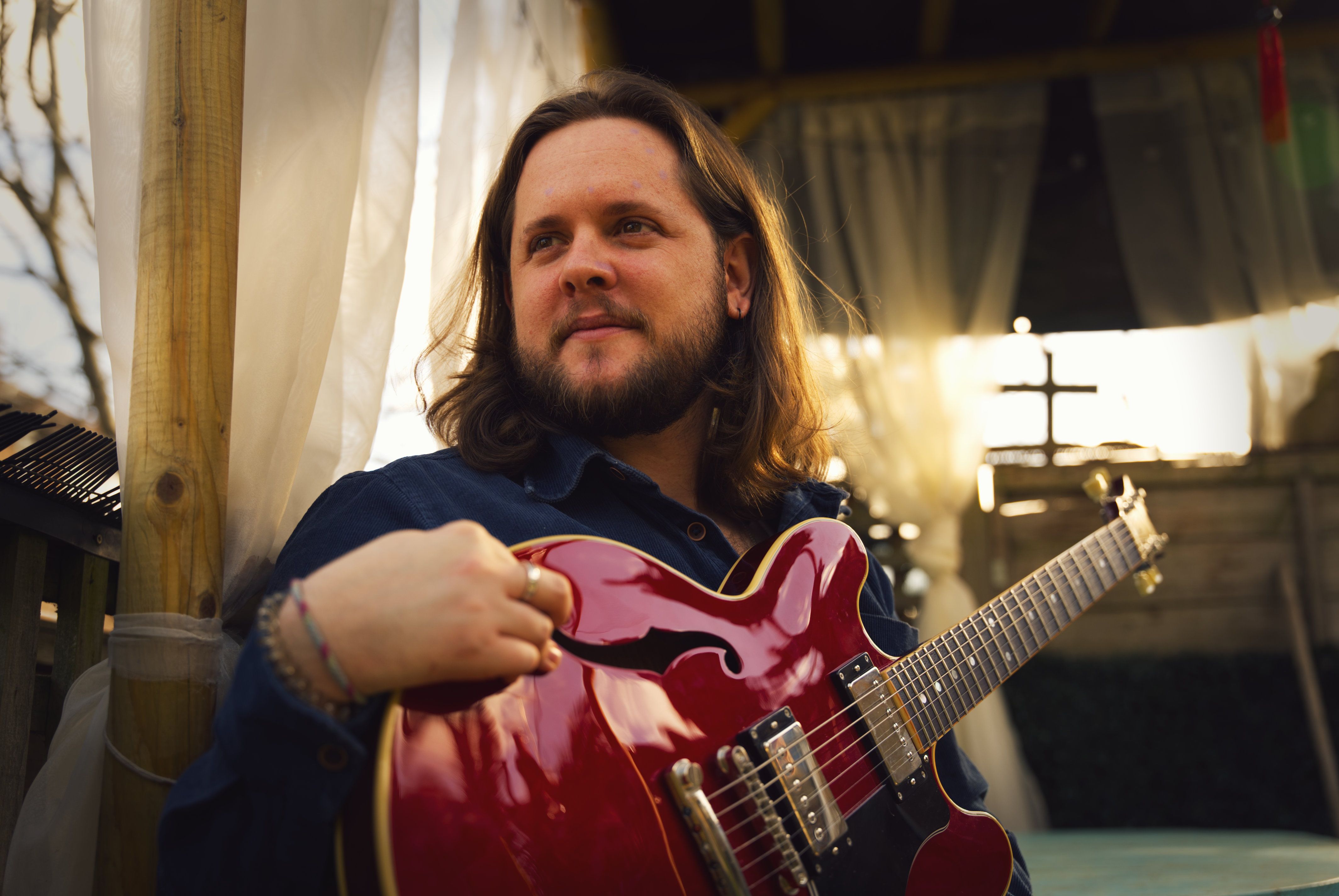 Zak Scerri Interview Image (c) the artist
“Inventing something on the spot is quite a difficult thing to do and would be like trying to create a new language on the fly.“
Video