Name: VARV
Members: Andrea Cappi (keyboards), Francesco Mascolo (drums)
Interviewee: Francesco Mascolo
Nationality: Italian
Current release: Varv's new album Transit is out via Off.
If you enjoyed this Varv interview and would like to know more about the band and their music, visit the duo on Instagram, and Facebook.
For a deeper dive, read our earlier VARV interview.
Where does the impulse to create something come from for you? What role do often-quoted sources of inspiration like dreams, other forms of art, personal relationships, politics etc play?
Often, it's simply an inner need to express our creativity and our desire to explore new musical territories and experiment with new ideas. At other times, we draw inspiration from moments and experiences from our past, as in Childhood, a track from our first album, Lowlands.
We can also be inspired by imaginary places or theoretical concepts that provide us with a powerful image from which to start composing, as was the case with “Wormhole,” a track from our latest album, Transit.
For you to get started, do there need to be concrete ideas – or what some have called a 'visualisation' of the finished work? What does the balance between planning and chance look like for you?
That's a very interesting question.
I believe that, in our case, there is a good balance between planning and chance. Some of our tracks were born from a compositional concept that had already been defined from the outset, with ideas that were well established from the very beginning.
Others, however, emerged from improvisation sessions based on just a few initial elements that we used as a starting point, such as a simple rhythmic or melodic sequence. A good example of this approach is "Place to Digress".
Is there a preparation phase for your process? Do you require your tools to be laid out in a particular way, for example, do you need to do 'research' or create 'early versions'?
Yes, absolutely. For us, it’s essential that each of us spends time individually researching new sounds and sonic textures, often tailored specifically to each track.
Our intention is to give every piece its own distinct identity, which is why the compositional process is usually broken down into several stages. This allows us to develop ideas in depth and explore how they can relate and interact with one another.
Do you have certain rituals to get you into the right mindset for creating? What role do certain foods or stimulants like coffee, lighting, scents, exercise or reading poetry play?
No, we don’t really have any particular rituals. We simply try to make sure we have enough time to do things calmly, without arriving at a show feeling stressed.
Often, it’s enough for us to have a relaxed moment together, have a drink and talking about things that are often unrelated to music.
For Transit, what did you start with? If there were conceptual considerations, what were they?
Our intention from the very beginning was to create a precise artistic work that could reach the audience in a direct way. For this reason, we worked hard to strip away anything unnecessary and shape an album that contained only what was needed to express our artistic vision in a compact and effective form.
We didn’t start from a specific overarching concept; instead, we focused on the individual tracks, making sure they became, as I mentioned in the previous answer, distinct and well-defined identities in their own right.
Tell me a bit about the way the new material developed and gradually took its final form, please.
The creative process was very heterogeneous; we did not adopt a fixed approach, but instead adapted everything to our creative flow, sometimes also trusting our instincts. I believe the latter is often an excellent starting point for initiating something that can then be shaped and refined at a later stage.
If we want to identify a common thread, perhaps it is precisely this: a continuous reworking of the material we had at our disposal until we reached something that satisfied us.
Many writers have claimed that as soon as they enter into the process, certain aspects of the narrative are out of their hands. Do you like to keep strict control or is there a sense of following things where they lead you?
As I mentioned earlier, we often relied on where the music would take us while we were playing. It is also true, however, that we found it very useful to set compositional rules in certain pieces so as not to drift too far from the initial idea.
Sometimes these two approaches were combined, perhaps in different sections of the same piece.
There are many descriptions of the creative state. How would you describe it for you personally? Is there an element of spirituality to what you do?
I wouldn’t really speak of spirituality, but rather of concentration understood as full presence in what you are doing.
It is about seeking that mental state that allows ideas to flow without rational thoughts starting to influence the creative aspect. Even though, at times, rationality can be useful for getting out of compositional dead ends.
Once a piece is finished, how important is it for you to let it lie and evaluate it later on? How much improvement and refinement do you personally allow until you're satisfied with a piece? What does this process look like in practise?
It is very important. At a later stage, with a clearer mind, it is possible to identify aspects that may have been overlooked at first.
It is therefore a practice we often follow, I would say for every piece. Sometimes the changes are minimal, other times we have almost completely reworked a track. It is a process that fascinates me greatly and that connects you even more deeply to what you do.
When you finally reach the finished result and look back, you see all the steps that were needed to complete the work. It is an opportunity to reflect on the entire process and to draw useful lessons for future pieces. I believe it is essential to constantly question everything and ask yourself whether a better version of what you are doing might exist.
How do you think the meaning, or effect of an individual piece is enhanced, clarified or possibly contrasted by the EPs, or albums it is part of? Does each piece, for example, need to be consistent with the larger whole?
In part yes, but without losing its own identity. Our intention was not to create a concept album, but rather an overview of the different nuances within our project. I think it is very interesting, within an album, to have not only affinities between tracks but also contrasts.
Music is made of tension and resolution, and I believe this concept can be applied to an album as well, not just to individual tracks.
What's your take on the role and importance of production, including mixing and mastering for you personally? In terms of what they contribute to a song, what is the balance between the composition and the arrangement (performance)?
They are all fundamental aspects.
We worked extensively on mixing and mastering to find a sound that would best enhance our tracks. Of course, this was built on a meticulous approach to sound design on our respective instruments, but without a tailored mixing and mastering process, there is always a risk of undoing the effort put into the search for sound.
As for the relationship between composition and performance, it depends on the individual pieces: some remain very faithful to the score, while others use it only as a map.
Music and the accompanying artwork are often closely related. Can you talk about this a little bit for Transit and the relationship that images and sounds have for you in general?
For this project, the images we have associated with the music are often not graphic images, but rather images understood as scenes or places, such as in the case of “Wormhole” (as previously mentioned) or “Place to Digress.”
In both cases, I think the influence these “images” have had on the respective pieces is tangible. Andrea’s piano and the way he plays it and delivers his solo in “Place to Digress” is, I think, very reminiscent of a hypothetical conversation between friends who digress first and then return to the original topic.
After finishing a piece or album and releasing something into the world, there can be a sense of emptiness. Can you relate to this – and how do you return to the state of creativity after experiencing it?
In truth, I don’t often experience this feeling. After a release, I am usually very euphoric and happy to be able to share our work with the world, and at the same time I immediately start reflecting on which new directions we could take for future releases.
So, for me, this moment is more of a source of inspiration for what comes next rather than a sense of emptiness.
I would love to know a little about the feedback you've received from listeners or critics about what they thought some of your songs are about or the impact it had on them – have there been “misunderstandings” or did you perhaps even gain new “insights?”
More than misunderstandings, we could say that we have received different perspectives and noticed a variety of impressions from listeners. It is truly fascinating how a piece can evoke different emotions in different listeners, and how these can sometimes even be in contrast with one another.
But I believe that is the beauty of music. For us, it is certainly a great source of reflection.
Creativity can reach many different corners of our lives. Do you personally feel as though writing a piece of music is inherently different from something like making a great cup of coffee? What do you express through music that you couldn't or wouldn't in more 'mundane' tasks?
Composing, for me, is a way of expressing what I often cannot put into words, and it is also a way to channel both positive and negative emotions. For me, music is above all an essential need. I cannot imagine my life without it.
Playing is only one aspect of it. Then there is everything else: listening to records, going to concerts, meeting new people. Music has allowed me to greatly expand my horizons, both creatively and interpersonally.

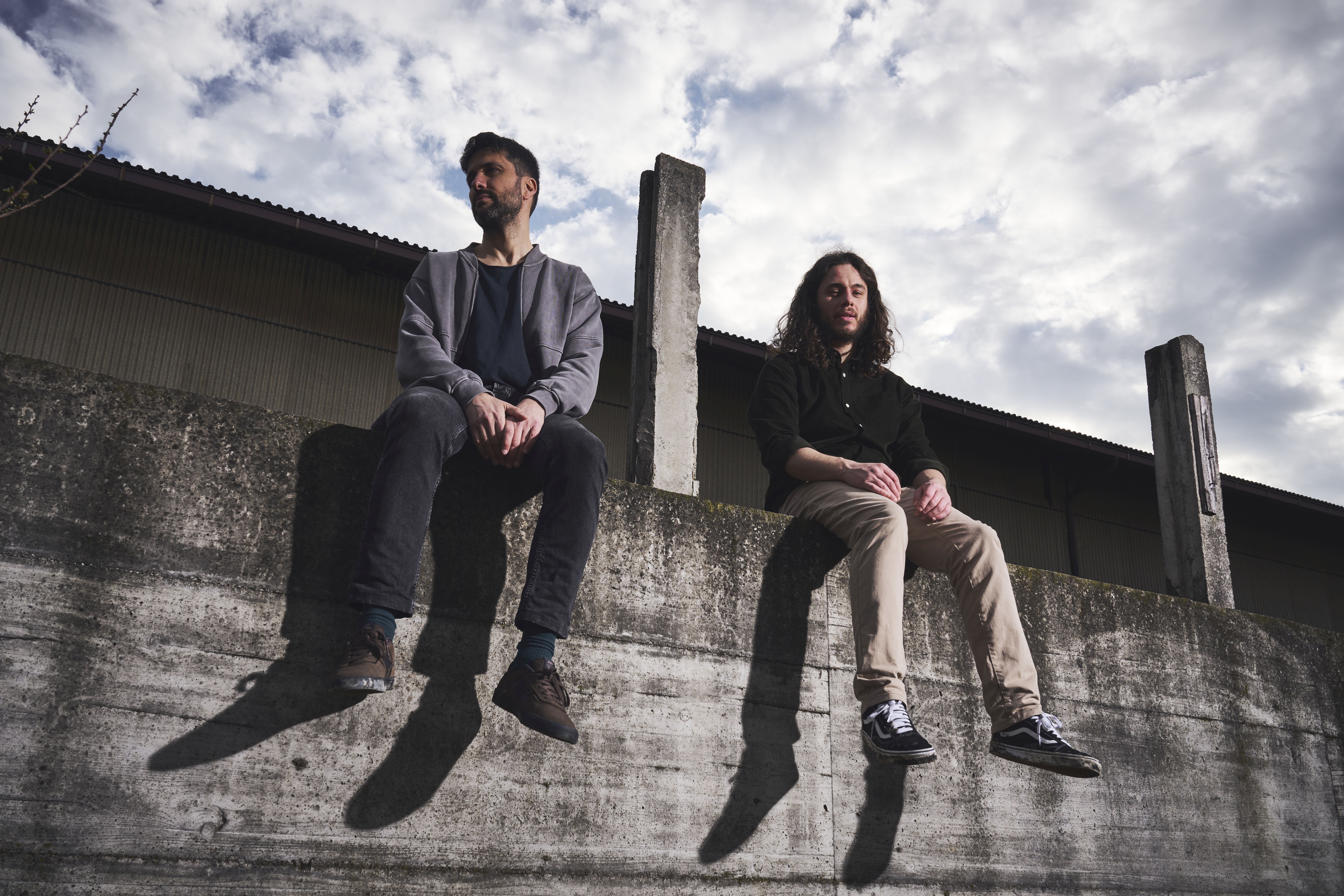 VARV Interview Image (c) the artists
"It is essential to constantly question everything and ask yourself whether a better version of what you are doing might exist."
Video