Name: Thomas Lemmer
Nationality: German
Recent release: Thomas Lemmer's Dreamscapes is out March 7th 2025 via Sine Music. The second single off the album, "Drifting through the Milky Way" is out now.
If you enjoyed this interview with Thomas Lemmer and would like to stay up to date with his music, visit his official website. He is also on Instagram. Facebook, twitter, and Soundcloud.
If you would like go even deeper, we recommend our earlier Thomas Lemmer interview in which he expands on an even wider range of topics. We also spoke to him and Spanish producer Oine about their collaboration.
The press release to Dreamscapes mentions that this was a very personal album to create. Would you say that you generally make music as medicine or as a reflection of what you're going through at the moment?
Both! I would say that music is my sanctuary—a place where I can forget everything around me and truly be present in the moment.
With Dreamscapes, I experienced almost meditative moments. Late at night, I would immerse myself in the music, feeling the peace it brings and losing myself in its sound. Often, outside the studio, I'll lie on the couch, put on headphones, and tune out the world when I need calm moments.
And yes, my music often reflects what I’m going through. Although it might not always be obvious, being an instrumental composer and producer, my feelings and experiences find their way into the music.
A clear example is my album Hope, which I created during the pandemic—a deeply personal and reflective time.
Outside of the technical and compositional ideas, there really seems to be a healing aspect to Dreamscapes.
Thank you. I truly hope that’s the case. It certainly worked for me, and I hope others can also find peace and healing through the music.
How important is sound for our overall well-being and in how far do you feel the "acoustic health" of a society or environment is reflective of its overall health?
I believe sound and music have a profound impact on our well-being. While I’m not deeply versed in the scientific research on the effects of music on health, I’m convinced of its many positive influences.
The concept of 'acoustic health' is a fascinating and philosophical idea. I do believe that listening to beautiful music with intention and presence can positively affect both individual and collective well-being. Sound shapes our environments, and in many ways, the acoustic landscape of a society can reflect its overall state of health and harmony.
The sonic palette feels quite unique within your discography.
Thank you, I’m glad you noticed!
Did you create a very different set-up for this music? What did it look like?
On Dreamscapes, I focused heavily on creating immersive soundscapes, relying on a minimal yet carefully curated selection of synths to achieve the desired atmosphere. The lush textures and rich ambiance owe a lot to the reverb choices. The Strymon Big Sky was a key element, especially its surreal, modulated reverbs, which played a significant role in crafting the spacey and ethereal sound.
For the synths, I primarily used the KORG minilogue xd, ASM Hydrasynth, Waldorf Iridium, and the Noire piano from Native Instruments. For the bass, the Moog Sirin was my go-to.
I intentionally limited myself to this set of instruments across most tracks to ensure a cohesive sonic palette, which I think really helped shape the album's unique character.
How did you approach the pieces on Dreamscapes? In terms of the thematic material, what was typically the starting point for the music?
My starting point for almost all the pieces on Dreamscapes was experimentation with a synth. I would play around until I discovered an inspiring pad sound or lead melody that resonated with me. Once I found something that sparked an emotional connection, I focused on crafting a chord progression that reflected the mood I wanted to express.
Sometimes, it took a while to find the right progression or melody—something that could sustain interest as a loop throughout the track without becoming repetitive. I was persistent, though, and didn’t stop until I found what worked.
I remember there was one track where I initially started with a different tempo and chord progression but later stumbled upon a completely new idea by accident. That moment of discovery really reshaped the piece, which is part of the joy of the creative process for me.
There is a strong sensation for me that these pieces are taken from a longer composition … if you only have 2-3 minutes and the music is already slow, how do you define beginning and end?
My goal wasn’t just to create endless soundscapes that stretch on for minutes but to compose music that is calming and meditative while remaining engaging and never dull. By keeping the tracks relatively short, the loop-based structure avoids feeling repetitive or overused.
At the same time, I wanted to maintain a sense of continuity. When one track ends and the next begins, the mood flows seamlessly, allowing the listener to dive deeper into the experience without interruption.
For me, the defining moment to end a piece came when I felt I had expressed everything I needed to say within it. Extending it further would risk diluting its impact or repeating myself, so I would bring it to a natural conclusion.
Describe the process of how the album came together from many evening sessions.
When I start working on a track, I usually focus on it until it’s complete before moving on to something new. This was also true for most of the tracks on Dreamscapes. However, I would occasionally revisit pieces to make refinements, especially after listening to them in a different environment, which often revealed nuances I hadn’t noticed before.
One notable example is the track “Drifting Through the Milky Way.” During the production process, I identified an issue in the mix that I wanted to fix. At that point, I had a rough mix, but I wasn’t entirely satisfied with it. Unfortunately, late one night, I made a mistake and accidentally messed up some audio files in the project. Instead of stopping, I kept going, which only made the situation worse, ultimately leaving me unable to recreate the project.
Despite this setback, the track was so important to me that I decided to re-record it from scratch, shaping it into the version I had originally envisioned. Interestingly, I still found something special about the rough mix, so I decided to keep it as an alternative version. I enhanced it with some LoFi techniques, and this became the album’s last track or bonus piece, adding a unique and personal touch to the collection.
How do you see the balance between composition and sound in your music in general?
I'm deeply inspired by sound itself. When I discover a sound that resonates with me, it has a significant influence on my compositions. In ambient music, where textures and atmosphere are essential, the interplay between sound and composition becomes even more crucial.
For example, I often find myself drawn to the Wurlitzer sound on my Waldorf Zarenbourg, which emulates Rhodes and Wurlitzer pianos. There’s something about the warmth and character of that particular sound, especially when paired with lush reverb, that consistently sparks new ideas. It’s hard to explain why, but it just clicks creatively.
For me, sound design and composition are inseparable—they work together to shape the emotional core of my music.
Specific sounds can give you liberties to do things in composition that you wouldn't be able to without them – keeping a loop running for extended durations, for example. How far does this apply to Dreamscapes?
The whole album is essentially built around a loop-based concept, primarily focusing on the chord progressions. There is, however, one track where I decided to break away from this pattern.
The inspiration for working with repetitive patterns came from meditation. Although I don’t meditate myself, I often listen to very calm music to find peace. I thought that incorporating repetitive, meditative techniques into my music could have a similar calming effect on listeners.
This loop-based approach pushed me creatively, as it required developing melodic ideas that evolve and overlap within the music. These ideas would build on different layers and then gradually simplify or fade, creating a dynamic flow. It was quite different from how I typically work, as my usual approach is more structured and song-oriented.
That said, I thoroughly enjoyed exploring this method and am considering revisiting it in future projects.
Do you feel as though some sounds already suggest a composition within themselves? In how far has this been the case for your work so far – and does this essentially imply a minimalist mindset where sometimes just a handful of elements can be enough to sustain a piece?
You’re absolutely right—I focused on minimizing the number of tracks to just the essentials. This minimalist approach was both freeing and challenging, as every melody and chord progression had to carry more weight and be carefully crafted.
Often, certain sounds would naturally inspire a melody or chord progression, almost composing themselves. This synergy between sound design and composition allowed the emotional essence of the music to shine through with clarity and space.
It’s a mindset I’ve come to appreciate and will likely revisit in future projects.
When you're picking your sounds for a piece, is it always an intuitive, from-the-gut-feeling - or do you think there is a system behind your sonic choices?
I had specific sounds in mind while working on the album. Some I crafted myself using my KORG minilogue xd, like during my vacation in France last year, where I focused on creating sounds rather than composing. Those sounds later became the foundation for tracks in the studio.
Other times, I’d start with presets, tweaking them slightly to make them my own. Ultimately, choosing sounds is always intuitive—a gut feeling. If I find myself drawn to a preset and enjoying the process of playing around with it, that’s usually a strong indicator it will inspire something meaningful.
Tell me about the sound sculpting part of the music and how you worked on this - was it always in direct conjunction with the composition aspects?
Sound sculpting and composition were closely connected throughout the process. In many cases, the sound itself served as the initial trigger for a melody or chord progression. It wasn’t just about the synth sounds, though—effects like reverb and delay played a major role in shaping the music on this album.
For instance, adding a large reverb or an expansive delay can completely transform the way you interact with a sound, influencing how you play and compose in the moment. In that sense, the sound design directly impacted the creative direction, with one element naturally feeding into the other.
Do music and sound feel “material” to you? Does working with sound feel like you're sculpting or shaping something?
That’s a fascinating question. Now that I reflect on it, the process of working with sound does feel similar to sculpting or shaping something tangible, but I don’t see music as 'material.' To me, it feels more spiritual.
Music raises profound questions: What is it, really? Why does it exist? Why are humans so deeply connected to it? These mysteries are part of what makes creating music such a unique and meaningful experience.
Reverb is one of the major effects for ambient music. What is your personal favourite reverb?
For Dreamscapes, the Strymon Big Sky reverb was definitely my favorite. I use it as a VST plugin, and it played a central role in shaping the album’s sound.
I also frequently use and love the Eventide Blackhole reverb for its unique, expansive textures, as well as the Soundtoys SuperPlate, which is one of my go-to reverbs for its versatility.
While all of these are incredible tools, the Big Sky remains my absolute favorite for its lush and atmospheric qualities.
What's your personal take on trying to get a reverb to sound as natural as possible versus sculpting it even to extremes in virtual?
I love big spaces and extremely long decays in reverb. While I appreciate the beauty of a completely natural sound, I also enjoy pushing reverb to its extremes.
For instance, I might modulate the reverb or add effects like a phaser or chorus specifically to the reverb signal to create an even lusher, more textured sound. It’s all about experimentation and seeing if these tweaks make the result more interesting.
If you could create one yourself, what would it sound like and what would it allow for in terms of sound sculpting?
If I could create a reverb myself, it would combine the warmth and realism of natural spaces with the ability to sculpt surreal, modulated textures effortlessly.
It would allow for dynamic modulation and layering, opening up infinite creative possibilities.
I could personally see many directions and approaches Dreamscapes could lead to. After completing this project – what are your plans for the ambient part of your work?
Thank you so much! It means a lot to hear that you enjoyed the album. I had such a wonderful time creating Dreamscapes that I’m already considering a follow-up—so yes, there will definitely be more ambient music in the future.
That said, I also have a surprise planned for later this year—something quite different and even unexpected for me. I’m excited to explore new directions and share them with you soon.

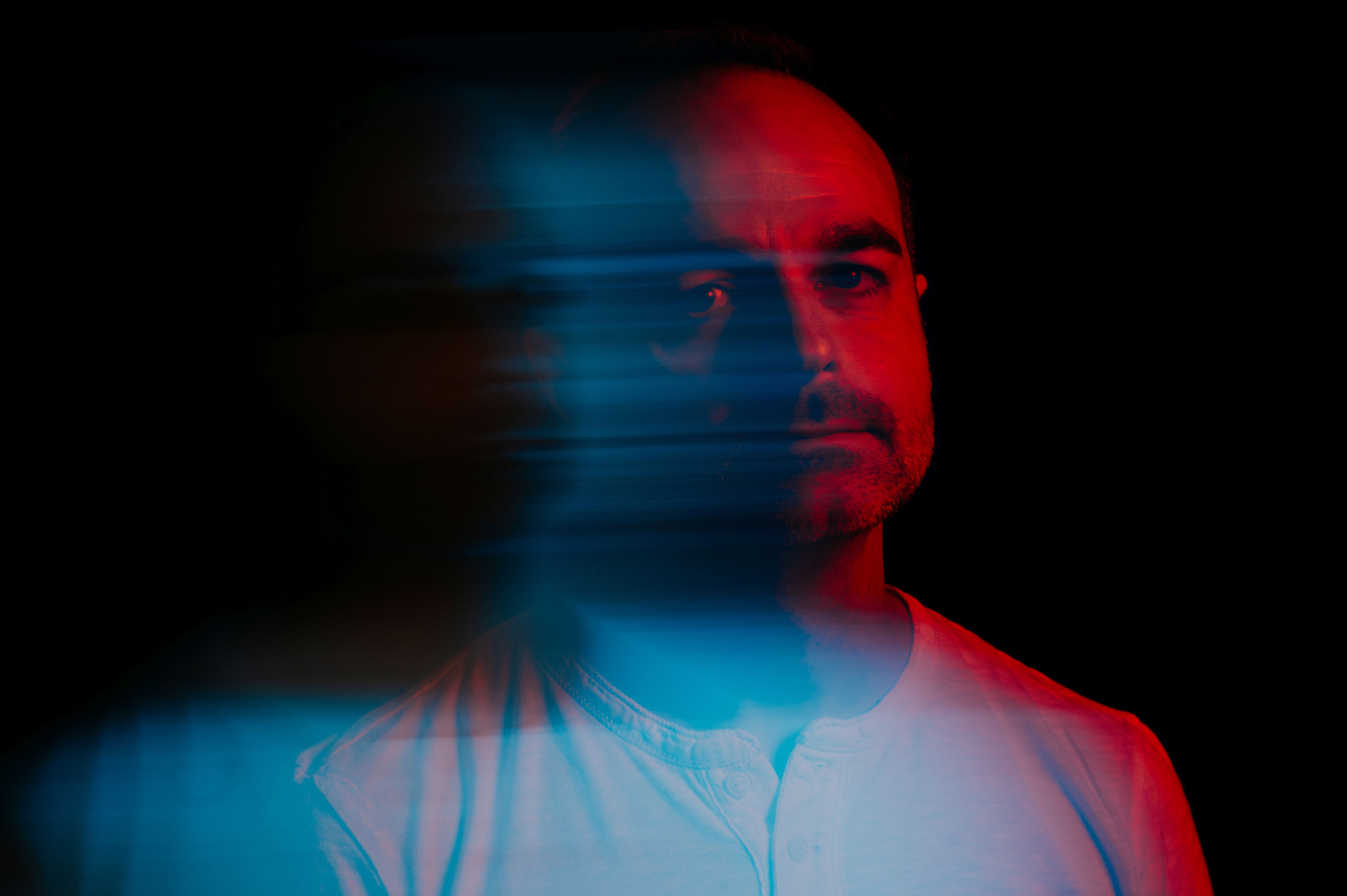 Thomas Lemmer Interview Image by Lukas Grünke
“The sound design on this album directly impacted the creative direction.”
Video