Name: They Might Be Giants
Members: John Linnell, John Flansburgh
Interviewee: John Flansburgh
Nationality: American
Current Release: They Might Be Giants's new album The World Is to Dig is out via Idlewild.
Hometown Recommendations: I recently went to the Frick, which is a smaller art museum in Manhattan. I went there a few times as an art student long ago, and it was closed for renovations for a few years, but now it’s open again, and it's an amazing experience. The collection is historic and mind-boggling, and the setting is beautiful and intimate. If you are looking for a perfect afternoon walking around a rich dead guy's house, I highly recommend it.
If you enjoyed this They Might Be Giants interview and would like to know more about the band and their music or catch them perform live in concert, visit the duo's official homepage. They are also on Instagram, Facebook, and tiktok.
Where does the impulse to create something come from for you?
It’s a great question, but it’s difficult to answer completely.
Writing songs and working on music is a 24/7 thing for me. I work pretty slowly compared to other writers I’ve known, and I work on many songs at the same time. I’m thinking about song titles and new sounds and how to put together songs in new ways all the time. Lots of voice memos and emails to myself with small ideas.
And there are a lot of long hours working on things that will get finished, and a fair bit of hours spent on things that might not.
What role do often-quoted sources of inspiration like dreams, other forms of art, personal relationships, politics etc play?
As for outside material inspiring work—anything in life can be material.
A photo, a film, two conversations happening at the same time in a waiting room.
For you to get started, do there need to be concrete ideas – or what some have called a 'visualization' of the finished work?
On rare occasions, a whole song might arrive in a single burst, but just as often, I’m fashioning one idea to another to see if the puzzle pieces fit.
It’s a big chop shop!
Is there a preparation phase for your process? Do you require your tools to be laid out in a particular way, for example, do you need to do 'research' or create 'early versions’?
There is a lot of musical activity that doesn’t look like formal songwriting, although I don’t think I am alone in this approach in the modern world.
I routinely have open-ended work days where I’m putting together new beats, or bass lines, or chord progressions, or I just cook up new lyrics. Somehow, it’s easier to focus on a small, cool idea on its own, and not think about how to make it work in a whole finished song. These are all just trampolines designed to spark more formal songwriting efforts later.
There is no good reason why I don’t spend more time just playing an instrument and singing in order to work out a song. It is such an efficient way of working things out, but it usually doesn’t feel as thrilling as working with new sounds on the computer.
Do you have certain rituals to get you into the right mindset for creating? What role do certain foods or stimulants like coffee, lighting, scents, exercise or reading poetry play?
Everything starts with coffee.
Tell me a bit about the way the material for The World Is to Dig developed and gradually took its final form, please.
We don’t ever write in the studio, but the levels of arrangement vary widely. We do demos at our project studios and then present them to the band. We are getting better at not fully arranging the tracks beforehand. It’s taken about 35 years, but our confidence in ourselves and the band is finally improving.
We don’t start with any concept. But to finish them, we try to figure out the best material and avoid repetition. I think a lot of people worry about sounding consistent through an album, but we kind of come at it from the opposite direction.
After a lot of years making albums, I feel that if you work in the same general way in the same place with the same people, a set of those songs will create a natural vibe that is pretty durable. In that way, even if there is no conscious concept, the album will still emerge as something quite distinct.
What makes lyrics good in your opinion? What are your own ambitions and challenges in this regard?
I come at lyrics from a few different directions. I am comfortable writing in strict meter and rhyme schemes. I’m thinking of our song "Hate the Villanelle."
That lyric took me forever to put together because it is in a poetic form with completely specific rules. It’s a puzzle.
But I also enjoy writing colloquial or conversational lyrics. I am always impressed when a lyric doesn’t rhyme but still has the lilt of poetry— lyrics that don’t have the formal rigor of “official good songwriting” but still flow.
What are areas/themes/topics that you keep returning to in your lyrics?
I have written two songs that mention cicadas, and maybe that’s one too many.
There is a mode of writing that comes up again and again, which is the idea of the “unreliable narrator.” The point of view or the narrating voice of any They Might Be Giants song is probably a fiction of some kind. Our songs aren’t “first person confessional” in the way a singer-songwriter’s work might be. So in that sense, our output is more like fiction writing, where the tale might be getting told by the protagonist, but the protagonist isn’t the author.
This kind of writing really invites heightened lyrics. Like, I’m not into revenge in my real life, but writing a song about revenge seems interesting.
Many writers have claimed that as soon as they enter into the process, certain aspects of the narrative are out of their hands. Do you like to keep strict control or is there a sense of following things where they lead you?
I can see that being exciting, because you’re really riding the mania of the process. But for me, I try not to get too swept up in anything too mysterious.
Maybe I’m uptight in that regard, but I enjoy the editing, which to me is the second half of it.
There are many descriptions of the creative state. How would you describe it for you personally? Is there an element of spirituality to what you do?
Honestly, it feels more compulsive than spiritual.
In terms of what they contribute to a song, what is the balance between the composition and the arrangement (including production, mixing and mastering)?
It can be huge. When you think about the history of the popular song, it started as something far closer to cartoons than painting, and yet we are all about a hundred years into it now, and it still feels like there are a ton of possibilities.
What recording brings to the idea of a song seems limitless.
Tell me a bit about the way the new material developed and gradually took its final form, please.
We don’t ever write in the studio, but the levels of arrangement vary widely. We do demos at our project studios and then present them to the band. We are getting better at not fully arranging the tracks beforehand. It’s taken about 35 years, but our confidence in ourselves and the band is finally improving.
We don’t start with any concept for an album.
Music and the accompanying artwork are often closely related. Can you talk about this a little bit for The World Is to Dig and the relationship that images and sounds have for you in general?
We made the decision not to put ourselves on the cover of our projects a long time ago.
While it does require some effort to find fresh imagery and collaborate with different people, the whole enterprise feels like it automatically helped us stand out from other bands and makes each album feel more defined.
After finishing a piece or album and releasing something into the world, there can be a sense of emptiness. Can you relate to this – and how do you return to the state of creativity after experiencing it?
Interesting. As I’m answering these questions, it seems I’m missing half the emotions humans are supposed to have! Wow.
Well, this may sound prideful, but I’m psyched about this album! I think it’s really solid, and I’m glad we worked on it as much as we did.
Creativity can reach many different corners of our lives. Do you personally feel as though writing a piece of music is inherently different from something like making a great cup of coffee? What do you express through music that you couldn't or wouldn't in more 'mundane' tasks?
Feeding people is a noble thing to do, but that’s another topic.
For me, writing, recording, and performing is a process that is just a very exciting and joyful thing to be part of.
I don’t feel like I have a lot of insight into how our songs will land, or who they will reach, and I am always surprised when people sing along.

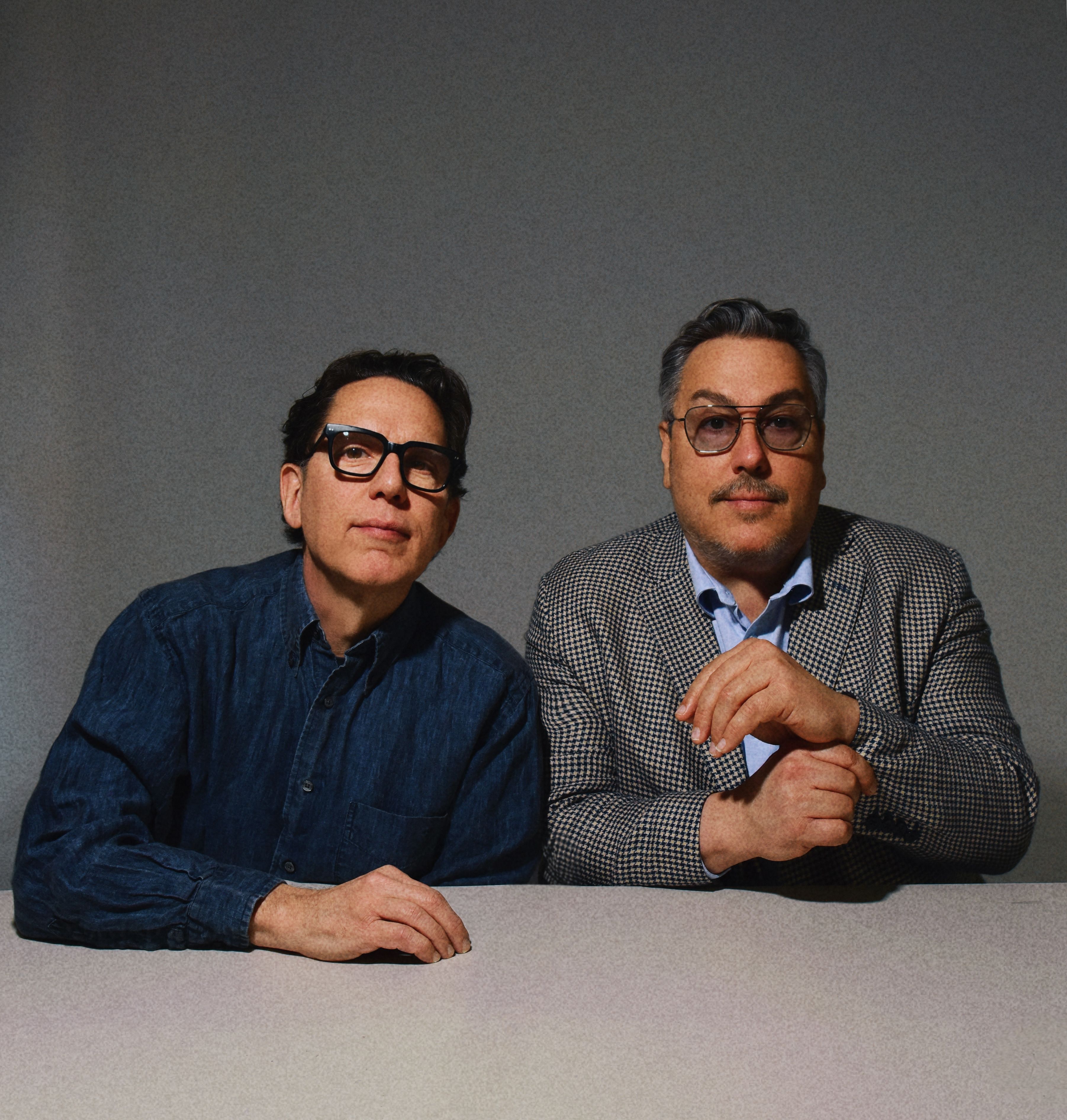 They Might Be Giants Interview Image by Shervin Lainez
"I have written two songs that mention cicadas. Maybe that’s one too many."
Video