Name: SUDO
Nationality: Japanese
Members: Isao Sudo, Takashi Sudo
Interviewee: Isao Sudo
Current release: SUDO's Real World EP is out now via Drumcode.
Recommendations: I love cartoons and Anime as well, so would like to introduce Japanese culture as a comic book - AKIRA by Katsuhiko Otomo, And The movie - Nausicaa of the valley of the wind by Hayao Miyazaki
If you enjoyed this SUDO interview and would like to know more, visit them on Instagram, Soundcloud, and Facebook.
Where does the impulse to create something come from for you? What role do often-quoted sources of inspiration like dreams, other forms of art, personal relationships, politics etc play?
When I think about where it comes from, I still have memories of when I was about 19 years old when I was first impacted by electronic music, and it's like going back to a beautiful memory from that time.
When I hear a great track, I want to make music. Why that is, I want to know too.
For you to get started, do there need to be concrete ideas – or what some have called a 'visualisation' of the finished work?
Not necessarily. Sometimes a good track can be completed from a single phrase that was created casually.
For me, composing has no theories, it's fun, and it's profound. There are thousands of ways for people to do it, and it's something worth spending my life exploring.
What does the balance between planning and chance look like for you?
Coincidence is more fun than planning, ideally 3 parts planned and 7 parts coincidental.
But lately, I sometimes start with a specific plan for a particular situation, such as a track at the peak of a DJ's performance.
Is there a preparation phase for your process?
Not particularly. I just try to listen to different genres of music to keep my motivation to making tracks high.
Sometimes, I record various sounds with a portable recorder, and when I concentrate on one piece of equipment like a synthesizer, or effect and explore it, I can come up with an interesting phrase that becomes a track.
Do you require your tools to be laid out in a particular way, for example, do you need to do 'research' or create 'early versions'?
I wouldn't go into too much detail. As for tracks, I tend to work on a number of tracks in parallel, rather than just completing one track at a time.
Do you have certain rituals to get you into the right mindset for creating?
I study psychology and use methods to get rid of unwanted distractions. It's difficult to explain the details of specific techniques, but, for example, when I want to make music but I can't concentrate on other things, I use a method that helps me concentrate.
Also, I watch videos of my favorite DJs playing and videos of stages I admire, which motivates me to create.
What role do certain foods or stimulants like coffee, lighting, scents, exercise or reading poetry play?
For me, dancing while creating a track is the best.Also, since I produce on my laptop, it is interesting to change my mood and produce sometimes in the park or on the terrace of my house.
Or I look forward to a good meal after studio work, which helps me work better!
What do you start with?
I guess I often start creating from a rhythm, it depends on the time, but sometimes a melody comes to mind and I start to make from the breakdown. Or, if I have a good vocal, I start from there.
To quote a question by the great Bruce Duffie: When you come up with a musical idea, have you created the idea or have you discovered the idea?
That's a tough one. Creation could also be something that was generated from my memory.
I guess the feeling is similar to that, the joy of playing as a child and finding something unknown.
Many writers have claimed that as soon as they enter into the process, certain aspects of the narrative are out of their hands. Do you like to keep strict control or is there a sense of following things where they lead you?
There's a lot of sense of following as it leads. Somewhere in there is control, but the feeling is always out of my hands.
There's nothing more exciting than a great phrase that I can create by accident.
Often, while writing, new ideas and alternative roads will open themselves up, pulling and pushing the creator in a different direction. Does this happen to you, too, and how do you deal with it? What do you do with these ideas?
New ideas and alternative roads are always interesting. But I do save them as another version. Because, sometimes I can make a few tracks in a derivative version.
There are many descriptions of the creative state. How would you describe it for you personally?
A state in which my soul is happy and enjoying life. I like to make music, and I'm happy or sad when I go into the studio and see how well I did that day (lol)
But when I get a good phrase, I'm the happiest man when I leave the studio to go home.
Is there an element of spirituality to what you do?
Often there is. I had the experience of performing at a place called Tenkawa Shrine in Nara Prefecture (where Vangelis and Brian Eno also performed) in front of the god which calls Benzaiten (god of arts) enshrined there with my brother Takashi and our friend Mazuda. When I was playing in the presence of God, I couldn't fake it.
And I thought at that time that I could never lie to myself. I want to keep in mind to create with sincerity and honesty in my heart.
Once a piece is finished, how important is it for you to let it lie and evaluate it later on?
Quite important. It's necessary to listen objectively. Sometimes a track that I thought was great that day is not so great the next day.
How much improvement and refinement do you personally allow until you're satisfied with a piece?
Forever if there is no deadline. Sometimes it's better to have a deadline in that sense.
Rarely will I finish a project that has been lying for several years, but most of the time it feels somewhat dated or I get tired of it after listening to it hundreds of times.
What does this process look like in practise?
Testing how it works on the dance floor. How it sounds in a loud environment is very important, so I often play it and then fix a little bit each time.
When you're in the studio to record a piece, how important is the actual performance and the moment of performing the song still in an age where so much can be “done and fixed in post?“
Especially techno music is made with sequences. And so, something off the grid is what makes it interesting,
I think the work of putting the soul into it when recording is particularly important.
Even recording a solo song is usually a collaborative process. Tell me about the importance of trust between the participants, personal relationships between musicians and engineers and the freedom to perform and try things – rather than gear, technique or “chops” - for creating a great song.
I don't know if this is an answer, and it's paradoxical, but music connect us, allows us to know and trust each other deeply. And when we play music, we can celebrate and share that wonderful place regardless of race and language.
I would say that music has saved my life and for that I am grateful.
What's your take on the role and importance of production, including mixing and mastering for you personally?
Obviously very important. A great phrase is a waste if it is poorly mixed and mastered. On the other hand, a seemingly simple and uninteresting track can have a great effect on the dance floor if it is well mixed and mastered.
In that sense, clubs and festivals that pursue good sound are very respectful and valuable.
In terms of what they contribute to a song, what is the balance between the composition and the arrangement (performance)?
Both are essential and should not be lacking.
Personally, we artists and engineers put our heart and soul into creating music, so we want people to hear it in a good sound environment.
After finishing a piece or album and releasing something into the world, there can be a sense of emptiness. Can you relate to this – and how do you return to the state of creativity after experiencing it?
I can relate to this. When I'm not in the mood to make music, I don't force myself to make music.
Traveling relaxes my body and mind, as well as hanging out as much as I can, and in any case, do things other than the music I want to do at the time. It's a strange thing when I do that, and I want to get back into the studio again.
Music is a language, but like any language, it can lead to misunderstandings. In which way has your own work – or perhaps the work of artists you like or admire - been misunderstood? How do you deal with this?
Whatever people think, I respect it according to their own values. I just want to live my life in a way that I don't lie to myself about my music. So I try not to care.
Creativity can reach many different corners of our lives. Do you personally feel as though writing a piece of music is inherently different from something like making a great cup of coffee? What do you express through music that you couldn't or wouldn't in more 'mundane' tasks?
I believe that all serious creations that people spend their lives creating are in the same league. I just had a opportunity to decide to work with music and I love it, so I would keep doing it.
Every job has its own way to improve and depth.

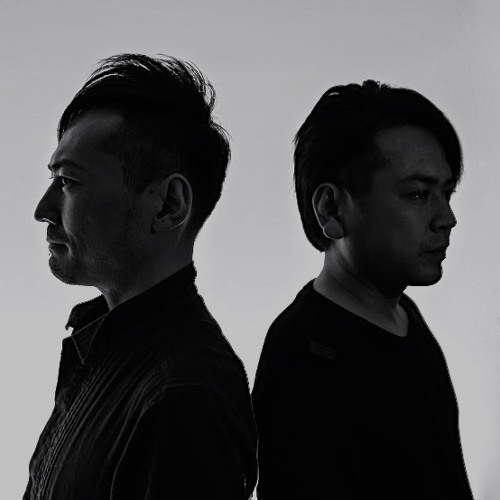 SUDO Interview Image (c) the artists
“Composing has no theories. It's fun, and it's profound.”
Video