Name: Abraham "Duke" Amayo aka AMAYO
Occupation: Composer, songwriter, percussionist, vocalist
Nationality: Nigerian-American
Recent release: AMAYO's debut album Lion Awakes, featuring artists from the Daptone roster as well as former Antibalas bandmates, is out now.
Global Recommendations: If you visit Lagos, Nigeria, I would recommend going to The Afrika Shrine, in Ikeja! You’ll be able to see Femi or Seun Kuti perform and get an experience of what it was like for me growing up and going to see Fela at his original Shrine when I was a boy.
Topic I rarely get to talk about: I’m very passionate about Fashion. I used to have a fashion line called ‘Amayo’ and opened up my own space in Brooklyn where I did several fashion shows. I also had shows at the Fashion Cafe, New York and London. That spot was also my Kung Fu dojo where I taught classes. And it’s where 2 guys came in and asked me if I wanted to join an Afrobeat band.
I design all of my stage outfits repurposing my late mom’s old fabrics. It helps me invoke her spirit when I perform. I also love cooking Nigerian food. I do most of the cooking for our family at home. And I love sharing my food and culture with others.
If you enjoyed this AMAYO interview and would like to find out more about his work, visit his official homepage. He is also on Instagram, and Facebook.
Many musicians I am talking to at the moment feel somewhat disillusioned about the impact, meaning, and value of their work. Feel free to vent some of your own frustrations and/or disappointments – as well, if possible, something that might give hope to other creatives.
I try not to be too concerned with my music having a typical visible impact, but instead focus more on expressing myself truthfully, with intentional lyrics. Thereby allowing the seen and unseen impacts to take its course.
However I got frustrated when my genre “Afrobeat” got coopted by a DJ driven genre called “Afrobeats”. I see a near future where both genres truly collaborate to end the confusion.
If, for a moment, we forget about streaming numbers, target audiences, social media followers, and sales - why are you drawn to sound and music as a creator and listener? What is it that you give and receive through it?
Practicing music is my daily morning meditation, packed with positive frequencies and energies to enhance our emotions. I have all my pianos tuned at 432hz to amplify and release healing properties in my body, thereby keeping me in a perpetual happy state.
I’m often told that I posses an aura that uplifts the vibration in any given space. It brings me refined joy.
In how far can music be considered “essential” for humans?
Music connects us to the Heavens. It’s the best agent for transforming our dreams to reality. It’s an essential tool for manifesting and activating dormant energy points in our bodies.
Take us through a day in your life, from a possible morning routine to your work, please, and how music and sound accompany you through it.
I use music in my daily Kung Fu practice to enhance my life force (Chi).
My daily routine starts with rolling out of bed. I wake up my lower core point with dynamic breathing and visualization, followed by about 60-100 pushups, then finger drills on the piano, take my kids to school, then I finally start my day.
I teach Jow Ga Kung Fu to a select group of students who’ve been with me for years on zoom 3x a week at 10am. And I make sure to get at least 2 hours of practice on the piano everyday.
What artists, albums, performances, or even aesthetics and philosophies are inspiring to your life in and beyond music right now and in which way? Have there been songs, albums, performances, and artists that changed /
influenced your life?
Fela Kuti inspires me for his masterful compositions and activism (“Water No Get Enemy”, “Army Arrangement” and “Beasts Of No Nation” are my favorites); Sun Ra for his limitless, cosmic compositions (“Space Is The Place” is my favorite); Michael Jackson for his creative work ethics, and his classical dance steps (“Thriller” stands out); Bob Marley for his activist love songs (“Turn Your Lights Down Low”, “Rat Race”, “Exodus”, are some of my favorites).
Tell me about some of the feedback you’ve received from listeners about how your work has impacted them.
I've had people tell me they've been listening to me since high school. In fact, my trombonist heard me first because his parents used to play my music! He grew up and started sitting in with Antibalas in our 3rd generation of musicians. And now he plays with me in my band under 'Amayo.'
The feedback I’ve been receiving for my solo album release has been amazing. Here is one from tmrw magazine:
“Lion Awakes album is “a true celebration of all that is mystic, soars from the 7-Stars to the planes of Africa and back. Amayo has brought fortune and joy to 2025 with all of the Lion’s majestic grace, and Style.”
“Your music heals my soul”, says another listener.
What are some of the goals and ambitions you have for your music?
I would love for the album to win a Grammy so more people can hear it. “Happy Lion” is all about gratitude and will help people tune into that frequency.
In Shamanic teachings, gratitude, love, and awe are the highest frequencies in the universe. I ultimately wish for this album to help activate people’s cosmic awareness, our infinite nature, our universal connectivity and remind us of our power to overcome all negative forces.
What kind of music/art do you feel the world needs right now - does it need “healing,” “shaking up,” “an escape from reality,” “consolation,” “a sense of community,” “holding up a mirror,” something else?
Forces of negativity have been on the rise since the millennium bug arrived. Creating pockets of chaos here and there, chronic imbalances with us. Positive thoughts and words infused in melodies is what the world needs to return to balance.
I wrote “Black Magic Sister” as a prayer for abundance and a blessing to uplift the black community during these trying times.
My song, “Lion Awakes” is about awakening our senses and our dormant power. It’s a call to action.
What are some of the non-musical topics and causes you feel strongly about? Do you keep them separate from or try to connect them to your creative work?
I’m big on sustainable living. I inherited my mom’s house in Nigeria where I grew up. We have an elementary school there.
In 2014, my team and I won a Grant from the New School to build a rain water collection system using only locally sourced materials. There’s no potable water there. My mom has a well on the property and that was how we bathed and did the dishes. With the grant, I took a crew of sustainable engineers to my family house in Lagos, Nigeria, to build a working Rain Water Collection System, and we hosted workshops about permaculture to share with my Lagos community.
I always connect my non-musical projects with my music. I believe music is the best vehicles to start, maintain and grow any project.
French Saxophonist Sakina Abdou told me that she “witnessed a powerlessness towards a world that is in absolutely no way in line with my values,” and that she hasn’t “yet found a way to overcome this in ways other than music, but I admire the activists around me who do it.” Can you relate to this and what does it say about the role of music in overcoming our sense of powerlessness and actually empowering us?
Yes. I can.
I recall the experience of playing to an audience in Brooklyn, a few weeks after the tragedy of 9-11. I went from feeling powerless to powerful after the show. The whole room felt the sense of community, healing and unconditional love.
Timely music has the power to shape a society at any giving period.
What do you make of the idea that music and sound are a universal language - and how can artists use its specific and universal qualities to bring about change on a global scale?
I put in calls to action in my lyrics like in the song, ‘Shadowless.’ It starts out with the lyrics: “In Kung Fu, the good doer remains unseen, but you see the good they do for humanity.”
I compose like I practice Kung Fu and I love layering rhythms and words that empower. I love writing lyrics that express attributes of the Orishas and our connectedness woven with Chinese mythology, creating mantras that help uplift my listeners and humanity as a whole. The entire album, ‘Lion Awakes’ is about the Chinese mythological lion that falls down from the heavens to bring good luck to humanity. I reimagined the story as landing in ancient Africa.
This idea of music being a universal language is experienced quite often. A current example is the music coming out of Nigeria and South Africa, the genres “Afrobeats” and Amapiano taking the world by storm. Most of their lyrics are not really understood, but you feel they are expressing vibrations of Love and Happiness.
There is a lot of spiritual sweetness in the grooves. My songs are layered in triple meanings.
How would our world be different if we paid less attention to looks and listened more instead?
Oh yeah. I believe it would make humanity more aware, empathetic, and sensitive!
Performing music or creating sounds with others opens up the possibility of resolving conflicts in a different way. From your personal experience in collaborations or group performances, how does this work and do you believe it is possible to apply these approaches to areas outside of music?
A group setting is a comfort zone for me, because I grew up in a large family of ten extended relatives (even though I was my mom’s only child, she raised a whole village.) It offered me an opportunity to learn collaborating skills. And it helped me years later when I decided to join a band and become the lead singer of Antibalas.
In the early days we were a collective with a lot of opinions. I think my background as a Sifu really helped me navigate that space. Then it became just the two of us as co-owners, and we had very different philosophies. And I knew it was time to branch out on my own as Amayo. I still collaborate and perform with many of the musicians I’ve played with over the years.
I love using the human body as a perfect model for collaborations. Without an orchestrated collaboration of our internal organs, the body functions would shut down. If we look within, we can learn from the simplicity and complexity of the systems that keep us functioning as living beings.
It is possible for someone with an entirely different world view from your own to love or appreciate your work. How, if at all, is it possible to use this power of sound and music to enter into a dialogue?
Yes, it is definitely possible. When melodies come to me while in my creative mode, they appear without words, before applying words. Then rhythms are applied to shape the intention of the groove.
As a whole this powerful alchemy can then move us into actions, reactions, bold statements, or inspire any emotion intended.
In human history, music is a universal across cultures and eras of development. Still, musicians are possibly being exploited more than ever. How do you feel they can see beyond their personal limitations, and form bonds and communities capable of tangibly furthering their cause? How can we get people to listen?
I believe it’s very important for musicians to belong to an advocate group that supports and helps mitigate exploitations. I belong to such a group called MFM (Musicians For Musicians).
This is an essential aspect of operating as a professional musician. There are others out there, and encourage my fellow musicians to research others.
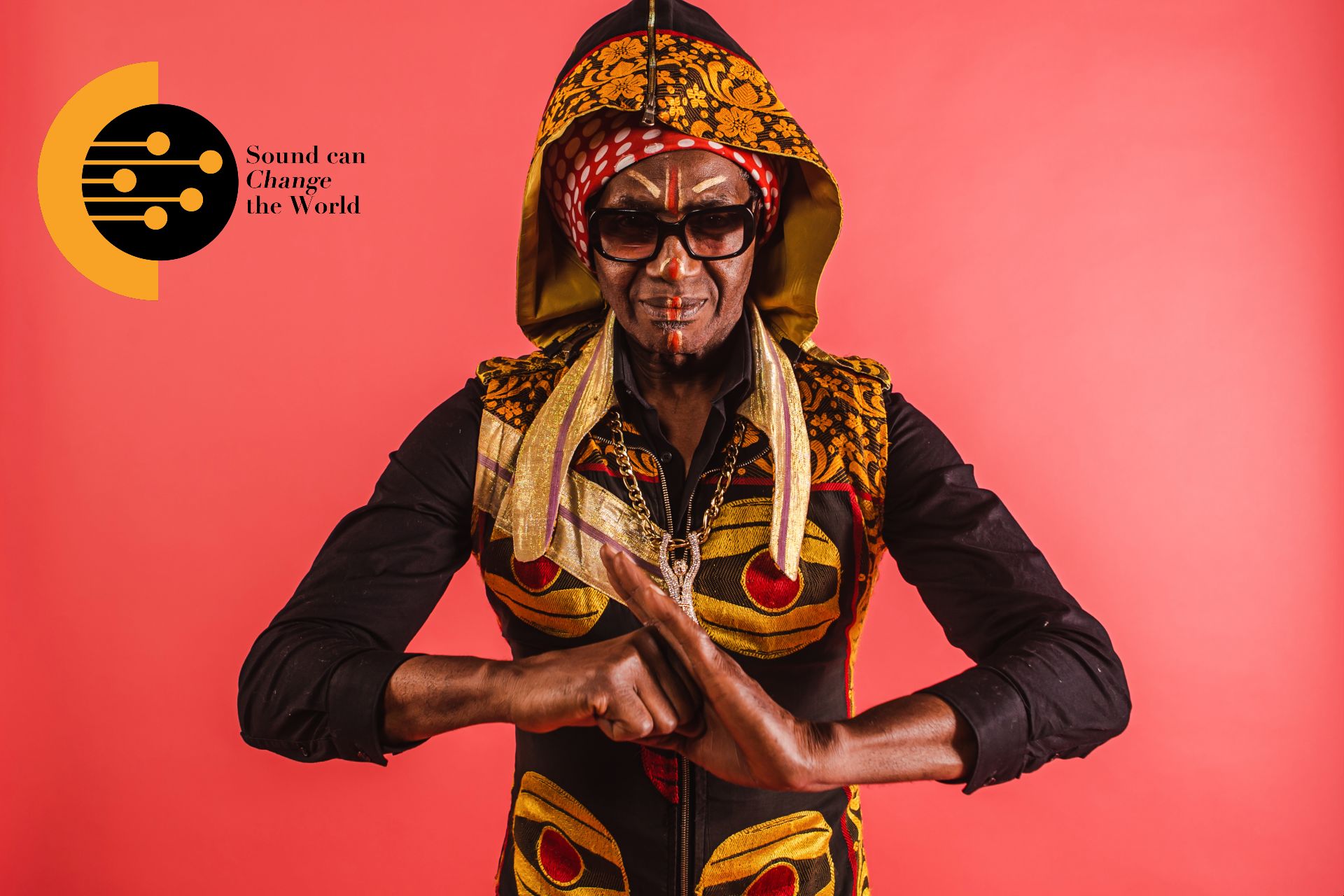 AMAYO Interview Image by Kory Thibeault
"Music is the best vehicles to start, maintain and grow any project."
Video