Name: Sorvina
Nationality: American
Occupation: Orator, songwriter
Current release: Sorvina's Oh, The Places You'll Go EP is out via Recordjet.
Current event: Sorvina is one of the artists appearing at the XJAZZ! 2025 festival in Berlin. For tickets, go here.
Recommendations for Berlin, Germany: One of my favorite spaces for art & music in Berlin is 90mil! Grateful for the work that those folks do in supporting artists with executing their visions and ambitions.
Topic that I am passionate about but rarely get to talk about: If you ever see me at a show, ask me about my favorite American national parks.
Shoutouts: Tyler, The Creator, Doechii, Little Simz, and every other queer Black rapper! The future of hip-hop is intersectional, and I love to not only see it but attempt to be a part of it.
If you enjoyed this Sorvina interview and would like to find out more about her projects and music, visit her official homepage. She is also on Instagram, and tiktok.
What were some of the musical experiences which planted a seed for your interest in hip hop?
2015, Kendrick Lamar’s To Pimp A Butterfly.
This album was everything to me – and from this project, I gained the inalienable understanding that rap can be jazz, poetry, theatre, concept, and anything else that we may dream it to be!
TPAB planted a seed that I can feel is still blossoming to this day.
What does the term hip hop mean and stand for today, would you say?
To me, hip-hop is a never-ending unfurling of the human imagination!
This genre (and all of the many different faces that it wears) is so special because it is a direct reflection of the human condition – reflections that often disrupt the status quo or simply speak truth to whatever lived reality that artist may be facing.
Hip hop has always been about a lot more than just music. For you personally, is hip hop a way of life – and if so, in which way?
Real talk, it feels so much to me as though hip-hop is the greatest test of both honesty and authenticity.
In so many ways, this genre constantly challenges me to face my own self, and in this way, writing verses and hooks is absolutely a way of life because it constantly questions my humility and ability to say something real.
What, would you say, are the key ideas behind your approach to creativity?
I have to always remind myself that creativity and creative ideas come from an unspeakable, infinite source, and that I (and all of us!) carry this source within. As long as I can feel connected to that source (or at least believe that it’s there), it’s miraculous how easily ideas will flow into their exact right places.
This is not to say that it’s always easy, but I find comfort in knowing that this power can never leave me.
Where do most of your inspirations to create come from – rather from internal impulses or external ones? Which current social / political / ecological or other developments make you feel like you need to respond as an artist?
My music is very much a reflection of my inner world, and my inspiration to create comes most from my intrinsic need to tell stories. As a queer, Black woman, my story always revolves around the delicacies of this identity.
The current uptick of global policies/narratives created to alienate and harm marginalized people only deepens my urge to be honest about who I am and double down on the fact that the love I have for myself cannot be altered nor destroyed by any system designed to make me feel that way.
Hip hop has always had an interesting relationship between honouring its roots and pushing the music forward. What does the balance between these two poles look like in your music?
I would say this balance is most reflected in my practice.
Every week, I intentionally spend time studying and dissecting one of the OG greats (right now I’m on a huge Mos Def kick!) – focusing on everything from their flow and delivery to understanding who their inspirations at the time were.
Then, on the other hand, finding inspiration in the people who are at the front of the genre now and understanding what makes them innovative.
Huge shout-outs to Doechii and Tyler, The Creator – everything they touch is a lighthouse for me.
And when I step into the studio, I carry inside of myself everything that I learned. This is balance.
What role do electronic tools and instruments, including AI, play for your creative process?
I’ve been making demos on GarageBand for iPhone since I was in 7th grade! Have you ever checked out their AI drummer function? Absolutely nuts, and really cool.
Although the finished products of my music almost always end with using real people and real instruments. Shoutout to my producer Jakob Hegner (aka jakohitsdifferent) – hip-hop beats with a real acoustic drum set really do hit a lil different!
Tell me a bit about the sounds & creative directions, artists & communities, as well as the colleagues & creative hotspots of your current hometown, please. How do they influence your music?
A Song For You, the Berlin-based vocal ensemble, is my home away from home. I am so grateful to be a part of this beautiful entity which, in my humble opinion, is one of the most special and innovative projects coming out of Berlin at the moment.
Being able to watch folks like Noah Slee, Dhanesh Jayaselan, and Stephanie Ilova conceptualise and execute ideas has been a masterclass in dreaming for me.
How do you see the role of sampling in hip hop today?
It’s just another playground for creative ideas!
I love the way that hip-hop can breathe new life into pre-existing concepts.
There has always been a close connection between hip hop and jazz. What role does improvisation play in your current creative process?
One of the reasons I always insist on performing with my band (as opposed to using backing tracks) is because I like the comfort of knowing that at any given moment we can surrender to the spontaneity of whatever the music calls us to do!
When I perform our poetry tracks, for example, those songs have never been performed the same way twice because the way we all feel and the way we all relate to the content of the piece is always evolving – therefore, these songs always include improvised ideas to capture that evolving nature.
In the more gospel-influenced parts of my set, I always improvise the message that I speak to the audience in the same way that pastors often improvise prayers.
It can sometimes seem as though, in hip hop, production is the main force of progress. Do you feel like there is still space for genuinely new ideas for lyrics and vocals as well? If so, what could these look like?
If I sincerely believe that we are all connected to an infinite source of creativity, then I would be contradicting myself if I didn’t think that there was always room for innovation – including but not limited to fresh lyric ideas and vocal techniques.
It’s hard to say what those ideas might look like (and if I knew, I would certainly be trying to do it now, ha!) but I trust that this infinite creative source will always speak through someone here on Earth.
I will be as diligent as I can to stay centered in this truth, so that someday perhaps those new ideas might flow through me!
For many artists, life-changing musical experiences take place live. How do you see that yourself?
By far, my favorite component of being an artist is performing live! There is something so special to me about creating a feeling in real time and seeing how that feeling is cultivated both by myself and by everyone else in that room.
Some of the most profound moments of my life have happened on stage, and I have such a deep sense of purpose when I’m able to step onto a stage.
How, would you say are your live performances and your recording projects connected at the moment? How do they mutually influence and feed off each other?
Whether I’m writing a verse, a full song, or even a poem, my work is always created with the intention of sharing it in a live setting. Always.
The writing process is important for me to understand what it is I want to say or share with the world, but performing challenges me to examine how I want to say what needs to be said, and this part for me is the most impactful.
From Star Wars via The Hitchhiker's Guide to the Galaxy to The Fifth Element, there have always been amusing sci-fi ideas about what music could look like at some point. For a not-too-distant future, where do you personally see it going?
I’m lowkey looking forward to the day that algorithms become so powerful that the only possible way we, as a human race, can fight back and defeat the machine is by listening to the radio again.
But this time, the radio doesn’t play the same song 18 times a day. Thank you for coming to my TED Talk!
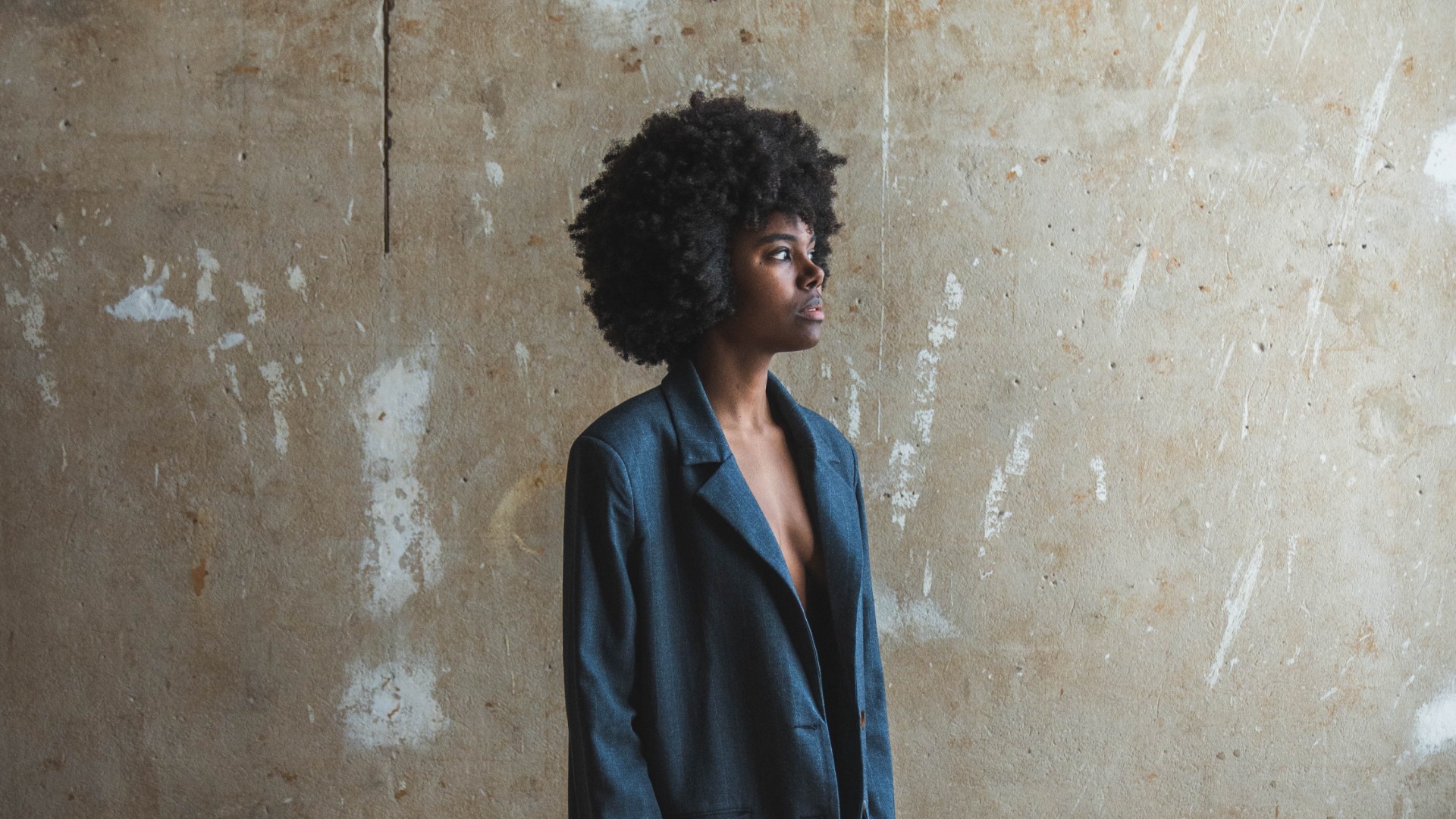 Sorvina Interview Image (c) the artist
“Hip Hop constantly challenges me to face my own self.“
Video