Name: Nikola Grebovic aka Scalameriya
Occupations: Producer, sound designer, DJ, performer, composer, label founder at Void+1
Nationality: Serbian
Current release: Scalameriya's new Raven Supreme EP, featuring Vasago, is out via his own Void+1 imprint.
If you enjoyed this interview with Scalameriya and would like to know more about his music, visit him on Instagram, Facebook, and Soundcloud.
Time seems to be an important aspect of the label and its release schedule. What are your personal reflections on time and how they relate to VoidPlus1 and your own work?
It is integral to both my creative work and the V+1 lore, but I did stop worrying about time eventually. Our brains will most likely never be able to perceive it as it truly is, therefore, it is a fool’s errand.
I did create a model of it in my mind, but going further is impossible: A swarm of interconnected spheres. Think of the way a video looks in a timeline in a video-editing software. Now multiply those timeline-strips by the amount your mind can visualize, as close to infinite as you are capable to. Now turn the strips into 3D spheres that are interconnected. Now imagine this construct is merely a shadow of the “real” thing.
If we could interact with this “construct” directly, “now” would be wherever we choose the “now” to be in the observable timeline that is the construct itself. Yes, not when-, but wherever ... Unless it is a solid torus at its core ... Then we are dealing with neither where nor when, but “how likely”, which would be a bit disappointing, but still less boring than the deterministic model.
As we have no perceptual capabilities to imagine either of those options in their fullest, all that is left for me is to do my best to enjoy the present moment. The Void+1 lore plays with this concept in its lore and a lot of my tracks seem to be fragments of it in one way or another.
I love how the label is also defined by personal connections and stories. Tell me just a little bit about this and what kind of a vision you have for the label as more than just another outfit for releasing music.
I wanted V+1 to be the ideal label for my own output.
We work under the assumption that if I would be happy to release on the label and to get the treatment that we provide, so would likely be other artists. We do our best to encourage them to take risks and be themselves while presenting vague guidelines. Usually this works, but I also find that some are quite confused about it.
The other part is that I am a hard-core nerd, so when I release something I want to have a story around it. There has to be a concept behind every aspect of the label: be it the comic book feel, the movie aesthetics, the child-like wonder about things, a log entry, a riddle that leads you to exclusive material, a game etc.
So, the same idea applies here, if the label has that wonder-factor for me and Slavica, it is likely that there are people out there who will appreciate it as well. We often reward curiosity with gifts and easter eggs. Just another label that releases what currently works and does things how someone said things should be done because those things were the norm 30 years ago, is as boring and damaging to the community as it gets.
And lastly, there has been a serious crisis of quality in the scene for about a decade now, and it seems like nobody is fighting it or even speaking up about it publicly. Everyone is afraid of losing money, while they are losing more money and even parts of their souls in the long run by conforming.
We don’t mind leading this battle, but it seems like we are currently the only ones standing our ground. In a way, this makes it even more exciting.
The fast production approach to your new release was an “emergency response,” so I take it that sticking to the schedule is essential for VoidPlus1. What would it have meant it you hadn't been able to keep it?
Yes, it is essential, especially this year, but the option of not keeping the schedule does not exist. We would have found a way regardless.
Luckily I always have a ton of my own material either immediately ready to go or within a day’s work. However, I chose to turn the situation into a challenge and a project.
Quite happy that I did so, as it was beyond fun.
How do you see the value of discipline in creativity and everyday life?
Discipline is everything. You can be the fusion of Tesla’s and Da Vinci’s reincarnation and without discipline you’d still be doomed to a life of boredom, depression and mediocrity.
While my statement may sound harsh, discipline is a simple decision really. Simple, but far from easy.
And yes, this applies to everything. Creativity, health, business, mental states.
One part of the label project, the way I understand it, is to use music to capture specific moments in time and tie music to them.
Yes and no. One of the things that we are trying to do on the label is to provide a platform for artists that we choose to invite to conceptualize and advance their craft. That concept often ends up being “capturing the moment in time” for some of them. This is the “yes” part.
The “no” part is that we want their concepts to be as daring as possible, not strictly capturing any moments. Let’s say, sending us a track that sounds like “a 3-legged zebra made out of glass running away from a swarm of cybernetic mosquitos, while its tinfoil-heart beats at 128 bpm. The zebra has slippers on 2 of its legs and a cowboy boot on the third one”.
How do you see the relationship between the moment and the music created in it? Quite often, sad music gets written in happy times of an artist's life and vice versa, so it seems like a complex relationship.
Until recently, I struggled with this question. It is bizarre, isn’t it? But due to some recent events in my life I realized that this is the most likely scenario:
Most of us are horrible at regulating our emotions and we are taught that “emotions are ok”. Which, they are, yes, but we are also capable of manipulating those emotions. Not suppress them, outright turn them into their opposites at will. I think this is one of the core principles that an artist needs to learn.
And then the other part is that creating moods to sound at will is a skill and a language on its own.
The press release mentions that the Raven Supreme EP was “shaped by hyperphantasia and an aversion to trend-led repetition.” What does that mean, concretely?
That was probably taken from my biography and incorporated into the press-text. It is relevant to all my work, so I can answer it in the context of Raven Supreme as well: I do have severe hyperphantasia.
If you are familiar with the basic “imagine an apple test”, I can imagine it in 3D, 4k, rotate it, zoom into a single pore of it and see a whole universe within it, while every movement of objects from that sequence creates sounds. I can do the same thing the other way around, sound to image, which is probably why I am so much in love with sound design. Now, I can do this at will, being in control and designing stuff, or I can simply let it “roll” out in front for me, like a movie.
With Raven Supreme, I tried to trigger an extreme form of this through sleep-deprivation and come as close to “taking a photograph” of moments from those “movies”.
For example, “Bent Spoon, Red Pouch, Glowing Moth” was a simple sequence, from left to right, of pixelated icons that looked like those objects. “How To Tame A Raven” was an obscure instruction-sequence of how I can befriend a raven by using an offering, a peanut that has shells of pure darkness and golden cores.
“Polyglobot” was a toy robot-face speaking in multiple languages, “Lo-Fi Jessica” was Lady Jessica from 1984 Dune in a royal dress, holding a boombox on her shoulders and staring menacingly thru an 80s visor into a mirror while dancing without moving her feet.
As for “trend-led” repetition. Probably taken from the “immune to trends” line in my bio, which I am, often at a cost.
I talk to producers all the time who speak about their constant questioning and difficulties finishing things in the digital realm. What are your own challenges in this regard and outside of this 33 hour approach, are there any other strategies you've tried and followed in the past?
I am sorry, I know I am supposed to say something relatable, but I do not have challenges with completing any of my work. The only thing close to a challenge is that I always want to do better and to make more.
I can have ideas on demand, I can do commissions on demand, and I still wish I could have 10 more ideas on top of it all. Hunting for those ideas is addictive and it is “challenging” only in terms of the quality of those ideas and the lack of, again, time.
The only strategy I have is to work on my imagination and regulate my mental states, which in my opinion is the only way one can improve other than learning the “craft,” (which should be step #1 anyway), and being disciplined.
The EP was produced almost entirely in under 33 hours. How different is this from your usual creative process?
My usual creative process is simply creating every day whatever I wish. This can be starting 10 new ideas or doing one from start to finish or finishing 10 I started the previous days. Basically active imagination and intent.
This EP was different in the way that I wanted to finish a whole EP, start to finish, in 24 hours after I haven't slept a day before in order to capture the bizarre moments that appear to me, without trying to modify them willingly.
Snapshots of passive imagination I suppose?
What exactly happened in those 33 hours?
The challenge started, the challenge was completed.
During this time, I only took breaks to vape, go to bathroom and I don’t even remember if I had something to eat, as I choose 1 or 2 days per week as fasting days for health and creativity-reasons.
It is already hard at times to say who is in control in a slower process – the music or the artist? What did that feel like for a process which was so much faster than usual?
The artist is always in control. At least, that is how it should be.
It was the same for me in this process as usual. The only thing that I didn't have control over, was what was being “shown” to me.
How much post production was there still after you had nailed the basic arrangements during those intense first 33 hours?
None. It was supposed to be a 24h challenge. I failed it. It took about 30h, but we used the 33h info as a “pun” that fits into the Year-4, occult narrative of the label.
But yes, everything was done in those 30 hours with only one of the tracks having to be re-exported a few days later due to an initial off-grid export that was luckily caught in time before it reached the stores.
Disclaimer just in case: I am talking about the first 4 tracks. The 5th collab-track with Vasago was completed months before and added to the release as a bonus.
The shorter the production process, the more blurry the borders between improvisation and composition get. How do you see these borders and the relative benefits of one over the other?
I don’t believe in improvisation the same way, or I don’t see it the same way as our society does.
It can be fun and it is very flow-dependent to be done right in its dictionary definition, but if someone is able to get into flow on demand, is it then improvisation? If confidence and competence are aligned, it is by definition not improvisation, so, on a high level, improvisation becomes a paradox if we allow it to exist in its dictionary form.
How fast does an idea have to go from “conception” to “form” to be labelled as improvisation? I don’t see any borders, it is the same exact thing, the only difference would be time, which is a tricky subject.
After completing the EP, how do you see the for you ideal balance between perfection and spontaneity?
There is none. I despise the modern notions of perfection and I can only barely tolerate spontaneity. If you achieve perfection, you have no improvements to look forward to, and if you strive to reach perfection, then there is either no perfection to begin with or you are being hubristic.
Then there are people who will argue that perfection is subjective. It is not. Perfection is unreachable, an ideal in itself. Unless we talk about terminology used in mathematics or simple, closed scenarios and systems. Therefore, if you are labelling yourself a perfectionist, you might as well call yourself a mediocre coward.
Spontaneity related to creativity is an excuse for incompetence and could be probably thrown into the same bucket as improvisation.
When you now look back on the material today, do you see more things that you would like to change or a bigger satisfaction about getting it done?
There is always something I wish I could change, of course. But the whole point is not being able to change it. This is how one grows.
Yes, you can always go back, rework, reinterpret, remix, remaster. I do have the “I could not have done better” phase, but this lasts only about 3 months to a year for me from the moment of completing the work and I really hope it will remain so until the day I die.
In how far did getting this project done give you fresh inspiration for future projects? Do you see yourself returning to this kind of approach?
No inspiration whatsoever. Maybe an ego boost that lasted for like a day, but I immediately continued working on new material.
As for returning to this kind of approach, most likely not, as I do not see anything to gain from it. I am thinking about other challenges for the future, such as creating a track with volume off, while not listening to what is being created, completely from memory and prediction that arises from experience.
Not sure where the value is in that though, other than having a challenge as entertainment and prove my own claims to myself.

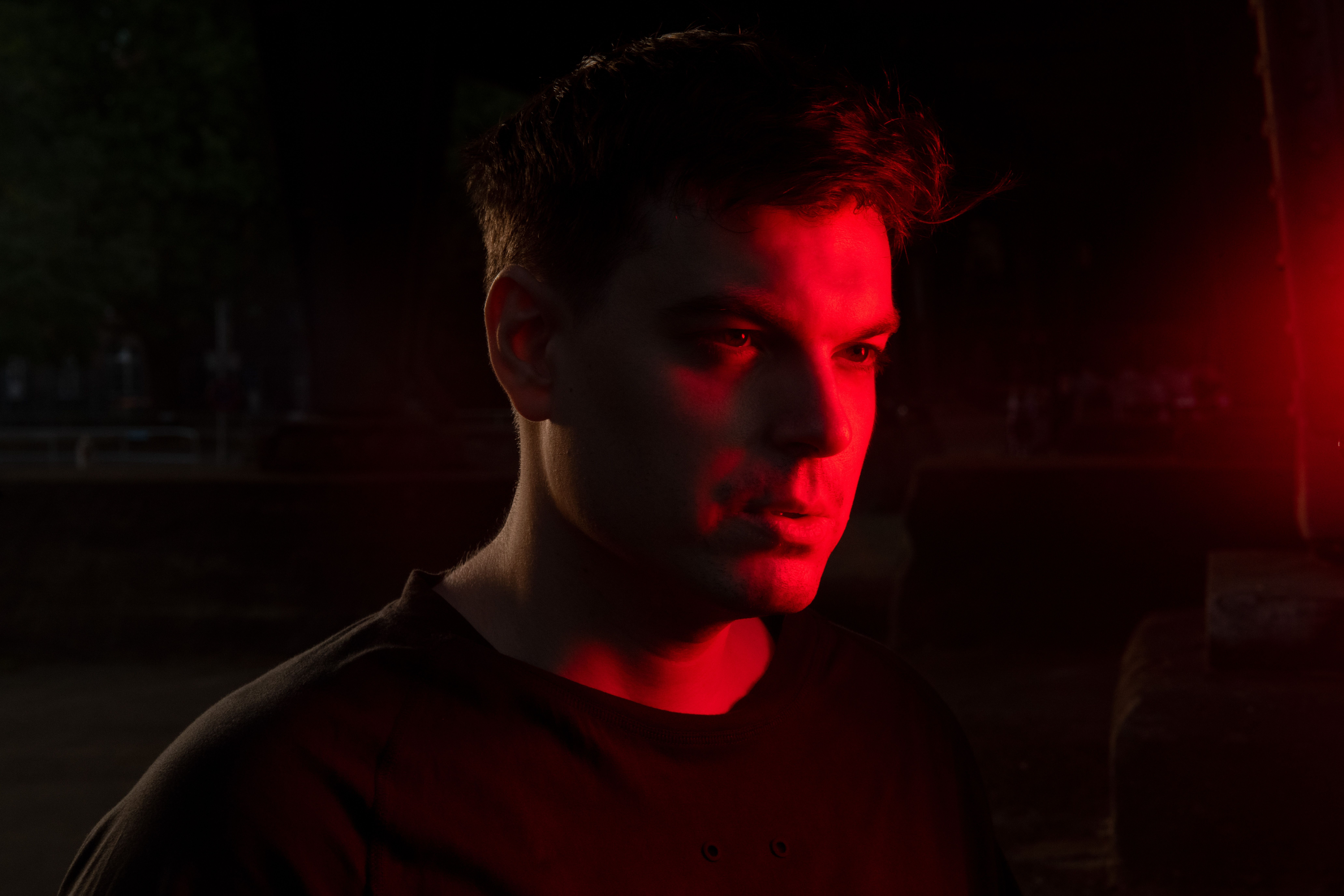 Scalameriya Interview Image (c) the artist
“You can be the fusion of Tesla’s and Da Vinci’s reincarnation. But without discipline you’d still be doomed to a life of boredom, depression and mediocrity.“
Video