

Part 1
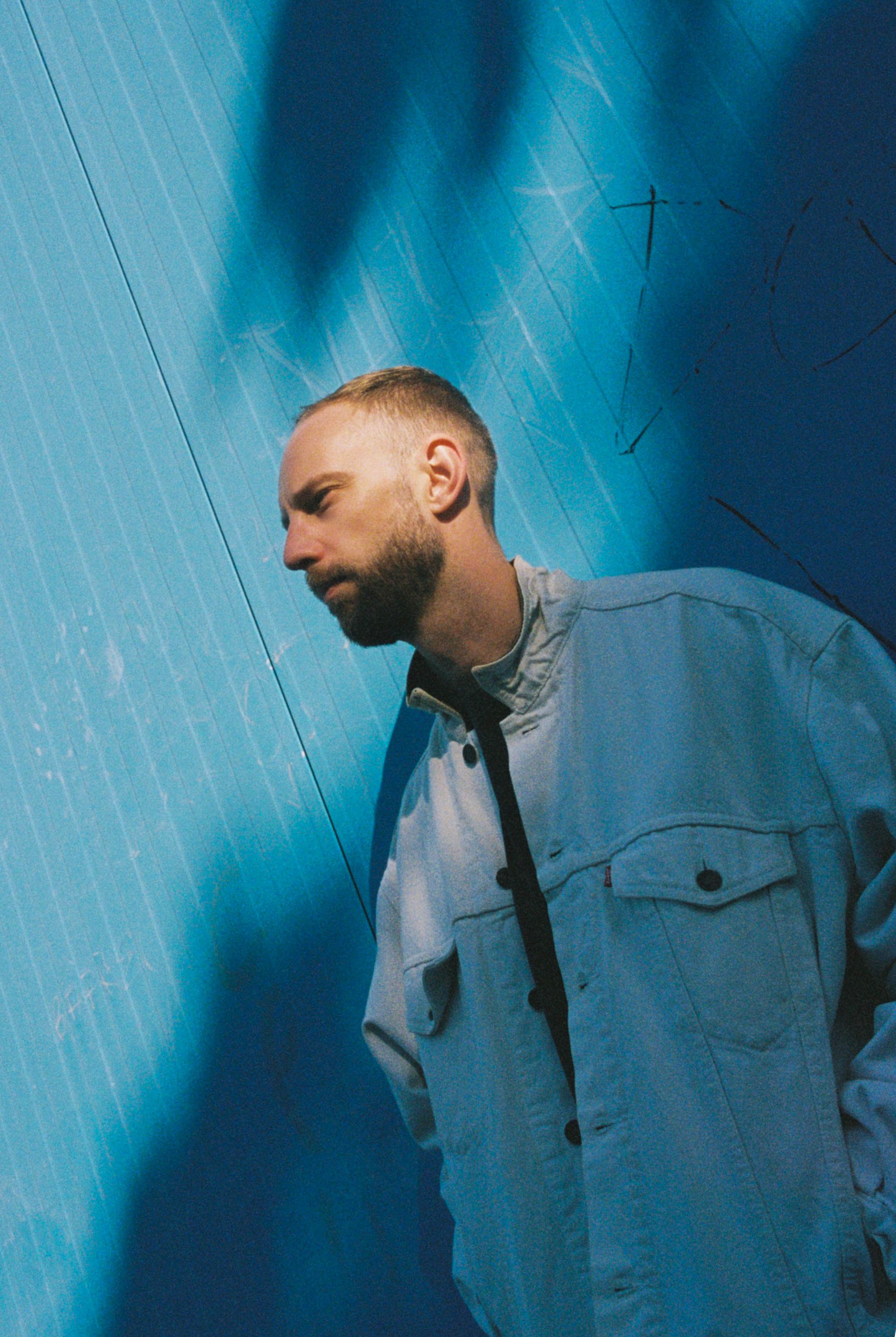
Name: Mark Newman aka Running Hot
Occupation: DJ, producer
Nationality: Welsh
Current release: Running Hot's Hot Tracks Vol.1 EP is out via Big Saldo's Cunkers.
Recommendations: Two recent reads that I’ve enjoyed …
The KLF: Chaos, Magic and the Band who Burned a Million Pounds by John Higgs - A bizarre but brilliant biography about a bizarre but brilliant band.
Keep on Dancin': My Life and the Paradise Garage by Mel Cheren - An essential read about Disco, The Paradise Garage and gay life in 70s/80s New York.
If you enjoyed this Running Hot interview and would like to stay up to date with his music, visit him on Instagram, Soundcloud, and bandcamp.
Do you think that some of your earliest musical experiences planted a seed for your interest in DJing? How and when did you start DJing?
I started DJing at a really young age (13) so some of my early experiences were DJing itself.
I was introduced by a friend’s older cousin who had started going to raves and had begun DJing himself. He gave us some mixtapes and I was hooked from the first listen. The music (Happy Hardcore!) was like something from another planet compared to what I had heard up to that point. I didn’t really understand what I was listening to.
On the tapes you would also hear the crowd noise, but I had no real idea of where this was happening, what it looked like, how many people were there, I just knew that whatever it was I wanted to be part of it. It took a couple more years before I actually made it to a rave but I started collecting records and DJing straight away.
Before that I had always been really into music. My Dad is a huge music fan and plays guitar, he’s into classic rock, soul and blues, so there was a lot of that growing up alongside the usual pop music of the time. Early on I was into some indie stuff like Oasis but also a lot of Eurodance that was around at the time like Culture Beat, Corona, Maxx which definitely ties into the later Happy Hardcore stylistically.
Today, DJs are rarely just DJs. Very often, they can be producers who are also DJs or DJs who are also producers. Where do you see yourself on this spectrum and what kind of potential issues and cross-pollinations does this create?
I definitely see myself as a DJ who produces. Having started DJing at such a young age, producing came a lot later in life so it will always be secondary to me. I enjoy making music but it doesn’t give me that same buzz that DJing does.
I find it strange these days that people will often discover me through the music I make rather than my DJing but that’s the way it’s developed. Producing has given me another way to communicate my taste, but DJing is still where I feel most at home.
What were some of the most important insights you gained from teachers/tutorials, other DJs, or personal experience? What does it mean to be a “better DJ?”
There weren’t really any tutorials when I started learning. My first home DJ setup was a couple of hi-fi turntables, one of which I’d stolen from my Dad’s hi-fi, and I couldn’t understand why it always sounded so bad when I mixed. Neither of the turntables had pitch control so it was impossible to beatmatch, but at the time I had no idea that beatmatching was even a thing.
It sounds ridiculous now that you can just go on YouTube and there’s a million tutorials showing you how to do everything but at the time it was just a case of figuring it out. Chris, who was the friend’s older cousin I mentioned earlier, was someone that helped show me a lot of stuff over the years. Listening to his mixtapes or going round his house and mixing I learned a lot. I didn’t realise at the time but he was an insanely talented DJ in terms of the technical side of things.
I remember when the Pioneer CDJ 1000s first came out and he was the first person I knew to have some. He brought them round to my house one night and showed us all these different tricks he could do with scratching and various combinations of effects and it’s wild looking back now at what he’d managed to teach himself. Never underestimate the creativity of a bored teenager with lots of time on their hands.
For me, being a better DJ is just becoming better at understanding your own tastes and how best to deliver that to an audience. Particularly now there are so many things trying to tell you what’s cool, what records to play etc. I think it takes someone with a very defined sense of self to resist all the outside influences and understand what their own taste is and be brave enough to deliver it.
I think it’s also one of the hardest things for a DJ to do, it’s something that took me a long, long time to achieve for sure, and it’s rare when you see it but it always stands out when you do.
For you, is there still listening outside of looking for music for your next sets? If so, what do you prefer to listen to and how does it possibly nonetheless have an influence on your performances?
Honestly, these days I don’t listen to as much other music as I’d like. I used to listen to much more but as I’ve got busier with DJing and producing as well as listening to stuff to release on the label that by the end of the day I’ve usually had enough music.
I definitely plan to start listening to music around the house more though as I have a young son and I know how influential it was for me to hear my Dad playing different types of music around the house and I want him to have that same experience.
When digging, what are you looking for? Is the process all about taste for you, or is it about “going beyond taste?”
I would say it’s all about taste for me.
In terms of my sound as a DJ, I’m not trying to play the most forward-thinking music or chase the wildest new sonics. I’m just looking for records I genuinely love. I tend to connect to music on an emotional level so I’m looking for any type of record that makes me feel something.
It’s probably quite a classical approach to DJing, but that’s always been what felt most authentic to me.
On the basis of one of your most recent gigs, tell me about how the preparation- and decision making process works during a gig with regards to the inclusion of key records, the next transition and where you want the set to go?
So I do a lot of preparation beforehand in terms of Rekordbox admin, making playlists for different moods etc. as well as making edits of records. I never plan what I’m going to play but just easily being able to find the type of track I’m looking for and knowing where I can mix it in or out for example gives me more confidence and flexibility when I’m actually up there playing to be able to do what I want.
In terms of the specific process of selecting the next track, it’s hard to verbalise it. Most times it tends to be obvious. Sometimes it isn’t and I have to dig a bit through my playlists to find something that will work.
In terms of key records, there are usually a few that I have in my head that I’d like to try and play but I don’t tend to force that too much anymore if the moment's not right. I’ve learned the hard way over the years to trust my gut. Every time I’ve tried to force a track in because I wanted to hear it, it hasn’t worked.
There must be endless ways of “matching” two or more tracks. How do you prefer to do it? What makes two tracks inherently “matchable” and what constitutes a great transition?
There’s a million ways to approach it. Personally my style is a bit of a mix but probably tends to lean towards longer, smooth blends.
I like things that work harmonically. I grew up listening to a lot of Sasha and Digweed and so that style of trying to seamlessly blend one track into another has never really left me. That said, I started DJing with Happy Hardcore as I mentioned and also DJ’d a lot of hip-hop over the years so I can also throw quicker cuts in too if the tracks call for it.
Obviously, having similar tempos, energy, sound palettes, or even being in the same key makes things inherently more matchable. But a great DJ can make two tracks work regardless of all that, so it’s as much about the skill of the DJ as it is about what is or isn’t matchable.
Similarly a great transition can be many things from a 2 minute long blend where the switch between the tracks is imperceptible to an instant fader cut into the breakdown of a new track that hits just right. I think the endless nature of it is at the heart of why it can be such a never-ending and addictive pursuit once you start.
How would you describe the experience of DJing, physically and mentally? Do you listen – and deejay - with your eyes open or closed?
Mentally it can be pretty all consuming and exhausting. I find there’s usually a bit of a re-integration period after you play before you feel back in the room fully. You’re hyper-focused on this one thing for however many hours you’re playing. You’re constantly trying to think a few steps ahead while also reacting to things in real time. That combination creates a lot of mental load.
As someone who has a particularly busy brain and internal monologue at all times I also find it quite cathartic as by fully focusing myself on this one task it quiets everything else going on in my head for the time that I’m playing. I’ve often thought that’s a big part of why I like doing it so much, is it gives my brain a rest from itself.
I don’t really think about it physically too much other than when you get into marathon set territory and just standing in one place for that long gets pretty tiring.