Name: Rokia Koné
Nationality: Malian
Occupation: Singer, songwriter
Current event: Rokia Koné is one one of the artists performing at the Musicport Festival 2024. Under the headline of “A Magnet for World-Class Musical Diversity,” the festival will take place at Whitby’s landmark Pavilion - Friday October 25 – Sunday October 27 2024. Get tickets here. Other acts at the event include Afro Celt Sound System, Chahat Mahmood Ali Qawwal Group, Divanhana, Fulu Miziki as well as Jah Wobble and The Invaders of the Heart.
Recommendations: The two pieces of art I recommend are the latest album by Les Amazones d’Afrique, Musow Danse, because it is a very important project that I was grateful to be a part of a few years ago and the feminist messages of the songs are important to be heard.
And also the novel Ségou by Maryse Condé, which is a story that takes place during the Bamana Empire in Mali, which may be interesting to fans of my music.
If you enjoyed this Rokia Koné interview and would like to know more about her music, upcoming releases and live dates, visit her official homepage. She is also on Instagram, Facebook, and twitter.
Where does the impulse to create something come from for you? What role do often-quoted sources of inspiration like dreams, other forms of art, personal relationships, politics etc play?
In Mali, our tradition is that the singers are the ones who spread messages of advice and guidance for the cohesion of society. These are the things I sing about in my songs, as well as spreading a message of equality for women and girls, because this is a problem in many African societies. So the responsibility of my role in society as a singer as well as my passion to stand up for women’s rights are the main inspirations behind my music.
A good example of a song which gives advice is ‘Bi Ye Tulonba Ye’, the first song on my album.
Also, ‘Mansa Soyari’ was a song I wrote for the all-female music collective Les Amazones d’Afrique, who campaign for gender equality. This song speaks directly to women and tells them that despite the difficulties we face.
We should still view being a woman as an opportunity, not a burden.
Is there a preparation phase for your process? Do you require your tools to be laid out in a particular way, for example, do you need to do 'research' or create 'early versions'?
I perform weekly in several music clubs in the Malian capital Bamako, which is where I live. I improvise a lot with my band — traditional Malian percussion, drum kit, bass, guitars, keyboards — and it is with them during our concerts that I carry out my creative process.
I am mostly guided by the rhythms and musical backing that they propose, and I put the melody and lyrics to it. It is a very organic process.
Eventually, sometime later, these songs change and develop, and finally someday I will go into the studio and we will record them.
When do the lyrics enter the picture? Where do they come from? Do lyrics need to grow together with the music or can they emerge from a place of their own?
In some of my songs, lyrics are partly drawn from the words of the griots (wordsmiths) whose role in our society is to pass down the history of our country through music and stories. So, some of my songs refer to the exploits of famous leaders in Mali’s history, and also bear wise words of advice and proverbs that are often said by the griots.
You can hear these particularly in the songs ‘Bambougou N’tji’, ‘Anw Tile’ and ‘Soyi N’galanba’.
Along with these historic words I introduce my own lyrics, and they really come from my subconscious in a very natural way. I never sit down to write lyrics on paper. They are stored in my head.
Many writers have claimed that as soon as they enter into the process, certain aspects of the narrative are out of their hands. Do you like to keep strict control or is there a sense of following things where they lead you?
I have only good things to say about the collaborators and producers who have been involved in my music. They take the traditional music of Mali for which I am a conduit, and adapt it and rework it to breathe new life into it. It has led to my songs being heard across the world, and we have seen some wonderful support for the music. Jacknife Lee produced my debut album, and I am thankful for this artistic collaboration, which has really helped my career.
[Read our Jacknife Lee interview]
Even in Mali, since the album has been released, my fans have been very receptive to the new direction of my music, and request that I perform songs like ‘Kurunba’ and ‘N’yanyan’ the way they sound on the album, rather than the more traditional way that I used to perform them.
When you're in the studio to record a piece, how important is the actual performance and the moment of performing the song still in an age where so much can be done and fixed in post?
I give everything to the performance in the studio, and we only record one or two takes of any song because I do not enjoy or find it useful to record many versions of the same thing. It makes me lose interest in what I’m doing.
Once a piece is finished, how important is it for you to let it lie and evaluate it later on? How much improvement and refinement do you personally allow until you're satisfied with a piece? What does this process look like in practise?
For me, I usually will sing the songs differently every time I perform them. It’s the way I have learned to be a performer — to be creative with the melodies and the rhythms.
Therefore, I don’t worry about one particular recording of the song. It’s just a moment in time that has been captured.
Even recording a solo song is usually a collaborative process. Tell me about the importance of trust between the participants, personal relationships between musicians and engineers and the freedom to perform and try things – rather than gear, technique or “chops” - for creating a great song.
I recorded most of my debut album BAMANAN in a studio in Bamako with my band who I have performed with for years. We are very familiar with each other so everything was quite easy.
The use of technology and gear came later when Jacknife Lee worked on the tracks to transform them, so I had the freedom to perform in the studio in a very instinctive way. Later he had the same opportunity to experiment with electronics in his studio without the pressure of live musicians surrounding him.
What's your take on the role and importance of production, including mixing and mastering for you personally? In terms of what they contribute to a song, what is the balance between the composition and the arrangement (performance)?
I have seen the great transformations that can happen to my songs in the hands of a good producer, and therefore I think it’s a worthy part of the process.
I am very open to radical reworkings of my music if it can make Malian music appeal to a wider audience, and I find that I really enjoy hearing these interpretations of my music.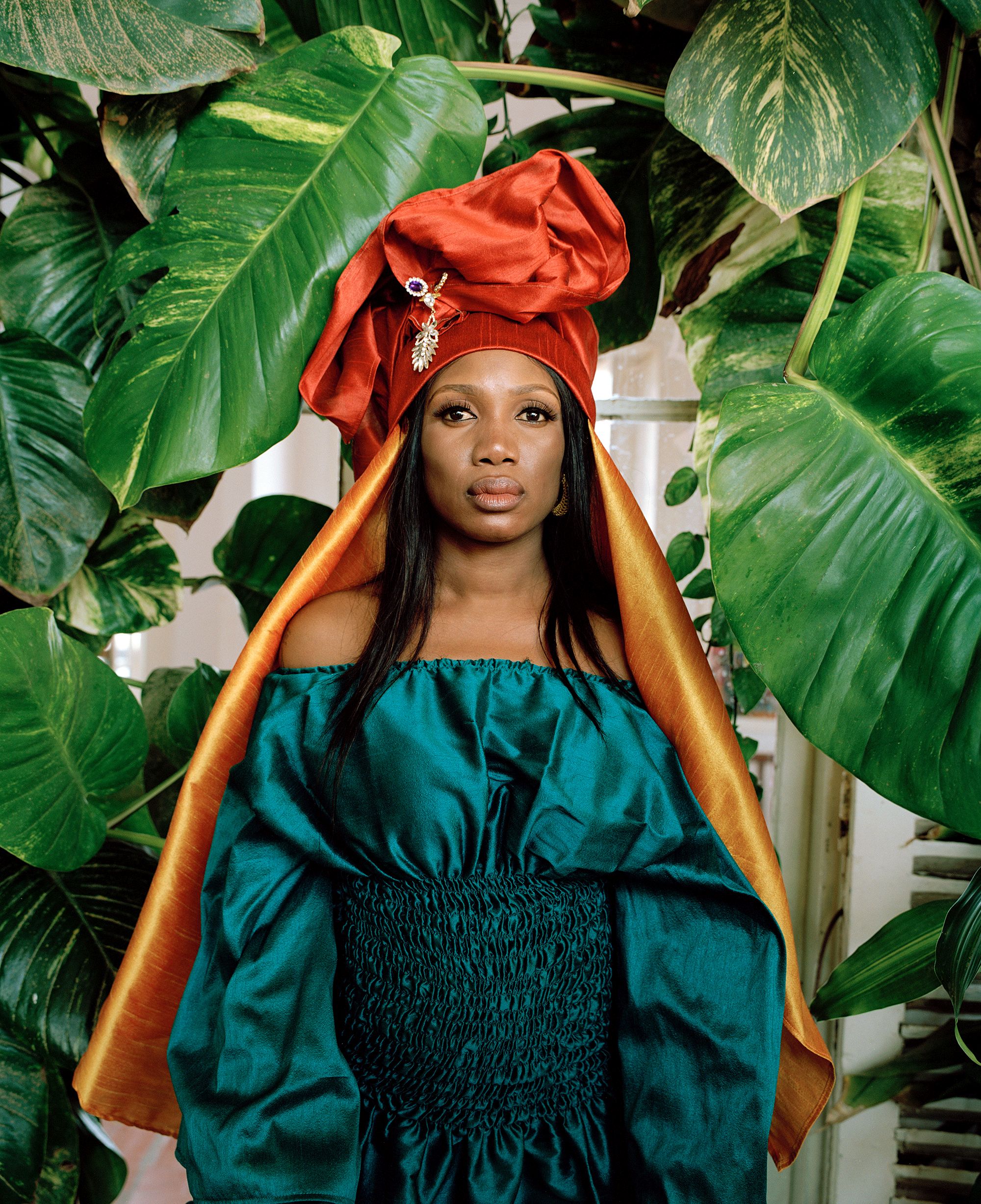
Rokia Koné Interview Image by Karen Paulina Biswell
Music is a language, but like any language, it can lead to misunderstandings. In which way has your own work – or perhaps the work of artists you like or admire - been misunderstood? How do you deal with this?
I haven’t really experienced this in a negative way.
I often hear that people don’t understand the words (because I sing in my native Bambara language) but nevertheless they are moved by my voice, which is a great compliment.
Creativity can reach many different corners of our lives. Do you personally feel as though writing a piece of music is inherently different from something like making a great cup of coffee? What do you express through music that you couldn't or wouldn't in more 'mundane' tasks?
I love making music, and there are times when I just sing and lash out and I release myself into the music — I let it take over me.
I’ll sometimes join my dancers and move frantically … but this all comes from the love I have for music. It’s as simple as that.
After finishing a piece or album and releasing something into the world, there can be a sense of emptiness. Can you relate to this – and how do you return to the state of creativity after experiencing it?
I don’t really relate to this. After the album was finished, I was able to look forward to the first live shows, and the rehearsal process was a lot of fun, and then when we went on tour it was amazing to perform the music in front of fans and feel their energy.
So, I always look forward to what’s next.

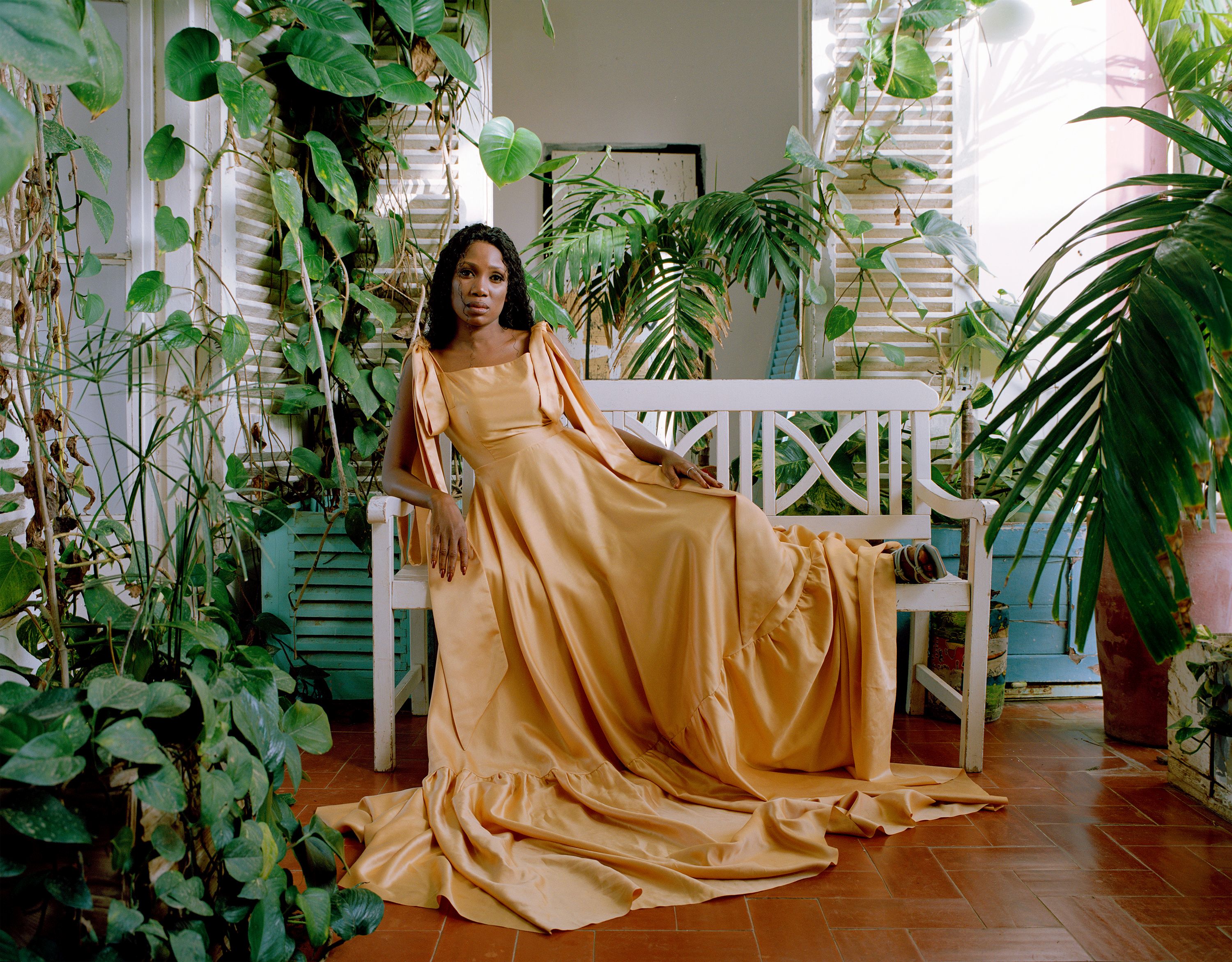 Rokia Koné Interview Image by Karen Paulina Biswell
“I never sit down to write lyrics on paper. They are stored in my head."
Video