Name: Rita Satch
Nationality: Australian
Occupation: Singer, songwriter
Current release: Rita Satch's Breathe / Joyride is out via Silk Throne. Full-length album Meet Me in the Garden will follow on February 25th 2025. Pre-order it here.
Pure vocal music recommendations:
Donny Hathaway - Live
Aretha Franklin – Amazing Grace
Stevie Wonder – anything (esp. Innervisions)
Nina Simone – Nina Simone & Piano
Marvin Gaye – Here My Dear
If you enjoyed this Rita Satch interview and would like to know more about her music, visit her official homepage. She is also on Instagram, Facebook, and Soundcloud.
Do you think that some of your earliest musical experiences planted a seed for your interest in your voice and singing? How and when did you start singing?
Some of my most treasured childhood memories is sitting around the dinner table, singing in harmony with my two older sisters. Music was always a part of the feast. And so, singing was always something that came naturally to me. A natural way of expressing joy, connection, and love.
I trained in classical violin and piano, inspired by my older sister, who was an amazing violinist. While I had natural talent, the pressure from my strict Soviet-era teacher and the constant push for perfection often left me feeling disconnected. Singing, on the other hand, always felt effortless and free— a natural extension of myself in a way the violin never was.
A few years ago, I picked up the guitar after spending a summer in New York and was instantly drawn to it. Not knowing where the chords were and intuitively following my fingers allowed me to discover my own harmonic concept. It was a more organic approach that felt like rediscovering music.
Over the past few years, I’ve found myself writing mostly on guitar, and it’s opened a new tenderness in both my voice and song writing.
Singing is an integral part of all cultures, and traditions. Which of these do you draw from – and why?
I come from a rich lineage of singers. My grandfather, whom I never met, was said to be one of the great singers of Shashmaqom - a style often described as the blues or gospel of Central Asia. I believe my voice is an ancestral gift, and I honour my elders for passing down this blessing.
One of my dreams is to travel back to Uzbekistan, journeying along the Silk Road—particularly to my family’s hometown of Bukhara—to explore my heritage and immerse myself in its rich history and culture.
What were some of the main challenges in your development as a singer/vocalist? Which practices, exercises, or experiences were most helpful in reaching your goals – were there also “harmful” ones?
I never had formal vocal training and was thrown into the deep end when I joined a professional wedding band at 15. My training was gigging every weekend alongside older, more experienced jazz musicians.
Playing with musicians who were far more advanced than me was both a challenge and a blessing—it pushed me to grow faster and really step up. I’ve always believed that surrounding yourself with people who inspire and challenge you is one of the best ways to develop as an artist.
How do you see the relationship between harmony, rhythm and melody? Do you feel that honing your sense of rhythm and groove has an effect on your singing skills?
I never had formal vocal training, so everything I do as a singer is pretty intuitive. My classical training in violin and piano gave me a solid foundation in harmony and intonation, but playing with amazing rhythm sections—shoutout to my drummer Felix Bloxsom and bass player Angus Radley—really helped sharpen my sense of rhythm and groove.
For me, harmony, rhythm, and melody all work together—they’re impossible to separate and create so much depth and feeling. Since picking up the guitar, I’ve started to develop a harmonic concept that feels like it’s mine. Because I’m not relying on theory and just figuring things out by feel, it’s opened up a whole new way of approaching music that feels really personal.
Honestly, just listening to music has been just as important as practicing—it’s how I’ve absorbed so much about how all these elements influence my singing naturally.
What kind of musical settings and situations do you think are ideal for your own voice?
The ideal musical settings for my voice are those where I feel completely free to explore and connect on a deeper level. There are certain people who bring out the best in me—people who allow me to sing in ways I didn’t even know were possible. When we work together, it’s like stepping into a portal where something greater takes over, and I find myself in a state of flow.
One such person is Australian musical royalty Barney McAll, whom I’ve been fortunate to work with for the past five years. I’ve featured on his last three albums and recording at his studio always feels magical. It’s like the space itself invites creativity to flow freely, and I’m able to tap into something beyond myself.
Those are the kinds of settings where my voice feels most alive and inspired.
When you're writing song lyrics, do you sense or see a connection between your voice and the text? Does it need to feel and sound “good” or “right” to sing certain words? What's your perspective in this regard of singing someone else's songs versus your own?
This is something I often struggle with, especially because my process usually starts with writing the melody using mumbles and fragments of words.
For me, the hardest part of song writing is deciphering those sounds and capturing the feeling they hold. It’s like solving a puzzle, and in the process, you uncover the message of your deeper subconscious. The words have to feel “right” for my voice—they need to resonate emotionally and fit naturally, almost as if they were always meant to be sung that way.
I believe that every song is already written—it exists somewhere, waiting to be discovered and brought into the world. We’re just the conduit for these ideas—they’re out there, but it’s up to us to stay open enough to let them come through. When I sing my own songs, there’s a deeper sense of connection because they’ve come from within me but singing someone else’s song can also be powerful if the lyrics and melody resonate.
Either way, it’s about staying present and creating space for the song to flow naturally, rather than forcing it.
Strain is a particularly serious issue for many vocalists. How do you take care of your voice? Are the recipes or techniques to get a damaged voice back in shape?
Hot tip … Dry sauna! This has become my go-to pre-gig ritual. It’s truly my happy place where I can find stillness and focus on my breath.
I’ve also been seeing a Wu Shen master over the past year, which has been a game-changer for my practice and overall well-being. It’s an ancient Eastern practice of energy release, helping to unlock blockages as many emotions are stored in the body. I highly recommend it.
And of course, most important of all is the breath. Finding that stillness and connecting deeply to it. I wrote a song about this exact thing—it’s called “Breathe.”
For recording engineers, the human voice remains a tricky element to capture. What, from your perspective, makes voices sound great on record and in a live setting?
I think it all comes down to trust. Trusting yourself to be vulnerable, staying in the moment, and letting go. Trusting the people you work with—feeling safe enough to try new things without judgment. It’s about working with people who are willing to jump off the cliff with you, musically speaking.
Finding the right microphone for your voice is important too. For this record, I tried a few, but the moment I heard myself through a vintage Neumann U87, I knew it was the one. A good room also makes a huge difference—being in a space where you feel comfortable is everything. For me, that meant recording all my vocals at home in my little studio, where I could completely relax and focus.
But most important of all is nailing a great take—no amount of effects, autotune or editing can fix a bad performance!

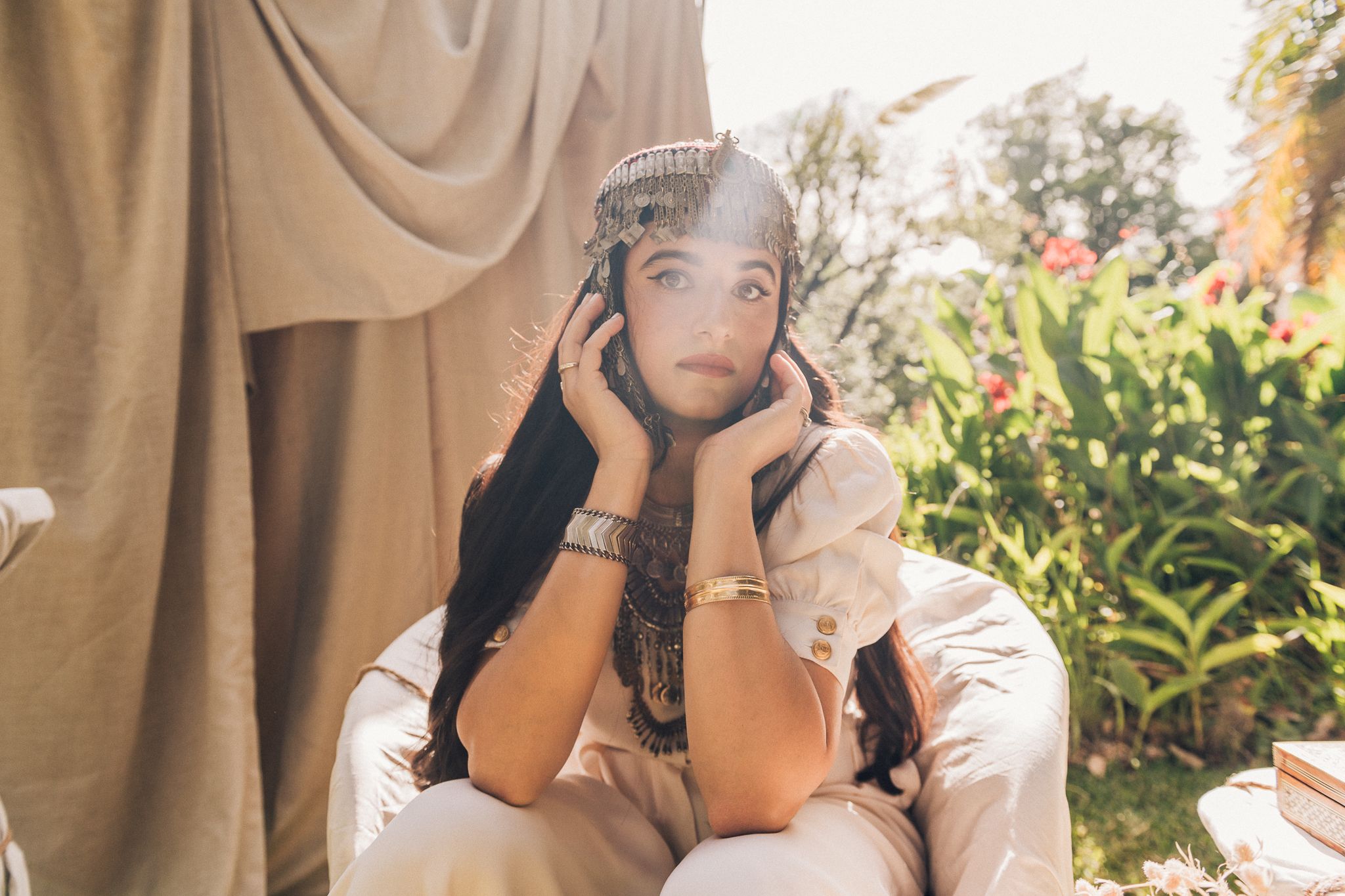 Rita Satch Interview Image by Ian Laidlaw
"Most important of all is the breath. Finding that stillness and connecting deeply to it."
Video