Name: Rafael Anton Irisarri
Nationality: American
Occupation: Producer, composer, sound artist, guitarist, mastering engineer
Recent release: Rafael Anton Irisarri's FAÇADISMS is out November 8th 2024 via Black Knoll. The second single off the album, "Red Moon Tide," featuring KMRU, is already available.
Recent events: Catch Rafael play live at one of the following performances:
If you enjoyed this Rafael Anton Irisarri interview and would like to stay up to date with his music and current tour dates, visit his official homepage. He is also on Instagram, Facebook, Soundcloud, and twitter. For mastering inquiries, visit his studio at Black Knoll.
For a deeper dive, read our earlier Rafael Anton Irisarri interview.
When I listen to music, I see shapes, objects, and colours. What happens in your body when you're listening? Do you listen with your eyes open or closed?
Whenever I need to listen with deep focus, I close my eyes. In the mastering studio, this helps me tune in to the finer details—whether I'm A/B testing tracks or comparing different versions, closing my eyes sharpens my ability to make the right decisions.
How do listening with headphones and listening through a stereo system change your experience of sound and music?
In the studio, I'm fortunate to have a wide range of headphones, with the Audeze MX4s being a standout. Their incredible detail allows me to make precise decisions during mastering, especially when it comes to spotting the smallest nuances in a track.
Tell me about some of the albums or artists that you love specifically for their sound, please.
Talk Talk – Laughing Stock
The Cure – Disintegration
Rhythm & Sound – Rhythm & Sound
My Bloody Valentine – Loveless
Def Leppard – Hysteria
Portishead - Dummy
Massive Attack – Mezzanine
[Read our Rhythm & Sound's Moritz von Oswald interview]
[Read out Tim Friese-Greene of Talk Talk interview]
Do you experience strong emotional responses towards certain sounds? If so, what kind of sounds are these and do you have an explanation about the reasons for these responses?
I love the sound of the world at 6 a.m. because everything feels so crisp and fresh, full of possibilities. It reminds me of the blue hour but in an auditory sense — a quiet, transformative moment when the day is just beginning to unfold.
There can be sounds which feel highly irritating to us and then there are others we could gladly listen to for hours. Do you have examples for either one or both of these?
I absolutely hate the sound of leaf blowers. They are so pointless and disruptive.
Are there everyday places, spaces, or devices that intrigue you by the way they sound? Which are these?
I've always loved the low hum of a train's sub-drone — it's soothing and meditative.
The deep drone on a ferry boat's engine has a similar effect, taking me back to a different time in my life in Seattle when I used to take the ferry to Vashon Island.
Have you ever been in spaces with extreme sonic characteristics, such as anechoic chambers or caves? What was the experience like?
I've been to so many places around the world with extreme sonic characteristics, that it's hard to choose just one.
Caves are definitely a favorite—magnificent spaces with stunning reverberations. I've also experienced the unique reverb inside an empty tower silo, which was fascinating.
But the most breathtaking space, acoustically, has been the Kamppi Chapel of Silence in Helsinki. The acoustics there are absolutely gorgeous—truly an unforgettable experience.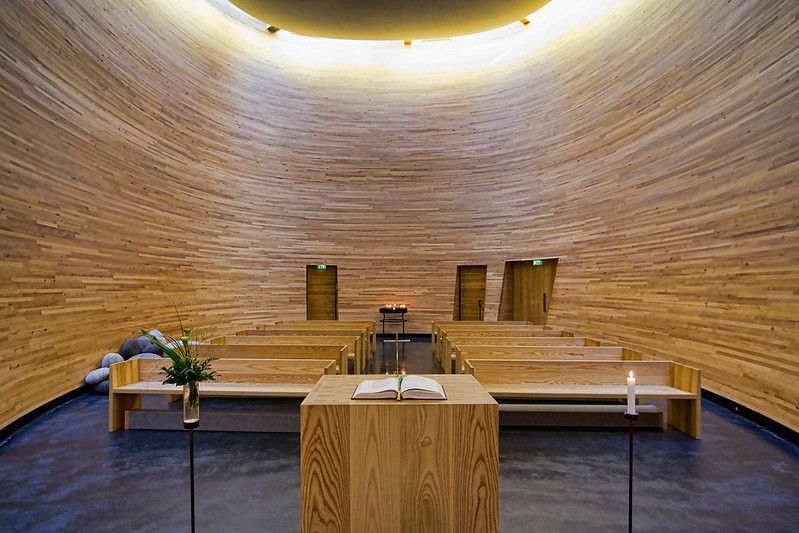
Kamppi Chapel of Silence in Helsinki Photo by Wojtek Gurak
What are among your favorite spaces to record and play your music?
Old European cathedrals and churches have always been a favorite of mine. Some of my most unforgettable performances have taken place in these historic spaces, like St. Peter & Paul Roman Catholic Church in Tbilisi, Georgia. Another remarkable venue was the Prague Planetarium, and I once even performed inside a former leprosarium in Ancona, Italy.
One of the most emotional experiences, though, was playing at the White Stork Synagogue in Wroclaw, Poland. The history of that synagogue—being the only one in the city to survive the Holocaust—made it a poignant reminder of the resilience of culture, especially in the face of rising anti-Semitism across Europe.
White Stork Synagogue, Wroclaw Photo by Slav@Wikipedia
Do music and sound feel "material" to you? Does working with sound feel like you're sculpting or shaping something?
Yes, it definitely feels that way. I often view my music as sculptures—frozen in time, capturing the essence of a specific moment and shaped into something meant to be appreciated later. The improvisations that happen in the spur of the moment are often irreproducible, embodying the unique feeling of their creation.
Because of this, I make sure to constantly record while I'm working with loops in the studio, preserving those fleeting, special moments before they slip away for good.
How important is sound for our overall well-being and in how far do you feel the "acoustic health" of a society or environment is reflective of its overall health?
I'm very concerned about noise pollution and its impact. Humans are a major source of noise, and it's becoming increasingly rare to find a truly silent place in the modern world. Even the most remote locations are still affected by human activity, such as the distant hum of airplanes overhead. The constant barrage of noise can be overwhelming and anxiety-inducing.
Since living in the quiet woods of rural New York, I've become especially sensitive to urban noise. Whenever I travel to the city by train, I wear earplugs to mitigate the intense, continuous noise that city life exposes you to.
Sound, song, and rhythm are all around us, from animal noises to the waves of the ocean. What, if any, are some of the most moving experiences you've had with these non-human-made sounds?
In late spring and summer, the cicadas and tree frogs create a symphony of sound in my backyard. It's a beautiful and immersive experience.
However, the most unsettling sound I've encountered in the woods was the night a pack of coyotes hunted and killed a deer. The deer's cries—an agonizing sound of impending death—were partially drowned out by the chaotic noises of the coyotes. After a few minutes, the noise suddenly stopped, leaving a heavy silence as the suffering ended and the coyotes were satisfied.
It's a stark reminder of the raw and often harsh realities of nature. And of course, I have a recording of it.
Many animals communicate through sound. Based either on experience or intuition, do you feel as though interspecies communication is possible and important? Is there a creative element to it, would you say?
I like to think my cats enjoy listening to me play the guitar.
Although, just like some people at gigs (particularly people in Los Angeles and New York), they often seem a bit aloof and indifferent!
Tinnitus and developing hyperacusis are very real risks for anyone working with sound. Do you take precautions in this regard and if you're suffering from these or similar issues – how do you cope with them?
Thankfully, my hearing health is excellent. I wear earplugs at every show, whether I'm performing or in the audience, and I encourage others to do the same. I also ask promoters to provide complimentary earplugs at every concert to make it easier for everyone to protect their hearing. While I love the immersive impact of loud music, it's essential to prioritize hearing protection.
As someone who relies on precise listening in the studio, I understand the risks of prolonged exposure to high volumes. Wearing earplugs isn't about diminishing the experience; it's about preserving your ability to enjoy music for the long term.
It's like wearing sunscreen at the beach—essential for protection while still enjoying the sun.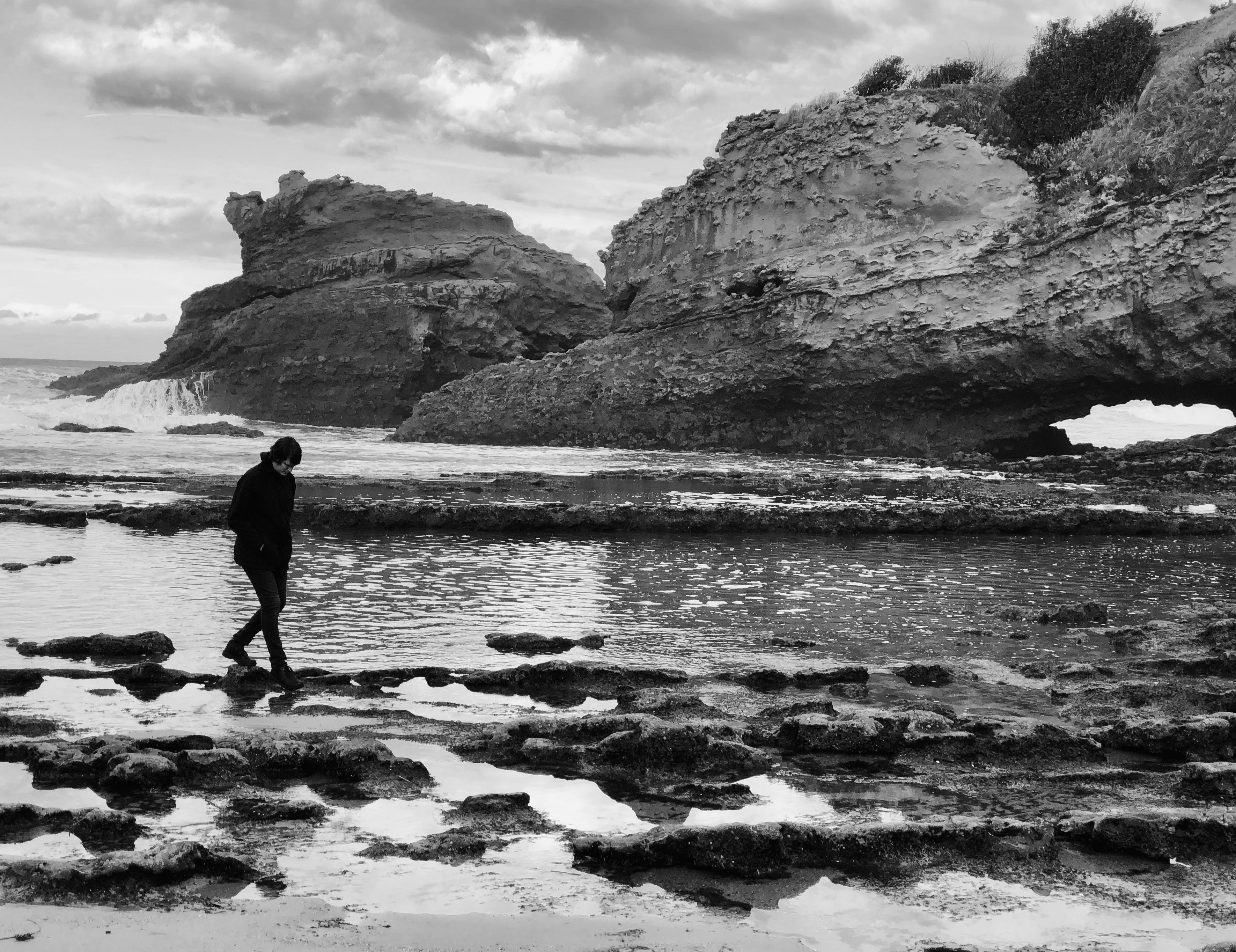
Rafael Anton Irisarri field recording in Iparralde Image by R. J. Irisarri
We can surround ourselves with sound every second of the day. The great pianist Glenn Gould even considered this the ultimate delight. How do you see that yourself and what importance does silence hold?
Silence is a critical element in music making—it creates contrast, builds tension, and adds emotional depth. Like the spaces between words, silence is essential for conveying meaning, intention, and feeling. It acts as punctuation, emphasizing and enhancing our communication.
One of the most impactful books I've ever read is Silence by John Cage. Throughout his career, he explored the concept of silence, famously stating, 'Sounds occur whether intended or not.'
When recording music, what we often call 'silence' is never truly silent; it's the subtle noise of tape hiss or the air in the studio. Absolute silence, like -infinity dB, would feel very unnatural in a recording.
Seth S. Horowitz called hearing the "universal sense" and emphasized that it was more precise and faster than any of our other senses, including vision. How would our world be different if we paid less attention to looks and listened more instead?
For starters, our communication could vastly improve as a species. We'd likely develop a deeper appreciation for the unseen, placing less emphasis on physical appearance and superficial judgments.
Additionally, our senses might become more refined, making us more attuned to subtle changes in sound that we typically overlook.

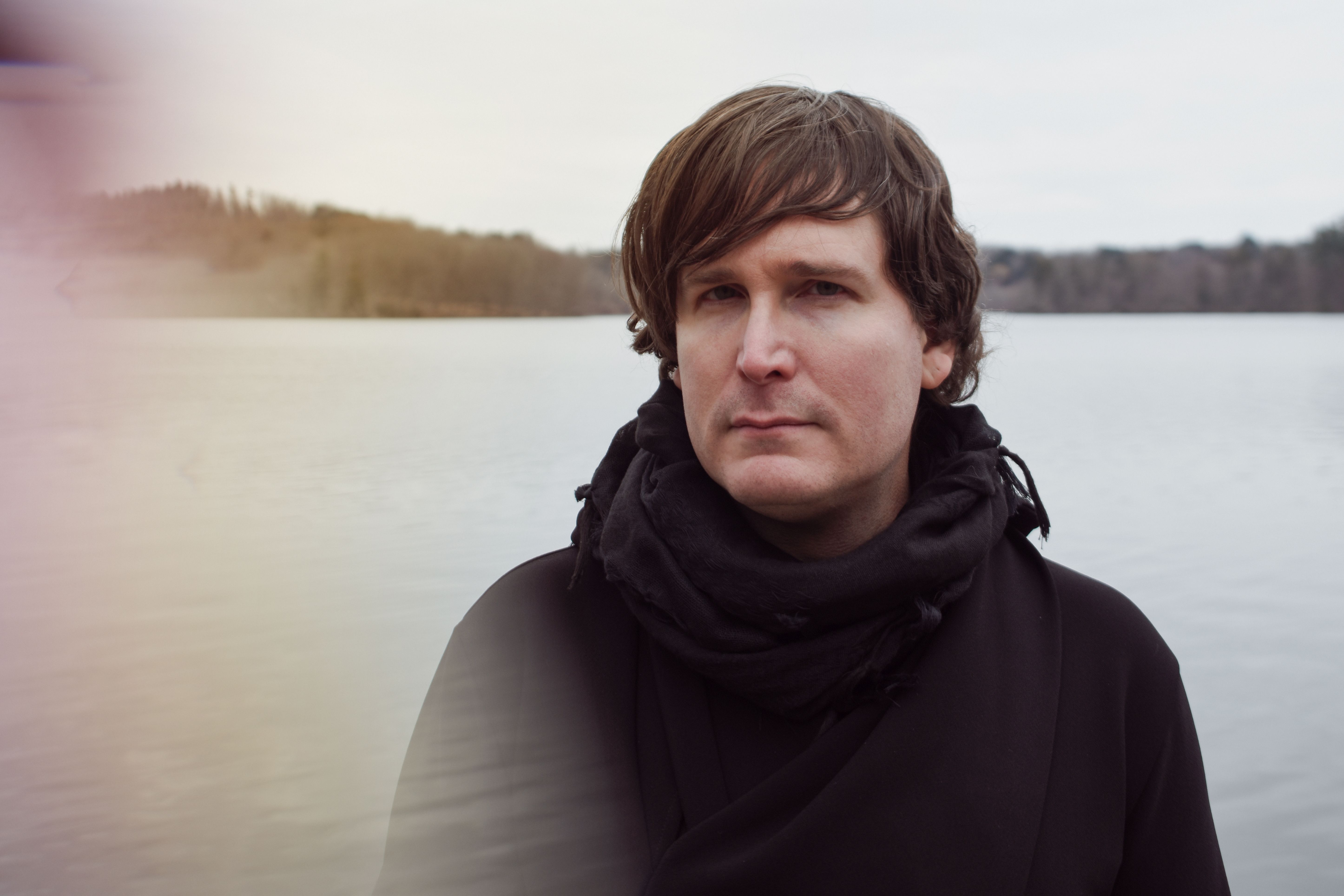 Rafael Anton Irisarri Interview Image by Molly Smith
"I'm very concerned about noise pollution. The constant barrage of noise can be overwhelming and anxiety-inducing."
Video