Name: PRNCPTL
Interviewee: Chris Phillips
Nationality: Brazilian
Occupation: Photographer, curator and organiser at PRNCPTL
Current Release: PRNCPTL's PRNCPTL AFTERGLOW - ACT III: CHAPTER XIII, a stunning compilation celebrating the series' 13th aniversary, is out now.
If you enjoyed this PRNCPTL interview, and would like to know more about the event, the release and everything around it, visit them on Instagram.
With 13 years under its belt, PRNCPTL has proven a remarkable statement on the ongoing power of club music. How would you describe your own path towards the community?
Our path started through art and a desire to see sexuality represented differently. Pornceptual began in Brazil as a project exploring eroticism and questioning the conventions of pornography. The parties developed in Berlin as a way to bring that project into a shared physical space.
Over time, the people around us helped shape what it became. Our Brazilian roots and the experience of building something in Berlin are both part of that history.
Thirteen years later, we understand community through the relationships and responsibilities that come with doing this together. We are now hosting events regularly in different places.
What makes PRNCPTL special?
The way our community helps shape it. We create a setting through music, art and the design of the space, and people bring their own imagination into it. What they wear, how they interact and how they express themselves become part of the party.
We like that something sexually explicit can also feel playful and warm. Humour has always had a place in the project. There is room to take your desires seriously while having fun with the ways you express them.
That makes the experience feel personal, even in a room full of strangers.
What kind of experience are you looking for when organising or visiting an event? What feedback matters to you?
We’re looking for a night that gives people time to settle in and become curious. Musically, we enjoy being surprised and trusting a DJ enough to follow them somewhere unfamiliar. As organisers, we also think about the space around that experience so people can connect in different ways.
What we’re most interested in hearing is what stayed with people afterwards. We hope PRNCPTL creates those kinds of memories and connections that continue outside the club. It means a lot when the music and the party become part of someone’s personal story.
What are some of the events, values, and personal connections that make you feel at home in the community?
The relationships with our residents, crew and other collectives are a big part of that feeling. There is something special about building trust with people over years and still finding new things to do together.
Our involvement in WHOLE has also been important, bringing different queer communities into contact and allowing those relationships to grow beyond individual parties.
We feel at home where people are curious about each other and look after one another.
How do you see the connection between your own identity and the music you listen to and make? Is electronic club music still a way of life for you and more than “just” music?
Absolutely. It shapes our friendships, our work and how we move through the world. As a collective, we express ourselves through the music we curate and release, alongside the images and spaces we create.
Our queer identities inform whose work we support and what kind of freedom we want people to experience. There is also something very physical about that connection. A sound can make you feel confident, vulnerable or sexually charged before you have words for it.
That relationship between music and the body remains central to PRNCPTL.
Queer culture has defined and shaped club culture like nothing else. Looking back, why would you say the two are so closely intertwined?
Queer people needed places where they could find each other and express desires that were policed elsewhere.
Dancing together allows a kind of recognition that doesn’t always need language. You can experiment with how you move, how you present yourself and who you connect with.
The pleasure is real, and so is the significance of being able to experience it openly.
Tell me about the queer club scene of the city you’re currently living in.
Berlin is home, and what we value about its queer scene is how many different communities coexist within it. Different generations and people arriving from other countries keep changing the city’s nightlife. You can still encounter an approach to music or sexuality that challenges your own assumptions.
At the same time, the financial pressure is very real. Rising operating costs and uncertainty surrounding spaces make it harder to sustain independent events and keep them affordable.
Berlin’s reputation can make its freedoms seem permanent, but everything can change for the worse if we don't protect the spaces that we currently have. They depend on people continuing to create and defend the conditions that allow them to exist.
How do you feel about the role and importance of dedicated, safe, queer-oriented spaces in the club landscape?
They’re essential. Being in a space organised around queer lives can allow people to relax parts of themselves that they have to monitor elsewhere.
We understand safety as an ongoing responsibility. It involves the door, the awareness team, how boundaries are communicated and how concerns are handled.
But the responsibility also expands to everyone present because we need to become a community that supports and is there for each other. It's important that people learn how to take care of themselves and those around them.
There is a constant balance to be found in club culture between celebrating diversity and individuality. What does the ideal balance look like for you?
Even queer spaces can develop quite narrow expectations regarding how people should look or express themselves. We think it’s important to keep questioning that.
A diverse room allows different ideas of beauty and sexuality to coexist, including those that challenge our own tastes. What connects people is a willingness to respect each other and share the space.
Ideally, being part of a community gives you more confidence to explore who you are, without feeling pressure to fit a particular image of queerness.
The club scene has gone through many changes over the past 13 years. What are discouraging and encouraging developments?
It’s encouraging to see how much the queer scene has expanded and how connected communities have become through music. Through PRNCPTL, we feel part of a global movement, with relationships that keep growing across borders. Being able to contribute to that feels very meaningful to us.
But the divisions within the queer community are quite discouraging, especially at a time when the far right is gaining ground in so many places. Disagreements are inevitable, and criticism is necessary, but it’s worrying how quickly we can lose sight of our solidarity.
We need to be able to challenge each other while still showing up for one another and defending the spaces and freedoms we’ve built together.
Many DJs express dissatisfaction about the politics of how events are booked and curated. What are your own experiences?
As promoters, we need to book artists with enough visibility to make events financially possible. At the same time, we need to give space to newcomers who are still building an audience. Finding that balance is a constant part of our work.
The pressure on DJs to also become content creators makes this more challenging. Maintaining that visibility takes time and a different set of skills. An incredible DJ might find that side of the job difficult, which can affect the opportunities they receive.
Our experience with our residents has shown us that we can grow together. Having a regular place in the party allows them to build a relationship with the audience, while their music helps shape PRNCPTL’s identity. Over time, people develop trust in them and come back to hear what they’ll play next.
The new PRNCPTL compilation is remarkably diverse and not tied to any specific genre. Are there certain qualities that unite the contributions or the music played at these events?
A PRNCPTL night can move through different moods, and the compilation has room for that range too. Our community has different tastes and musical histories. It makes sense that the record reflects those differences.
What brings it together is the freedom each artist has to express themselves, and the relationship their music can create with a dancefloor.
Tell me about your contribution to the compilation.
Our contribution is the curation and the wider artistic context of the release. PRNCPTL AFTERGLOW - ACT III: CHAPTER XIII brings together nine tracks from residents and dear friends across the international queer scene, marking thirteen years of the project with a double vinyl release.
We see it as a way of documenting the musical community around PRNCPTL at this point in time. The artists each bring something individual to it. Putting that on vinyl also gives people something they can keep, play and develop their own relationship with beyond the party.
What would you personally like to see more of on club nights?
More playfulness. Some club nights are too serious and people forget that having fun is also the goal.
Queer nightlife can be a place to try something unfamiliar, look a little ridiculous and surprise yourself. We want people to feel comfortable bringing that energy into the room and sharing it with each other.

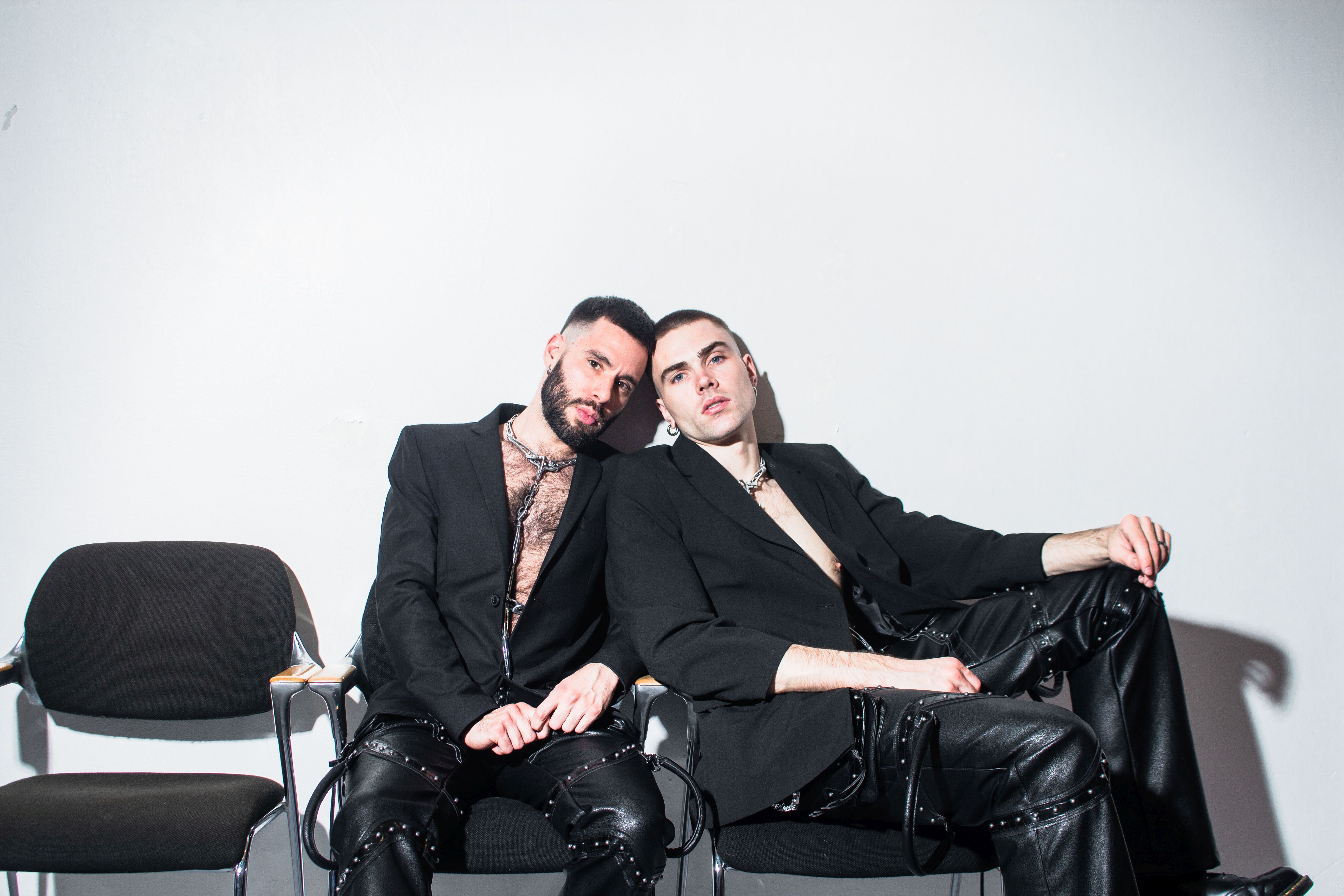 Chris and Malte Interview Image (c) PRNCPTL
 "The relationship between music and the body remains central to PRNCPTL."
Video