Name: PHAL:ANGST
Members: Philipp Spichtinger (voice, various instruments, electronics, sampling, visuals, videos), Alfred Wihalm (guitar, videos), Nina Schönwald (bass), Dion Hämmerle (electronics, sampling, visuals)
Interviewees: Philipp Spichtinger, Alfred Wihalm
Nationality: Austrian
Current release: PHAL:ANGST's new album Minor Tremors is out September 18th 2026 via Noise Appeal.
Recommendations for Vienna, Austria:
Alfred: I’m all into subcultural spots and concert places, so it’s: EKH, ARENA, VENSTER99, EINBAUMÖBEL, Gürtel Area (CHELSEA, RHIZ and many more). Metro Cinema and Satyr Filmwelt, the incredible living room shop “DVD Paradies” at the Kandlgasse (you have to call before). Recordshops MUSIKVERSORGUNG STEINER, SUBSTANCE, SISSYSOUND, RAVE UP, SCHALLTER and RECORDBAG.
Philipp: The Steinhofgründe with the Otto Wagner church and the adjacent area are worth a visit.
If you enjoyed this PHAL:ANGST interview and would like to stay up to date with the band and their music, visit them on Instagram, Facebook, and bandcamp.
When was the first time you noticed you were drawn to darker themes and moods in music, literature or the movies?
Alfred: I would say when I was around 10. I was just fascinated by horror and science fiction movies. I really don’t know why, I was just a kid, didn’t know anything and rarely had a chance to see anything, we didn’t have cable tv or a vhs player.
At around 12 I got a TV and a VHS player in my room and became a very good customer at the local video rental. Plus, I became educated by this incredibly well curated weekly program on national television called “Kunst Stücke”, they played movies by Pier Paolo Passolini, John Waters, by the “Wiener Aktionismus” (Vienna Actionism), Ken Russel, Nicolas Roeg, Fassbinder, Wim Wenders and so on. It was just incredible at the time.
Then came music, Punk, Metal, Dark Folk, from Sex Pistols and Alice Cooper with 13 to Deicide and Dead Can Dance with 16, Soap & Skin with 32 and Chat Pile with 47.
[Read our Dead Can Dance's Lisa Gerrard interview]
“Darkness” is, of course, not strictly speaking a term related to sound. What constitutes darkness to you, especially in instrumental terms?
Alfred: For me it’s mainly the atmospheric mood of melancholy in music.
You find it in all styles from Hardcore to Trip Hop, Post Rock to Folk. I’m mainly just interested in themes on the dark and twisted side of life, human tragedies, mental health problems and violence, death, suffering, transgressive behaviour, societal outsiders.
As a guitar player it might be no surprise I love the sound of the instrument in all forms, from heavily distorted Noise Rock to reverb soaked twang guitar in Southern Gothic.
I’m also very much interested in anti-fascist, radical left-wing politics. But this might be a different thing. Of course I combine it in my artistic life.
How would you describe the physical sensation and possible attraction of being exposed to darkness in music?
Alfred: I just feel attracted to melancholy, aggression, dark and twisted moods and themes. That’s when I get interested, it feels good.
Never really questioned that, it’s what it is and we all prefer to do what feels good.
Does your interest in darker musical themes extend into extra-musical fields such as fashion, or politics?
Alfred: For me very much movies. When it comes to politics, I feel very passionate about anti-fascist, radical left-wing politics. But I don’t think this has anything to do with darkness.
I come from the wish to life a nice life and feel as deeply connected with my fellow humans as possible, be equal and the wish for everyone to live a nice life on a healthy planet. That’s more the opposite of darkness I guess.
Personally I’m not much of a dark character. Also I’m maybe even a bit of a fanatic when it comes to justice and materialist logic.
Philipp: To me, art is generally more interesting when it deals with darker aspects of life. Be it music, literature, movies, theatre, the art of painting etc.
Creating “happy art” seems easy and boring to me.
Who/what are currently artists, labels or even genres which draw you in because of their darker approaches, aesthetics and sound(s)?
Alfred: I love the Flenser label, great Noise Rock and Doom: Bell Witch, Chat Pile, Agriculture, The Body, Faetooth, Ragana. I try to stay interested in contemporary music but mainly listen to my old favourites, from Hardcore and Metal to Post Rock, Trip Hop and Dark Folk music and especially Soundtracks by Ennio Morricone, John Carpenter, Goblin, Fabio Frizzi or Angelo Badalamenti.
Many favourite long-running artists are still releasing great music, the new Neurosis album is dope, Mogwai, Notwist, Soap & Skin or even John Carpenter are on top of their game, 16 Horsepower just reunited. One of the bands I miss the most is Low.
[Read our Notwist interview]
Philipp: Here are some albums that deal with darkness that I enjoyed in the last months:
The Body - Master, We Perish
Nothing – a short history of decay
Kmru – Kin
Maija – What if
The Black Heart Procession – Six
Bersarin Quartett – III
Bruch – The Harbour of the Broken Hearts
And of course, one of the greatest songs ever written, “I See A Darkness” by Bonnie “Prince” Billy.
[Read our Bonnie “Prince” Billy interview]
What were some of the first performances or releases when you became active in exploring truly dark places in your music yourself?
Alfred: Musicwise Metal started it. So after Alice Cooper it would be bands like Deicide, Morbid Angel and the likes which I would already call quite dark and twisted. Dead Can Dance, Sisters Of Mercy, the melancholy of Leonard Cohen or Portishead I also fell deeply in love with at a very early stage of my life.
As a (younger) teenager I also liked the Goth bands Lacrimosa, Deine Lakeien, Das Ich and some - but found most of that embarrassing soon later.
I have had a hard time explaining that listening to death metal calms me down. When you're performing a piece with a darker energy, does it tend to fill you with the same energy or feeling – or are there “paradoxical” effects?
Alfred: Haha, I know this effect very well.
When I was around 15, Deicide was one of my favourite bands. As a young teenager you need much sleep. I had this routing that when having my 2-3 hours afternoon sleep after school I put on Deicide and slept like a baby.
But usually it gives me sensation and fascination and joy.
Tell me, if applicable, about the concrete lyrical themes that you felt drawn to for your current release.
Philipp: The darkest song on our new album for sure is “All Will Be Grey.” It deals with a general feeling of melancholy and frustration, inspired by grey and depressing autumn days.
Apart from that song, the lyrics on Minor Tremors aren’t even that dark, but deal with various political and personal topics.
When it comes to exploring darker themes, what's your approach to writing lyrics? What makes lyrics good in this regard?
Philipp: I try to avoid clichés, that’s very important to me and that’s what makes lyrics outstanding. There are a hundred bands that sing about how everything sucks, no one wants to hear that anymore.
Usually I start with a certain topic that fits the mood of the song, and then I take it from there and formulate the lyrics.
Tell me about the creative process for Minor Tremors, please.
Alfred: Usually our electronic comrade “Angst” [Dion Hämmerle] comes up with the first input. Sometimes it’s some patterns or loops, sometimes nearly finished songs. Then we jam to that, usually very much guitar-orientated.
Then we sort it out, talk about it, do the arrangements. Before entering the recording studio we usually take care of some refinement. That’s more or less the way it goes with our band.
How did you realise your goals in terms of the production, including effects?
Alfred: On all our albums we had different recording engineers. Everyone we worked with was cool but there were always some flaws in it. Also we are always interested in trying out new things. So we wanted to find a new recording engineer again.
We found Fazo666Fazo who is the drummer for our (ex-)labelmates BAITS and BULL NAKANO, recorded/produced BIPOLAR FEMININ, LOVEHEAD and others.
His approach was quite different which was interesting and for sure had a positive impact on the album.
Exploring darker themes in the music often goes hand in hand with the accompanying artwork. Tell me a bit about this relating to your new release.
Alfred: Funny you ask this because we really wanted to go for an artwork which goes away from all the dark clichés related to dark and post rock music: darkness, water, mountains, fog, trees, nature and so on.
So we ended up with a bright orange pink artwork with some birds and pink-splatter vinyl.
I would love to know a little about the feedback you've received from listeners or critics about what they thought some of your darker songs are about or the impact it had on them – have there been “misunderstandings” or did you perhaps even gain new “insights?”
Alfred: There are always some very positive responses from people who tell us they really “feel” into our music, got addicted for a while and felt strong emotions.
It’s one of the most satisfying things to hear as an artist.
Sharing music on stage can change the way it is experienced, both for musicians the listeners. Can you talk about this a bit, especially in the light of darker themes?
Alfred: It’s a great feeling when playing a concert, and you realise people really get into it and get carried away by it.
But honestly I have to confess that playing concerts is not my favourite thing. We are not well-known and play very difficult music, so it’s not easy for us to get many gigs and attract people.
It’s quite an effort technically, logistically and timewise and sometimes that’s just tiring.
Throughout the history of art, there have been artists who did not want to exorcise their demons, afraid they might lose their creative spark. What's your take on that?
Alfred: I really don’t like it when it’s tolerated that artists behave toxic, like assholes or even violent and people excuse it because they consider them to be great artists or maybe even geniuses.
You don’t have to be an asshole to create great art. And if artists keep their demons for the creation of art and even if it might not be of any disadvantage for other people around them. I also do not consider that a healthy approach and would recommend them to fuck the art and go for a healthy, satisfying life. You only live once and time is short.
On the other hand there is music I love but know the people behind it have been assholes. I try to transcend that so I can still enjoy the music, most of the time, I succeed in that but it can be hard.
Philipp: For me it’s not possible to “separate the art from the artist”. If you’re an asshole, I won’t be giving you any attention.

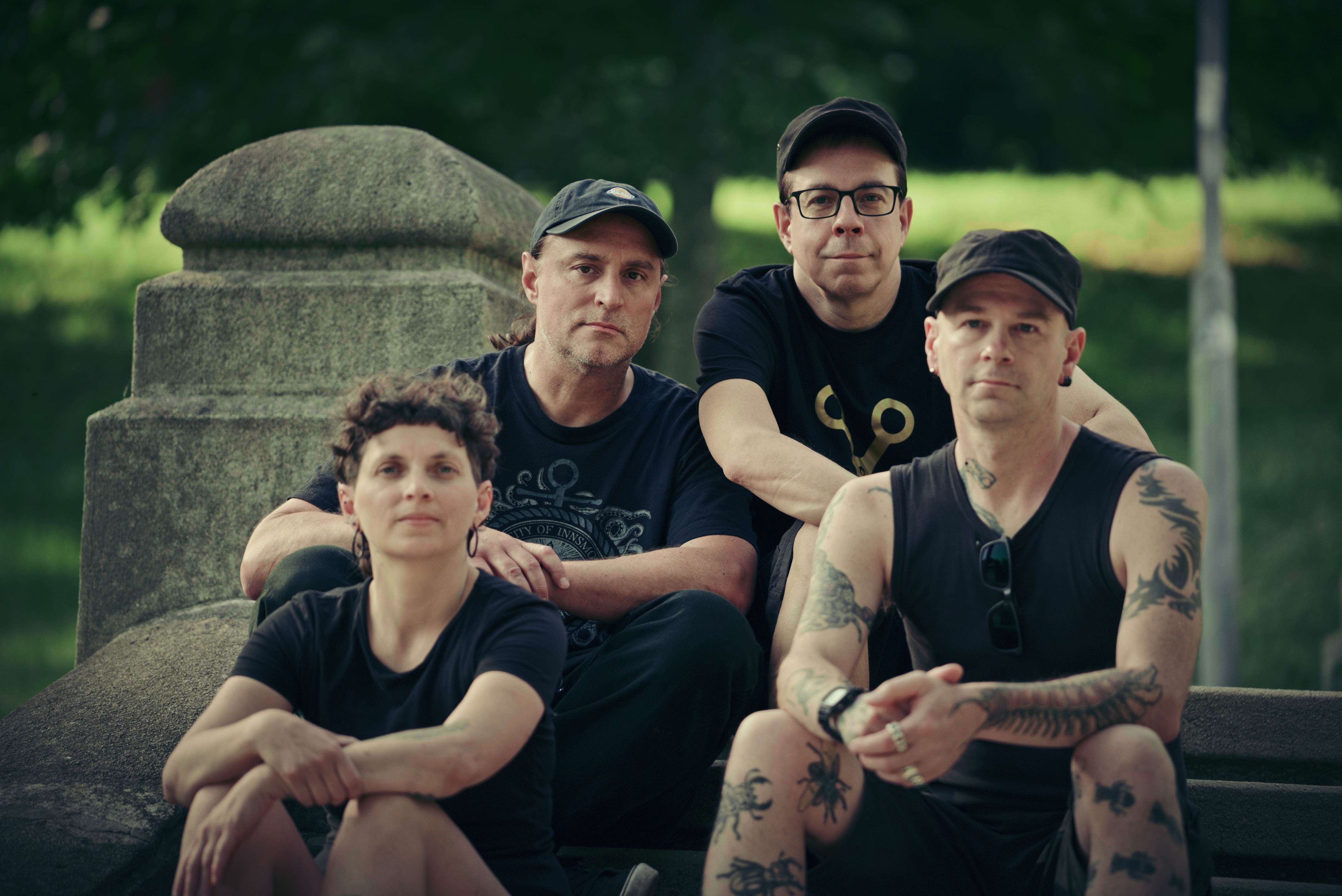 Phal Angst Interview Image by Bernd Faszl
Philipp: "There are a hundred bands that sing about how everything sucks. No one wants to hear that anymore."
Video