

Part 1
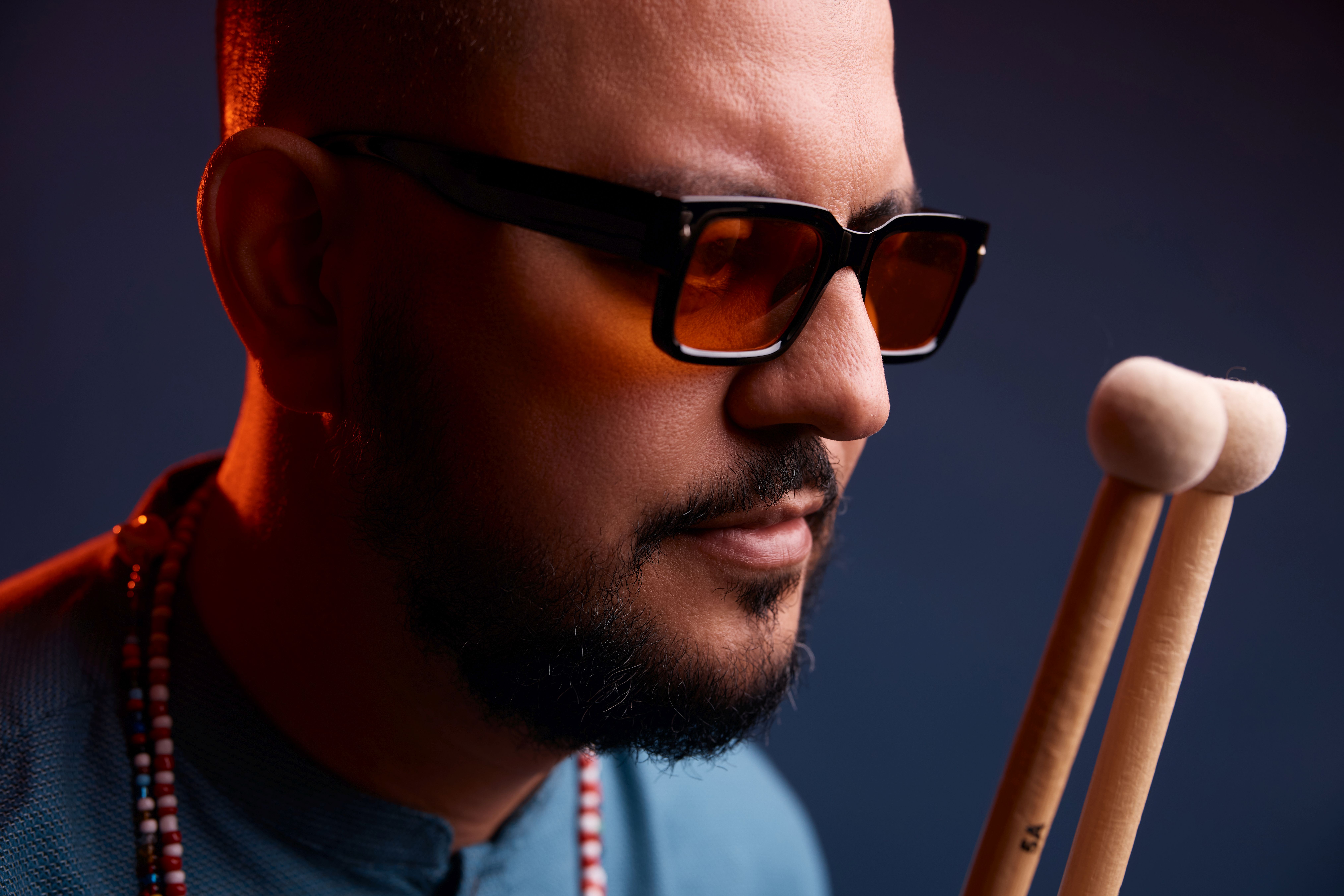
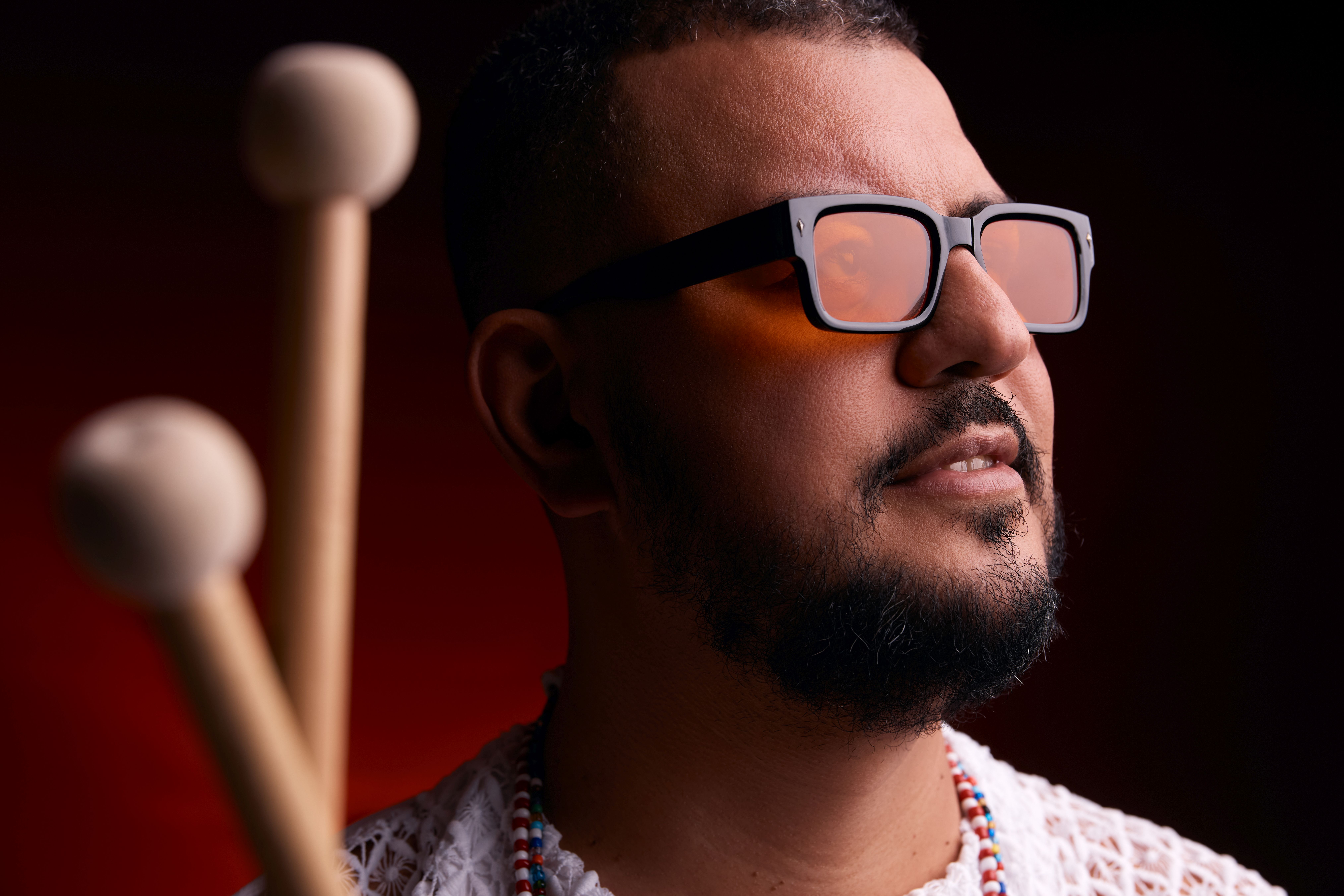
Name: Paulo Almeida
Occupation: Drummer, percussionist, composer, improviser
Nationality: Brazilian, Switzerland-based
Current release: Paulo Almeida's new album Love in Motion, featuring himself on drums and percussion as well as Lorenzo Vitolo (piano and synths), Josh Schofield (alto and soprano saxophone), Joan Codina (acoustic bass), Jorge Rossy (vibes on “Ipê”) and Lisette Spinnler (vocals on “Nenhum Talvez”) is out via DOX.
Hometown Recommendations: I've been living in Basel for 7 years, and it's a beautiful city. For jazz fans, I'd highly recommend the Jazz Campus and the Birds Eye Jazz Club. But it's also a city full of museums.
Pure drumming records recommendations: I would recommend listening to Naná Vasconcelos. To me, he is one of the greatest authorities when it comes to percussion and the expressive possibilities of a single instrument. His work goes far beyond rhythm. He explores sound, texture, silence, melody, and the physicality of percussion in a very unique way. For me, he is a great example of how much you can express with very little.
If you enjoyed this Paulo Almeida interview and would like to stay up to date with his music, visit his official homepage. He is also on Instagram, Facebook, and bandcamp.
It seems as though most aspiring artists are drawn to the drums and percussion for one of two reasons: Creating sound/noise and creating rhythm. What captivated you?
What captivated me from the very beginning was the experience I had at a very young age—around six years old—of going to watch the rehearsals of the big band my father played in.
He would always stand next to the drum set, and I would sit right beside him, listening to the drums up close. I was completely fascinated by the sound, the physicality, and the energy of the instrument. I’d come home, grab my mom’s pots and pans, and try to create grooves or just improvise randomly. My dad quickly realized how captivated I was and signed me up for drum lessons.
Looking back, I think it was that combination of sound, rhythm, and the feeling of being right next to the drummer that first drew me in. It wasn’t really a conscious decision at that age—I just knew that I wanted to make those sounds myself.
When I listen to music, I see shapes, objects and colours. Others experience emotions. Everything around drums, on the other hand, is based on touch, vibration, and movement. Does this mean that your own perception as a listener is also more connected to touch, vibration, and movement? What happens in your body when you're listening?
I always try to associate a groove or a musical line with a “place,” an atmosphere, a scene, or even a smell.
Since I grew up immersed in Brazil’s cultural movements centered around rhythm, I learned that percussion is often a collective experience. It is connected not only to sound, but also to the people, the food, the clothing, and the environment surrounding a celebration.
For example, samba is not just a rhythm to me—it immediately brings a whole world with it. A samba groove is connected to a feijoada, the traditional dish often served at samba gatherings, and to the sense of community that surrounds those moments. So, because I developed a connection with percussion from such an early age, I naturally associate rhythm with human connection and shared experiences.
On another level, I do experience the drums through touch, vibration, and movement. I feel that the instrument becomes an extension of my body. Every drum and cymbal has its own physical response, and the way I move my hands, arms, and body directly influences the sound and the vibration that comes back to me.
That is also why I believe the drum set can be harmonic in its own way. Even though it is traditionally considered a rhythmic instrument, I think you can create the sensation of harmony, tone, and even the feeling of a chord through the way you choose and shape each sound. The dynamics, touch, and combination of different drums and cymbals can create a very rich sonic landscape.
What was your first drum set like and what are you using today? What, to you personally, are factors in terms of build and design that you appreciate in drums and percussion instruments?
My first drum set was made of wood and rubber. At the time, my father couldn’t afford to buy a professional drum set, so I played that homemade set for many years.
Looking back, I think that experience taught me a lot about focusing on the music itself rather than the equipment. It was about developing my ears, my touch, and my creativity with whatever I had available.
Later, I got my first professional drum set—a brass kit from the Brazilian brand GOPE—which was a very special moment for me because it represented a new chapter in my musical journey. Today, I have several drum sets, but my favorite is the Yamaha 67 D-20. I love its vintage character and the sizes: 20", 12", and 14". It has a very musical response and a personality that really connects with the way I like to play.
In general, I have a strong connection with handcrafted instruments, whether they are percussion instruments or drum sets. I appreciate the details, the imperfections, and the human touch behind an instrument that has been carefully built. For me, the best instruments are the ones that have a voice of their own—they respond to the player and inspire a deeper connection between the musician and the sound.
Late Rush-drummer Neil Peart said: “The equipment is not an influence. It doesn't affect the way I play. It's an expression of the way I play.” What's your take on that?
I agree with Neil Peart’s idea that the equipment is an expression of the way you play, but I also believe that the instrument and the environment influence how that expression comes out.
It’s not only about the equipment itself—the room where you play, the acoustics, and the physical response of the instrument all have a huge impact on the way you express yourself. A different instrument can inspire a different approach, a different touch, or even a different musical idea.
I think having a good instrument makes a significant difference. For example, imagine practicing on a keyboard with very light keys and then suddenly performing on a grand acoustic piano. The technique, the touch, and the way you interact with the instrument would change because they are completely different experiences.
I believe this perspective also depends on a musician’s personal journey. If you have never played a bad drum set, you might say that equipment doesn’t matter. But if you have experienced an instrument that doesn’t respond well, you understand how much a great instrument can open possibilities and allow you to express yourself more naturally.
At the same time, I think the most important thing is the connection between the musician and the instrument. The equipment doesn’t replace creativity or musicality—it simply becomes another part of the conversation.
The drums and percussive instruments are an integral part of many cultures, and traditions. Which of these do you draw from in your playing – and why?
My connection is deeply rooted in Afro-Brazilian music, as well as in the many musical traditions influenced by Latin America. After all, I am Brazilian, and that cultural background will always be part of who I am as a musician.
Even though I have been living outside Brazil for many years, I feel that, with time and distance, I have actually become even more connected to Brazilian music. Being away has made me reflect more on my roots and understand the depth and richness of the traditions I grew up around.
These influences shape not only the rhythms I play, but also the way I approach music—the feeling, the phrasing, the relationship with the groove, and the importance of listening and interacting with other musicians. They give me a sense of identity, even when I’m playing styles that are not directly connected to Brazil or Latin America.
For me, these traditions are part of my sound and part of my musical personality. They are always present in the way I express myself, regardless of the style or context.
What were some of the main challenges in your development as a drummer / percussionist? Which practices, exercises, or experiences were most helpful in reaching your goals?
For me, one of the biggest challenges in my development as a drummer was always the infrastructure—not always having access to a good instrument or a proper space where I could practice freely without worrying about disturbing the neighbors.
At first, this was a limitation, but over time it became a valuable lesson. I learned how to play with more control, sensitivity, and awareness of my dynamics. Having to play quietly forced me to develop a deeper connection with touch and helped me understand that expression doesn’t come only from volume, but from intention and control.
I believe that experience contributed greatly to developing a wider dynamic range and a more nuanced approach to the instrument. It taught me to listen carefully, to make every sound count, and to find musicality even within limitations.
How would you describe the physical sensation of playing the drums? [Where do you feel the resonances/pulse/groove, what are emotional sensations, is there a sense of release or tension etc …]
First of all, playing the drums is a very physical experience. It requires a deep connection between the body and the instrument. If you are not connected to the instrument, you will naturally feel disconnected from the groove and the flow of the music.
I try to align my body with the movement of the instrument so I can feel the vibrations throughout my body. For example, when moving from the snare drum to the high tom, if you rely only on your arm to reach the drum, you end up pulling your whole body behind that movement, which can create unnecessary tension, especially in the neck and shoulders.
Instead, I think about using my head and my center of gravity to guide the movement, bringing my body naturally closer to the instrument. This allows me to feel the sound more physically and creates a stronger connection between movement and vibration. This idea is closely related to concepts from the Alexander Technique for musicians, where awareness and efficiency of movement are essential.
I also believe that being aware of tension is fundamental. Playing without any tension is not really possible—we need a certain amount of physical engagement to create movement. The important thing is understanding where that tension is happening and learning how to use it efficiently.
For example, instead of holding unnecessary tension in your hands or arms, you can shift your focus toward your center and allow your extremities to remain more relaxed. When you develop this awareness, your body becomes a more precise and expressive instrument. The way you communicate emotions and sensations through music becomes both more creative and more intentional.