Name: Paul Cornish
Nationality: American
Occupation: Pianist, composer, improviser
Current release: Paul Cornish's new album You’re Exaggerating! is out via Blue Note.
Current event: The Paul Cornish Trio will play at Ronnie Scott's August 25th 2025. Find out more and buy tickets on the location's website.
Recommendations for Los Angeles, USA: Hmmm …. I would say go to a Minaret Records show if it’s happening while you’re in town.
Things I am passionate about but rarely get to talk about: A lot of things, but two in particular, I think about quite a bit are food insecurity in underserved communities, and lack of arts funding/resources in public schools. Both have deep effects on the human beings we grow to become in many ways we have not yet fully realized. Food, especially, I believe should be every human being’s right to have access to, and not just any “food.” Whole and quality foods that allow the body to function properly and regulate itself.
If you enjoyed this Paul Cornish interview and would like to know more about his music, visit his official homepage. He is also on Instagram.
When did you first consciously start getting interested in musical improvisation? What was your first improvisation on stage or in the studio and what was the experience like?
In a sense, I’ve been improvising from the beginning. From the age of two, I remember stacking boxes, pillows, and whatever I could find to try and recreate musical instruments, and I would jam out. Could not tell you what I was playing at all, but I was in it.
Then, at my church, we would be there all day every Saturday, and there was always a break period between lunch and the evening service, and I remember going to the piano, making up songs, and in a sense, “improvising” whatever came to mind.
I was formally introduced to improvising in the context of Jazz music at a summer music camp going into 7th grade. It was called the Summer Jazz Workshop in Houston, Texas, and it was 5 weeks long, and we had a gig every Friday for the duration of the camp. Those were my first experiences improvising on stage.
Tell me about your instrument and/or tools, please. What made you seek it out, what makes it “your” instrument, and what are some of the most important aspects of playing it?
I resisted the piano for a long time. I really wanted to play drums from the age of 2, and my mom told me that I had to take piano alongside it. So, I took lessons for both up until high school.
A combination of not getting into my middle school jazz band because there were too many drummers, getting introduced to jazz music at the aforementioned camp I went to, and hearing the music of Robert Glasper, changed my perspective on what I thought was possible through the piano.
The piano feels the closest to my personal expression. I feel the most free expressing myself with it and through it, even apart from playing keyboards. I think the instrument also has a story that it wants to express, and with the player, there’s a partnership. I think the most important aspect of playing is taking the time to learn and understand that story (i.e. its mechanics, character, various sounds it produces, your touch/technique in relation to it, etc.)
How would you describe your own relationship with your instrument – is it an extension of your self/body, a partner and companion, a creative catalyst, a challenge to be overcome, something else entirely?
It definitely feels like all of the above, in many ways, much like a great partner. Some days, we are very aligned and the instrument is a seamless extension of me. Other days, it feels like a challenge to be overcome.
Factors also vary the feeling whether it be that I’m playing a different piano (which is often the case, and also how I may be feeling that day.)
Derek Bailey defined improvising as the search for material which is endlessly transformable. What kind of materials have turned to be particularly transformable and stimulating for you?
I think any material can be transformable, maybe not all endlessly, but its limitation may be the very thing that serves the moment.
So I try my best to embrace whatever material is in front of me, and allow it to tell where to go next. That’s stimulating for me, at the moment.
Do you feel as though there are at least elements of composition and improvisation which are entirely unique to each? Based on your own work or maybe performances or recordings by other artists, do you feel that there are results which could only have happened through one of them?
Certainly, composition tends to be a lot more fixed, or at least usually intends to be, to a somewhat permanent end. Whereas improvisation is in the moment and ephemeral.
I do like to think of approaching improvisation like a composer, but to me, the process feels different; maybe simply for the fact that you can erase things when you sit down to compose.
When you're improvising, does it actually feel like you're inventing something on the spot – or are you inventively re-arranging patterns from preparations, practise or previous performances? What balance is there between forgetting and remembering in your work?
I think if I’m focused on either of those things, then I am not in the moment. That’s my ultimate goal, to truly be in the moment and to express myself as honestly as I can. Sometimes that comes out as re-arranged patterns, other times it feels like something new (at least new to me).
A teacher once told me to forget all the theory, patterns, scales I learned (while I’m playing), and it’ll always be there to fall back on, if I need it.
Artists from all corner of the musical spectrum, not just “free jazz” have emphasised the importance of freedom in their creativity. What defines freedom for your improvisations?
Freedom, for me, is being able to be in the moment and being able to express myself honestly and openly, in a way that is still connected to the material that came before it.
Taking your recent projects, releases, and performances as examples, what, would you say, are the key ideas behind your approach to improvisation?
My approach has been that my “solo” would be a true collaboration of ideas happening together with the trio, like we’re writing this story together.
It’s not about me showing off what I can do, but really more like an extension of the song that wasn’t pre-written.
In your best improvisations, do you feel a strong sense of personal presence or do you (or your ego) “disappear”?
It’s both. Ego disappears and the expression feels very personal.
What are some of your favourite collaborators and how do they enrich your improvisations?
I would say it’s a tie between my trio (Jermaine Paul - bass, Jonathan Pinson - drums) and the members of the current Joshua Redman Quartet (Philip Norris - bass, Nazir Ebo - drums).
I truly feel, in both scenarios, that they embrace whatever I play, and not only make it sound good, but we’re able to create something new and in the moment together, as a unit.
In a live situation, decisions between creatives often work without words. From your experience and current projects, what does this process feel like and how does it work?
I would say it feels spontaneous and synergetic. Some things happen and it's very serendipitous, playing the same note or rhythm at the same time.
Other times it’s not as seamless, but there’s a trust and willingness there to figure it out.
Stewart Copeland said: “Listening is where the cool stuff comes from. And that listening thing, magically, turns all of your chops into gold.” What do you listen for?
I listen for the music and what it may be calling for in the moment, and I also try to listen for what the other people on stage are saying/not saying.
There can be surprising moments during improvisations – from one of the performers not playing a single note to another shaking up a quiet section with an outburst of noise. Can you tell me about such situations from your own performances and how they impacted the performance?
For me, at the moment, the surprise often comes from going off script as a group, and figuring out how we get back.
In my trio, grooves, forms, arrangements are often changing on the spot, and a lot of times it’s not me initiating the change, and that’s an interesting surprise, but it forces us all to truly listen and be in the moment. I think the music is better for it.
As a listener, do you also have a preference for improvised music? If so, what is it about this music that you appreciate as part of the audience?
As a listener, I enjoy listening to most music, even if there are no aspects of improvisation in it.
In a way, we improvise all the time. In which way is your creative work feeding back and possibly supporting other areas of your life?
It has influenced me in the areas of embracing discomfort and listening more to others.
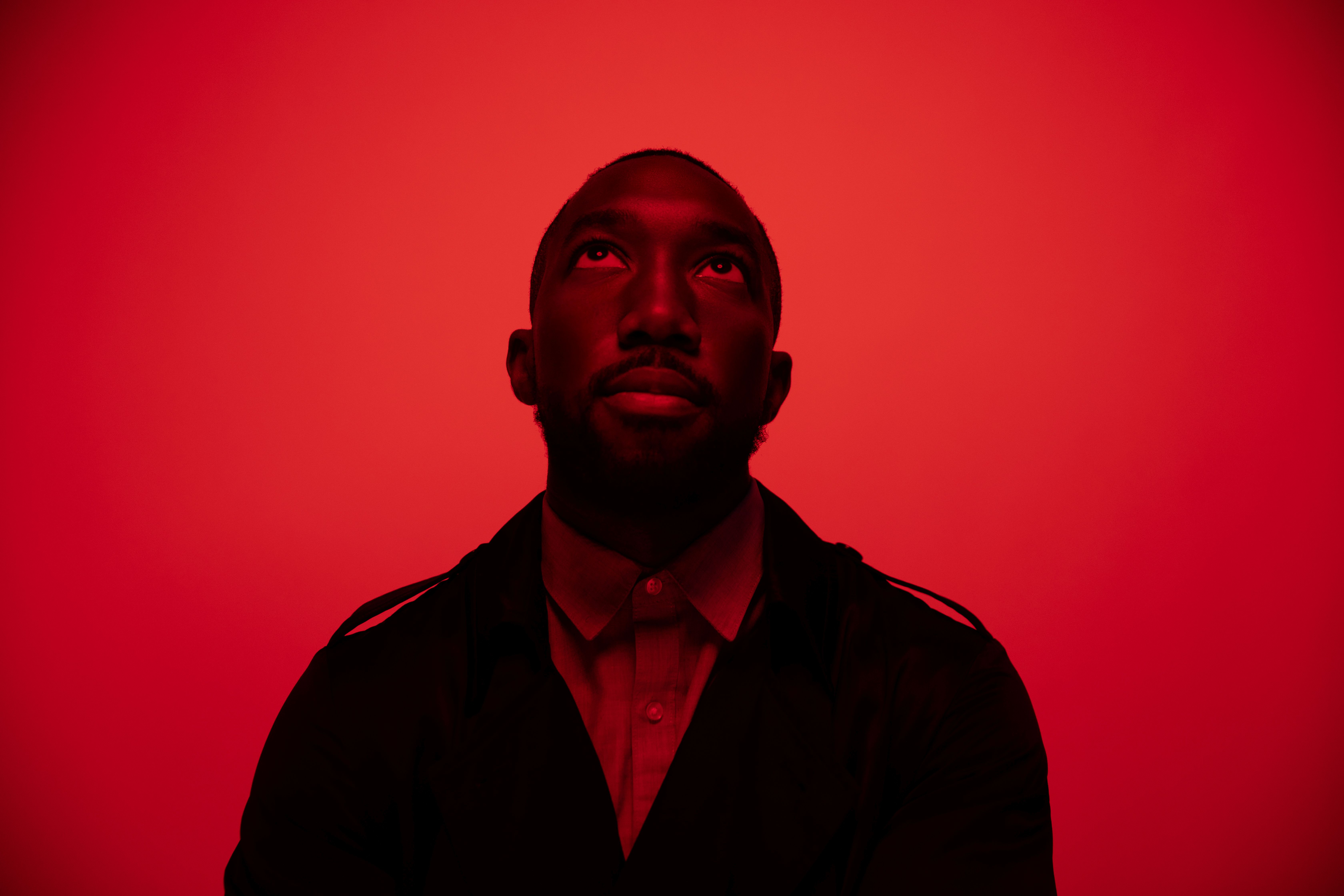 Paul Cornish Interview Image by Piper Ferguson
“The surprise often comes from going off script as a group - and figuring out how we get back.”
Video