Name: Passepartout Duo
Members: Nicoletta Favari, Christopher Salvito
Nationality: British
Occupation: Pianist (Nicoletta Favari), Percussionist (Christopher Salvito)
Current release: Passepartout Duo team up with Inoyama Land for their collaborative new album Radio Yugawara, out via Tonal Union.
Recommendations: Album: Kokoro - こころ by Sababa 5 & Yurika; Film: Happy as Lazzaro by Alice Rohrwacher
[Read our Inoyama Land interview]
If you enjoyed this interview with Passepartout Duo, visit their official homepage. They are also on Instagram, and Facebook.
For a deeper dive, we recommend our earlier Passepartout Duo interview.
There are many potential models for collaboration, from live performances and jamming/producing in the same room together up to file sharing. Which of these do you prefer – and why?
We don’t jam with other musicians on a regular basis, but maybe that’s why we really remember the times when it happened!
In some way, there is nothing better than making music together with other people in the moment, because it’s really a matter of energy, of listening, of reaching out. So we definitely appreciate these precious opportunities.
How did this particular collaboration come about? What did you know about each other before working together?
We discovered Inoyama Land as a group around 2019, when finding the Kankyō Ongaku collection by Light in the Attic Records and then the Inoyama Land Commissions: 1977-2000 collection.
That was also the year of our first trip to Japan, to participate in an art biennale. We were scouring the internet and asking all around, trying to find more information about these mysterious musicians. We did find an email address for them, so we reached out, and received a response even!
But it was only during our second trip to Japan, in the post-pandemic 2023, that we could actually weave a more complete view of the context around their personalities, musical milieu, and overall biographical details that brought them to make music that we admire so much!
Describe your creative partner in a few words, please.
Two musicians with incredible intuition and a lot of imagination!
What do you generally look for in a collaborator and what made you want to collaborate with each other specifically?
Every collaboration for us is inspired by different ideas and circumstances, but in general we are really excited to try something new, in any form!
In this case, we were really interested in entering the world of Inoyama Land, see how they make music, and how we could learn our own path in this world, especially stretching our muscles for improvisation, which we don’t usually rely upon as heavily as in this project.
Tell me a bit about your current instruments and tools, please. In which way do they support creative exchange and collaborations with others?
There are two elements in our current setup that have opened up a new collaborative approach, and those are Ableton, of course, and an instrument that we have built ourselves, an analog synthesizer called Chromaplane.
This instrument is very open, completely tuning-agnostic, easy to manipulate in timbre, but at the same time it asks the performer to decide on self-limitations, because it is still analog and generally only offers ten notes at once. So, by defining some limits, it sets up a very good context for a collaboration.
In a similar way, we recently collaborated with a player of traditional Japanese flute. Every flute he uses is in a key, so if he wants to modulate, he needs to exchange the entire instrument, which is a very interesting approach, unusual for us.
Generally speaking, what are your preferences when it comes to planning vs spontaneity in a collaboration?
Whenever we dive into improvisation, we like to think of it as structured, rather than free improvisation. Therefore, before getting to play we always set up a mood, an idea, a general storyline.
It was the case also with this collaboration: we didn’t need many words, so that even this basic idea can be largely interpreted, but you are at least rowing the same boat, let’s say.
Describe the process of working together, please. What was different from your expectations and what did the other add to the music?
We went into the session with not many expectations actually, we just thought about what instruments we would bring over, and what sort of sound world could fit what we knew of Inoyama Land.
But the surprise was actually the fact that it was rather easy - they worked to make it easy for us maybe! Makoto and Yasushi also talked so very little, but had such a perfect reciprocal understanding; when you see them in this context, it becomes so apparent how long they have played together.
In an improvisation, especially if you are meeting the other musician for the first time, it is a sort of musical offering that every participant is putting into the mix, and all the others are called to respond to it. So by the end of the session, it is beautiful enough to just have become more familiar with those voices.
What are your thoughts on the need for compromise vs standing by one's convictions?
That’s something we have been thinking about recently! Every situation is different, but we think that often it is better to trust somebody who has an idea and can see it through, and just give it a chance, instead of creating half ideas.
Do you find that thanks to this collaboration, you changed certain parts of your process or your outlook on certain creative aspects?
Definitely! We are used to expressly defining and describing most of the aspects of what we do, so finding yourself in a situation where people don’t do that, it helps you to gain a different perspective.
And in this case, it is based on musical intuition, as simple as that.

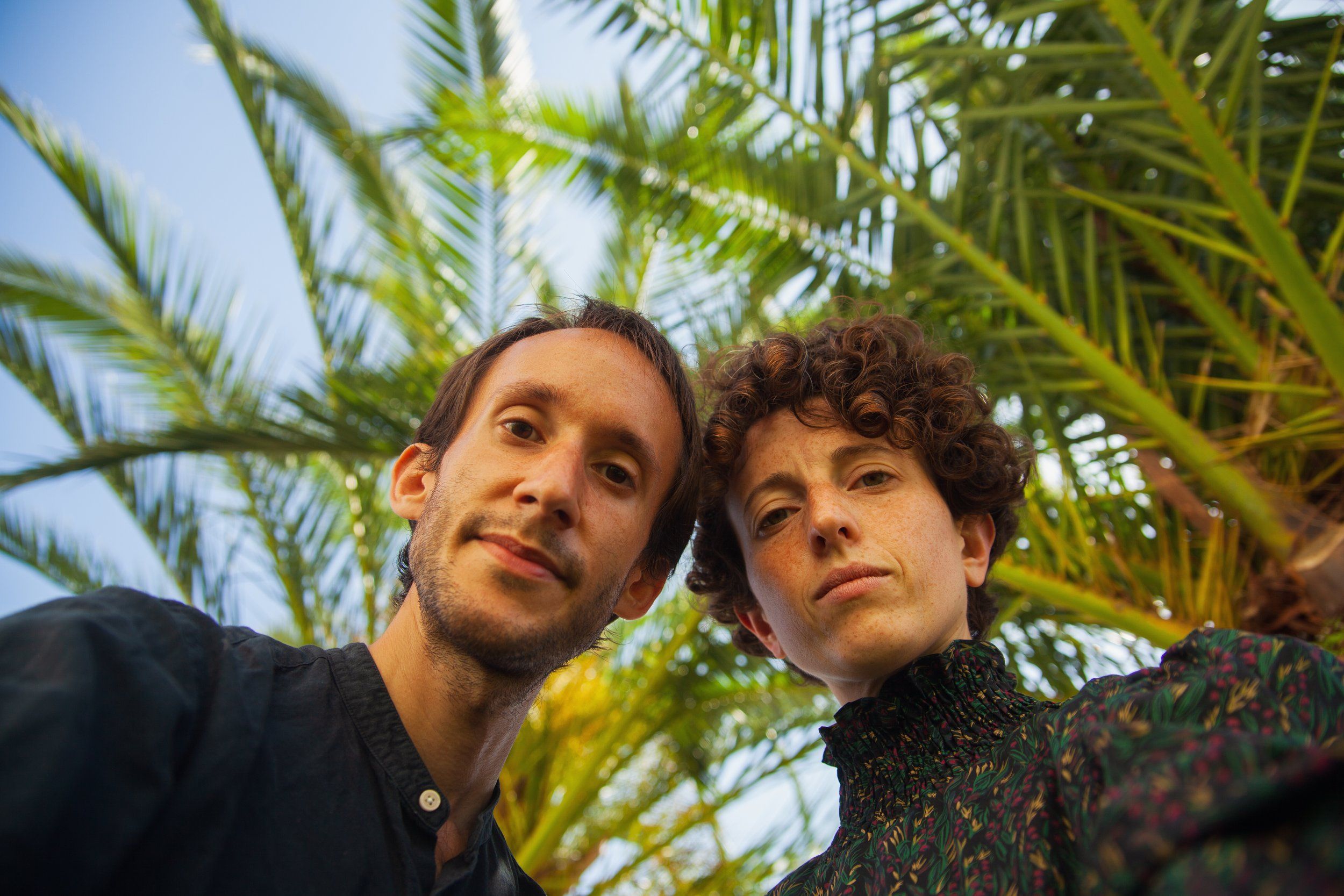 Passepartout Duo Interview Image (c) the artists
"Often it is better to trust somebody who has an idea and can see it through, instead of creating half ideas."
Video