Name: Open Thread
Members: Julien Wilson (tenor saxophone, electronics), Peggy Lee (cello), Theo Carbo (guitars), Dylan van der Schyff (drums, percussion)
Nationality: Australian (Julien Wilson, Theo Carbo), Canadian (Dylan van der Schyff, Peggy Lee)
Interviewee: Dylan van der Schyff
Current release: Open Thread's new album Waiting Music is out via Earshift.
Recommendations for Melbourne, Australia: Check out the live music scene in Melbourne. It’s incredible — though hardly anyone knows about it, because we’re so far from everywhere else. It’s like its own bubbling microcosm. There’s great jazz, indie, experimental music, music from all over the world.
If you enjoyed this Open Thread interview and would like to liste to more music by the band, visit them on bandcamp.
Where does the impulse to create something come from for you? What role do often-quoted sources of inspiration like dreams, other forms of art, personal relationships, politics etc play?
You can hear all kinds of impulses and influences in this music. The rhythmic material in “Egg on the Escalator” is inspired by Captain Beefheart, and “God’s Little Prefect” draws on the punk and noise aesthetic of 80s bands like Mission of Burma or the Saints, the legendary Australian band Julien has played with for years.
Other pieces set a European free-improvisation sensibility against very simple melodies; others hint at Afrobeat, as in “The Sideway,” or lean toward ambient music. “Rattle Song” was inspired by the sound of cicadas in Toronto.
When we were developing “Sumud,” Julien was thinking about the perseverance of the human spirit in face of the oppression and cruelty we see in so many parts of the world today.
We try to take all of that in — the music we love and the world around us — and reflect it back, while trying to hold onto a sense of playfulness and humour. Improvising and collaborating together has a way of revealing the better side of human nature and we want our music to carry that.
For you to get started, do there need to be concrete ideas – or what some have called a 'visualisation' of the finished work? What does the balance between planning and chance look like for you?
Waiting Music was a collaborative effort from the start. Members would bring in fragments (a scrap of melody, an idea, something half-formed) and we’d work them over in rehearsal, trying them different ways until we were happy with the shape.
At that point they’d start to become set pieces, though always with room left to improvise inside them.
Do you have certain rituals to get you into the right mindset for creating? What role do certain foods or stimulants like coffee, lighting, scents, exercise or reading poetry play?
There aren’t really any rituals. We don’t have a preparation phase as such — we just play together, record the rehearsals, make suggestions, and try things out.
It tends to be pretty obvious to us when we land on something that works.
For your latest release, Waiting Music, what did you start with? If there were conceptual considerations, what were they?
No specific conceptual considerations other than to build on our shared collaborative process.
The title, Waiting Music, is open to interpretation. For us it speaks broadly to the sense of uncertainty we all feel these days. While we wait to see what happens, we must get on with the real business of living together, supporting each other with music, humour, and the other good things that make life worth living.
That’s not so easy for people in some parts of the world.
Many writers have claimed that as soon as they enter into the process, certain aspects of the narrative are out of their hands. Do you like to keep strict control or is there a sense of following things where they lead you?
The music develops in a collaborative, improvisational way, and it keeps evolving, but the pieces do become set after a while. The improvisation plays out within the confines of the form, and that form gets relatively stable over time.
What we don’t want is for the band to sound “tight” in the commercial sense. We aim to be together, but also loose and open. Staying open and keeping an improvisational sprit in the music allows interesting things to happen.
Sometimes something that started as a mistake ends up becoming part of the piece. Someone plays a wrong note, but it gives the passage a nice crunch, so we keep it. As a drummer, I’ll often ask what happens if I do the opposite of what I “should” do. That can set up some interesting contrasts.
Those “what if” questions matter a lot. Sometimes the what-if doesn’t work exactly, but trying something a bit “out of the box” can sometimes uncover a possibility you hadn’t noticed before, which can then be refined.
There are many descriptions of the creative state. How would you describe it for you personally? Is there an element of spirituality to what you do?
The collaborative process we use involves a lot of empathy and trust — both in the flow of the moment, and in the rehearsals and discussions we have.
So yes, there’s a spiritual dimension to it. We’re making a shared space for creativity and emotional experience, one that connects us as a group and connects us with the audience.
Once a piece is finished, how important is it for you to let it lie and evaluate it later on? How much improvement and refinement do you personally allow until you're satisfied with a piece? What does this process look like in practise?
It’s an active process, so the pieces become set over time, some more quickly than others. What you hear on the album is the version of each piece at that moment; the result of introducing the bits and pieces early on, assembling them collaboratively in rehearsal, touring them, and then recording.
We refined the material on the tour, which meant that we could record the album in a single afternoon––almost as it were another performance––to capture the live energy we were after. This gives the music a bit of edge, an improvisational feeling, and we like that.
The album is a snapshot of where the music was on that day, not the final word; the pieces could change as we keep playing them.
How do you think the meaning, or effect of an individual piece is enhanced, clarified or possibly contrasted by the EPs, or albums it is part of? Does each piece, for example, need to be consistent with the larger whole?
On the album the pieces are curated to take the listener on a journey––it’s the same thing we do when we make a set list for a show. Sometimes a piece should build on the one before it; sometimes it should contrast with it.
We usually like to open with either a free improvisation or something meditative and let it unfold from there.
What's your take on the role and importance of production, including mixing and mastering for you personally? In terms of what they contribute to a song, what is the balance between the composition and the arrangement (performance)?
Getting the right balance and tone for each track matters a great deal. Theo and I did the postproduction together; he’s a brilliant producer. In the studio we go back and forth, trying different options for EQ and reverbs etc. It’s very collaborative.
Joe Talia’s mastering really helps glue everything together. He’s also an incredible drummer and a sound artist working in experimental music, so he really gets the aesthetic range of what we do.
Also, the tracking engineer, Sheldon Zaharko, is someone Peggy and I have worked with for many years. He and the team at Warehouse Studios in Vancouver really get what we do and are able to create a studio environment that supports the improvisational flow of our music
Music and the accompanying artwork are often closely related. Can you talk about this a little bit for your current project and the relationship that images and sounds have for you in general?
The artwork for Waiting Music is by Leigh van der Schyff, my mother.
For me, the image is about connecting nodes into a whole: ideas, sounds, notes, rhythms, people and places; separate threads drawn together.
After finishing a piece or album and releasing something into the world, there can be a sense of emptiness. Can you relate to this – and how do you return to the state of creativity after experiencing it?
I don’t really feel emptiness after putting something out.
If anything, it does the opposite; it prompts us to look toward the next project and to find more opportunities to play.
Creativity can reach many different corners of our lives. Do you personally feel as though writing a piece of music is inherently different from something like making a great cup of coffee? What do you express through music that you couldn't or wouldn't in more 'mundane' tasks?
I’d put it a little differently. Rather than “writing music,” I’d say we’re engaged in a collaborative process that’s different from, but continuous with, the other practices that give life meaning: cooking, sharing food and conversation with friends and family, building and maintaining relationships, and so on.
Collaborative music-making plays with and enhances our social and perceptual capacities in all sorts of ways. The music expresses our own emotional, social and perceptual possibilities back to us — it lets us see ourselves and the world differently.

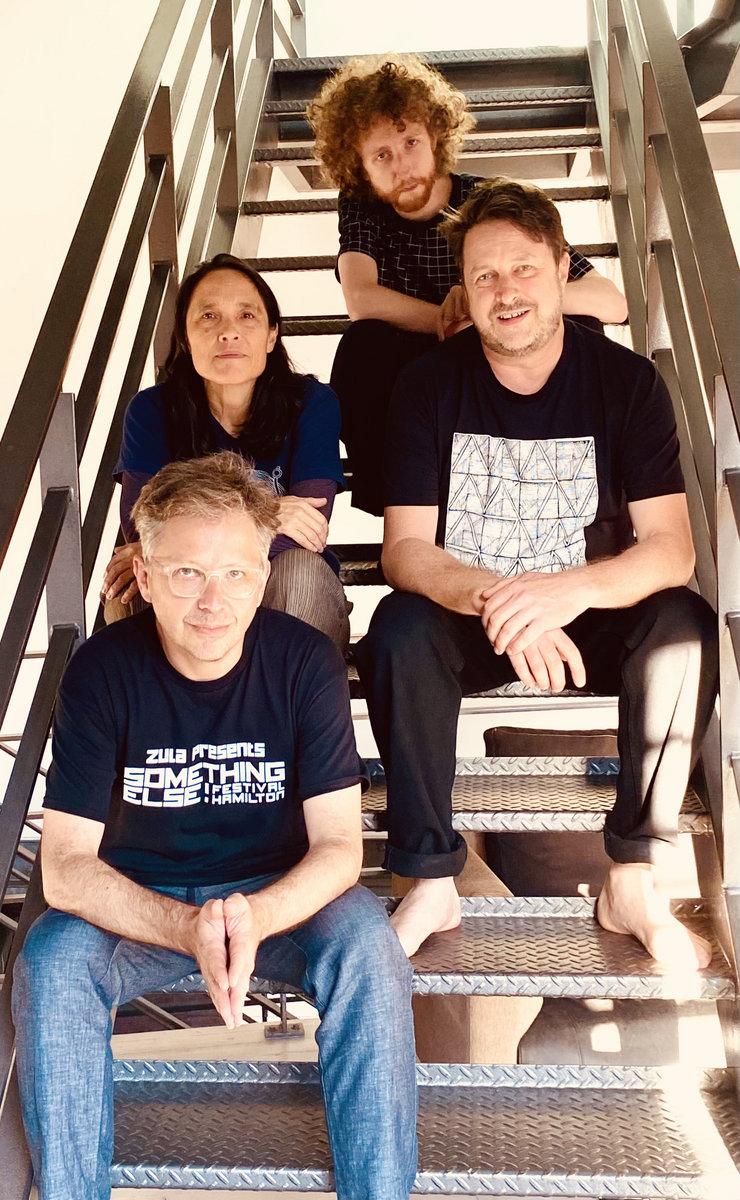 Open Thread Interview Image (c) the artists
“We don’t want is for the band to sound “tight” in the commercial sense. We aim to be together, but also loose and open.“