

Part 1
Name: Nik Bärtsch’s RONIN
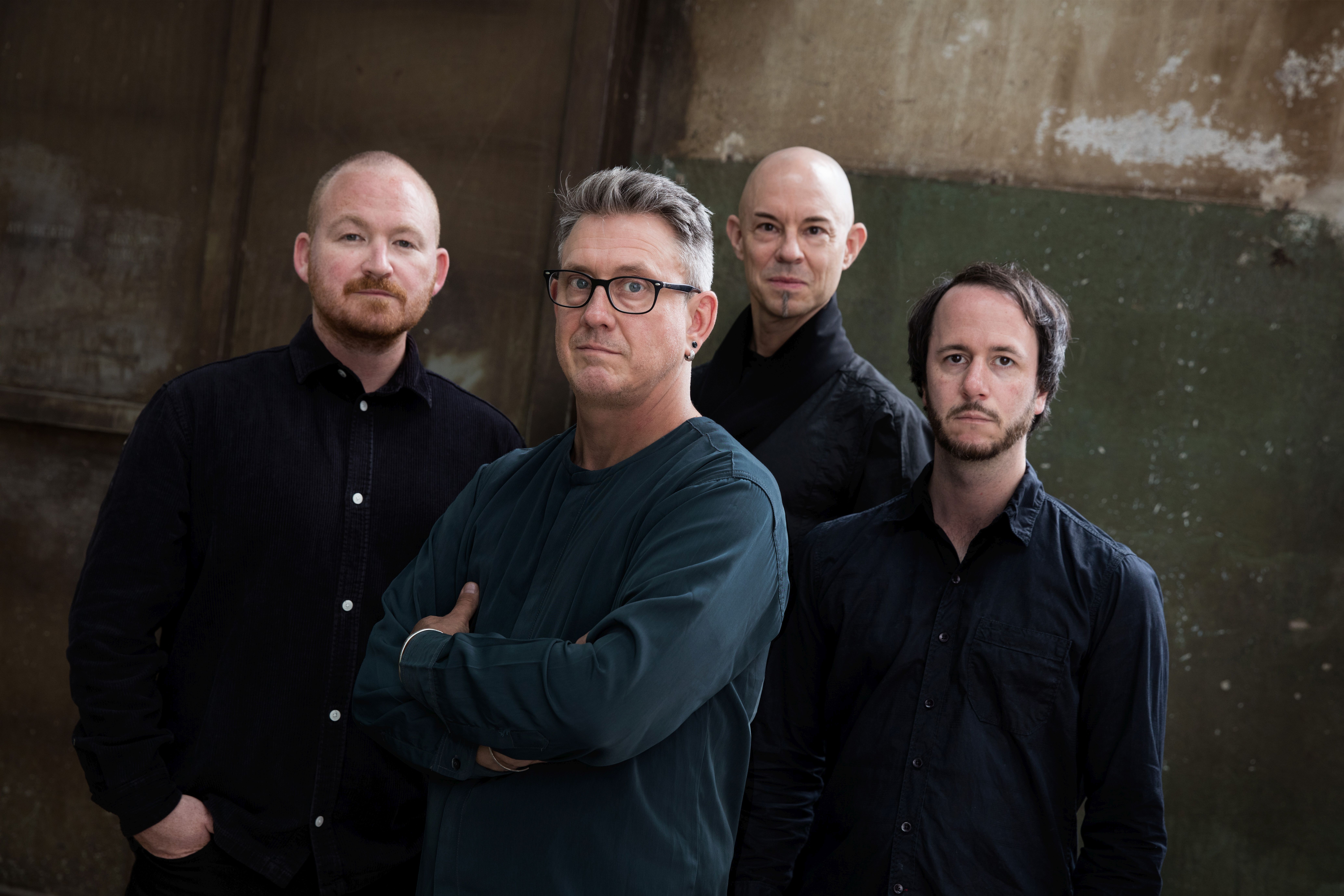
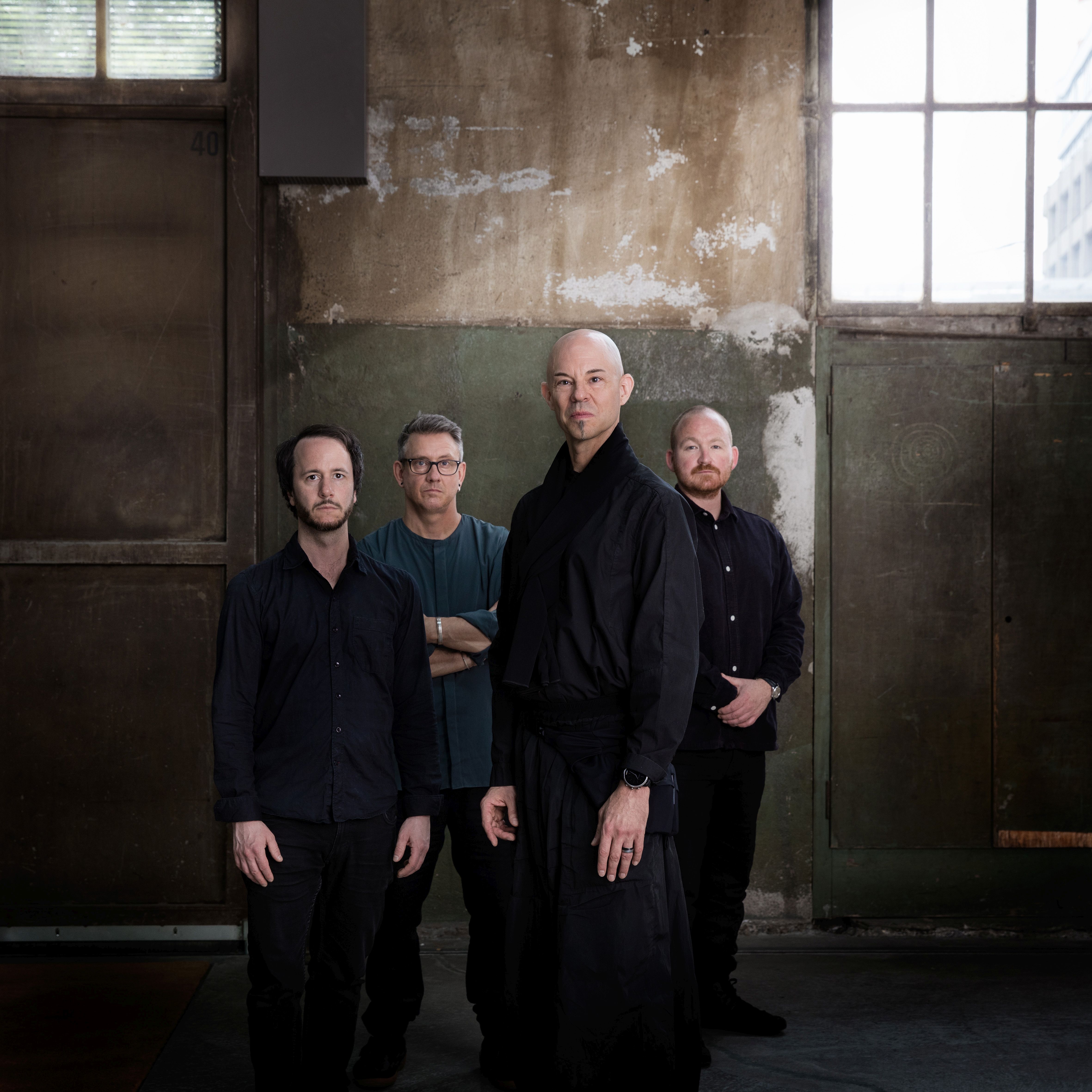
Members: Nik Bärtsch (piano), Kaspar Rast (drums), Jeremias Keller (bass) and Sha (reeds)
Nationality: Swiss
Current release: Nik Bärtsch’s RONIN's latest album SPIN is out via Ronin Rhythm Records. The band is also the subject of in-depth documentary Ingredients for Disaster by director Julian Phillips which can be streamed bia Apple TV and Amazon Prime.
Current event: RONIN are currently touring the Netherlands. Catch them live here: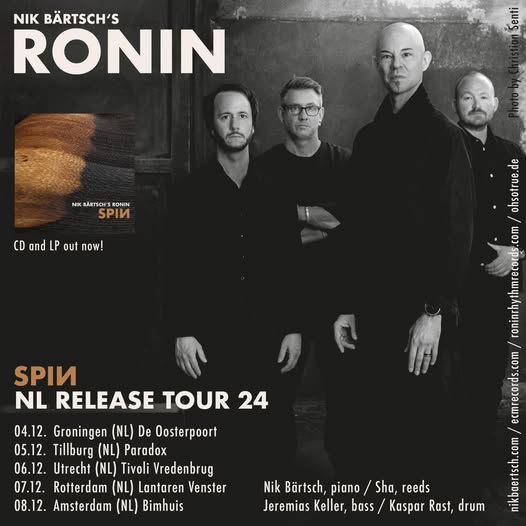
Recommendations:
KR: Sculptures of the Italo-Swiss artist Cesare Ferronato (whom I know since my childhood)
NB: The work of British video and installation artist Sophie Clements, with whom I had the pleasure to work together.
And a book, Sha recommended to me after his New York residency last year: Jill Lepore's These Truths – History of the United States
If you enjoyed this Nik Bärtsch’s RONIN interview and would like to know more about the band, visit their official homepage. They are also on Instagram, Facebook, and bandcamp.
You can also find out more on the respective homepages of Sha, Nik Bärtsch, and Jeremias Keller. For a deeper dive, read our earlier Nik Bärtsch interview or our former RONIN member Andi Pupato interview.
For a while, it seemed as though the model of the bed room producer would replace bands altogether. Why do you like playing in a band rather than making music on your own?
JK: It’s a completely different experience. Whilst bed room producing can be a very satisfying and creative experience, making music together triggers very different ideas and creative processes.
The energy and emotions of each player are being projected to the others whilst playing. Ideas are being shared, discussed and can be thrown away until the one idea that everyone agrees on finds the way into the music.
But there is of course the very banal social experience of simply being in a room with people you appreciate musically as well as personally.
SH: There is no better feeling than when the music suddenly sounds like more than the four us. When everything comes together and there is this electric moment. You’ll never be able to experience this just by yourself.
While playing solo has its perks too, the fun and connection of being part of a group is unmatched.
KR: It’s more fun, because you have to react and listen to others and you always have to find a compromise. Playing together is of course a personal decision.
NB: In my experience a band is the most fragile and agile musical vehicle at the same time. It is a complex process for the members to create the right agreements for social, financial, ethical and aesthetic balance in a band. But if this equilibrium is stable, a band becomes what Sha and Jeremias mention: a very effective, creative, powerful and therefore joyful and smart organism.
I mean that concerning recording, live playing and long-term planning. It is fulfilling because the agreements and workflow are based on self-chosen responsibility and the individual freedom of every band member – that’s probably what Kaspar means with compromise: an enriching and band proven compromise.
A real band cannot be created with force or money. Then it’s usually another model, for example with a leader and side people or an orchestra.
What, to you, are some of the greatest bands, and what makes them great?
KR: Beatles, Led Zeppelin, Weather Report.
You hear all of the members and their contribution to the sound and the composition.
SH: There are so many great bands in music history, it’s practically impossible to pick some out.
To me the greatest bands have a distinct band sound, which can’t be copied by anyone else: this unique blend of styles, backgrounds and personalities, which create their musical language. And of course haircuts are very important!
NB: I agree. A band universe is more than the music. It contains its style, community, humour and the development from a musical language into a distinctive dialect or even slang.
JK: I agree with everything said so far. If I would have to pick one that's still active: I think Nick Cave & The Bad Seeds have proven to create great music for many decades now.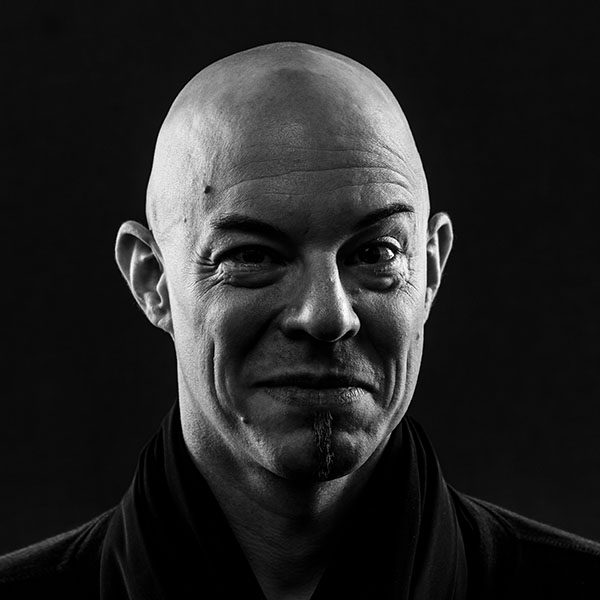
Nik Baertsch Interview Image (c) the artist
Before you started making music together, did you in any form exchange concrete ideas, goals, or strategies? Generally speaking, what are your preferences when it comes to planning vs spontaneity in a collaboration?
NB: Kaspar and I have been making music together since we were kids. We already had bands together as teenagers with partly similar ideas like now.
Sha joined RONIN, when the RONIN already existed a few years as a trio. He knew the band’s music and philosophy already although he was from a younger generation. So all of that was an organic process without a lot of talking. It is similar with Jeremias, who joined the band now in 2020 as new bass player.
Usually our musical raw material is very structured. I have the ambition to bring a carefully composed piece to the rehearsals. From there on a lot can happen in the rehearsals, weekly Monday concerts at our club EXIL up to the international concerts and then the recording.
A so-called MODUL composition usually has a long and rich history although it has a clear character. For me spontaneity should happen organically in the result of a clearly structured, planned and trained context. 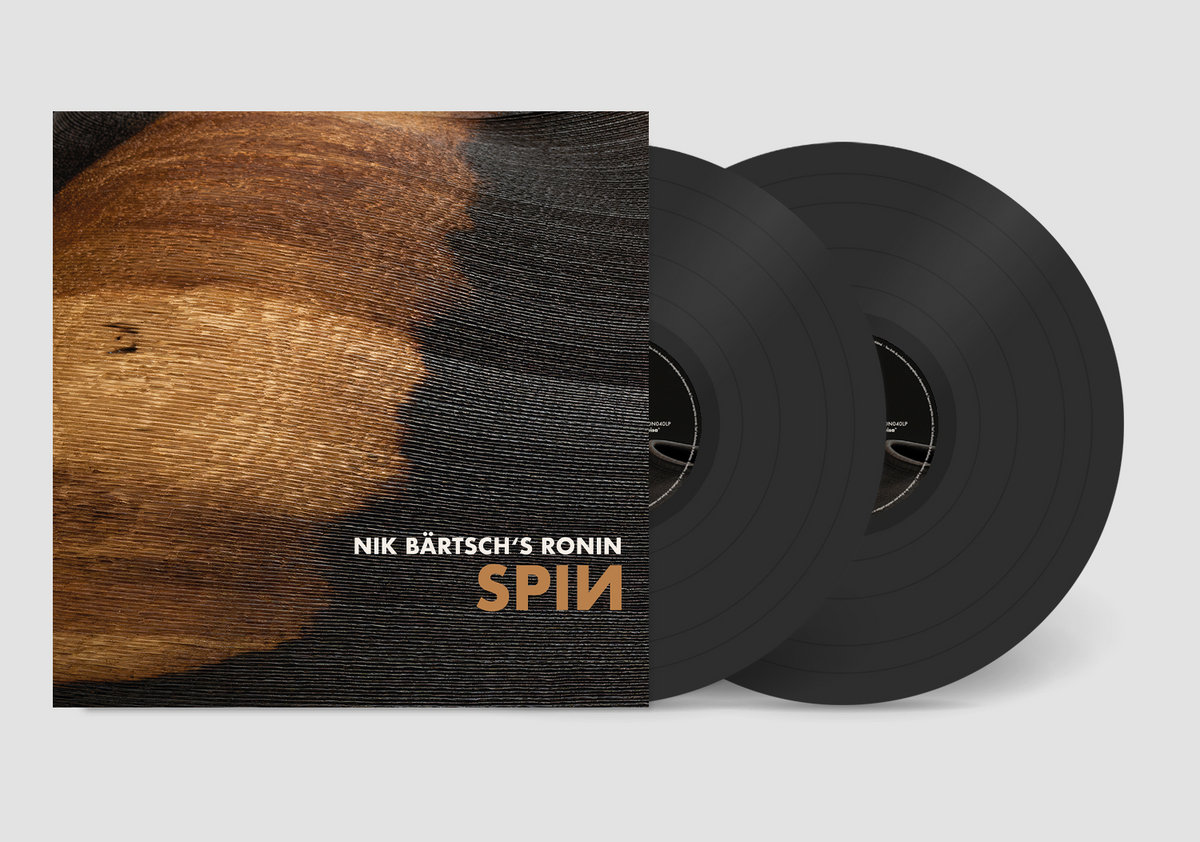
Nik Baertsch's RONIN Spin Vinyl Pack Shot
There are many potential models for creativity, from live performances and jamming/producing in the same room together up to file sharing. Which of these do you prefer – and why?
KR: I prefer playing live or jam in a studio - as long as you can feel each other.
JK: My first impulse is to say playing live is the preferred way. But working in a studio as a band is also really interesting. Anyway it is for sure playing music together.
NB: As mentioned above, I believe in a long and focused process from composing, to sharing and then to exploring the material in the band over a long period. Our music cannot be created out of coincidental jamming. It can be refined and defined by playing it together.
But the original structure needs a lot of research and exploration before it comes as a cleared piece into the playful process.
How do your different characters add up to the band's sound and in which way is the end result – including live performances – different from the sum of its pieces?
JK: I think the difference lies within Nik's compositions.
Nik's music is composed in a very radical way: the rhythms and notes are much more following rules of logic and patterns, than for example expressing a certain feeling or mood as a starting point. This forces you to treat your playing in a different way where you have to adapt it to some extend to make sense in the musical context.
Every member of this band is capable of playing many different styles of music but we are all very conscious players when it comes to "serving the song". And when we do this with these "weird songs" of Nik, that's where the magic happens.
NB: I find the most fascinating fact of our band playing, that listening, leaving space for the others and focusing on the piece creates newly surprising dramaturgies for us every time. We know the musical material so well but the band organism outfoxes the individual players.
Like in a football game: you never know what happens although you know the rules and the players. 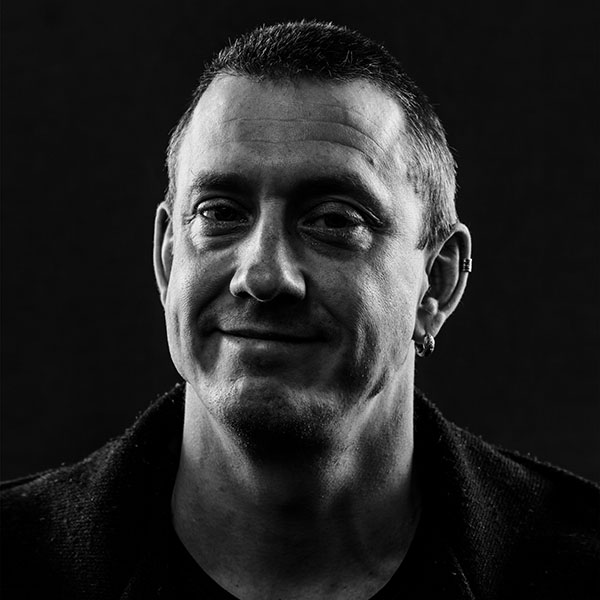
Kaspar Rast Interview Image (c) the artist
Is there a group consciousness, do you feel? How does it express itself?
KR: There is a big music-consciousness in this group. I - respectively “we” - can always – or most of the time – trust each other musically.
No one plays “out of the zone”. Everybody respects the rules and contributions of the others.
SH: If there wouldn’t be one, I wouldn’t be making music, most probably nobody would be. So yes, there definitely is!
Tell me about a piece or album, which shows the different aspects you each contribute to the process particularly clearly, please.
KR: Difficult question …There are so many parts, which come from different parts, situations…
NB: We created a score of the album Llyrìa (ECM 2010), where you can compare the written music with the reality of the recording. In there is also a text about the procedure. [Buy the score here]
It depends also on the phase of the band, how the rehearsal process developed the music. In the beginning there were many so called “one page pieces” which show on one score page the basic beat, bass line and pattern structure. The band then created the dramaturgy often in a process.
You can also read about these band processes in my book “LISTENING – Music, Movement, Mind” (Lars Müller Publishers 2021).