Name: Nicole McCabe
Nationality: American
Occupation: Saxophonist, composer, educator
Recent release: Nicole McCabe's new album A Song to Sing is out via Colorfield.
If you enjoyed this Nicole McCabe interview and would like to stay up to date with her music, visit her official website. She is also on Instagram, and bandcamp.
For a deeper dive, read the thoughts of one of her collaborators in our Sasha Berliner interview.
How would you describe your own relationship with your instrument – is it an extension of your self/body, a partner and companion, a creative catalyst, a challenge to be overcome, something else entirely?
My relationship with my instrument is more of a very dear friend than an extension of myself.
I love all my instruments (fute, clarinet, soprano saxophone, etc) but the one I feel closest to is my alto saxophone. The reason I say it is not an extension of myself is because I feel I need to put a small amount of distance between us so I don’t too closely relate my self-worth as a human to what I can do on my instrument.
Like a close friend, I do nurture the relationship with respect by practicing as often as I can and making sure I am taking good care of the instrument.
Do you feel as though there are at least elements of composition and improvisation which are entirely unique to each? Based on your own work or maybe performances or recordings by other artists, do you feel that there are results which could only have happened through one of them?
I do feel that the act of improvising is composing on the spot, and thinking of it that way I think helps make your solos feel like they should ebb and flow like a composition with a storyline and some sort of underlying structure.
Composition gives you a chance to control more parts of the structure by giving other people parts and slows down the process to possibly make more intentional choices, but I feel that both are very closely related to one another.
What balance is there between forgetting and remembering in your work?
I think it is important to speak using words that others are familiar with, but to arrange them in a creative way.
A huge inspiration for me is Lennie Tristano, a bebop pianist who taught saxophonists Lee Konitz and Warne Marsh. He had an incredible way of taking bebop material and intervening, displacing, and reworking it so it sounded totally fresh.
Taking your recent projects, releases, and performances as examples, what, would you say, are the key ideas behind your approach to improvisation?
Playing not only what I hear but trying to play something that fits into the landscape that the other musicians I am playing with are creating.
In the case of A Song to Sing, trying to find melodies and textures that can add to the world of synths and drum machines.
It feels like I am relying on vocabulary less on this album and thinking more about melody.
What are some of your favourite collaborators and how do they enrich your improvisations?
Paul Cornish is one of my favorite musicians and collaborators. He is a great friend and kind human but also an incredible pianist.
He is always deeply listening to what is going on around him and reacts selflessly to serve the music. He is incredible at taking a single idea and developing it into a symphony, never losing sight of the seed that started it all.
Stewart Copeland said: “Listening is where the cool stuff comes from. And that listening thing, magically, turns all of your chops into gold.” What do you listen for?
On the bandstand, usually rhythmic ideas that I can latch onto or if I hear some sort of extension in the comping instrument on stage.
In my own time I love listening to a wide variety of things, I loved Charli xcx’s new album as much as I loved Jason Moran’s solo piano record.
In a way, we improvise all the time. In which way is your creative work feeding back and possibly supporting other areas of your life?
I think I am learning to relinquish control in my personal life and on the bandstand.
I used to feel that I needed to know what was going to happen all the time, but now I am learning to enjoy the mysteries of what will happen next and to have faith that I will make it out on the other side of any challenges life or other musicians throw at me.
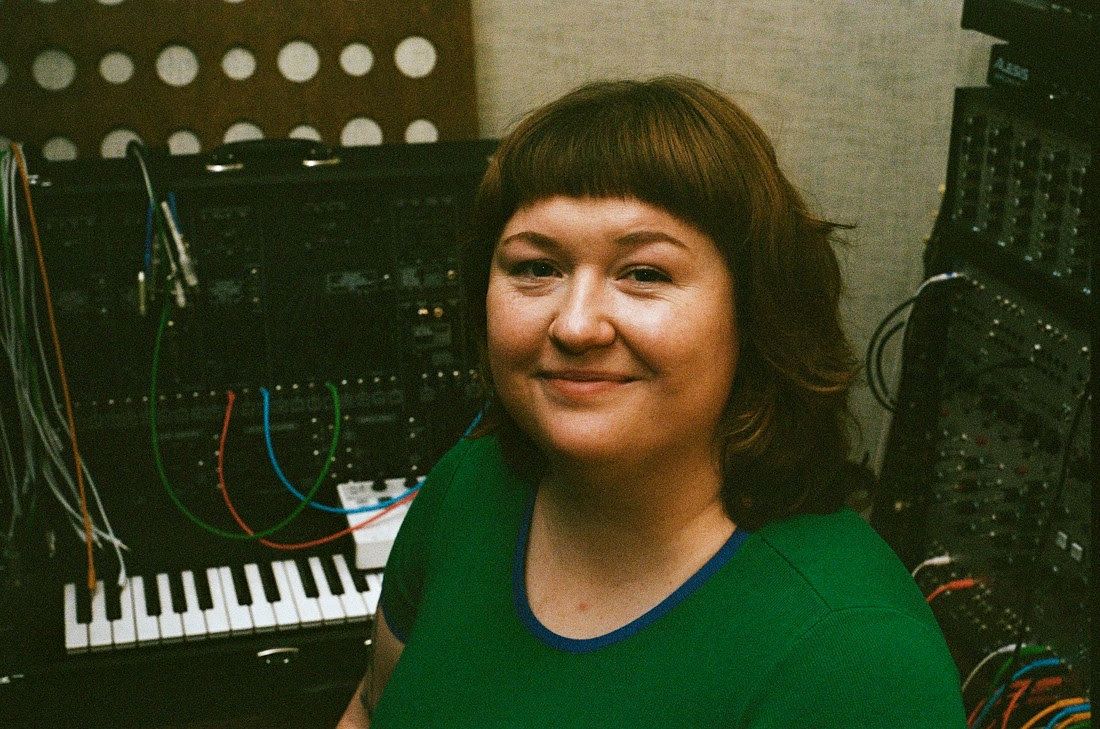 Nicole McCabe Interview Image by Charlie Weinmann
“I think it is important to speak using words that others are familiar with, but to arrange them in a creative way.“
Video