

Published
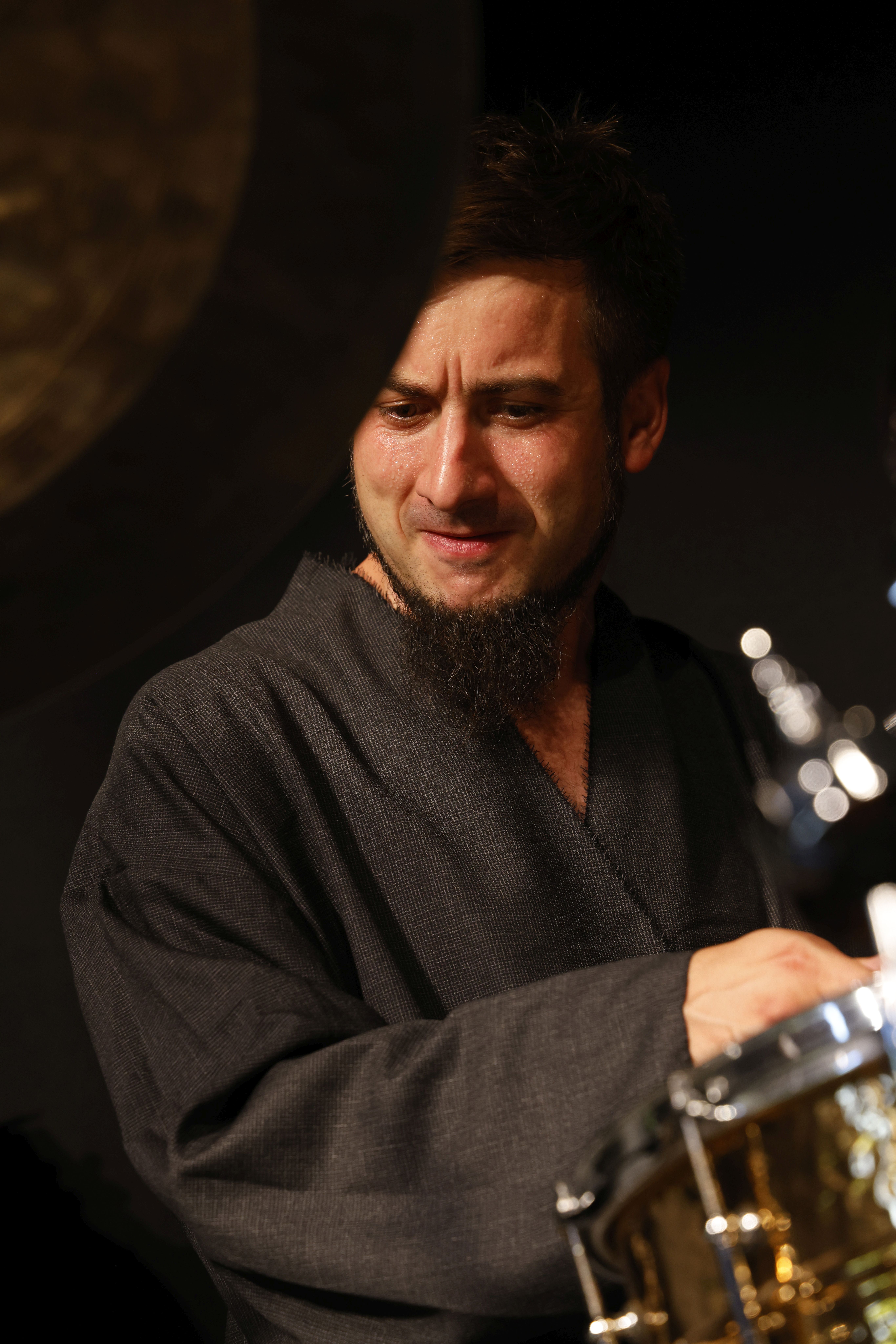
Name: Nathan Ott
Occupation: Drummer, composer, improviser, producer, educator
Nationality: German
Recent release: Nathan Ott's Continuum is a direct-to-tape recording under Ott’s name from the legendary Bauer Studios in Ludwigsburg, Germany and will be released on February 21st 2025 on his new label An:Bruch. Resonant Bodies will be the second release on An:Bruch April 11th.
Current Event: Nathan will perform as part of the Sandro Saez Trio at Sowieso in Berlin on March 20th.
Pure Drum Recording Recommendations: Jack DeJohnette's Pictures, Andrew Cyrille's What About, Gerry Hemingway's Tubworks, Jo Jones's The Drums. Then there are solo-tracks which I love: Max Roach - “The Drums Also Walzes“, Art Blakey - “Freedom Rider”, Tony Williams - “Echo.“
Recommendation for his hometown of Berlin: I’m a fanatic when it comes to Chinese food and tea. That’s why I want to recommend a cozy fine dining place with tea-pairing option in Berlin-Wedding called “UUU.“
If you enjoyed this Nathan Ott interview and would like to find out more about his music, visit his official homepage. He is also on Instagram, and Facebook.
It seems as though most aspiring artists are drawn to the drums and percussion for one of two reasons: Creating sound/noise and creating rhythm. What captivated you?
The first time I sat behind a drum kit, it was like stepping into an entirely new dimension.
After a decade of classical violin (my parents wanted me to start with a melodic instrument), where every movement followed preconceived steps and the path was carefully structured, the drums felt wild, immediate, physical. They weren’t just about playing music—they were about an individualistic way of being, a lifestyle.
To this day, it remains a portal into a world of endless possibilities and never-ending discovery.
When I listen to music, I see shapes, objects and colours. Others experience emotions. Everything around drums, on the other hand, is based on touch, vibration, and movement. Does this mean that your own perception as a listener is also more connected to touch, vibration, and movement? What happens in your body when you're listening?
Experiencing music is a very multi-layered thing. Many of those layers for me are visual—seeing shapes and colours, but always in motion! Since music exists in time, I perceive it as moving pictures in my mind.
From the point of view of the drums, which for me is the ultimate listening space, the way I react to what I’m hearing is also shaped by sensory and visual aspects—the geometry of movement, the spatial relationships between sounds, and the physical sensation of resonance. Drumming is just such a deeply sensory experience!
But when it comes to the visual aspect, I tend to be highly sensitive … the lighting on stage can completely change the way I hit my cymbal! Shadows, reflections, and colours influence my perception, opening up an entirely new realm of imagination and possibilities for what to play on the instrument. It’s as if the visual environment becomes part of the musical conversation, shaping my gestures and decisions in real time.
This deep connection between sound and movement is also at the core of Resonant Bodies, a piece for solo drums and two dancers I created in 2024 in collaboration with choreographer Hannah Schillinger and film artist Kai Ehlers. Performing alongside these incredible dancers, I gained a whole new perspective on the interplay between rhythm, movement, and space.
It was fascinating to experience how drumming and dance could merge into a single, fluid conversation—where sound became visible and movement became musical. Quite an amazing journey!
What was your first drum set like and what are you using today? What, to you personally, are factors in terms of build and design that you appreciate in drums and percussion instruments?
I’ve always played a standard 4-piece jazz kit. My first was a Gretsch Catalina, and my second was a DW Jazz Series, which I still use in my practice studio at home to this day.
I’m not much of a gearhead—I deeply appreciate well-crafted instruments, but for me, drums are ultimately a means of expression rather than an obsession with specs. If you want to have a conversation, I’d much rather talk about records than drum gear!
Late Rush-drummer Neil Peart said: “The equipment is not an influence. It doesn't affect the way I play. It's an expression of the way I play.” What's your take on that?
I encounter all types of instruments on the road, so over the years, I’ve learned to focus on bringing out the sound I hear in my head, regardless of the kit in front of me.
Tuning experience plays a role, but the most important factors are the sounds and ideas in my mind and the ability of my hands to translate them.
As far as equipment goes, the only real constant is my approach—how I shape tone, dynamics, and feel. The drums themselves are just the medium.
The drums and percussive instruments are an integral part of many cultures, and traditions. Which of these do you draw from in your playing – and why?
I don’t think about tradition in a conscious way when I play, but of course, it’s all there. I’ve listened to and studied a lot—American jazz, European classical music, South Indian rhythm concepts, and various folk traditions—but in the end, my playing is just a natural synthesis of everything I’ve absorbed.
What fascinates me most is the fluidity of rhythm across different cultures—how it can shift, stretch, breathe, and transform within a piece of music, creating a sense of movement that goes beyond time signatures or stylistic boundaries.
One aspect I’m particularly interested in, and which transcends style and genre, is exploring the lyrical potential of rhythm. This idea has stayed with me for a long time, continuously shaping both my compositional work and my approach to playing and with that I got a lot of inspiration from hand drumming traditions from all over the world.
What were some of the main challenges in your development as a drummer / percussionist? Which practices, exercises, or experiences were most helpful in reaching your goals?
The main challenge for me in playing the drums is achieving the same sense of intimacy that I had with the violin. Holding that piece of wood in your hands every day for so many years creates a unique connection, a deep familiarity and confidence. It’s smaller than a baby!
Growing up in a classical musician’s household and learning the violin in Germany felt completely natural—it was part of the cultural fabric around me. That’s why playing it felt like second nature.
With the drums, everything is different. Instead of one fixed instrument, you have an entire setup to navigate—cymbals, drums, hardware—each with its own sound, its own response. There is no direct physical contact like with a violin or a wind instrument. Finding that same sense of connection, of being inside the instrument rather than just playing it, takes time. It’s not just about technique but about shaping sound, touch, and control in a way that feels personal.
And beyond that, it means immersing yourself in the cultural context of the instrument—learning about the African American jazz tradition and understanding its language and history.
Over the years, I’ve developed a much deeper relationship with the drums, but that feeling of total familiarity, of home—I’m still working that out.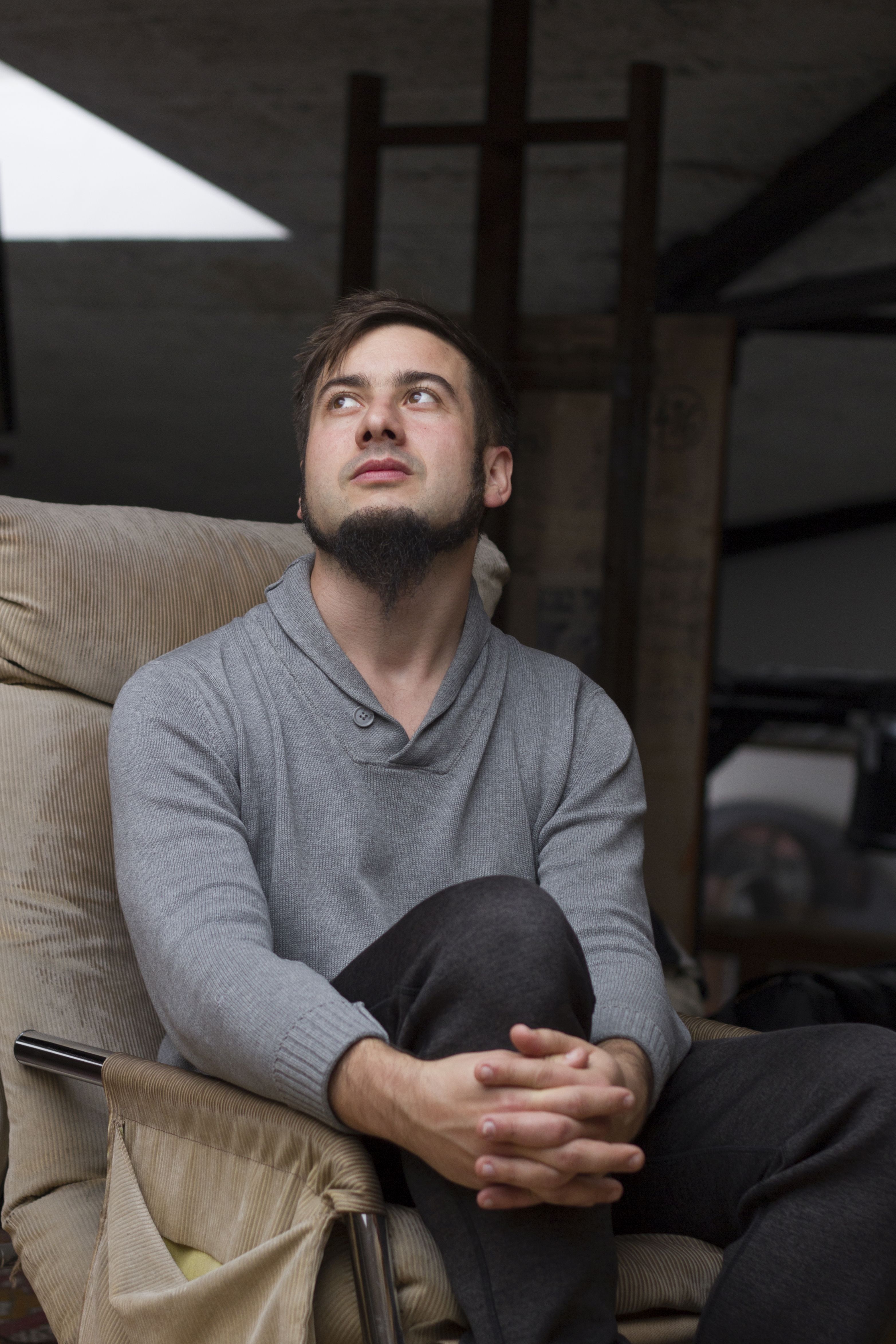
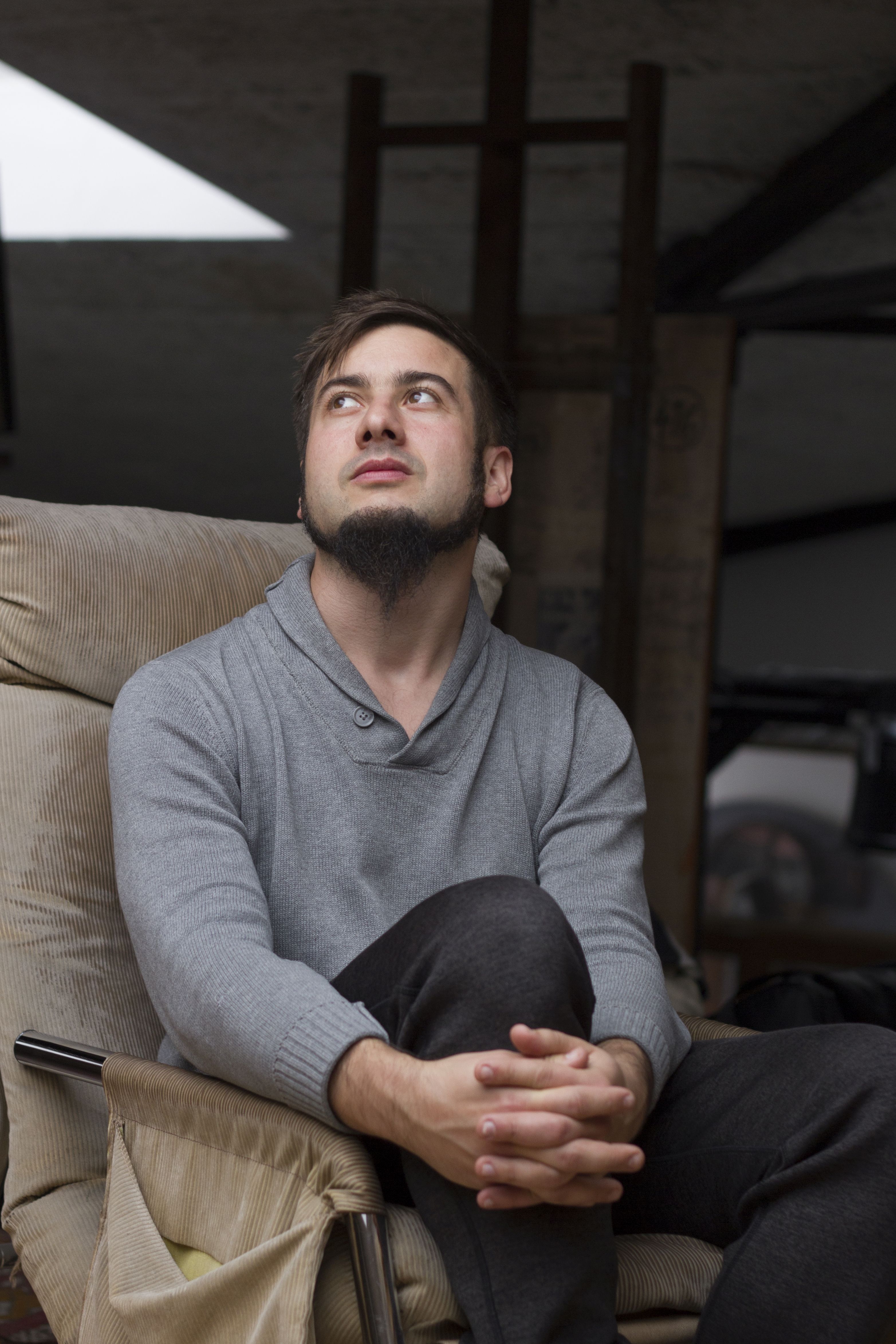
Nathan Ott Interview Image by Evgenia Chetvertkova
How would you describe the physical sensation of playing the drums? [Where do you feel the resonances/pulse/groove, what are emotional sensations, is there a sense of release or tension etc …]
Playing the drums is a full-body experience—the pulse runs through your hands, breath, and spine. The resonance is physical; you feel it in your chest, your fingertips, even the floor beneath you. There’s a deep physicality to drumming, but at the same time, it can feel incredibly weightless, almost like floating inside the rhythm.
Like Tony Williams used to say: "The drums can be aggressive and forceful. That's why many people are afraid of the drums. But they also can be romantic like a violin."
What is the relationship between harmony, rhythm and melody? How do non-percussion instruments contribute to the overall rhythmic texture of a piece?
Seeing harmony, rhythm, and melody as separate elements feels a bit theoretical to me—when music happens, they are deeply connected, constantly shaping and influencing each other.
Rhythm carries its own melody, just as melody has an inherent rhythm, while harmony adds movement, depth, and tension that redefine both. A single drum hit can be melodic. A phrase played by a horn can be rhythmic. It’s all connected.
Do you feel that honing your compositional / songwriting skills has an effect on your drumming skills?
Absolutely. Writing music has made me much more aware of form, space, and pacing. When you compose, you have to think about the why of every aspect, and that same awareness transfers to drumming.
One of the best things about living in Berlin is being surrounded by classical music every single day—it’s astounding! The city has seven major symphonic orchestras performing regularly, but beyond that, there’s an entire world of smaller ensembles, experimental projects, and intimate performances waiting to be discovered.
At some point, I got completely hooked on the program at Pierre Boulez Saal—so much so that my wife got mad at me for buying tickets to 60 shows in just two seasons.
Experiencing that level of musicianship up close has been hugely inspiring for me, especially in contemporary chamber music. The depth of sound, the phrasing, the way rhythm and texture unfold—it all feeds back into my own playing and composing in ways I wouldn’t have expected.
I've long been intrigued by bands or ensembles where the drummer is the leader and/or main composer. In as far as it is possible to generalise, what do you think changes in terms of the music or performance in these situations?
I see the drummer’s role in an ensemble as similar to that of a conductor in an orchestra. You’re constantly shaping the flow, directing the energy, and maintaining a deep awareness of the entire musical structure—whether you wrote the music or not. That level of familiarity with form, dynamics, and interaction makes drummers natural leaders in many ways.
So ideally, there shouldn’t be a big change when a drummer leads—at least if we’re talking about a musical drummer!
How are you making use of the timbral and textural potentials/possibilities of your drums and percussion instruments when making music?
Recently I've been thinking about how to make rhythm itself feel textural. And vice versa treating what they call sound effects like actual rhythms. That makes you zoom out in an interesting way!
I got that idea from listening to the opening of Jack Dejohnette's ECM-record Pictures. What a great record!
It also inspired me to look at the drums in a more orchestral way.
How has technology, such as drum machines and sequencers, impacted the way rhythm is created and perceived? Has it been a concrete influence on your own approach?
Technology has definitely changed the way we hear rhythm. Drum machines and sequencers have introduced a level of precision and repetition that’s very different from the natural elasticity of human playing, shaping new aesthetics and clichés along the way. Maybe it’s even influenced this textural-rhythmic idea I’ve been exploring!
It’s certainly not a direct influence on my playing, but I’m sure some of the sounds I hear in my head are coming from that side, whether I realize it or not.
Physical strain is a particularly serious issue for many drummers. How does it manifest itself, how do you deal with it and in how far does it affect your creativity?
I think if properly done drumming should have a healing quality, not just spiritually but physically. So ideally the more I play the better I feel!
Look at all the greats who were and are able to play on the highest level well into their old age: Roy Haynes, Elvin Jones, Billy Hart, Jack DeJohnette!!!
Many recording engineers have remarked that the drums can be particularly hard to capture. What makes drums sound great on record and in a live setting?
It starts with the player—how they interact with the room, how they balance their own dynamics. The best drum recordings capture the air around the instrument, not just the attack of the hits.
In the studio, I prefer a natural, open sound with minimal processing. Live, it depends on the space—some rooms make the drums sing, others swallow them up. You have to adjust constantly.
With my upcoming record Continuum, I’m really happy with how the sound of the drums comes across. It was recorded direct-to-tape with no editing at the legendary Bauer Studios in Ludwigsburg, Germany, using a minimalistic, vintage-style mic setup. The approach allowed for a completely organic, unfiltered sound, capturing the depth and warmth of the instrument in a way that feels very alive.
Drums and percussion are remarkably often used for physical therapy / healing. What, from your point of view, makes them particularly suitable tools for this?
It’s all about the trance. Drumming has this incredible ability to pull you into a deep, hypnotic state where everything else fades away.
Whether it’s through repetition, groove, or sheer physical engagement, rhythm has a way of realigning your focus and energy.