

Published
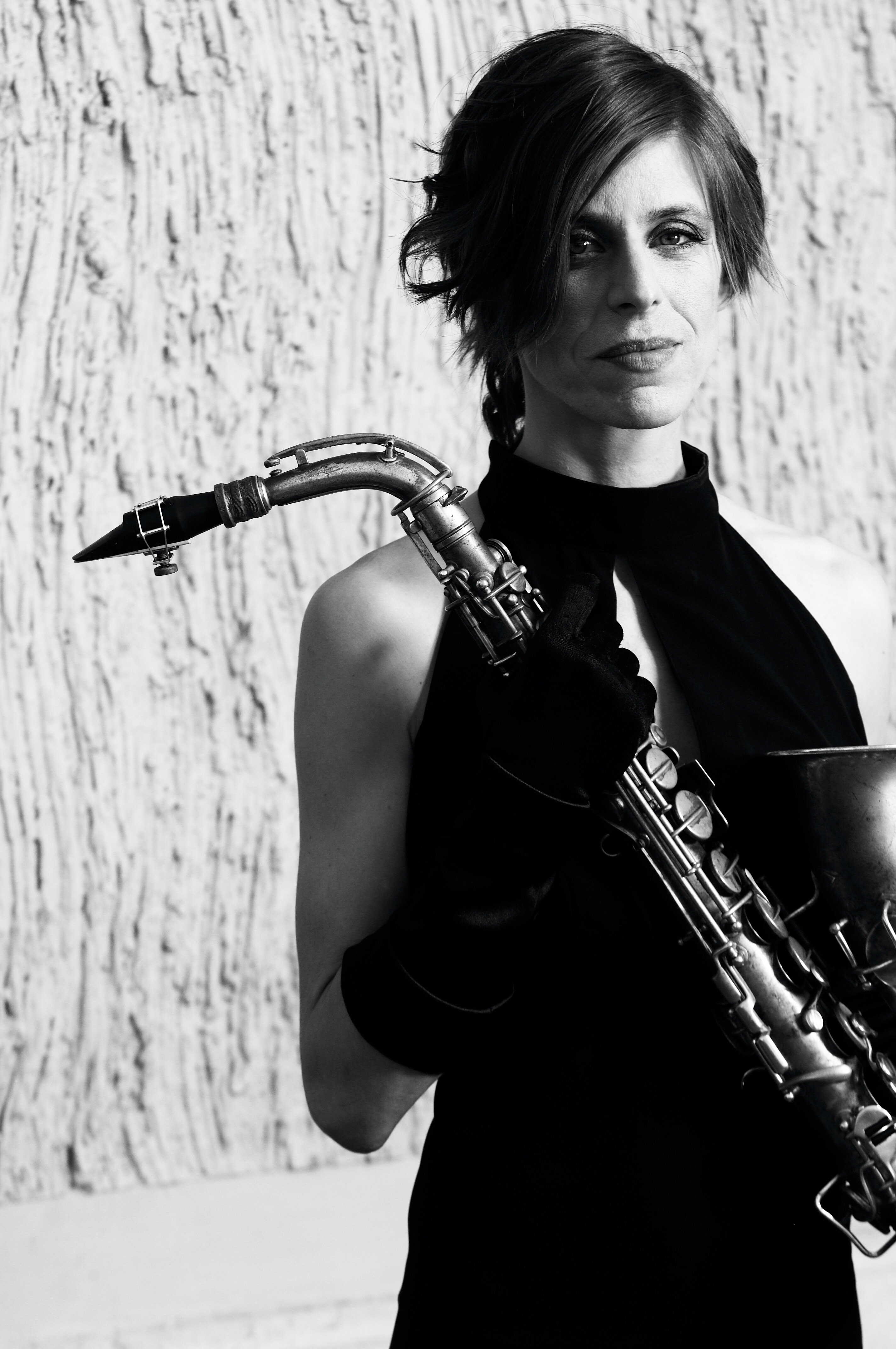
Name: Muriel Grossmann
Occupation: Saxophonist, improviser, composer
Nationality: Austrian
Current release: Muriel Grossmann is one of the artists appearing at the XJAZZ! 2024 festival in Berlin. For tickets, go here.
Other acts at the festival include Nala Sinephro, Shabaka, Bill Frisell, Bex Burch of Vula Viel, Portico Quartet, Sasha Berliner, Nubiyan Twist, Orchestra Baobab, Nduduzu Nakhathini, Sebastian Studnitzky, Szabolcs Bognár aka Àbáse, and many more.
[Read our Bex Burch interview]
[Read our Vula Viel interview]
[Read our Portico Quartet interview]
[Read our Nubiyan Twist interview]
[Read our Sebastian Studnitzky interview]
[Read our Nduduzu Nakhathini interview]
[Read our Sebastian Hecht interview about XJAZZ curation]
[Read our Szabolcs Bognár aka Àbáse interview]
If you enjoyed this Muriel Grossmann interview and would like to know more about her music and upcoming live performances, visit her official homepage. She is also on Instagram, and Facebook.
For a deeper dive, also check out our earlier conversation with Muriel Grossmann about her performance at the XJAZZ! festival.
Derek Bailey defined improvising as the search for material which is endlessly transformable. As of 2024, what kind of materials are particularly transformable and stimulating for you?
Each of my records deals with some specific elements and materials that I transform into my experience and the way I hear the music. It is a sign of good material when you can reinvent or transform it.
"My Favorite Things" is a beautiful piece of music, but what John Coltrane did with it transcends even that.
It is quite fascinating, just 12 notes with endless possibilities. I get inspired by melodies, phrases, songs and from there I can stretch from intervals to harmonic ideas and use rhythmic variations.
The longer I play, the more I feel I can discover.
Thanks to technological advances, collaboration has become a lot easier. What's your view on collaboration and its ongoing role for the music you make?
For me it is meeting the band, that is the collaboration I enjoy the most because it helps us develop our band sound.
Making music has always been about collaboration, interaction and communication. Meeting the band for a rehearsal, recording or a concert is where I find the joy and where the music starts to happen.
In terms of the results, the process, and the satisfaction, how do making music in the same room together versus filesharing compare to you, real concerts vs live streams?
There is nothing like the band in the room where you can feel that electricity when the band starts playing together and things start to fall into place. And when they do, you look around, you look into the audience and you see that they dig it, you see that they are having a good time, the music is right, the band is tight - what more can you ask for.
The other stuff you mentioned is okay, it serves its purpose. I am glad that live streams of concerts have become possible. It’s a great opportunity if you can’t make the trip. But I'm quite old-fashioned, I like to see bands live and I like it when there's a lot of live audience at my concerts because it's that energy flow that makes the moment special.
Improvisation is obviously an essential element of jazz, but I would assume that just like composition, it is transforming. How do you feel has the role of improvisation changed in jazz?
The greatest musicians in jazz like Louis Armstrong, Lester Young, Charlie Parker, John Coltrane, Ornette Coleman, they were the ones who changed the role of improvisation in jazz by inventing different styles like swing, bebop, modal, free and a specific way of playing these styles.
I enjoy long, elaborate solos, I want to hear the language of each musician and I love to discover how his way is paved by his fellow musician.
What, would you say, are the key ideas behind your approach to improvisation?
Playing music requires a set of universal skills, and then it is up to the musician to express his or her experience, musical thinking, and understanding of any given material.
For me, I like to orientate myself around the theme, to interpret the theme in the most organic way. To do justice to the theme, and in this way everything I practice comes out organically.
How would you describe your own relationship with your instrument – is it an extension of yourself/body, a partner and companion, a creative catalyst, a challenge to be overcome, something else entirely?
I see it as an extension, a tool through which I can express all that I want to hear, a fuller version of my existence. I see myself and my instrument as a tool for spreading hope, well-being and inspiration.
The term identity is an important aspect of many communities. Are you acting out parts of your identity in your improvisations which you couldn't or wouldn't through other musical approaches? If so, which are these?
The way is to go inside, to what is 100% really you, to be yourself most of all, and act from there. Music feels like freedom and improvisation feels like free falling.
I have always been fascinated by the many facets of improvisation but sometimes found it hard to follow them as a listener. Do you have some recommendations for “how to listen” in this regard?
It is good to be curious, because as you said, there are so many facets of improvisation, especially in jazz. We would have to discuss each one of them to understand the value of these different facets. I think it is okay to prefer something more than something else.
Just listen, ... there is nothing to follow, if it speaks to you, if it feels right ... listen more.
In a way, improvisation reminds us of the transitory nature of life. When an improvisation ends, is it really gone, like a cup of coffee? Or does it live on in some way?
The coffee particles will be incorporated into your cells, some will become part of you, and some particles will leave you sooner or later.
All life and everything in life is impermanent. Everything changes from moment to moment. When the improvisation ends, something in you has changed and you will never be the same.