Name: Mo Lowda & the Humble
Members: Kirby Sybert, Jeff Lucci, Jordan Caiola, Shane Woods
Interviewee: Jordan Caiola
Nationality: American
Current release: Mo Lowda & the Humble's new album Tailing The Ghost is out June 20th via Workaround.
Recommendation for her hometown of Philadelphia, USA: Go see a show at Union Transfer, Johnny Brenda’s, Underground Arts, or the Met. After touring for almost 10 years it has made me realize this town has some amazing venues - big and small.
Things I am passionate about but rarely get to talk about: I’m pretty in love with the show ‘Fargo’. Seasons 1 through 3 especially. I don’t have many friends who watch it but am always looking for someone to talk about it with.
If you enjoyed this Mo Lowda & the Humble interview and would like to find out more about the band, their releases and upcoming live dates, visit their official homepage. They are also on Instagram, tiktok, and Facebook.
When it comes to experiencing strong emotions as as a listener, which albums, performances, and artists come to mind?
Radiohead - In Rainbows.
Bon Iver - For Emma Forever Ago.
Fleet Foxes - Self-Titled.
Local Natives - Gorilla Manor.
Van Morrison - Astral Weeks.
There can be many different kinds of emotions in art – soft, harsh, healing, aggressive, uplifting and many more. Which do you tend to feel drawn to most?
I think there’s a lot of power in the universal, shared heartache.
I often find myself being pulled in by songs that encapsulate it well.
I have had a hard time explaining that listening to death metal calms me down. When you listen to a song or composition, does it tend to fill you with the same emotions – or are there “paradoxical” effects?
Some of my favorite songs on earth make me want to dance, but also cry at the same time.
Again … hard to explain, but it’s real.
In as far as it plays a role for the music you like listening to or making, what role do words and the voice of a vocalist play for the transmission of emotions?
As a writer, I focus heavily on trying to properly convey emotion, both in my word choice and delivery. Ironically, as a listener, it usually takes me about 5 to 10 full listens before I’m really diving into what the lyrics are.
The music itself and the production can convey so much emotion on their own, that I often think great lyrics are the icing on the cake. The listener won’t give the lyrics the time of day if they’re not pulled in by the tonality of the song as a whole.
Then, you’ve “earned them” so to speak - and have the ability to captivate them fully.
When it comes to experiencing emotions as as a creator, how would you describe the physical sensation of experiencing them? [Where do you feel them, do you have a visual sensation/representation, is there a sense of
release or a build-up of tension etc …]
There are many emotions that come in during the writing/creating process. There is the rush of pulling a good line out of thin air … The continued excitement of chasing down an idea and going through the process of recording and producing it in a way that comes as close to that vision as possible.
This process is often laden with small moments of frustration that you really have to push through if you want to get it there.
When it comes to composing / songwriting, are you finding that spontaneity and just a few takes tend to capture emotions best? Or does honing a piece bring you closer to that goal?
I think it’s a song by song basis.
There is no doubt that “demo-itis” exists. Which is growing attached to the very first rough draft recording of a song where you were simply just trying to get the idea down to not forget it. It’s easy to get used to that version, and often times it may be the best/most emotional performance of the song that you could’ve given, simply because you were in that moment and weren’t forcing it or trying the sing/play it absolutely flawlessly.
There’s 2 sides of the coin here though: Some songs call for that rawness. The imperfections add charm. Other songs end up reaching their full potential if you really sit with them for a good bit, honing each detail. It just depends.
How much of the emotions of your own music, would you say, are already part of the composition, how much is the result of the recording process? for your current release, what kind of emotions were you looking to get
across?
I think the goal of the recording process is to still harness the emotion from which the song idea spawned in the first place. That is always my goal at least.
There are many emotions on this record and I think each song brings something a little different. Longing, frustration, regret, ambition, encouragement, contentment, love, excitement, grief.
Overall though, this album is our most uplifting one yet - especially lyrically but I think tonally also.
How do you capture the emotions you want to get across in the studio?
It’s a very difficult thing, honestly. And this concept is definitely the culprit for a lot of the frustration I touched on previously. I think we’re always learning. We’re always trying new things and seeing what works.
A little trick of the trade though (and I can’t tell you how many times this is the answer when something isn’t “working”) is to simply mute an element at a key moment, making space for the featured line or riff or chorus to hit even harder. Sometimes when tracks are competing with each other, it actually takes away from the power.
In terms of emotions, what changes when you’re performing live on stage, with an audience present, compared to the recording stage? How does the presence of the audience and your interaction with it change?
Oh man, the crowd is quite literally everything.
I try to bring the exact same energy level each night and when it’s a great crowd and they’re right there with us it is an unexplainable high. When it’s an off night and you can tell the crowd isn’t fully engaged, it can be very difficult to convey the same emotion and get on the same page.
Our live show is about authenticity. We’re going to bust our asses every night trying to play these songs to the best of our ability and bring you in with us.
How would you describe the creative interaction with listeners during a gig?
I’ve looked up and seen smiles. I’ve looked up and seen tears. Sometimes during the same song. Sometimes at the same time.
I find beauty in the fact that it can span those two emotions and everything in between.
What kind of feedback have you received from listeners or concert audiences in terms of the experience that your music and/or performances have had on them?
I’ve spoken to people after shows who have told unbelievably touching stories about what our music has meant to them, their loved ones, their relationships, their kids.
THAT is what it’s all about. And it all stems from the emotional connection we make through what we do.
The emotions that music is able to generate can be extremely powerful. How, do you think, can artists make use of this power to bring about change in the world?
I think the change can come in small ways through an artist conveying their genuine self. I think listeners can sniff out the bullshit. So if I actually believe in the things I’m singing, then the listener believes in them too. I try to stay within myself for that reason and write what I know.
As far as portraying a political, global, or humanitarian message - I think it’s every artist’s right to explore those things and speak out for what they believe in. They’ve earned their platform, they can use it for whatever they’re like. Folks don’t have to listen if they don’t want to.
But I can’t stand the whole “Stick to music” thing. When music is so intertwined with who the artists are as people, there are going to be other things that come along with it.

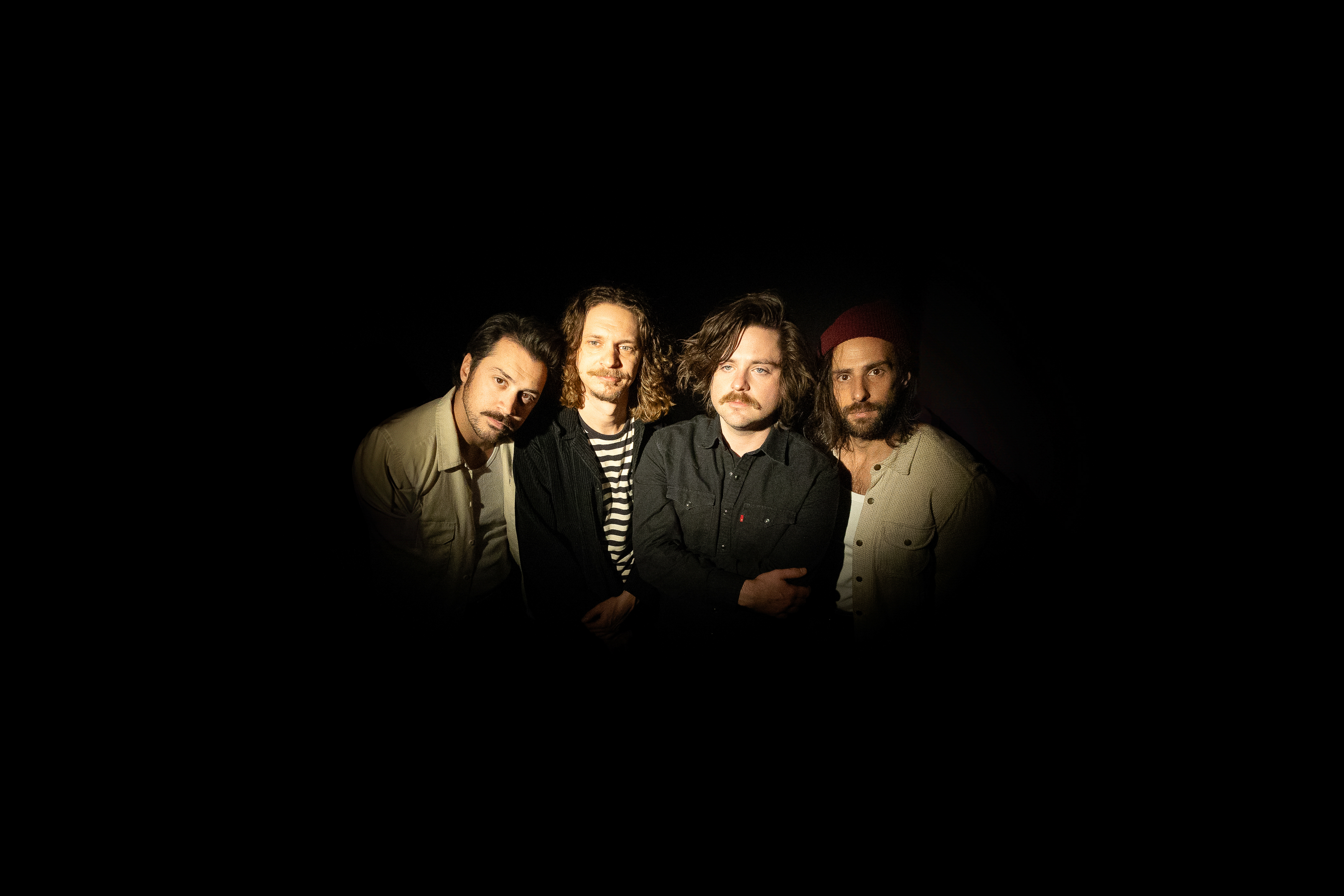 Mo Lowda & the Humble Interview Image (c) the artists
“Listeners can sniff out the bullshit. If I actually believe in the things I’m singing, then the listener believes in them too.”
Video