Name: Matthias van den Brande
Nationality: Belgian
Occupation: Saxophonist, flutist, composer, improviser
Current release: Matthias van den Brande's new album Fields Of Color, featuring Jean-Paul Estiévenart (trumpet), Tijs Klaassen (bass), and Wouter Kühne (drums), is out via Fresh Sound New Talent.
If you enjoyed this Matthias van den Brande interview and would like to stay up to date with his music, visit his official homepage. He is also on Instagram, bandcamp, and Facebook.
This interview was conducted as part of the research for a book commissioned by guitarist-composer Stephan Thelen about Mark Rothko, the relationship of his paintings with music, synaesthesia and the connections between different forms of art.
If you have something to contribute or would like to stay up to date, drop me a line at tobias@15questions.net. Read an interview with Stephan about the origins of his own Rothko project here.
You have a deep, personal connection with Rothko. Can you talk about that?
I went to study in Philadelphia, in the States, and from there, I went to New York a lot, and to DC. There are many Rothkos at those place, whereas in Europe, it's hard to find one.
Music is more direct than painting, for me at least, and it's a bit easier to find this space where the world dissolves. But Rothko kind of gave me the same hypnotic feeling. I have a specific kind of colourblindness, but for some reason, Rothko really struck me in a certain way. I think it has to do with the fact that his colours are very distinct.
Rothko said that his works are 80 or 90% form and 10% colour.
That's how I perceive it as well when I started writing music.
And yet, with the secret murals, for example, for me, they seem to emit light. When you're in a dark room with them, it's like light is coming out of them. It's in the way Rothko treats the paint and how the colours interact with each other.
You seem to sense a personal connection to him. So how did you approach this project?
I actually really didn't want to write something that would make people think, ah, that sounds like Rothko! I wanted something that sounds like it was made by me but influenced by Rothko. So that the music stands on its own.
I know he listened to a lot of Mozart and classical music from before his time, and he hated modern classical music, he hated jazz. His art is very modern and from its time, but his influences are very old - Roman paintings, Michelangelo ...
And I feel the same. I listen mainly to jazz from the 40s and 50s, to Bach … But then when I make my music, it's still from this time and I'm not trying to make something that sounds like something else.
How did you start work on Fields Of Color?
There was this huge exhibition in Paris two years ago. I went for five days and I went to the museum every day. And then I started composing in Paris.
For most of the songs, I already made sketches there, but every piece is influenced differently. I would take a painting and I would just use the way he uses form in a musical way. “Yellow fields” is really, form wise, structured like the painting for me.
Others are really more emotional, like how I feel when I see the painting. So every piece has its own angle.
“Untitled stories” is an homage to all his paintings, because he wouldn't give titles to them, but they're influenced by some of his drawings. In one of them, which is on the cover of the book by his son Christopher …
... From the Inside Out …
… right, and on that painting you see all these lines going in circles. It inspired me to do things like that in music.
Where did you see the famous Seagram murals?
In Paris as well. I'd seen them when I was a teenager, and then they had the whole room and some extra even from London moved over to Paris. So even before I came to Paris, I'd already written a sketch of that tune.
This is one of the only ones on the record where I feel, if I listen to the music, I really feel the same as when I was in the room. A lot of people mentioned it's more violent for them, but for me, it had a really meditative feeling to it and the glowing aspect. That's why I used to the effects on the bass, on the chords.
It's very personal, though. I think that's also why Rothko didn't give titles to his paintings. He didn't want people to have just one idea of the painting. I'm sure that my experience is different than someone else's. I just try to write something close to my experience, I guess.
There is a lot of visual vocabulary around music, like the word “colour.” Or how you just described how you wanted to create a “circular” motion in your piece. Do you think that that these terms are just bridges or metaphors, because we don't have any more suitable terms to describe the actual phenomenon?
The way time happens in art is so different from music. There's a very interesting interview with conductor Sergiu Celibidache, where he talks about how something like a complete Bruckner symphony goes from moment to moment and you need to make sure that they are all aligned, even if it's an hour long. Whereas, if you look at a painting, you perceive it in one go.
So, in sound, this circle needs to happen over time, you need to have different fragments, whereas in painting, you see a circle and it's there already. So I think with art, it's a more immediate thing.
But then a Rothko is such a huge painting and there's so much happening that I think you can get the same feeling - that experience the painting by looking at different parts of it. Sometimes it looks like it's moving. It's almost like it's happening in real time.
What about the colours?
They came in when I thought about what I would do for the instrumentation.
If you think of colours, you may initially think of guitar and piano - harmonic instruments. I had my cordless trio - bass, drum, saxophone - and I didn't want to add piano because I didn't want to change the sound of the band too much. But I thought that an extra horn player would give me the opportunity to write more contrapuntal lines and to have more colour, but at the same time keep the sound of the trio.
Compositionally, it's a different approach, because you have less voices to work with, but it actually helped to think more of form and counterpoint. With piano and guitar, I would have maybe chosen the easiest option to create soundscapes.
Also, Rothko usually uses only three or four colours, at least in his later style. He used a lot of shades of these colours and a lot of layers. And so with me, I only had four colours, and actually only three voices, if you don't count the drums. So in that respect, it makes sense.
With the other band members, did you discuss in any way how to play it – did you want them to approach it differently from any other piece you would play?
Not so much. I mean, I've been playing with Tijs and Wouter for years now. I play in Tijs's band as well, and we're best friends. So we're super close, and we've been playing a long time in a trio as well, we got to a point that we never rehearse anymore. So if I bring new stuff, it's usually during the sound check.
But of course, this time it was all new repertoire. So I did want to rehearse. But then we had a residency and already after one day, I felt like, we didn't really need to rehearse anymore, it felt like it was working. I don't like to talk too much about music anyway, the more you try to talk about what you want, the more the musicians feel trapped and I need to stay open to what they bring.
However, before we went to the studio in France, we passed the exhibition and, one day before the sessions, we all went to the museum. It was really special to see all the paintings with the other musicians the day before we would record. So they would be a bit in the mood and get to know Rothko a bit better.
I would walk around, and I would hear my music in my head while I was watching the paintings it was inspired by. I remember walking into the Seagram room, and I would hear the piece in my head, and I was like, Okay, it fits, it matches the experience.
What do you think Rothko actually painted?
If you look at his whole career, he was really searching for an essence. I feel I'm on the same search, just like most artists that really reach a really high level. I'm thinking of Wayne Shorter and John Coltrane and people that are really digging deep, and keep digging deep. They don't stop at some point. It's because there's this spiritual underlying, this truth, almost, that you're trying to visualize.
When I look at Rothko's earlier work, I feel he's struggling and he doesn't really have the right tools yet to express what he thinks. When you look at his own writings about his work, he really knows what he's doing intellectually and spiritually early on. But you need to find your own way of expressing yourself. It's like a meditation. Your essence is already there, but it's just covered by stuff that you need to get rid of to see clearly.
And I feel he was doing that all the time. He would paint, and he would just get rid of stuff until he arrived at some sort of essence. And I think he was still working to get more to the point. He went more and more abstract, not for the sake of it, but to have less distractions in his work.
And then, when I look at Rembrandt or Da Vinci, I see that same essence, the essence of life, something universal.
I agree. You can't paint something with nothing. Rothko had to use paint to make the nothing, the emptiness, the essence visible. If it had been possible, he would have worked with less.
It's fascinating that you use the words empty, because I'm Buddhist. And the word Sunyata in Tibetan Buddhism or Mahayana Buddhism is very important, and it's translated as emptiness. Which is a bad translation, really, because emptiness gives a connotation that something is not there and unimportant, but that's not what it is.
Emptiness is the fact that there's nothing as an inherent existence. Everything is changing all the time. So there's no moment in time where you have a soul or you have an identity, because everything is influenced by everything else. So everything is constantly moving. There's this universe in which everything is connected. We exist because everything is empty, because if it weren't, we would not interact with each other, things wouldn't change and we wouldn't be here.
It's this paradox of things being empty and at the same time connected to the whole universe, and I feel with art, you can get in touch with that. It's beyond concepts, and ideas, but we still need them to get there. We need words, we need sound, we need paint to get us to that space, and then we dissolve into it, and then we have an experience. And then, later, when we try to explain the experience, we fail, because if we would be able to explain it, it wouldn't be empty …
It feels like my purpose in life is to keep looking for that. And sometimes I find it, when I listen to Wayne Shorter play live, or when I sometimes play myself and then things happen, or when I meditate, or when I meet people. Or when I see a Rothko.

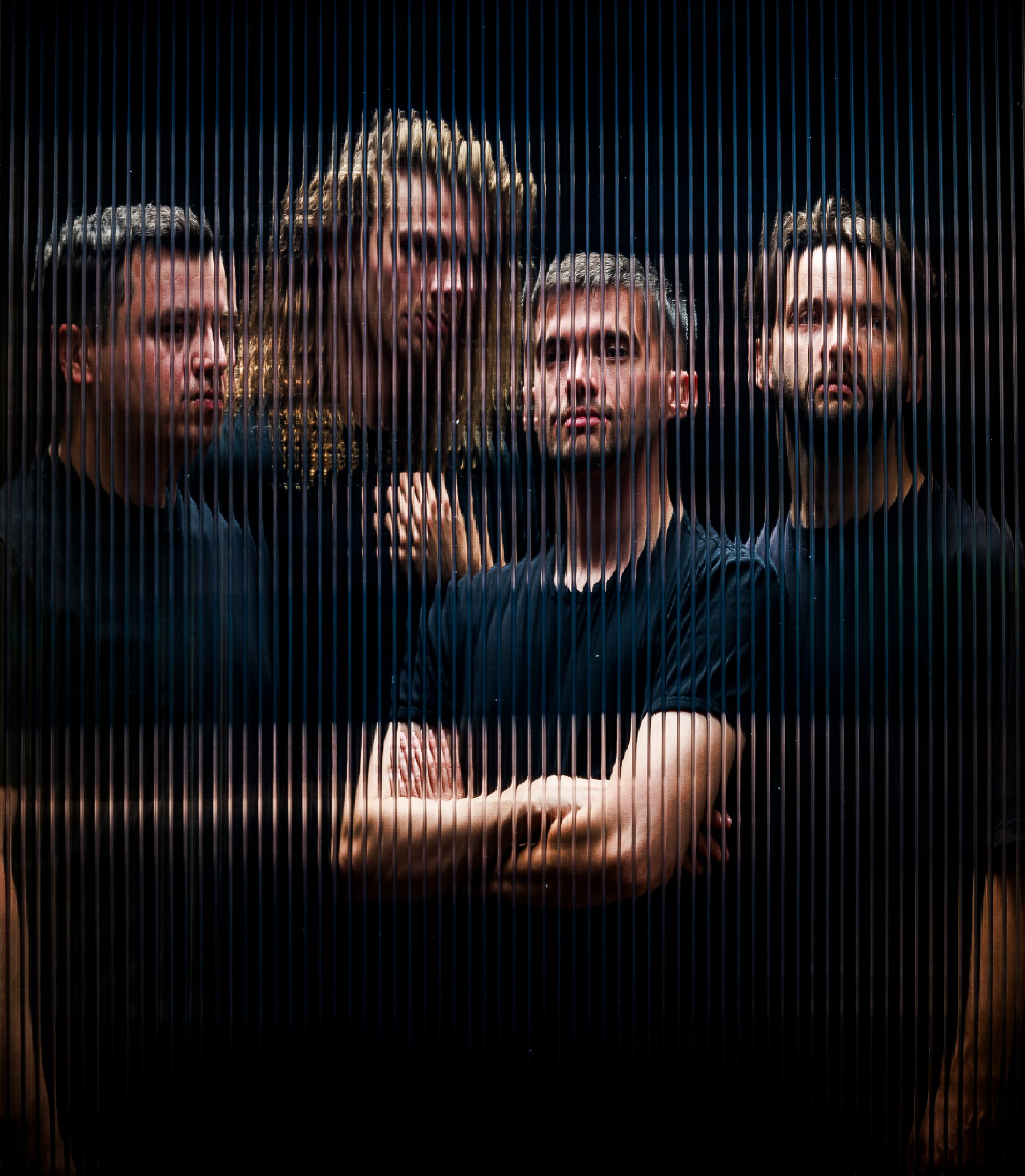 Matthias van den Brande Quartet Interview Image by Victoriano Moreno
“If you look at Rothko's whole career, he was really searching for an essence. I feel I'm on the same search.”
Video