Name: Martin Kohlstedt
Nationality: German
Occupation: Pianist, composer improviser
Current release: Martin Kohlstedt's new album LIVE is out now via his own Edition Kohlstedt. And because after the concert is before the next one, he just keeps touring. Catch him live at one of the following gigs: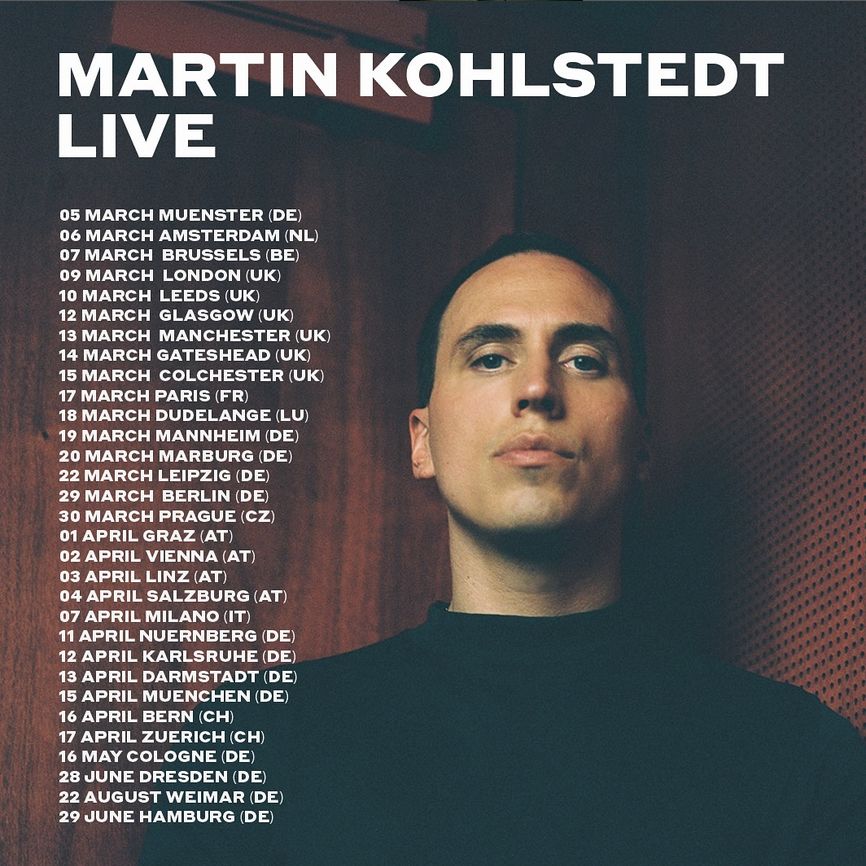
If you enjoyed this Martin Kohlstedt interview and would like to know more about his music, visit his official homepage. He is also on Instagram, and Facebook.
Do you think that some of your earliest musical experiences planted a seed for your interest in improvisation?
Yes, there’s one early experience I remember. I was about twelve years old, and we had a slightly out-of-tune piano in our living room. One evening, I sat down and simply pressed a note — just one — and repeated it meditatively. Occasionally, I added another key with my right hand. Honestly, that approach has stayed with me.
Even today, when I perform live, I approach music in a similar way—through meditative patterns, slowly and steadily letting myself sink deeper into the music.
When did you first consciously start getting interested in musical improvisation? Which artists, teachers, albums or performances involving prominent use of improvisation captured your imagination in the beginning?
Improvisation has always felt like something that came from within me. I didn’t know much about improvisational music or artists who were into it. It had to come from my own inner drive, a need to break free from patterns.
When I started taking piano lessons, about three years after that “just-one-note” moment, I quickly realized that I wanted to move beyond the written exercises. I began playing variations, gradually merging my own voice into the music.
How does your album LIVE connect your live performances and your recording projects? How do they mutually influence and feed off each other?
I like to think of my studio albums as a collection of vocabulary that I then use on stage to create entirely new phrases. I take individual pieces and let them collide, allowing new works to emerge. Sometimes I improvise freely, letting pieces grow again from scratch. My albums are like arguments, while the live performances are the discussions.
With LIVE, I wanted to capture the fleeting moment when new music is born from this vocabulary. Over 400 improvisations recorded during 70 concerts in 2023 were distilled into eleven pieces, representing the ways I approach music. These tracks combine to form a new, fictional concert from eleven different European cities.
Tell me about your instrument and/or tools, please. What made you seek it out, what makes it “your” instrument, and what are some of the most important aspects of playing it?
It all started with the piano, and for the first ten years, it was enough to define my vocabulary. Everything came from there.
When the first synthesizer entered my life, it felt distant, almost foreign, but over time, I filled the space between instruments with a Fender Rhodes, drum machines, a loop station, effects, a Prophet synthesizer, an Osmose synth, and so on. I created a setup that allows me to translate any idea I can think of directly into sound.
In improvisation, it’s crucial to have tools that help you quickly translate your thoughts into music. Many first, intuitive ideas are the heart of an emerging improvisation.
How would you describe your own relationship with your instrument – is it an extension of your self/body, a partner and companion, a creative catalyst, a challenge to be overcome, something else entirely?
Over the years, each instrument has taken on a different role for me. The piano, for example, is a catalyst for the past—it stores my longings and thoughts about the world I wanted to see.
Electronic instruments, on the other hand, are born in the moment and can bring the past into contact with the present, often confronting me with harsh, noisy realities. A synthesizer can scream out of the moment, while the piano tries to describes it for me. For each area of my mind, there’s an instrument that I can interact with directly.
For example, the drum machine organizes the music, defragments it, while the piano, in its organic and human form, will never yield to the artificial. The friction between them is the fuel for the whole process.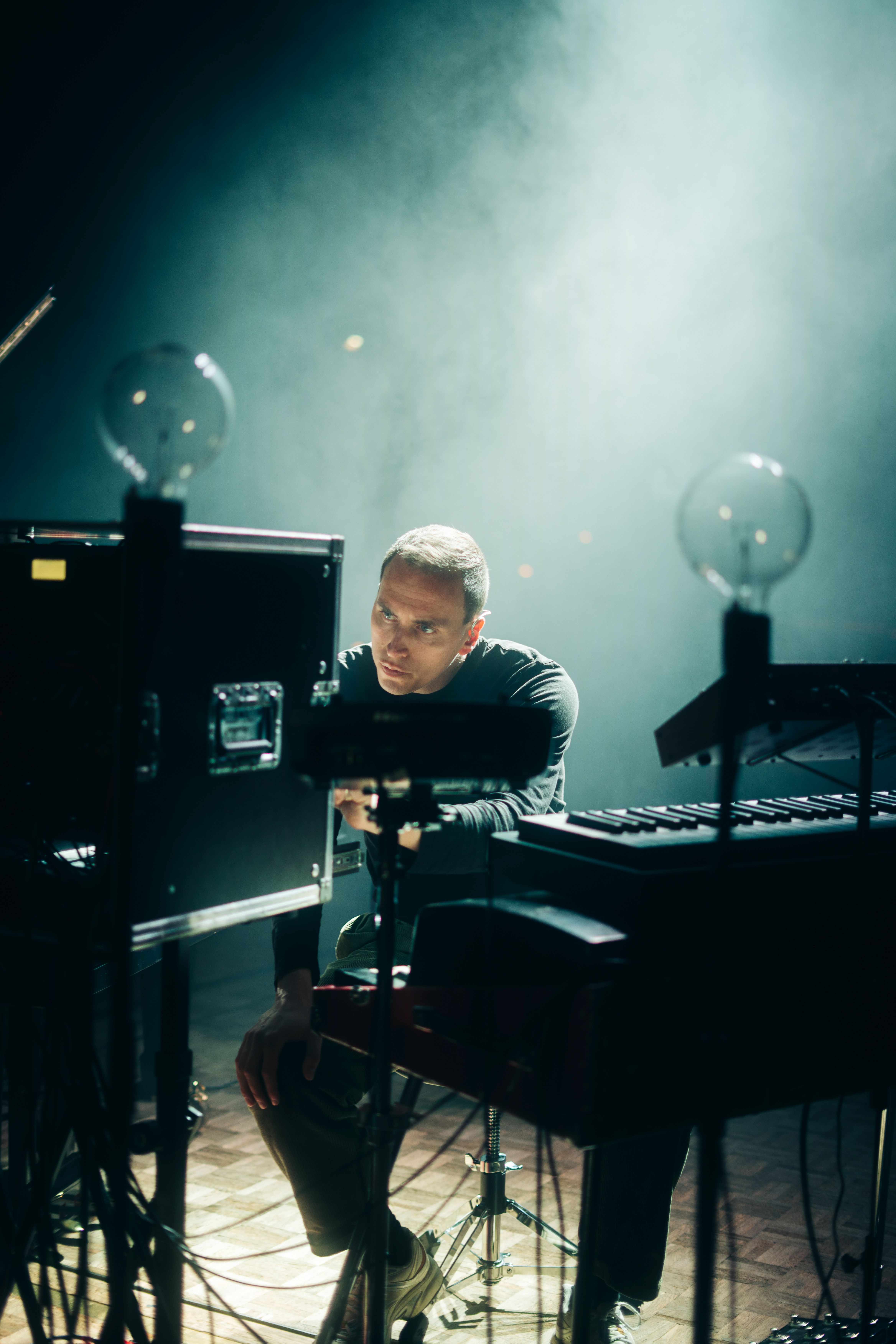
Martin Kohlstedt Interview Image by Karine Bravo
Derek Bailey defined improvising as the search for material which is endlessly transformable. What kind of materials have turned to be particularly transformable and stimulating for you?
Derek Bailey used the metaphor of material. For me, I’ve developed the concept of “modular composing.” I see my material as building blocks — like Legos — that can be rearranged live, filling the spaces with new, intuitive connections.
Each of my pieces is built around a three-letter combination, allowing me to leave them in process and merge them in long chains on stage. This collision of pieces is how I create something new. I also use methods like the “cold-water” or “chance” method, where I start from scratch, allowing new pieces to emerge and become part of the vocabulary.
This keeps everything fluid and, as Derek Bailey said, endlessly transformable.
Do you feel as though there are at least elements of composition and improvisation which are entirely unique to each? Based on your own work or maybe performances or recordings by other artists, do you feel that there are results which could only have happened through one of them?
I’m certain that with each album and each performance, something unique happens. Especially in the resonance with time and space, the audience, and all the factors that build around an improvisational ceremony, you can see how pieces almost develop on their own, filling the moment completely.
For me, improvisation is like the third dimension — it makes a concert truly come alive. Composition, which often comes from the left side of the brain, can tell a story more clearly and concisely. Improvisation, on the other hand, flows into the cracks, carving its own path without a narrative, but still moving forward. Both sides have their importance.
For me, the challenge is compressing the essence of improvisation into my studio albums, allowing the music to “freeze” and hold a compositional element that can be eternal. When you pass this ball back and forth, you get to explore and evolve both yourself and your music.
When you're improvising, does it actually feel like you're inventing something on the spot – or are you inventively re-arranging patterns from preparations, practice or previous performances? What balance is there between forgetting and remembering in your work?
That’s a beautiful question. The balance between forgetting and remembering is something that fascinates me. I don’t think you ever create something completely out of nothing. Instead, you’re creating frameworks with open, variable formulas that you follow from your conscious mind to your subconscious.
Even if I start a concert by simply choosing a key, taking a deep breath, and following a childlike repetitive structure that will eventually become a piece, there are already boundaries and tracks set for the music to emerge. From that point on, however, the intuition takes over, and the music unfolds anew in a completely different dimension.
It’s sometimes eerie to realize that you’re playing something without consciously trying to. As soon as you focus on it, the piece collapses like a house of cards. It’s as though you’re tapping into something higher and transmitting it, losing yourself in the process.
Are you acting out parts of your personality in your improvisations which you couldn't or wouldn't through other musical approaches? If so, which are these? What, would you say, are the key ideas behind your approach to improvisation?
In my case, it’s about freedom. I come from a rural area in the forests of Thuringia, in the middle of Germany, where I grew up in a performance-driven environment, always following rules. It was the piano that first allowed me to let my thoughts run freely and break away from those structures.
Today, when I improvise, I still want to free myself from or deepen the thoughts around me, simply arranging and allowing them to exist. Depending on the psychodynamics, I sometimes need “hard” tools like electronics to break through barriers and release certain demons, or I use soft piano motives that gently “stroke” my thoughts away, like in a good conversation.
I never expected this approach to resonate with an audience, but when so many people gather and reorder their own thoughts together, it creates a real pull.
This drive for freedom is deeply rooted in me. It might even relate to the history of East Germany, but that’s a story for another time. In short, it’s about breaking rules and allowing natural flows in the body and mind. The rest happens almost by itself.
In terms of your personal expression and the experience of performance, how does playing solo compare to group improvisations?
Improvising with a group, especially a large ensemble like a choir, adds a completely different layer.
I once improvised with the 70-headed Gewandhaus choir, and it was incredible to see how a large group of individuals can amplify the improvisation. I realized that, in moments where I felt unsure or limited on my own, the collective energy of the group allowed us to overcome boundaries that would’ve been impossible for me alone. Improvising in a group – or, as I’d simply call it, society – is key to accessing a natural, free flow.
It’s always like a good conversation where you connect with yourself during solo sessions and reflect through others in bigger ensembles. This mutual feedback loop allows decisions to be made honestly and without force. Only then can they be brought into the world without constructed intentions.
In your best improvisations, do you feel a strong sense of personal presence or do you (or your ego) “disappear”?
With every passing minute of a performance, I disappear more and more into the music. It’s one of the most beautiful feelings to let go of your ego and dissolve into the natural flow of music. Although it sounds theatrical, it’s true – and it becomes addictive. That’s why I need concerts and tours to continue developing my music and the personality that is intrinsically linked to it.
Connection is key. When I connect with others, I connect with myself, and I can zoom out and see everything as a large organism, where I’m just a small cog in the machine.
Unlike many other acts I speak to, after a performance, I’m not mentally exhausted or overstimulated by the attention; instead, I feel calm, tired, and deeply content. I feel integrated and connected with the people and the audience. That gives me hope and strength to keep going.
Stewart Copeland said: “Listening is where the cool stuff comes from. And that listening thing, magically, turns all of your chops into gold.” What do you listen for?
That’s a wonderful question. When I was younger, I saw it as a challenge. Now, I view it as an interesting trick: I listen to everything, unfiltered, and find it hard to focus on any one element. So, when a melody, chord progression, or rhythm emerges, I don’t concentrate on it directly. Instead, I zoom out and take in the overall structure, sensing its essence.
This way, I’m not diving into the details; I experience the music as if it’s unfolding for the first time. It allows me to immediately recognize something unusual or potential that may not be obvious in the moment. It’s like surfing a wave until it runs its course.
I love what Stewart Copeland said about prioritizing listening over technique – I completely agree with that.
There can be surprising moments during improvisations – from one of the performers not playing a single note to another shaking up a quiet section with an outburst of noise. Have you been part of similar situations and how did they impact the performance from your point of view?
I experience these moments constantly. Take the recording of “KSYGOL” from my live album, for example.
We were in a huge church, with 900 people, and the atmosphere felt like a massive, sacred reactor. The high ceilings, the fog, it all provoked a certain reverence. To birth something into this powerful stillness felt almost foolish, but that’s exactly where the music found its way. “KSYGOL” is a little demon that makes its way through, growing in power.
At times, I almost provoke the piece to push further, until it’s big enough to fill the space. The subconscious decides that it needs a big wave to unite the audience. In smaller venues, the conscious mind expects intimacy, and the subconscious often chooses something softer – like a solo piano piece that forms a direct connection. So, the improvisation often takes a completely different direction than what the conscious mind might expect.
Each time it happens, it slips further out of my control.
I have always been fascinated by the many facets of improvisation but sometimes found it hard to follow them as a listener. Do you have some recommendations for “how to listen” in this regard?
Speaking from personal experience, when listening to the 400 improvisations for my live album, I really had to go through a hard process and listen to myself—often too much.
I remember, for example, playing an amazing intro in Amsterdam, but realizing it lasted 35 minutes, and consciously, it was almost impossible to follow. The sensation didn’t correspond at all to the actual experience, and everything felt different from what I expected. It wasn’t until I decided to stop focusing so much on the details and just let things happen, that I found myself immersed in the pieces again, back in the moment where the audience also connected with the music.
So, if I may offer a suggestion to the listener to improvised music, it’s really important not to follow the illusions of perfection, skill, or the “genius” complex. The most important thing is to allow things to flow, to perhaps even do something else in the process — like look out of the train window or lie on the carpet while letting the experience wash over you. It‘s about losing focus by overcoming the barrier of expectations.
The potential of improvised music becomes far greater than that of composed, planned, or structured music for me.
In a way, improvisations remind us of the transitory nature of life. When an improvisation ends, is it really gone, just like a cup of coffee? Or does it live on in some form?
This is the best question to end on. I’m not sure whether we’ve truly captured the fleeting moment of music ever — it’s an ongoing experiment, and I find it beautiful to embrace the impermanence of it all.
My new live album has definitely given me fresh perspectives on how I view my music, and how I might try to freeze a moment in time, almost for eternity. But despite all efforts, the music remains transient, which, in a way, makes it all the more magical. It means we have to come together again and again to experience it live.
However, I’ll never know if the way I felt that unique concert night in LaNau Club in Barcelona can truly be preserved. But the next European tour is already planned for spring, and I’m excited to see what new experiences will unfold.

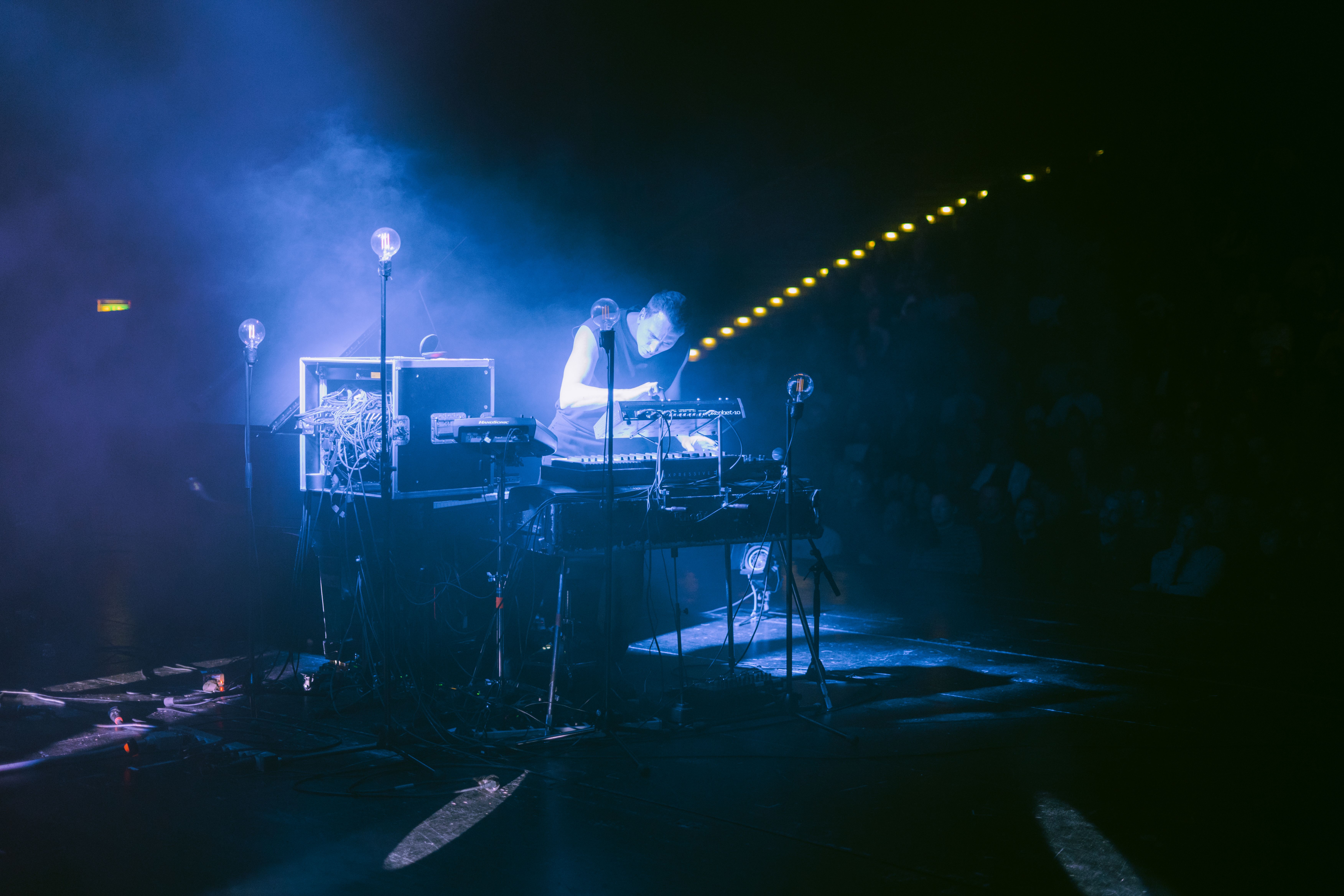 Martin Kohlstedt Interview Image by Karine Bravo
“My albums are like arguments. The live performances are the discussions.“
Video