Name: Marcelo Callado
Occupation: Drummer, singer, songwriter
Nationality: Brazilian
Current release: Marcelo Callado's new album Brado is out via Nublu.
Hometown Recommendations: Indecente Café – a café/restaurant with live music in the Santa Tereza neighborhood of Rio de Janeiro, Brazil.
Pure drumming records recommendations: Yeah! When it comes to percussion albums, I recommend these:
Olatunji! - Drums of Passion
Mustapha Tettey Addy - Master Drummer from Ghana, Volume 2
Sylvio Gualda - Percussion (Constant: 14 Stations / Stockhausen: Zyklus)
Les Percussions de Strasbourg - Ohana: 4 Études Chorégraphiques; Kabelac: 8 Inventions
Les Percussions de Strasbourg - Xenakis: Persephassa
If you enjoyed this Marcelo Callado interview and would like to stay up to date with his music, visit him on Instagram, and bandcamp.
It seems as though most aspiring artists are drawn to the drums and percussion for one of two reasons: Creating sound/noise and creating rhythm. What captivated you?
Definitely creating rhythm.
In fact, my interest in percussion instruments began with Carnival *blocos* (street bands) here in Rio de Janeiro, back in the 80s. I used to watch my father playing amidst the *bloco's* percussionists and thought the feeling of being part of that must be extraordinary—being part of a group of players where each person, while performing their individual role, contributed to a harmonious, pulsating whole; an energy that was simultaneously mantra-like and impossible to stand still to.
So, I can say that what motivated me was creating a rhythm that was part of an ensemble. And I think that’s still the case for me today.
When I listen to music, I see shapes, objects and colours. Others experience emotions. Everything around drums, on the other hand, is based on touch, vibration, and movement. Does this mean that your own perception as a listener is also more connected to touch, vibration, and movement? What happens in your body when you're listening?
That’s an interesting point. Given my background as a percussionist, I still have a preference for playing instruments where I can control the dynamics through touch—through my strength and playing style—even with harmonic instruments like acoustic guitar, electric guitar, and bass.
I was never much of a fan of keyboards and synthesizers because I can't get that dynamic control directly in my hands. Piano, metallophone, and vibraphone—those I do like, because you can gauge your force there without relying on turning the volume up or down; they respond to the physical vibration you impart when playing them.
And when listening to music, I feel like I experience a similar sensation. I tend to enjoy things that pulse in that tactile, physical way—though that’s just a tendency; in reality, I listen to all kinds of music and get different feelings from each.
What was your first drum set like and what are you using today? What, to you personally, are factors in terms of build and design that you appreciate in drums and percussion instruments?
My first drum kit was cobbled together from cardboard boxes, a birdcage, a metal lunchbox, cushions, and a book wrapped in aluminum foil.
Later, my father gave me a 1960s Pinguim kit, which I traded for a Pearl Export in 1994. Nowadays, I own a 1967 Ludwig kit with Zildjian cymbals.
I don't have a strong preference for specific percussion instruments; I try to adapt to whatever I come across. I chose that Ludwig kit because it was the brand Ringo Starr used.
Late Rush-drummer Neil Peart said: “The equipment is not an influence. It doesn't affect the way I play. It's an expression of the way I play.” What's your take on that?
I don't agree. Over time, I’ve increasingly preferred taking less gear to the shows I play. If I could, I’d bring nothing but my drumsticks.
This means I encounter all sorts of different bass drums, snare drums, toms, and cymbals; I usually adapt to the sound of those specific pieces, so my playing style shifts depending on what’s set up in front of me.
Of course, I have my own personal approach to whatever comes my way, but it tends to be flexible rather than rigid.
The drums and percussive instruments are an integral part of many cultures, and traditions. Which of these do you draw from in your playing – and why?
I’m definitely inspired by samba school culture.
Sometimes—even when playing a standard drum kit in a different genre like rock—I think of the drums as independent percussion instruments that combine to create a unified groove, much like the various sections of a Rio samba school.
I also often look to German "Krautrock" bands for inspiration; I’ll develop a specific pattern and repeat it endlessly, or perhaps introduce slight variations depending on the situation.
What were some of the main challenges in your development as a drummer / percussionist? Which practices, exercises, or experiences were most helpful in reaching your goals?
That’s an interesting question, because I’ve never practiced drums in isolation. I never enjoyed it. I never sat down to do technical exercises, and I don’t read sheet music either.
What I’ve always loved—and this ties back to the first question—is playing alongside other musicians, whether in a samba street band or in the countless bands and projects I’ve been part of. I enjoy playing percussion as part of an ensemble; playing alone holds no appeal for me. I’d rather try to figure out songs on the guitar, write lyrics, or come up with a bassline for a track.
What kept me going with the drums was the huge number of talented friends I’ve had the pleasure of playing with. I’ve always been involved in many different musical projects, and that’s what gives me structure and keeps me moving forward.
How would you describe the physical sensation of playing the drums? [Where do you feel the resonances/pulse/groove, what are emotional sensations, is there a sense of release or tension etc …]
I love the feeling of playing the drums. No other instrument gives me that same sensation.
It’s almost as if your heart—through its pulse—is transforming into sound via the drums and reaching the hearts of the people listening. It’s a wild thing when you think about how the drummer somehow drives the rhythm for the people watching the performance, or listening to a song.
There is definitely some tension involved, because—depending on what’s being played—the drummer is the pillar holding the song together; you can’t afford to slip up, or the whole thing falls apart.
I think having a bit of that tension is good; sometimes it’s beneficial to have to put in real effort—both physical and mental—to play. I feel it heightens your level of commitment, right up to the point where that tension starts to feel natural, and before you know it, you’re completely relaxed *within* that tension.
What is the relationship between harmony, rhythm and melody? How do non-percussion instruments contribute to the overall rhythmic texture of a piece?
In my case, all the harmonic instruments I play end up serving a rhythmic function. In many songs where I play electric or acoustic guitar, you can hear a drum-like beat in my strumming hand. It’s inevitable.
On the other hand, I think because I don't have a strictly "rhythm-player" mindset, I often find myself playing guitar riffs or bass lines that contrast with the rhythm—leaning heavily into melody, almost as if to say, "Look, you already play drums; now it’s time to think melodically! Enough with the rhythm!"
I actually composed a song about this called "I'm a drummer".
In most cases, my compositions start with either melodies or lyrics. I then find the harmony for that melody, and the rhythm follows—or it is already suggested by the melody itself.
Do you feel that honing your compositional / songwriting skills has an effect on your drumming skills?
I certainly do.
I think that by stepping outside the "drummer's little cage" and venturing into other roles, I’m able to think about music more broadly, rather than just with a drummer's mindset. It’s no coincidence that when I started my solo shows 11 years ago, I made a point of stepping away from the drum kit.
Having a different perspective on the ensemble—and having the opportunity to gain that experience—has profoundly influenced the way I play drums today, both in my own shows and when backing other artists.
I've long been intrigued by bands or ensembles where the drummer is the leader and/or main composer. In as far as it is possible to generalise, what do you think changes in terms of the music or performance in these situations?
While performing my solo material—where I both sing and play drums—I’ve noticed that the entire show's dynamic is tied to my drumming, which in turn is tied to my singing and breathing.
Essentially, my singing drives my drumming, which drives the rest of the band, creating an incredible different dynamic I’ve never experienced before. It’s a great new feeling!
How are you making use of the timbral and textural potentials/possibilities of your drums and percussion instruments when making music?
There’s no great mystery to it. I try to consider what the music calls for and choose the best fit for the situation.
It’s funny, but I don’t actually have a huge range of instruments, and I like it that way. I sort of have to make do with limited options, but I know each of them really well.
How has technology, such as drum machines and sequencers, impacted the way rhythm is created and perceived? Has it been a concrete influence on your own approach?
I think it’s had a huge influence.
Nowadays, anyone can program amazing beats with incredible sounds, but honestly, I have absolutely no interest in mechanical-sounding beats.
Physical strain is a particularly serious issue for many drummers. How does it manifest itself, how do you deal with it and in how far does it affect your creativity?
I haven't really felt the strain yet. I exercise regularly and lead a healthy lifestyle. Physically, I feel like I’m playing drums better than ever.
That said, I know that sooner or later, I’ll probably start to slow down a bit. The important thing is to keep exercising and playing.
Many recording engineers have remarked that the drums can be particularly hard to capture. What makes drums sound great on record and in a live setting?
I don't know much about recording engineering—even though I do a lot of recording on my own using the setup in my studio.
But I think that beyond having gear suited to what you want to achieve, it’s always good for the drummer to have dynamic control while playing, so they can get the best sound for the specific part required.
Drums and percussion are remarkably often used for physical therapy / healing. What, from your point of view, makes them particularly suitable tools for this?
I’m not sure, but perhaps the almost mantra-like quality of repeating rhythmic patterns can lead to levels of relaxation where one reaches meditative states that help in finding solutions to mental health issues.
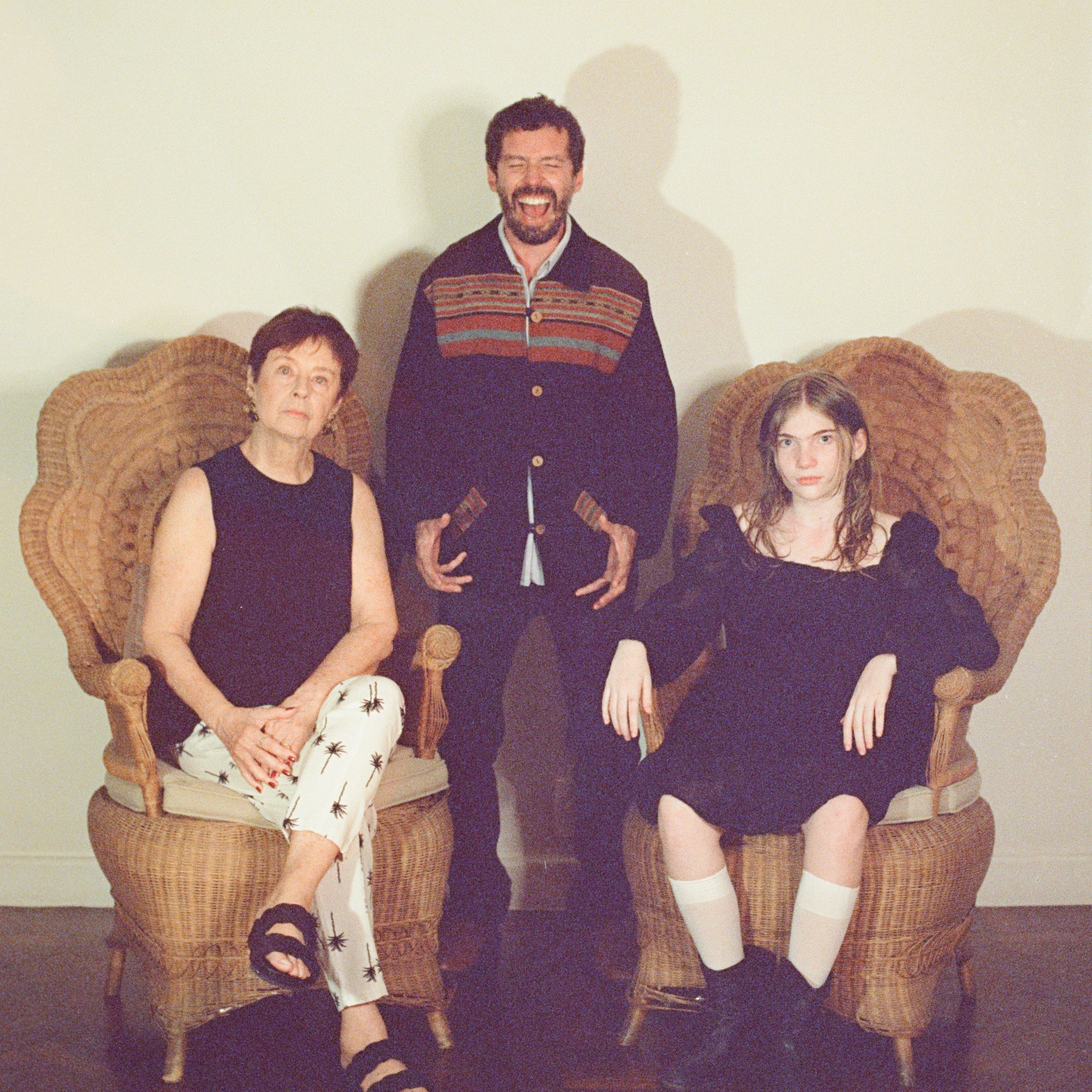 Marcelo Callado Interview Image by Caroline Bittencourt
“I’ve increasingly preferred taking less gear to the shows I play. If I could, I’d bring nothing but my drumsticks.“
Video