Name: Jeff McIlwain aka Lusine
Occupation: Producer, composer
Nationality: American
Current release: Lusine's “Pendulum” is out now via Ghostly. It is the first single of his upcoming new album Melting Days.
Recommendations for Seattle, USA: I think for people coming to Seattle, if you can get over to the peninsula, it's really a special thing to do. I know there are a lot of tourist attractions here, and that taking a ferry can be a hassle, but driving over to the Peninsula and visiting the towns over there, or the Olympic National Park is really something else.
Things I am passionate about but rarely get to talk about: Like a lot of people, I'm really into films, and I guess various TV series now. One movie that kind of blew me away a few years ago was “Aftersun.” Honestly, I'm not sure I've been hit by a movie that hard in a very long time. I suppose it just reminded me of the relationship I have with my step-daughter and how much she means to me.
If you enjoyed this Lusine interview and would like to know more about his music, visit his official homepage. He is also on Instagram, Soundcloud, and Facebook.
Where does the impulse to create something come from for you? What role do often-quoted sources of inspiration like dreams, other forms of art, personal relationships, politics etc play?
I think it varies. I've been making music so long that I feel like I always need to be working on something, and then I start on it, and it sort of sucks me in. I kind of don't feel centred if I'm not working on music at any point in time.
For this record, I wanted to work on some more ambient things because I'm also working on a film score, so I wanted to be in that head space.
For you to get started, do there need to be concrete ideas – or what some have called a 'visualisation' of the finished work? What does the balance between planning and chance look like for you?
I usually just have one small thing I want to start working on. It might be an idea for using a sample with a particular piece of software, or I wanted to try something with an instrument I have in the studio. And then, from there, I kind of figure out what needs to be added to keep going.
For instance, I did some work for Minimal Audio on their program Current and had an idea for how I wanted to start a track with a particular sample, which is how “Overlook” came to be.
But, I usually don't have a vision of what the song is going to be until I'm working on it for a bit. Occasionally, I'll hear some other music and it will give me an idea for something I might try though.
Is there a preparation phase for your process? Do you require your tools to be laid out in a particular way, for example, do you need to do 'research' or create 'early versions'?
I'm definitely not the type that does pre-composition. I sort of jump right in.
But, that being said, I do end up with a LOT of versions. When the track is not going so well, I might have 10 or 15 versions. Sometimes months or years later, I'll go back and realize that one of those early ideas is worth working on again, because it's so different from what the track ended up being.
I remember back when I was writing “Gravity” for A Certain Distance, I had written a completely different song. But, I just wasn't happy with it. So, I decided to completely deconstruct it and treat the new version as a remix.
So, the final product is sort of a cut up, remixed version of what I had originally produced.
Do you have certain rituals to get you into the right mindset for creating? What role do certain foods or stimulants like coffee, lighting, scents, exercise or reading poetry play?
I do need my coffee, but I'm not sure about rituals. I do exercise regularly. That does probably help clear my mind.
And I suppose that one ritual I have is to step away from a track for a few hours when it's just not working. It always brings a new perspective to what I was doing, and I usually figure it out. Just sitting there working on it doesn't really help.
For Melting Days, what did you start with? If there were conceptual considerations, what were they?
I think I started with some cello recordings. I have some acoustic instruments and I like to do loopy things, so this was one of those times when I thought I might start there. The track, “Apparition,” ended up being very different, but that was my starting point.
For “Pendulum,” I was interested in messing around with a particular multi-timbral function of my Dave Smith Tetra … just playing around. I honed in on a particularly dirty, but percussive synth sound and the melody sort of came out of that. Then, I realized that throwing it through a wash of reverb gave it a totally different, less frantic feel.
So, for me, it's really just starting with something, but keeping an open mind about where it's going to end up, which is often in a totally different place.
Tell me a bit about the way the new material developed and gradually took its final form, please.
It's kind of a hard question to answer because it's instinctive at this point.
I think for the first few tracks, I'm just throwing out some ideas with a goal of keeping things ambient, or at least very mellow downtempo. Then after maybe 5 tracks or so, I start to get an idea about how I should fill things in and sequence the album. So, the last few tracks are a little more intentional.
I guess the way I keep myself interested is in exploring new textures or different instrumentation each time I start a new track. I brought in my friend Bryan Manzo to record some saxophone, because I really wanted to get some weird, textural loopy stuff from him to fill out the rest of the album.
So, the opening track, “Sightline,” and the last track, “Uncharted” were maybe a bit more intentional for this particular album.
Many writers have claimed that as soon as they enter into the process, certain aspects of the narrative are out of their hands. Do you like to keep strict control or is there a sense of following things where they lead you?
Definitely following things where they lead me. But, I do know what's working and what's not, intuitively.
So, my music might sound more controlled than it actually is to listeners, because I do become a perfectionist once there is material to re-work.
There are many descriptions of the creative state. How would you describe it for you personally? Is there an element of spirituality to what you do?
As far as “spirituality,” the closest I can come to being spiritual is probably through music. Meditative might be a better word. Or “hypnotic.”
I think the reason why I'm drawn to minimalism is because it's incredibly hypnotic. I also know that this kind of repetitive style of music isn't for everyone.
Once a piece is finished, how important is it for you to let it lie and evaluate it later on? How much improvement and refinement do you personally allow until you're satisfied with a piece? What does this process look like in practise?
I usually know when a track is finished. If I'm not sure, that means it's not finished.
But, sometimes I do need to step away for a while to figure out HOW to finish it.
How do you think the meaning, or effect of an individual piece is enhanced, clarified or possibly contrasted by the EPs, or albums it is part of? Does each piece, for example, need to be consistent with the larger whole?
I haven't been very good at making my albums consistent. But, I suppose sometimes I think a “consistent” album can be a boring one. So, I guess I really like for albums to be diverse.
For me, I think it might show where I'm at in my musical interests or production style. So, the consistency might be more obvious to the listener than to me. When I listen back to something like Sensorimotor, I can definitely hear where my interests were at that time.
I don't think of albums as fixed statements so much as snapshots of what I was curious about musically. The common thread is probably that I'm always exploring texture, rhythm and space, even if the records themselves end up sounding quite different.
What's your take on the role and importance of production, including mixing and mastering for you personally? In terms of what they contribute to a song, what is the balance between the composition and the arrangement (performance)?
For me, mixing and producing are part of the composition process. Sometimes a musical idea sort of comes out of the mixing, rather than the other way around.
“These Walls” is a track that was me sort of drowning some sounds in reverb and figuring out the melody from that, rather than knowing what it was going to be. And it's really hard to tame that and make it into a cohesive track. I don't like just washes of reverb that sound unintentional, so that was a challenging one. But, I liked the way it came out.
As far as mastering, I like to keep that as a separate thing and let someone else with an outside perspective focus on that. Sometimes there's some back and forth between me and the mastering engineer, but I don't want to be the one in control of the mastering.
And I'm also not the type that likes to master a track while producing. It's too limiting to worry about your master as you're trying to be creative, in my opinion.
Music and the accompanying artwork are often closely related. Can you talk about this a little bit for your current project and the relationship that images and sounds have for you in general?
This is also something that I usually leave to a visual artist after the fact as well. But, I suppose I get a lot more picky with the artwork, so it can be a challenge.
I think, personally, that Michael Cina nailed the vibe on this one though. He gave me a lot of options and I was immediately drawn to this acrylic piece of art that he had done, because it just seemed to match with the feel and “theme” of the record.
And then he sort of shaped it into something that worked with my style a little better.
After finishing a piece or album and releasing something into the world, there can be a sense of emptiness. Can you relate to this – and how do you return to the state of creativity after experiencing it?
Yes definitely. It can be difficult to jump back into writing new music. I usually start doing remixes for people for a while, or focus on my live sets.
Right now I'm re-working a couple of the tracks as sort of a “Coda” release. We'll see how that turns out.
I would love to know a little about the feedback you've received from listeners or critics about what they thought some of your songs are about or the impact it had on them – have there been “misunderstandings” or did you perhaps even gain new “insights?”
The question on this one, for me, is whether this album is actually ambient. And it's been interesting. A couple people said they don't think so, and then a couple people that are really into ambient music said that they do think it's ambient, which is funny to me.
I guess what we settled on is that it's ambient in a little bit of an old school way. Back in the 90's, ambient music wasn't really thought of as extremely mellow, or a strict genre. It was more of a “vibe” I guess.
Also, my friend Bryan pointed out the nautical themes, or that the album had a feeling of “traveling” or a “journey” and I really liked that. I honestly hadn't thought of it like that, but I think it fits perfectly.
Creativity can reach many different corners of our lives. Do you personally feel as though writing a piece of music is inherently different from something like making a great cup of coffee? What do you express through music that you couldn't or wouldn't in more 'mundane' tasks?
I guess that goes back to the “spirituality” question. Everytime I get into writing a piece of music, I realize how much I need it. It's kind of where I'm in the zone, and it makes my days feel purposeful.
I'm more in touch with this idea as I get older.

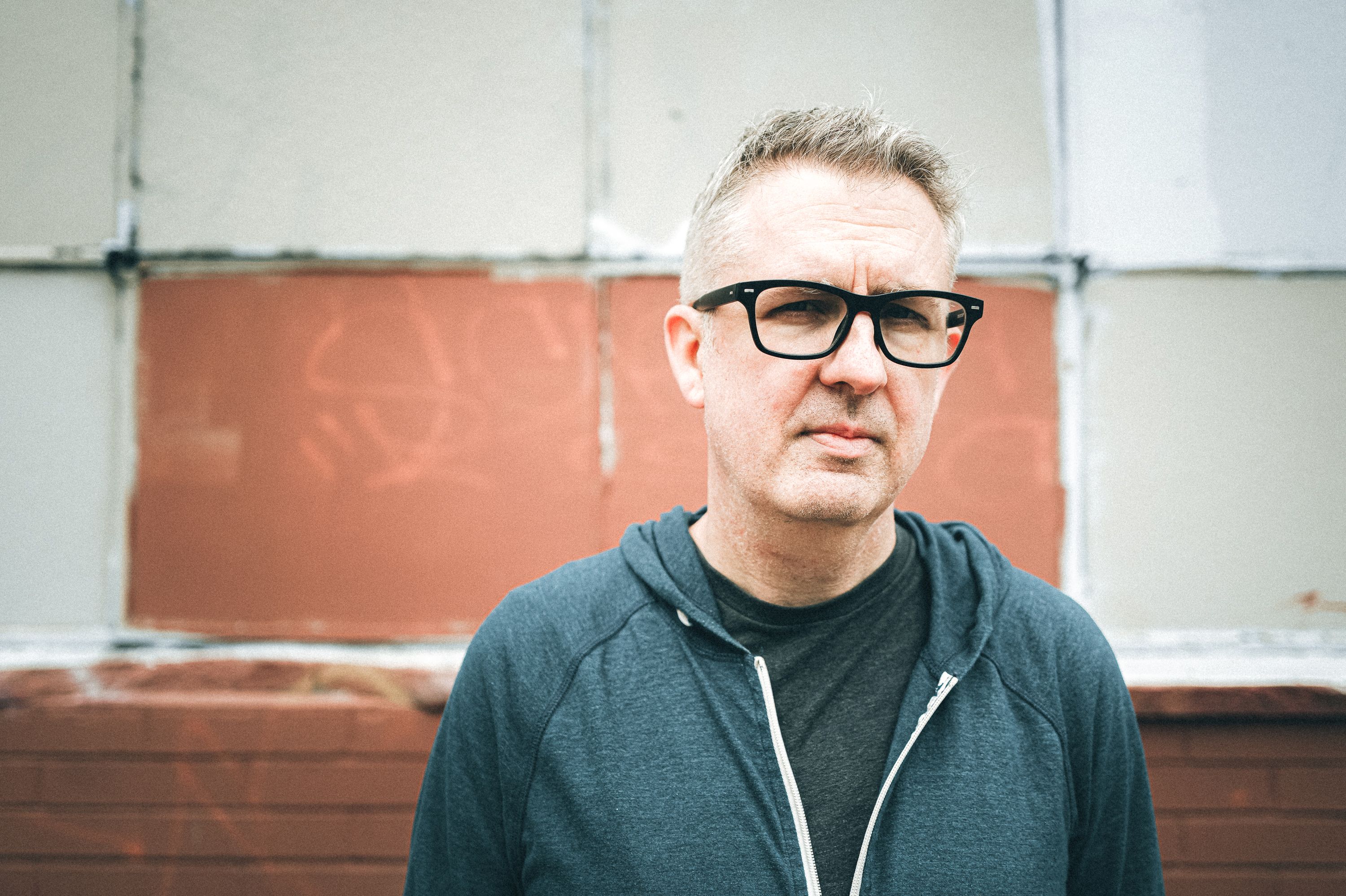 Lusine Interview Image by Alley Rutzel
“Everytime I get into writing a piece of music, I realize how much I need it. It makes my days feel purposeful.”
Video