

Part 1
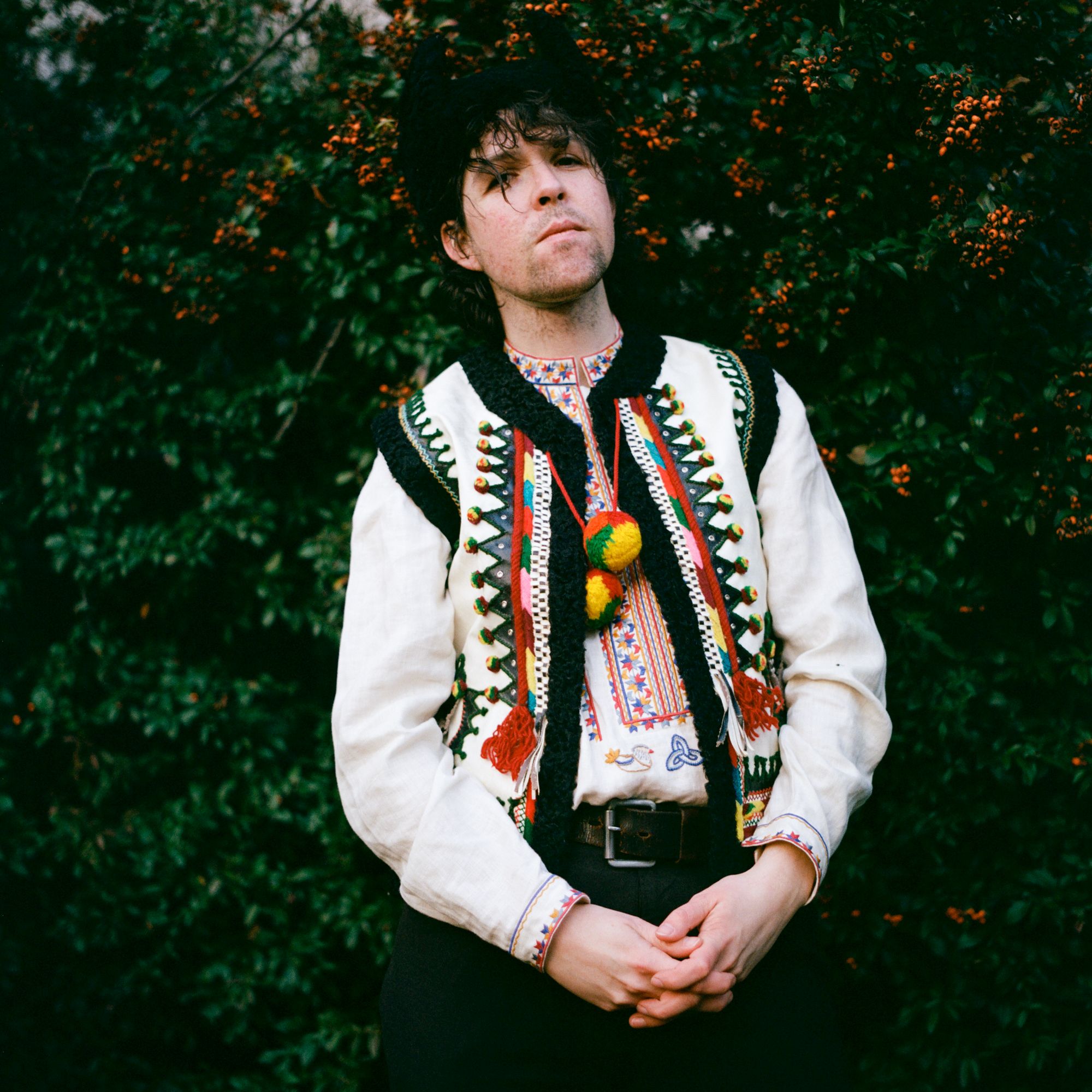
Name: Luka Kuplowsky
Occupation: Singer, songwriter
Nationality: Canadian
Recent release: Luka Kuplowsky's new album The Grass Grows, Antonych Grows is out March 20th 2026 via Next Door.
Recommendations for Toronto, Canada: The Tranzac. It’s where some of the best music in the world happens. To be more specific, if you’re here on the last Friday of a month, go see the Ryan Driver Sextet at 930pm in the Tranzac front room (The Southern Cross).
If you enjoyed these thoughts by Luka Kuplowsky and would like to stay up to date with his work, visit his official homepage. He is also on Instagram, substack, and Facebook.
For a deeper dive, read our earlier Luka Kuplowsky interview.
Do you think that some of your earliest musical experiences planted a seed for your interest in writing lyrics or poetry? How and when did you start writing?
I remember forming a boy band in a grade two French class. We were called the quatre mousquetaires.
The first song I wrote for the group was an interpolation of the Bee-Gees “Staying Alive” sung as L’ L’ L’ L’ L’halloween. I also tried to write an original song in French that had to do with backpacks and handbags (Sac à dos sac a main, aujourd'hui le ventment oui). It made no sense. The other boys in the band were fairly ambivalent about being part of it, but I was energized. We only lasted a few weeks, but there was definitely an urge to write and perform that came about in that class.
I was an early reader and loved writing as a child. In the same year as the quatre mousquetaires, I read the graphic novel of Miyazaki’s Nausicaä and began writing my own story in class called “Nascar and the Valley of Fire” (I was oblivious to the association with sports racing). It was a tremendously bloody story and spanned several schoolbooks (of course, written in large child’s scrawl).
That same year I wrote poetry on the ‘super-weapon; in Final Fantasy 7: “Sister Ray” (perhaps foreshadowing my love of the Velvets).
My grade eight teacher, Mr Clarke, also had his students memorize poems and recite them for the class. It had a profound impact on me in retrospect.
Later on in highschool, Bob Dylan, The Kinks and The Band inspired me to start earnestly writing songs. Although Tenacious D and School of Rock perhaps preceded those influences around thirteen and began steering my path towards music.
What were some of the artists and albums which inspired you early on purely on the strength of their lyrics? What moves you in the lyrics of other artists?
For early influences, I guess Dylan would have to be it. And of course, it's not just Dylan’s lyrics, it's that attitude and swagger. When you hear it at a young age, you imitate it instantly - it helps you recognize that how you sing is a choice.
We had a chord songbook of Dylan’s (63-78?) and I would be constantly playing piano and singing Dylan in my teenage years. I loved how the words sounded. A song like "Sad Eyed Lady of the Lowlands" was a favorite. Even the title! It opened up a world.
Later on, I’d veer away from Dylan and find it too excessive, but I always return to him. He is close to my heart.
Judee Sill was also very impactful in my twenties. Her lyrics and voice were so beautifully matched - like liquid. And the words! So rich with spectacular images but also grounded in a context that feels sincere and lived.
Once a demon lived in my brow
I screamed and wailed and I cursed out loud
And I sailed through the clouds
On ten crested cardinals to guard my battleground
Not many people can sing that and you believe it. Judee makes you believe.
Seeing the Grey Whistle Test performance of “The Kiss” is particularly vivid in my memory. It’s a song out of time, just completely eternal. In my head I equate it to that song in Murakami's Kafka on the Shore. This completely perfect, otherworldly, unbelievable song that affects the fabric of time.
I remember reading that book and wanting so badly to hear this fictional song. But here it is. In Judee. The Kiss. Wow. Even the way Murakami describes unusual chord changes, an intense melancholy, a difference to all other songs. It’s all there in Judee.
An EP of mine from 2020 pays tribute to some of my favorite songwriters and includes a cover of Judee’s "There’s A Rugged Road."
Have there been song lyrics which actually made you change (aspects of) your life? If so, what do you think, leant them that power?
Listening to Jonathan Richman (AKA. Jojo) in my early twenties had a powerful effect on my life.
Musically, it was an influence I had to slowly wean off of to find my own voice, but personally, I was so moved by his sincerity that I think it shaped my personal ethics and outlook on the world. Less so the Modern Lovers, which I loved, but perhaps resonated too deeply with his apathy and melancholy, and more so the later Jojo. He’s so open! And willingly to be silly and serious within the same song. And how he sings feels so direct and immediate.
He writes love songs by embracing kitsch and sentimentality yet remaining sincere. Maybe he recognized that the sentimental and kitschy can’t be untangled from the love song. It’s pretty miraculous what he does. Anyone who is skeptical just has to see him live and they’ll believe. Anyway, I was listening!
For the first decade of playing music under my own name, I refused to get a guitar strap because Jojo didn’t use one. My song “O My Heart is Full” always felt like my Jojo moment. I wanted to reach people like he reached them. Perhaps it was too on the nose.
I have always considered many forms of music to be a form of poetry as well. Where do you personally see similarities? What can music express which may be out of reach for poetry?
I guess this question is the crux of my last two albums: how does a poem travel? There are many earlier traditions where a poem was a song and a song was a poem. The difference was negligible.
I think much of their contemporary division arises out of the context in which they are presented, sold, packaged and circulated. Or we might even say their division arises out of a confusion about whether music or poetry is art or entertainment.
Perhaps the category of poetry is also the issue. Rather than say that music is a form of poetry, we might say that poetry occurs in the gap between the various arts. Antonych declared, “I do not know how to write a poem/ I scoff at the rules and standards,” and Ryōkan Taigu wrote: “My poem, in fact, is not a poem. When you realize that my poem is not a poem, then we can discuss poetry.” On my last album, I changed Antonych’s lyrics to, “I do not know how to write a song.” Good poems and good songs largely ignore what is expected of poetry and music.
Related to this, there is an interesting correlation in the 20th century of the genres/hierarchies of art beginning to blur and break down, and an increasing need in the market to clearly define categories of art and what their purposes/effects are. What music and poetry can do in the market and what music and poetry can do for the soul are two different questions that are often hard to disentangle for the artist and audience.
There is also such an ingrained notion in folk or popular music that lyrics are a form of transparent interiority into the songwriter. This is antithetical to what poetry does. Poetry thrives in its ability to challenge language and sense and to draw irreconcilable ideas into play. If we consider music (without lyrics), there is a whole tradition that saw it as separate from the other Arts, in that it bypassed the need for signification of language or visual representation.
Music is more spiritual insofar that it isn’t spoiled by language. Lyrics bring music back down from heaven. And the best music (and poetry) lives within that tension of the spiritual and the ordinary.
To think of my last two albums, the process of poem to song is responsive and transformative. The poem meets my musical language and the excess of meaning that music brings trims the redundancies of the poem. It’s a dance.
The relationship between words and music has always intrigued me. How do you see it? In how far can music take you to places with your writing you would possibly not have visited without it?
For so many years, I would write music and lyrics simultaneously. I held a belief that strumming my guitar would allow me to reach in and pull out a song. And often it worked.
It was also a process that started to run dry. As a technically limited musician, I found that how I strummed or fingerpicked was producing very similar rhythmic phrasing, or that playing music while writing was reminding me too much of other songs. I also wanted to write less about myself in a direct way, and found playing guitar while writing always landed in a personal place that felt increasingly uninteresting.
The process of making the last two albums entirely shifted my process. I got so used to adapting poems that I just began to write my own poetry. Writing poetry can free up patterns of rhythm or language that you rely on. It also created some distance between the immediacy of the poem and its transformation into a song. In my current process, I write poems whenever there is an urge and then days / weeks / months / years later, will write a song, pulling from a poem (or several poems), collaging the language until a song is revealed.
It’s now the words that take my music to places I wouldn’t have imagined and interestingly I’ve done that by separating their process and then bringing them back together in a way that makes room for play and the unexpected.
What are areas/themes/topics that you keep returning to in your lyrics?
The big ones: love, death, friendship, creativity, spirituality. Can you escape them?
Perhaps in the last five years, The Blue Cliff Record has also been a central prompt for writing and thinking through songwriting. When I made the Ingredient album with my collaborator Ian Daniel Kehoe, the book loomed large in our studio, planted on a table in the middle of the room.
The language didn’t necessarily make it onto the album, but we would just consult it, read a passage and then play a synth line or sing a vocal take. It provided insight, humour and something ritualistic to our process.
More recently, I began working on an album that is more directly in conversation with The Blue Cliff Record, albeit drawing from it in fragments and then trying to stitch together a song out of disparate words / mis-readings / images.