Name: Ella Balinska aka Linska
Nationality: British
Occupation: DJ, producer
Current release: Linska's Criminal EP is out via Arcane.
Recommendation for Los Angeles, USA: I’d recommend getting a picnic and watching the sunset from the rooftop of a parking lot in the Arts District where you have a view of both the beach and DTLA. 10/10.
Things that you I am really passionate about but rarely get to talk about: Physics and Space. I’ve always had an affinity towards how things work, gaming, sci-fi and what might be beyond us here. Interestingly, makes me feel more present and at peace. I think my ability to learn software quickly came from being so interested in these things at a young age, so I was always pretty synergetic with technology.
Also fashion, It’s been a second hobby for me for many years. If you had a look at my closet (and how it was organised) it would be very character revealing. I am excited to start showing more of that side of myself.
If you enjoyed this Linska interview and would like to stay up to date with her music, visit her on Instagram, and Soundcloud. For her fashion projects and products, visit Project Linska.
The path to becoming a producer is a process - but from many interviews, I am under the impression that there are nonetheless one or a few defining moments. If this was the case for you – what were they and why were they so incisive?
I’ve always been someone who has collected music throughout my life. I’ve always held onto cassettes and CDs, then when bluetooth came I was always sending songs and trying to build a library of music.
Over time it got to a point where I was always the person who was responsible for playing music and curating playlists. Eventually, I wanted to start making those songs blend together. I would always hear mashups in the back of my mind when I’d listen to songs, and there came a point where I started recording them live on my DJ controller … but there is only so much you can do with two hands!
So that was a pretty big moment when I decided I needed to take matters into my own hands on a DAW like Ableton. From there I caught the production bug and it developed from there.
Tell me about one or two of your early pieces that you're still proud of (or satisfied with) in terms of production – and why you're content with them.
I am very happy with my first record 'Digital Dream' that I released with Rebūke. That record was the first time I had ever worked with someone else producing and I learned so much in the process.
I think because it was the first time too, I was brave and unapologetic with the lyrics and the sonics of the record too … it felt like unrestricted creation without too many external inputs that might hold me back from being creative.
That is something that defines me as an artist and I intend on keeping that quality.
In how far, would you say, was your evolution as an artist connected to the evolution of your music set-up and studio? Were there shared stepping stones?
I’m definitely a firm believer that as long as you have a laptop and a pair of headphones you can create anything and you shouldn’t be limited to your equipment!
My first pair of producer headphones were gaming headphones. Also, it’s incredible the range and sophistication of some of the free plugins you can download these days, music is so accessible and has removed the studio as a ‘barrier for entry’; remember watching old videos of some of the greats starting in their bedrooms and feeling like I was on the right path doing a similar thing.
My breakout record ‘Bad Boy’ I made in a single night in a hotel room with wired apple EarPods.
There are artists who can realise their ideas best with a traditional – or modified – piano interface, others with a keyboard and a mouse, yet others by turning knobs or touching screens. What's your preferred and most intuitive/natural way of making music and why?
For me I think I will always need some sort of piano … whether it’s physical MIDI keyboard or using my computer keyboard, I find it easier to translate melodies through my fingers that way as I spent years playing the piano.
There’s something about being able to physicalise the rhythms too that translates well for me. Especially when making remixes … If I can start playing along with the original record and coming up with ides that makes things flow so much faster.
My remix of ‘Wavey’ by Eli Brown was a great example of this as the bassline just came to me my hands as I was experimenting.
From the earliest sketches to the finished piece, tell me about the production process for the Criminal EP, please.
‘Criminal’ was just released on Arcane. I wanted it to be a reflection of who I am as an artist. I wanted it to feel bold and unapologetic but also sonically a taste of my background in music. I have always loved large sounding production so wanted to challenge myself in making records that feel big but are also groovy and catchy.
‘Criminal’ is a collaboration record with Polish duo Duss that originally started when I met them in during my first show in Poland where we played in the same festival. They had sent me a demo of a record which I immediately saw massive potential in, so jumped on it with them.
The vocal came pretty naturally and quickly too … it’s actually my own vocal, just heavily processed. I wanted a Jamaican vocal on it as it reminds me of drum & bass vocals that are popular back home in London and carry so much command and power.
‘Four Four’ is the B-side of the record which was the record Eli Brown initially signed. I wanted a track which felt catchy, fun and british but driving and punchy at the same time. rhys from the sticks does such a great job of capturing that.
I also love the crunchy processing on his vocal too, that makes it feel a bit messy and grungy which is something I lean towards … I am overall very proud of these records.
Tell me about your aesthetic preferences for picking effects like reverb, delay, compression, chorus etc … - what was the role of these effects in the production of your current release?
I love a good bit of reverse reverb into a big stab. I think that's pretty consistent throughout most of my music production.
Also, getting creative with delays and seeing how they can fill the space in the mix I think is really interesting. Especially in headphones or in the studio, or even when you're testing in the car … it’s like “ooh, I’d like this build to start panning from left to right so it feels like it’s swirling around the listener”.
Making music immersive is really fun; my remix of ‘I WON’T LET YOU DOWN’ by Emmitt Fenn was a great example of just letting myself run with this concept.
Producers work with sound in a very direct way for very long stretches of time. What are some of its qualities that you appreciate now more than before, and how do you try to bring these to the fore in your work?
Honestly, the more I produce, the more I develop my aural perception skills …
I listen to some of my older sessions of music I had experimented with and the levels of everything are so off. But that’s part of the journey! You start being able to mix the record as you go, which brings you so much closer to a finished product when you’re nearing completing the record.
Some of my records are peak-time records so are dealing with a lot channels and loudness … I’d say 90% of the time when a mix isn’t hitting right and I want to add something and make it bigger, it’s actually a mix problem; I’ll take something away, make sure all the elements are properly EQd to fix the the mix and it sounds so much better.
I’m starting to challenge myself now and see how few channels I can work with in my DAW and still make a record that I’m proud of.
The current production process allows for fast and infinite variations. Can you tell me about how you deal with this potential for the infinite and what ultimately decides on how many iterations to create and which version to release?
Honestly, sometimes it can be similar to being told to draw something on a blank piece of paper; the possibilities are so endless that you get stuck in creative paralysis. Or, the opposite can happen when you have too many ideas and you try to put them all into one record.
I think its important for me to have a clear intention with each track and have a vague idea as to what you what it to do as an artist, then go from there. It’s like putting up small artistic boundaries so I can be free within those boundaries.
Also having a deadline really helps because it creates a constant variable away from infinity. If you have the luxury of being able to play your music out to an audience you can immediately see what works and what doesn’t in both your and the audience reaction to certain elements/parts of the record.
Generally my rule is: "if it’s not a “fuck yeah” it's a “no”. It becomes super clear what I would like to change when I play my music for other people. My remix of “The Creeps” by Camille Jones & Fedde Le Grand I think got to ‘v25.5_Final_final_THISONE' before I finally settled on a finished version.
On the flip side, when I have absolutely no inspiration or idea on what I’m doing, I just start to create melodies with synths instead. I’ll pick a random synth and make a melody that I think sounds good, save it, then move onto the next synth sound. I have a little bank which one day might come in useful and at least makes me feel like I’ve accomplished something that day …
'World & Back’ with Riko Dan was one of those records which came from just an idea I had in my synth melody folder.
Production, as opposed to live performance, can be a lonely process and feedback from listeners isn't always tangible. What is it about production that gives you satisfaction?
I call it the vacuum, and you have to really enjoy being in the vacuum to be motivated to stay in it. It’s the closest thing I can imagine to being in outer space, where you lose all track of time and you are in a flow state with your surroundings.
I think it’s the overall satisfaction of having made something that truly no-one else can make. Its creation is intimate and you want to show no-one until it's ready, then afterwards, all I want to do is share it with the world for everyone to hear. It’s oddly selfish and selfless in that way.
At the end of the day, I just want people to hear music that makes me dance and it’s a massive bonus if it makes them dance too.
We can watch videos on production, take producer courses, and exchange deep insights on gear forums. Amidst these options to improve one's chops/skills, how do you keep things playful?
Not being afraid of sucking. Like, really, really sucking. Making something that you want to trash straight away, but just seeing it through for a little while longer so that you learn something in creating it.
I think failure is an under-explored emotion that more times than not, once you have the courage to explore it fully, leads to success. And if truly nothing comes of it, at least you can look back at it in the archives and see how far you’ve come from that point.
Also, making something that’s maybe a bit more on the nose than you are used to? My second collaboration with Rebūke “Choose Life” we had the concept of making something super existential.
I re-wrote the original monologue from the opening of the cult classic film “Trainspotting” and thought it was way too obvious. Now, it is one of my favourite records to play live because it truly ignites people and takes people to this rebellious, united place in the middle of the night.
That wouldn’t have happened if I had been afraid to create something that might suck.
Creativity can reach many different corners of our lives. Do you personally feel as though producing a piece of music is inherently different from something like making a great cup of coffee? What do you express through music that you couldn't or wouldn't in more 'mundane' tasks?
I think in life we are told to follow certain systems. Music, and I feel mine in particular, allows me to say “fuck the system” and I love that. I want my music to encourage everyone to FTS in their own way, even if you’re not a music producer.
Even if it looks like making an incredible cup of coffee. I think that is what is the bigger picture here. Music brings us together, especially in times when we need it most, and I’d be proud to have made even the smallest contribution to that.
Music is an express route to individuality, and finding community that celebrates that, and that’s something I hope everyone can discover and experience in my shows. All coffee is welcome here.

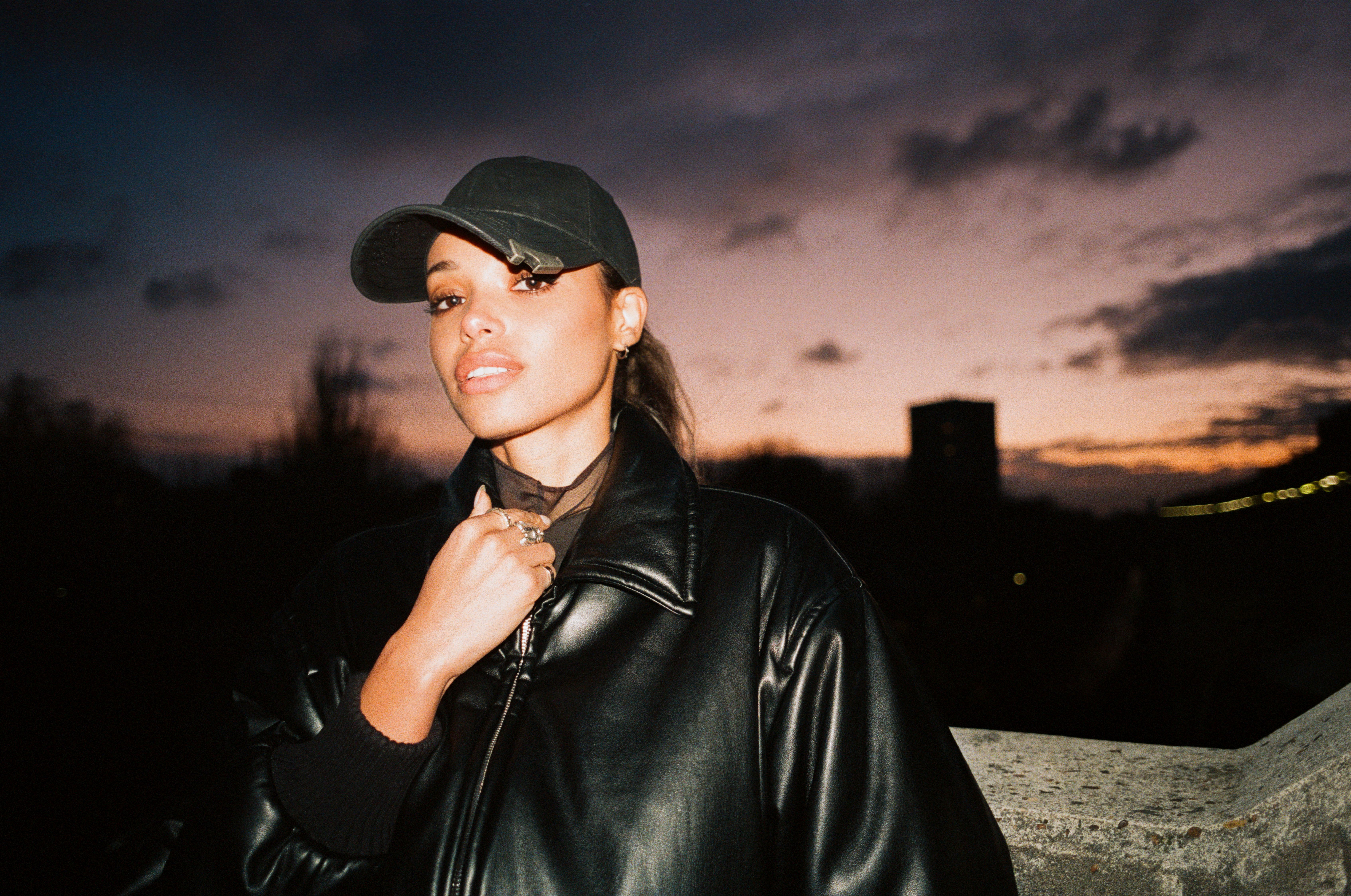 Linska Interview Image by Dan Medhurst
“Creation is the closest thing I can imagine to being in outer space.”
Video