Name: Lea Lisa
Nationality: Swiss
Occupation: DJ, producer
Current release: Many Shades Of House, selected by Lea Lisa and featuring, among others, Ian Pooley, Fred Quest, Chateau Flight, and Leonel Castillo, is out September 25th 2026 via Favorite.
Shoutouts: Kléo, Ladymonix, Kuniyuki, Session Victim, because they make this scene better.
Recommendations: My Many Shades Of House compilation artworks reflect my work and my commitment to this culture and to art.
If you enjoyed this Lea Lisar interview and would like to find out more about her music, visit her on Instagram, Soundcloud, and Facebook.
Do you think that some of your earliest musical experiences planted a seed for your interest in DJing? How and when did you start DJing?
I’d say I got into it at a very young age. I was 16, in the early ’90s, when I discovered club culture and the alternative music scene.
Then I saw Francesco Farfa play, and something just clicked. Technically, he was remarkable, but what really drew me in was the story he told through his set that night.
I’ve been hooked ever since.
Today, DJs are rarely just DJs. Very often, they can be producers who are also DJs or DJs who are also producers. Where do you see yourself on this spectrum and what kind of potential issues and cross-pollinations does this create?
I’m first and foremost a DJ. I only came to production much later, because I see it as a way of leaving a part of yourself behind through a piece of work. It feels more tangible somehow. You can remember a set, of course, but a record carries something even more personal.
To be honest, I don’t particularly enjoy producing, because I tend to find inspiration only in pain. But I’ve never approached any of this with my career in mind. I’m not chasing that kind of thing.
Art comes first, and I couldn’t care less about the rest.
What were some of the most important insights you gained from teachers/tutorials, other DJs, or personal experience? What does it mean to be a “better DJ?”
I’d say the most important thing is not to let your ego take over.
Generosity, to me, is an essential quality. I think being a good DJ is about making people dance while taking them through different emotions.
The substance, the intention, the sharing, the passing on of music and culture — that’s what really makes the difference.
For you, is there still listening outside of looking for music for your next sets? If so, what do you prefer to listen to and how does it possibly nonetheless have an influence on your performances?
I’m so deeply rooted in my own musical culture that I listen to very little outside of it. I’m constantly searching for new tracks, and that already takes up a huge amount of my time and attention.
Beyond that, I actually find it quite difficult to listen to music casually. Even in a restaurant, the music can sometimes feel overwhelming. When I was diagnosed with ADHD, I finally understood why I function that way. I need to feel completely engaged with what I’m listening to — I need to be 100 per cent passionate about it.
I need to manage my priorities, otherwise it gets too complicated.
There must be endless ways of “matching” two or more tracks. How do you prefer to do it? What makes two tracks inherently “matchable” and what constitutes a great transition?
For me, it’s about experience and knowing your tracks too; I never work things out mathematically – it’s all by ear.
Subtlety is just as important; that’s what makes the art of mixing so beautiful. Blending and creating atmospheres across two tracks to enhance the whole is a quest.
How would you describe the experience of DJing, physically and mentally? Do you listen – and deejay - with your eyes open or closed?
When you’re 100 per cent connected with your audience, it’s an indescribable pleasure, an unforgettable bond; it’s about letting go and getting carried away together through the music …
These are moments when tears of joy can flow. I’ve experienced that sort of miracle in my career.
Do you engage with audiences/dancers - and how? Taking one of your online DJ mixes as an example, how does the experience and the way you deejay change when you subtract the audience?
I also really enjoy mixing at home.
I have a lot of respect for the people who take the time to listen to my mixes, so I put just as much heart into them — even when I’m playing for an invisible audience.
Collaboration is a key part of almost every aspect of music making, but it is stil rare in DJing. Tell me about your own views on back-to-back DJing, interactions with live musicians or other forms of turning DJing into a more collective process.
For me, B2B is an excellent exercise. To do it successfully, you have to adapt and find your way, setting a direction to ensure the whole thing comes together coherently.
It also opens our eyes to a different perspective, which is enriching.
How important is dancing for our wellbeing on a personal and even on a societal level?
Dancing is a wonderful form of expression; it is a moment of letting go, of liberation and of sharing.
It is essential to come together in places where we are all equal and free, especially in today’s world.
Tinnitus and developing hyperacusis are very real risks for anyone working with sound. Do you take precautions in this regard and if you're suffering from these or similar issues – how do you cope with them?
To be honest, I suffer a lot from tinnitus, and I also have problems with my Eustachian tubes – I feel as though my ears are blocked almost every day. I’ve been seeing an ENT specialist for check-ups, but I haven’t found a solution.
I try to protect my ears, but I need loud sounds to feel fully immersed. I’ve tried ear protectors, but they make me feel disconnected. I don’t really have a solution.
Let's imagine you lost all your music for one night and all there is left at the venue is a crate of records containing a random selection of music. How would you approach this set?
It’s a challenge, but also a right old slog – though I never forget how lucky I am to do this job, even in the worst of times :)

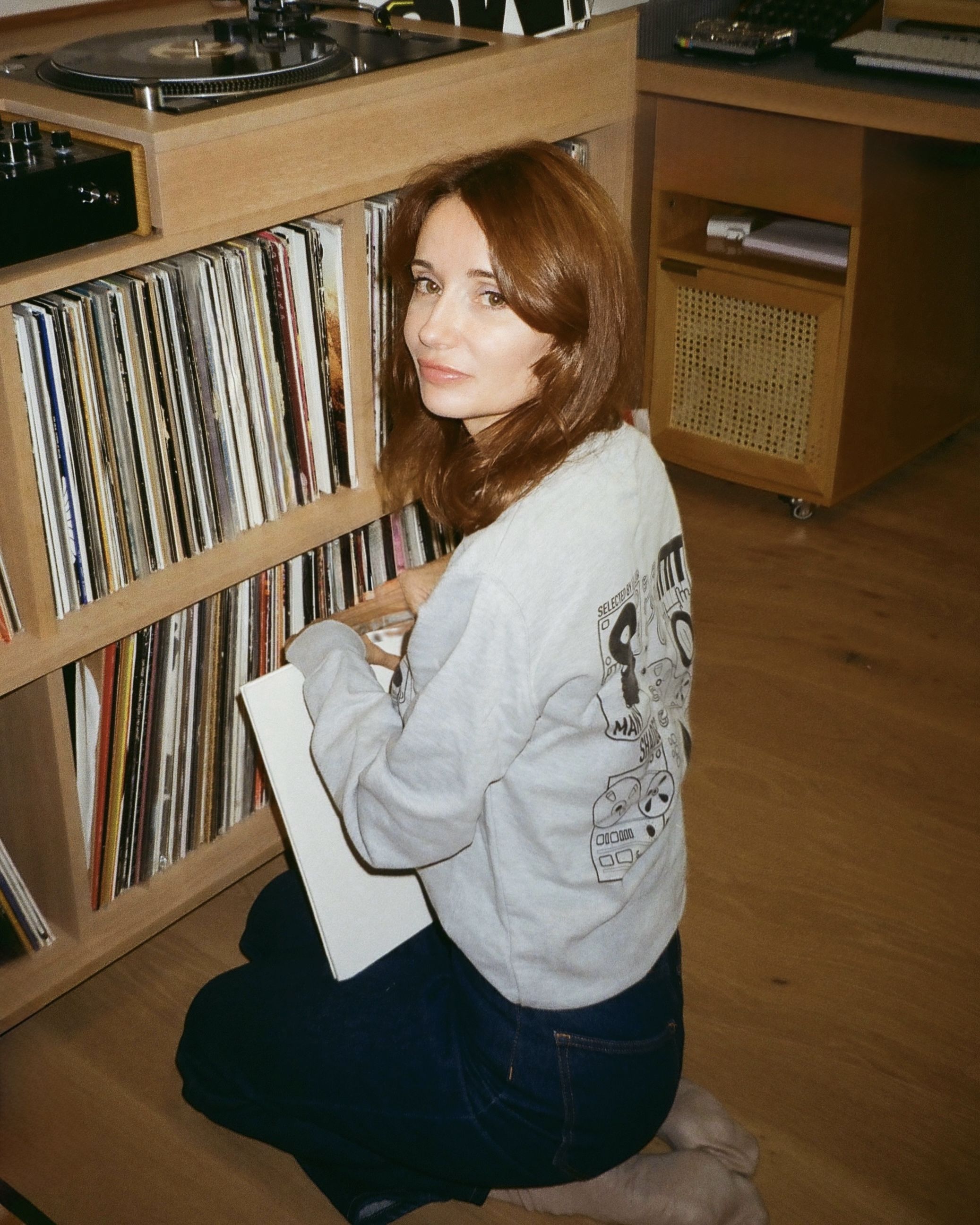 Lea Lisa Interview Image (c) the artist
“It is essential to come together in places where we are all equal and free, especially in today’s world.”
Video