Name: Kjetil Mulelid
Nationality: Norwegian
Occupation: Composer, improviser, pianist
Current Release: Kjetil Mulelid's new album Piano, Unfolding is out via Sagene. This is what Kjetil told us about the release: “I'm genuinely proud of Piano Unfolding, and I hope people listen to it, whether they love it or dislike it. Either reaction is valuable if the music creates emotion or makes someone stop and listen."
Recommendations for Oslo, Norway: I live in Oslo, and my favourite thing about the city is how closely connected it is to nature. Within half an hour you can be deep in the forests, hiking in the summer or skiing through the trails in winter. It's something I really appreciate about living here.
I also highly recommend taking the ferry out into the Oslo Fjord. You can use a regular public transport ticket and spend the day island hopping. Gressholmen and Langøyene are amazing with beautiful spots for swimming and a peaceful atmosphere. If you have a bit more time, rent a kayak in the city and explore the islands from the water. It gives you the freedom to stop at small, quiet places that are otherwise difficult to reach.
And for music, don't miss Nasjonal Jazzscene and Kafé Hærverk. They're two of the best places in Oslo to discover adventurous live music and experience the city's vibrant jazz scene.
If you enjoyed this interview with Kjetil Mulelid and would like to stay up to date with his music and his different groups and projects, visit his official website. He is also on Instagram, and bandcamp.
For a deeper dive, read our earlier Kjetil Mulelid interview.
What were some of the musical experiences which planted a seed for your interest in jazz?
For me, it all started with the idea that music could tell stories. I loved the thought that you could create something personal through melodies, rather than just play the notes that were written on the page.
When I was in high school, I had a fantastic piano teacher who challenged me in a way I'd never experienced before. Every lesson started with a title, something like “Hungry Little Chickens”, and then I had to improvise a piece with that title in mind. We would also set a few musical rules beforehand: maybe an ostinato, a certain key, a time signature, a register, or even just a few specific notes.
Looking back, I think the title was just as important as the musical limitations. A title immediately creates images and associations. "Hungry Little Chickens" isn't just funny, it already suggests a certain energy, maybe something a bit chaotic, nervous or impatient. Those images naturally influence the music.
I still work like that today. When I sit down at the piano, I often give myself small restrictions or little stories to explore. Most of them disappear after a few minutes, but every now and then something catches my attention and develops into a composition.
For example, "Memorable Stories" and "(the longing for a) Hello" on my new album actually began exactly that way.
What does the term jazz mean today? What are the key ideas behind your approach to improvisation?
For me, jazz is about curiosity. It's about trying things, failing, listening, playing, and discovering who you are through the music.
I've never been that interested in simply learning somebody else's language perfectly. Of course I've learned from people like Herbie Hancock, Keith Jarrett, Esbjörn Svensson and many others, but what's really interesting is what happens after you've absorbed those influences.
Everyone steals little ideas from everywhere throughout life. Classical music, folk music, pop songs, singer-songwriters, avant-garde music, jazz ... eventually all those references become your own vocabulary. That's the part I'm interested in, both in myself and in other musicians.
A good example is "How the West Was Won." The A section has a very simple, almost cinematic or cowboy-like character, while the B section could almost belong to a Romantic classical piece. Even the title comes from one of my favourite albums as a teenager, Led Zeppelin's live album How the West Was Won.
Listening to those incredibly long live versions, where they stretched every song far beyond the original, probably taught me something about allowing music to live and unfold through improvisation.
Where do your inspirations come from? Do current events influence your work?
Mostly from inside, I think, but usually triggered by something outside, or by something I've experienced. A place, a conversation, a memory, a landscape, or simply sitting at the piano searching.
I rarely write music because I want to comment directly on politics or current events. Instead, I think my music reflects whatever is happening in my own life. Sometimes it's joy, sometimes it's melancholy, and sometimes it's simply curiosity. I like music that leaves room for the listener to bring their own experiences into it.
Here is an excerpt of a song named “Alone” - for me it’s just a feeling of walking around alone in the streets:
Tell me about your hometown, your musical community and the people around you.
Norway has a really inspiring music scene.
One thing I appreciate is that there's a genuine openness towards new music. There are funding opportunities that make it possible to develop original projects, and there are venues willing to present music that doesn't necessarily fit into established categories.
At the same time, perhaps there's a little less focus on preserving traditional jazz compared to some other countries. That combination encourages people to search for their own voice instead of mainly looking backwards.
I'm also lucky to work with so many inspiring musicians. For this album I worked closely with my long-time friend and trio drummer Andreas Winther, who recorded the album and acted as both sound engineer and creative sparring partner. He was actually one of the people who encouraged me to make another solo piano record.
Together we drove across the Norwegian mountains to Kabuso Kunstsenter in Øystese, which has a beautiful concert hall with wonderful acoustics and an amazing grand piano.
One of the tracks on the album, "Entrance," is actually one of the very first pieces my trio learned back in 2016. Revisiting it alone at the piano almost felt like meeting an old friend again. Here is a video of my trio:
I also want to mention drummer Axel Skalstad, who passed away suddenly last year. His death was a huge shock for all of us in the Norwegian jazz community. Axel was one of those musicians who completely transformed every room he played in.
Shortly before he died, I had written "Shards of Light (Krystaller)". Somehow the piece has gradually become connected to him in my mind, and today I think of it as his piece. Here is a version of it:
Collaboration has become much easier through technology. What collaborations have been especially meaningful recently?
One of the most meaningful collaborations in recent years has been with Dutch saxophonist Kika Sprangers.
We met through an exchange programme designed to strengthen connections between Norwegian and European jazz musicians. We immediately felt a strong musical chemistry, and shortly afterwards formed Beiggja together with Mats Eilertsen and Per Oddvar Johansen.
We've now released our debut album, toured in the Netherlands, Norway and Italy, written lots of new music together, and have many exciting plans ahead. Collaborations like that remind me that the best musical partnerships often happen very naturally - you simply recognise something in another person's way of making music.
My solo version of "Encore" on Piano, Unfolding originally comes from the Beiggja repertoire.
Jazz constantly balances tradition and exploration. How does that balance work in your music?
I was recently interviewed by someone who felt my new solo album leaned even more towards classical music than my earlier releases, while still sounding unmistakably Nordic.
I think they're probably right. Classical music was my first musical language. Before discovering jazz I spent some years listening to and playing Romantic composers, and perhaps you naturally return to your roots as you get older.
At the same time, I definitely feel connected to the Nordic jazz tradition. I think what people often describe as the "Nordic sound" has a lot to do with space. Scandinavian jazz often leaves more room between the notes and doesn't always rely on the dense harmonic language often found in traditional American jazz.
But honestly, I don't spend much time thinking about balancing tradition and innovation. I simply try to follow what feels natural. That inevitably means carrying my musical background with me while continuing to explore new places.
Have there been live experiences that changed your relationship with music?
Absolutely.
One of the first big turning points came during my first week of high school, when a piano teacher literally took me out of an ordinary class and showed me that music didn't have to begin with sheet music. Until then I mostly associated the piano with classical repertoire, and I had actually started playing rock guitar instead. She completely changed my perspective.
Later, another teacher introduced the idea of telling stories through improvisation instead of trying to impress people with technique, like I mentioned earlier.
Another important turning point came between 2018 and 2020, when I was touring extensively with the band Wako and struggled to adapt to different pianos from concert to concert. Unlike the other musicians in the band, I never travel with my own instrument, so every performance begins with a completely new relationship. I would watch the others carefully adjusting every small detail of their instruments to make them sound exactly as they wanted, while I simply had to accept whatever piano was waiting for me.
That made me realise how surprisingly little I actually knew about how a piano works. Together with a piano technician in Oslo, I spent several days studying the mechanics of the instrument, and how every component influences the touch and the sound. In the same period, I also worked with anatomy and body mechanics to better understand how I use my body while playing. Those two experiences fundamentally changed my relationship with the piano.
Today, I feel much more connected to every instrument I sit down to play, because I understand better both how it works and how I can adapt to it.
How are your live performances and recordings connected today?
More and more, I've tried to stop chasing perfection. If my trio went into the studio tomorrow, the album would sound different than if we recorded next week - and that's perfectly fine. Time, place and state of mind all influence the music.
I've become much more interested in capturing what's true in the moment than polishing everything until it loses its personality. Live concerts have taught me to trust those moments, and I think that's also how I now approach recording, if the music allows me to.
Here is a video of a duo I have with vocalist Siril who released an album earlier this year - the duo project really dig this liveliness which I think you can hear easily.
Montreux preserves performances for future generations. Should everything remain available forever?
I actually like the idea that some performances only exist in the memories of the people who were there. A concert is a shared experience between musicians and audience, and there's something beautiful about allowing certain moments to remain unique. Not everything needs to be documented.
At the same time, recorded music allows us to reach people we could never otherwise meet, and I'm incredibly grateful whenever listeners continue sharing my music with new audiences and future generations.

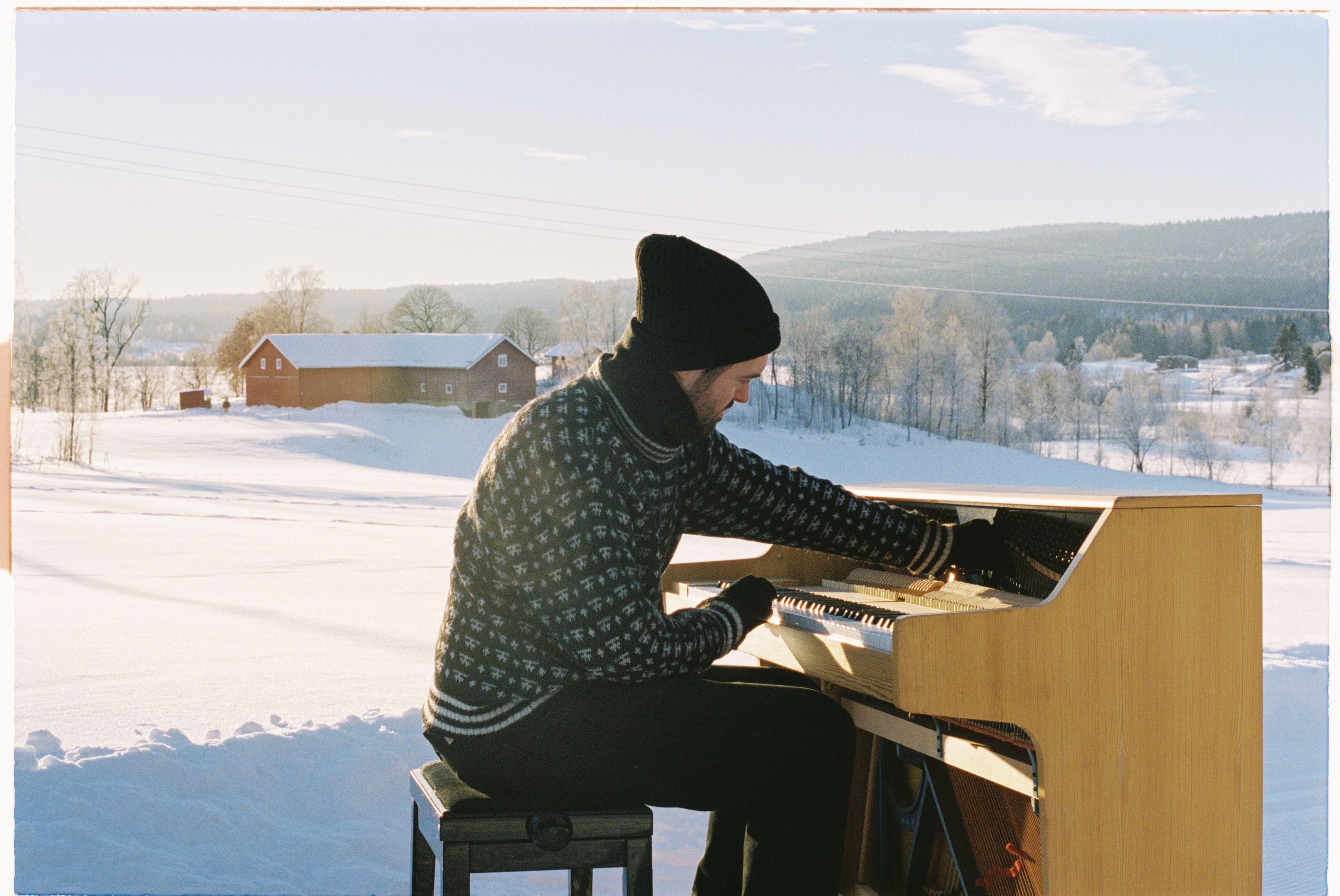 Kjetil Mulelid Interview Image by Eirik Havnes
“I've never been that interested in simply learning somebody else's language perfectly.”
Video