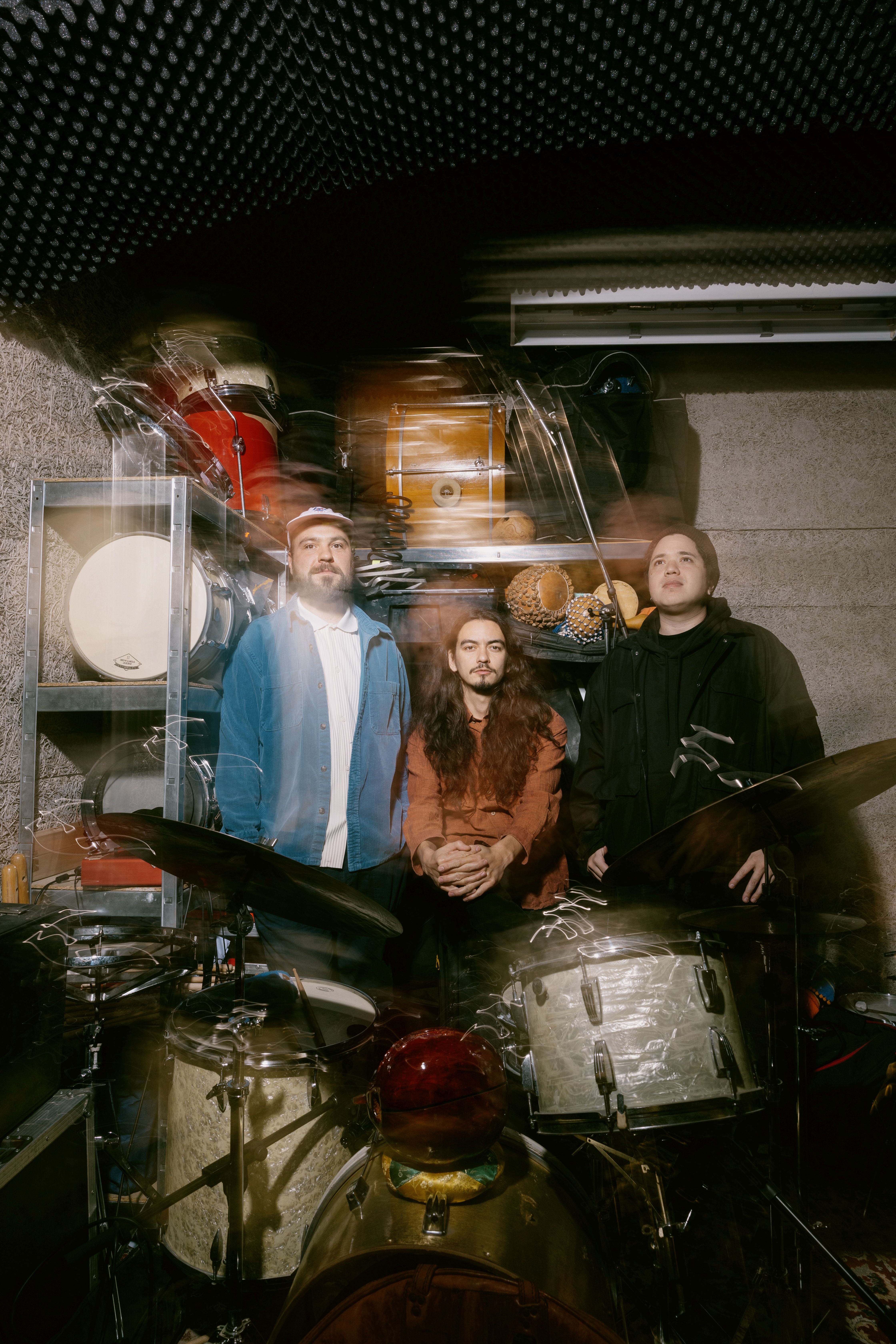


Published
Name: Kenji Herbert
Nationality: Japanese-American, Vienna-based
Occupation: Guitarist, composer, improviser
Current Release: Kenji Herbert's latest album A Million Forests of the Fall was released in November 2024 via Unit. It features Vinicius Cajado (bass), and
Lukas König (drums).
If you enjoyed this Kenji Herbert interview and would like to know more about his music, visit his official homepage. He is also on Facebook.
For the thoughts of one of his collaborators, read our Arooj Aftab interview.
What were some of the musical experiences which planted a seed for your interest in jazz?
My uncle, Peter Herbert, is a professional musician and my dad took me to his concerts in smoky jazz clubs when I was a little kid. I struggled to stay awake past the first few tunes, but if you want to talk about planting a seed, I’m sure those sounds left an important imprint in me as I was dozing off into a dream.
At that time I had no idea I would eventually pick up the guitar, follow in his footsteps and that we would one day share the stage together.
What does the term jazz mean today, would you say?
I would say the word at this point doesn’t carry much meaning at all.
It means different things to different people and I find discussions around what the style does or does not include to be tedious. Considering that many of the great icons of this music also never really liked the term to begin with, I have no particular attachment to the word ‘jazz.’
As an artist, it’s preferable not be tied to a particular genre or style of music anyway. I understand it’s a convenient handle for listeners to get a sense of what we do and sound like. At the same time, it’s important to think outside of categories if you want to be creative.
Derek Bailey defined improvising as the search for material which is endlessly transformable. As of 2024, what kind of materials are particularly stimulating for you?
I love Derek Bailey and also this quote. This is an interesting question because you can interpret ‘materials’ to mean many different things. There are materials that relate to instrumental technique and music theory. In this area, I am indebted to my teacher Mick Goodrick, whose philosophical approach has given me a lifetime worth of ideas and sounds to explore.
On the other hand, there are physical materials in terms of instruments, effect pedals and software etc. Material can also include things outside of music: books, paintings, a sunset you saw on a walk not too long ago …
I try to draw from anywhere that helps me avoid getting stuck in approaching music in one particular way. In a sense, this is what improvisation is about. You want to be ‘unstuck’ in your thinking and action.
What, would you say, are the key ideas behind your approach to improvisation?
Communication, empathy and being present in the moment.
How would you describe your relationship with your instrument – is it an extension of your self/body, a partner and companion, a creative catalyst, a challenge to be overcome, something else entirely?
Jim Hall said in an interview that he likes to think of himself as a musician who happens to play the guitar. I relate to this sentiment very much.
Most of all, it is really fun to play, but more and more I find myself developing my ideas away from the instrument to see how much I can translate once I sit down to practice. 
Kenji Herbert Interview Image (c) the artist
With guitar players especially there is a tendency to develop an obsession with certain technical aspects of the instrument, like how fast and how ‘clean’ you play. This can sometimes be to the detriment of developing in other important areas, like having a personal sound aesthetic or effective ensemble playing.
While I believe it’s important to have good instrumental technique, ultimately it’s the message that counts. If you have something that you feel is important to say, you will find a way to express it regardless (or in spite of?) the medium.
Jazz has always had an interesting relationship between honouring its roots and exploring the unknown. What does the balance between these two poles look like in your music?
I don’t think it’s necessarily one or the other. We are all influenced by the sounds that came before us and many of our heroes were pioneers of their time. In that sense, being innovative and having a personal voice is perhaps part of the tradition, rather than something that is opposed to it.
More and more I think about passing on what I was lucky enough to receive, whether through my mentors or great collaborators that I have had the chance to work with. Their sounds live in me and I try to manifest that when I play.
When I’m on stage, I want to celebrate what I feel is true and beautiful in music and life. Whether what I’m doing is honoring a particular tradition or going for the unknown, are more often than not, secondary considerations at best.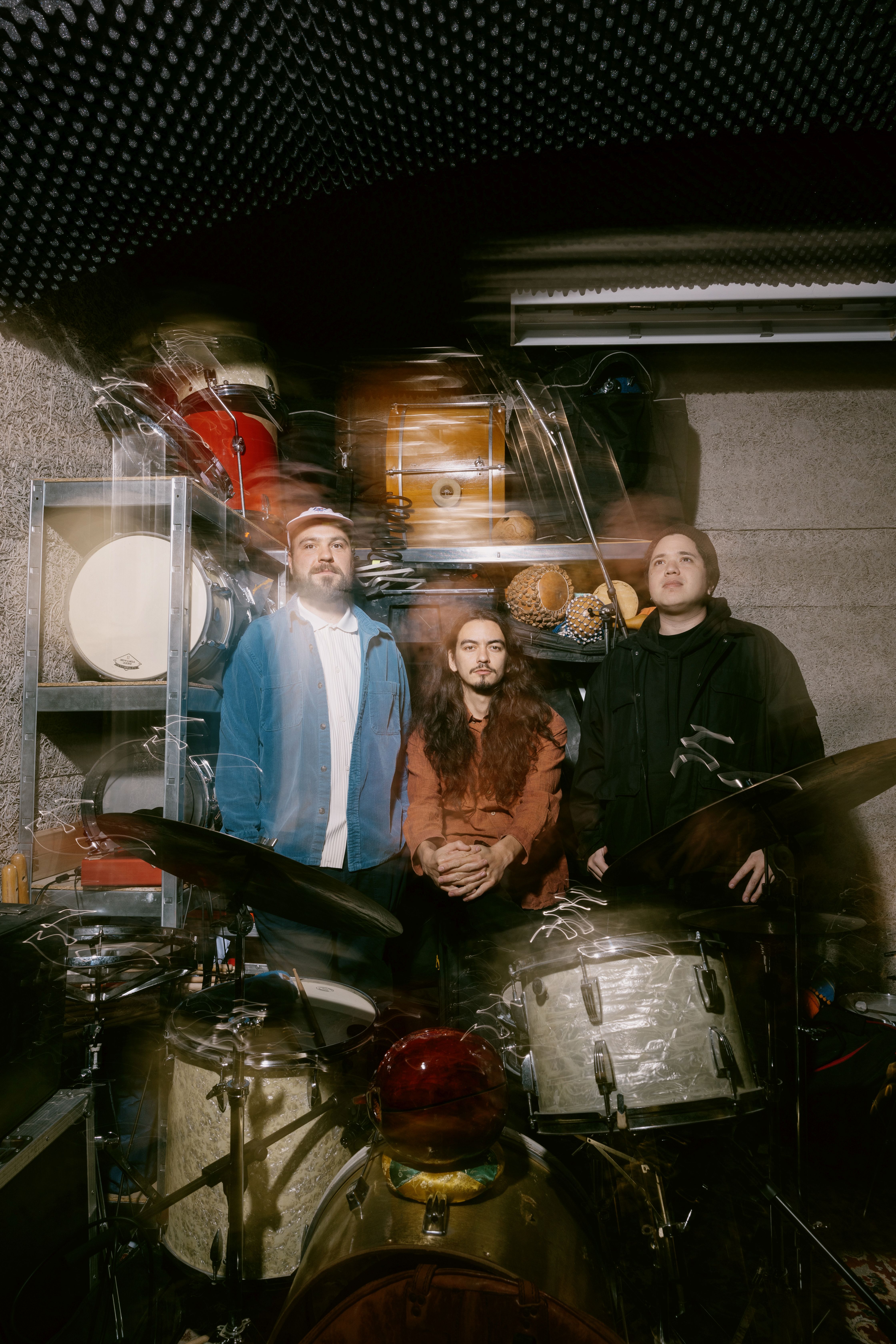
Vinicius Cajado, Kenji Herbert, Lukas König Photo (c) the artists
What are currently direction in jazz or jazz-adjacent communities which you personally find interesting?
In Vienna, musicians from various backgrounds coming from contemporary classical music, experimental electronic music and jazz are finding common ground in non-idiomatic improvisation.
I find this to be an exciting area of collaboration resulting in new and interesting sounds.
How, would you say are your live performances and your recording projects connected at the moment? How do they mutually influence and feed off each other?
I find myself trying to be as succinct and to the point as possible on my recording projects. Live, the same material is stretched and deconstructed as much as possible with the band.
So I would say I approach these two situations very differently. I’m still figuring out how to find some kind of middle ground between the two.
The Montreux Festival intends to preserve its archive of recordings for future generations. Do you personally feels it's important that everything should remain available forever - or is there something to be said for letting beautiful moments pass and linger in the memories of those that experienced them?
I once had a conversation with the great pianist Evan Shinners about how composers such as Beethoven and Chopin had large parts of Bach’s Well-tempered Clavier memorized. Nowadays, few pianists, let alone composers do. I asked him why this is and his answer kind of blew my mind,
“Well, in their day there wasn’t much piano repertoire that was circulating in print to begin with, so it was one of few works that you studied to become proficient at the instrument. Everything else they basically had to compose themselves.”
While it is amazing that we have this incredible library of sound available at our fingertips, I can’t help but wonder if it isn’t also stifling our imagination and will to create and explore on our own.
I find great beauty in the ephemeral and value in forgetting and letting go. Recorded music has only been around for give or take 100 years, while music itself has existed for many thousands of years before that. Maybe live in concert, in the moment, is more true to the spirit of how music is meant to be appreciated and passed on, rather than through recorded archives.