Name: June Freedom
Nationality: Cape Verdean
Occupation: Singer, songwriter
Current Release: June Freedom’s new album Casa Mira Mar is out via Flight Club.
Recommendations for Cape Verde: If you ever go to Fogo Island in Cape Verde, you have to visit Chã das Caldeiras. It’s at the top of the island, where the volcano lives — and being up there, you’re literally standing in the clouds. The ground is all black volcanic rock, and out of that blackness grow these wild, vibrant red flowers everywhere. It’s surreal. You’re surrounded by this dark, dramatic landscape with bursts of color, looking up at this massive volcano towering above you.
There are goats walking around, locals grilling on the roadside, families making fresh goat cheese, and bed-and-breakfasts tucked into the mountainside with the most incredible views. They grow grapes right there in the lava soil and make amazing local wine. You drink it with the volcano in the distance and music in the air. It’s peaceful, intense, and alive — a once-in-a-lifetime experience. Magical doesn’t even cover it.
Things I am passionate about but rarely get to talk about: Horses. I grew up around them in Cape Verde, and they’ve always had a special place in my heart. Not a lot of people know that. I used to take care of them like they were mine. There’s something about the way they move — calm but powerful. I think if I wasn’t making music, I’d probably be somewhere with animals, living quiet.
Also, I’m super into languages — the way they shape emotion, tone, rhythm. I speak four, and I’m always picking up bits of new ones. It’s not just about understanding people — it’s about feeling the world differently.
If you enjoyed this June Freedom interview and would like to know more about his music, visit his official homepage. He is also on Instagram, and Facebook.
Do you think that some of your earliest musical experiences planted a seed for your interest in writing lyrics or poetry? How and when did you start writing?
Definitely. I think my relationship with lyrics started before I even realized it.
As a kid, I was surrounded by music that was deeply emotional — especially Cape Verdean music. Even if I didn’t understand every word, I could feel what was being said. That stuck with me.
I didn’t start writing right away, but I was always absorbing. Over time, I realized I had things I needed to say — things I couldn’t always say out loud — and music gave me the space to do that.
Entering new worlds and escapism through music and literature have always exerted a very strong pull on me. What do you think you are drawn to most when it comes to writing?
For me, writing is about release. I think I’m most drawn to the feeling of turning pain or confusion into something beautiful.
Writing helps me make sense of what I’m feeling — even when I can’t fully explain it. It’s less about escaping and more about facing things from a different angle.
Sometimes the studio feels like the only place where I can really be honest. It’s a way to process and transform whatever I’m carrying.
What were some of the artists and albums which inspired you early on purely on the strength of their lyrics? What moves you in the lyrics of other artists?
Early on, Lauryn Hill and Mayra Andrade really stood out to me.
Lauryn’s lyrics carried so much wisdom and pain — like every word had weight. And Mayra’s use of Creole and Portuguese showed me that lyrics don’t need to be in one language to be powerful — they just need to be honest.
Later, when I was living in New York around 2011–2012, I got really into Frank Ocean.
The way he writes — all the layers, the subtext, the double meanings — it really pushed me to think deeper about how I write.
I love when a lyric hits you one way the first time, and then says something completely different the second time you hear it.
It is sometimes said that “music begins where words end.” What do you make of that?
I believe that. There are things I feel that I couldn’t explain to someone in a conversation — but when I sing them, they make sense.
Music speaks in a way that bypasses logic and goes straight to emotion. That’s why sometimes a melody with no words can say more than a full paragraph. It holds what words can’t always carry.
I have always considered many forms of music to be a form of poetry as well. Where do you personally see similarities? What can music express which may be out of reach for poetry?
They definitely overlap. Both music and poetry rely on rhythm, imagery, and emotion.
But music has the extra dimension of sound — tone, harmony, silence — things you can feel in your body, not just your mind. You can write a beautiful poem, but when you sing those same words with a certain chord or vocal tone behind it, it hits differently.
Music can make you cry over a line you wouldn’t even notice on paper. It goes deeper.
The relationship between words and music has always intrigued me. How do you see it? In how far can music take you to places with your writing you would possibly not have visited without it?
Music pushes my writing into places I wouldn’t go just by sitting down with a notebook. A melody can pull something emotional out of me that I didn’t even know was there.
Sometimes the music knows what I’m trying to say before I do. I might be playing around with chords or humming something, and suddenly a line comes out that’s realer than anything I’ve written.
It’s like the sound gives the words permission to be honest.
What are areas/themes/topics that you keep returning to in your lyrics?
I always come back to themes of identity, distance, and longing — trying to find home, whether that’s in a place or within myself. I also write about needing time alone — that quiet space to figure things out or just breathe.
But there’s also joy in the music. Dancing, love, tropical places, being back in the islands — that energy always shows up because I like making people feel good. Even when I’m singing about something real or painful, I still want the rhythm to carry people somewhere light.
And I pay attention to what’s happening in the world. Even if I don’t name it directly in every song, those things make their way into the music — in the tone, in the questions, in the urgency. I think it’s important to reflect the times we’re living through.
On the basis of a piece off Casa Mira Mar, tell me about how the lyrics grew into their final form and what points of consideration were.
The song “Fè” — which means faith — came from a real place.
I was in the Netherlands when we worked on it, and I collaborated with a couple other creators in the studio. We all put our heads together and built it around the message of staying grounded, even when life feels like it’s falling apart.
It’s about keeping your head up, staying mentally strong, and not letting stress or hard times take over. It’s that reminder to keep going, even when you don’t know what’s next. That’s what fè means to me — pushing forward when things get tough.
Do you tend to start writing with what will be the first line of the finished lyrics? The chorus? At a random point? What are the words that set the process in motion?
It’s honestly different every time.
Sometimes I have a line written down already — something I jotted in my notes that I know I want to build a song around. Other times, it just comes in the moment, in the middle of a session. Maybe a melody hits that sounds so sweet I have to find the lyrics that match the emotion of it. Sometimes it’s a topic I’ve been sitting with, and other times it just flows out of nowhere.
There’s no set formula for me — I just follow the feeling.
I’d love to know how you think the meaning or effect of an individual song is enhanced, clarified or possibly contradicted by the EPs, or albums it is part of. Does the song, for example, need to be consistent with the larger whole?
Yeah, I definitely think a song hits differently depending on the body of work it’s a part of. On its own, a track might just feel like a vibe — but when you hear it in the context of the full album, it becomes part of a bigger story.
With Casa Mira Mar, I was intentional about the sequencing and themes. Each song has its own world, but together they reflect different sides of me — joy, heartbreak, identity, escape.
So yeah, I do think it matters. The album gives the song depth, and sometimes even shifts how you hear it.
When you’re writing song lyrics, do you sense or see a connection between your voice and the text? Does it need to feel and sound “good” or “right” to sing certain words? What’s your perspective in this regard of singing someone else’s songs versus your own?
Yeah, I definitely have to feel a connection between my voice and the lyrics — whether I wrote them or not.
Sometimes I’ll hear a song that someone else wrote, and I know right away if it fits me or not. The tone, the phrasing, the feeling — it has to sit right in my voice.
But honestly, some of my favorite songs I’ve released were written completely by other people. I actually like that. It brings in new stories, new emotions I might not have written myself. It adds more dimension and more layers to a project when you can bring in different perspectives.
It’s still me singing it, but now it’s me carrying someone else’s truth, too.
I would love to know a little about the feedback you’ve received from listeners or critics about what they thought some of your songs are about – have there been “misunderstandings” or did you perhaps even gain new “insights?”
Yeah, definitely. People interpret songs in all kinds of ways, and I actually love that.
There’ve been times someone tells me what a song meant to them, and it’s something I never even thought about — but it still makes total sense. Like, they’ll say a track helped them through something personal, when for me it came from a completely different place. That’s the power of music. Once it’s out, it’s not just mine anymore.
I’ve had people misunderstand lyrics too, thinking a song was about a relationship when it was really about something internal. But I’m okay with that — I like that the meaning can shift depending on who’s listening.
Creativity can reach many different corners of our lives. Do you feel as though writing song lyrics or poetry is inherently different from something like making a great cup of coffee? What do you express through music that you couldn’t or wouldn’t in more ‘mundane’ tasks?
They’re definitely different, but there’s still intention behind both. Making a good cup of coffee is about routine, precision, maybe even peace. Writing music, for me, is about release — it’s emotional.
Music lets me say things I don’t always have the words for in regular life. I can be more honest, more vulnerable. I wouldn’t be out in public talking about some of the things I’ve written in songs — but when I’m in the studio, it all comes out. Music gives me that space.
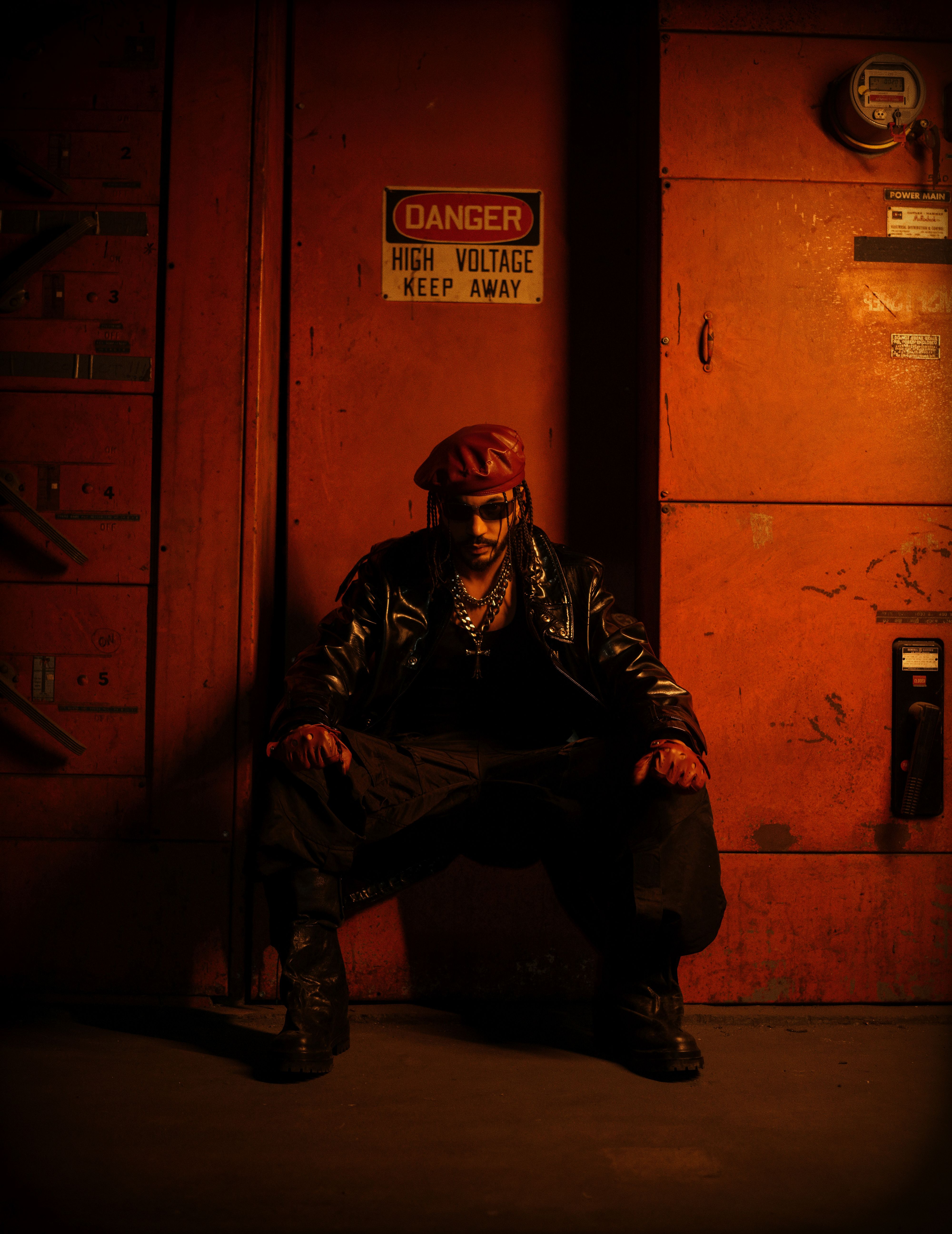 June Freedom Interview Image (c) the artist
“Sometimes the studio feels like the only place where I can really be honest.”
Video