Name: Jono McCleery
Nationality: British
Occupation: Singer, songwriter
Current release: Jono McCleery's new album Reconcile is out November 29th 2024 via Sonar Kollektif.
Pure vocal music recommendations: I would suggest John Tavener's 'The Lamb' and Erik Whitacre's 'Sleep' as being good places to start with regards to choral music. I also love the vocals on a lot of Henry Purcell compositions, and the vocal arrangements on some Jon Lucien and Marvin Gaye records. Terry Callier's song 'Drifter' - although recorded with guitar and 2 double basses, I think has a fascinating vocal delivery/recording.
If you enjoyed this Jono McCleery interview and would like to know more about his music, visit his official homepage. He is also on Instagram, tiktok, and Facebook.
Do you think that some of your earliest musical experiences planted a seed for your interest in your voice and singing? How and when did you start singing?
My brother was 9 years older than me and was studying the piano. At some point he persuaded me to try singing some of our favourite songs together. He even recorded my voice and I remember running away because I was so shocked when I heard it.
Without him I don't think I would have ever sung.
If you're also playing other instruments, how does the expressive potential of these compare to your own voice?
Double bass is probably my favourite instrument to play. I love the sheer physicality of it, and feeling the notes resonate through everything.
But the voice will always be the purest form of expression, it allows you to tap into experiences you didn't know were inside you, and effect people in the most powerful ways.
Singing is an integral part of all cultures, and traditions. Which of these do you draw from – and why?
Most of the music I enjoyed growing up was from America: Soul and Jazz which originated from the Blues. I felt a very strong connection to it and that's what got me interested in singing.
Later, as I started learning how to play guitar, I listened more to folk, classical and world music. And now, it could be anything.
But I think there are things I always look for whatever it's origins: usually music which emanates warmth, authenticity, and originality.
What were some of the main challenges in your development as a singer/vocalist? Which practices, exercises, or experiences were most helpful in reaching your goals – were there also “harmful” ones?
I quickly found out that my range is lower than most singers, which was quite frustrating at first because I couldn't sing along to my favourite music. So in order to play other peoples' songs I would have to learn to transpose the music on the guitar by ear, which was a good learning exercise.
Even then, learning how to sing/perform songs I loved was incredibly challenging: Jeff Buckley's 'Morning Theft' and Rufus Wainwright's 'Dinner at Eight' for example.
I don't do warmups (outside of a soundcheck) or exercises but I take preventative measures to keep from harming my voice. I don't drink alcohol before singing, because you need to be mindful not to overuse your voice before singing.
I try to avoid being around smoke or being in loud environments where one would need to shout to communicate. And I always start gently to sing and build up slowly before using my full range, and drink plenty of water in-between sessions.
How do you see the relationship between harmony, rhythm and melody? Do you feel that honing your sense of rhythm and groove has an effect on your singing skills?
Absolutely. Black music has been so important, it's a whole language unto itself which has had a huge influence on me.
Whether is was Bill Withers, Otis Reading, Q-tip or John Coltrane, each examples of entire genres which offer unique perspectives into phrasing and melody within rhythms – of course Blues and Gospel being at the core of it all. Having a strong sense of rhythm and groove allows you to lay a foundation over which you can improvise freely, especially performing with other musicians.
To make a crude analogy: Harmony for me is like the sea, it's everywhere, not just in the chords and melody, but between percussive elements and in the spaces between notes etc. Rhythm is the waves, and the melody is all the life and stories within the sea. All equally important to the eco-system of music.
What are the things you hear in a voice when listening to a vocalist? What moves you in the voices of other singers?
I like listening to singers whose voices convey an interesting life story or emotion, and are not simply expressing their skill for singing.
There is also something mysterious about what connects us to a piece of music, or a voice. Something I believe which makes us feel seen.
Lately:
How would you describe the physical sensation of singing? [Where do you feel the voice, do you have a visual sensation/representation, is there a sense of release or tension etc …]
It's definitely a release, if I'm doing it right - life creates the tension by itself.
I prefer to keep my eyes closed and try to let the notes flow through my body.
What kind of musical settings and situations do you think are ideal for your own voice?
1) Being by myself.
2) performing with musicians I feel a strong connection with.
3) Having an audience who want to hear something.
When all these things come together it can be a truly magical experience.
We have a speaking voice and a singing voice. Do these feel like they are natural extensions of each other, ends on a spectrum or different in kind?
Somewhat yes, and for me sincerity is important with both. But as a singer I am a soloist, whereas speaking has so many interrelation functions, all which require different ways of speaking.
For me singing is liberating and speaking is something which we have to do in order to get along mostly.
From whispers to screams, from different colours to dynamics, what are the potentials and limits of your voice? How much of your vocal performance can and do you want to control?
I have no idea what my limits are to be honest. I think I decided at some point that I wanted my voice to be a calming influence for listeners whilst exploring my creative limits.
I don't have a need to scream or shout in music, I think there is enough noise in the world. I want to give the thing in music which I yearn to receive, a place of console, comfort, where I can switch off and feel safe to explore ideas.
When you're writing song lyrics, do you sense or see a connection between your voice and the text? Does it need to feel and sound “good” or “right” to sing certain words? What's your perspective in this regard of singing someone else's songs versus your own?
The lyrics have to feel 'natural' within the feel and rhythm of the music, as if the words and melody belong to each other.
For me the fit is sometimes more important than the meaning of the words, this is what allows you to really sing, and ultimately it's the singing that is conveying the message.
Strain is a particularly serious issue for many vocalists. How do you take care of your voice? Are the recipes or techniques to get a damaged voice back in shape?
The interesting thing about when you sing with your natural voice is that it doesn't usually cause you harm. If it does, it might be because you're not ready to sing: either not warmed up, or not well enough.
Never force yourself to sing if it's uncomfortable, unless you really have to. Be patient, and just try to sound like yourself. Rest is the only cure for a damaged voice.
How has technology, such as autotune or effect processing, impacted singing? Has it been a concrete influence on your own approach?
As a listener I want to feel as close as possible to the singer, I want to hear the humanness of a voice, and the small imperfections.
I don't listen to singers who use much effects, and because I enjoy performing, it's important that I make recordings which I am comfortable replicating live. So it's always little to no effects.
For recording engineers, the human voice remains a tricky element to capture. What, from your perspective, makes voices sound great on record and in a live setting?
Great singers make voices sound great, and a little bit of microphone technique helps. Otherwise it's very difficult.
This is why live performance is so important, to learn how to sing without any production help. And if you lean too heavily on production then you will have difficulty performing those songs live.
Motherese may have been the origin of music, and singing is possibly the earliest form of musical expression, and culture in general. How connected is the human voice to your own sense of wellbeing, your creativity, and society as a whole?
I couldn't say how connected the human voice is to society with regards to singing, I think this has probably changed over the years. Maybe before it had more to do with gathering and singing together, and strengthening bonds within the community. Whereas now it's commercialised and mostly about the individual who is singing, selling tickets and records/streams.
But, for my well being singing is very important. It has allowed me to know myself better, and showed me how to tap into my creativity.
Music in general has given me a path to follow in life where I feel like I can be me.
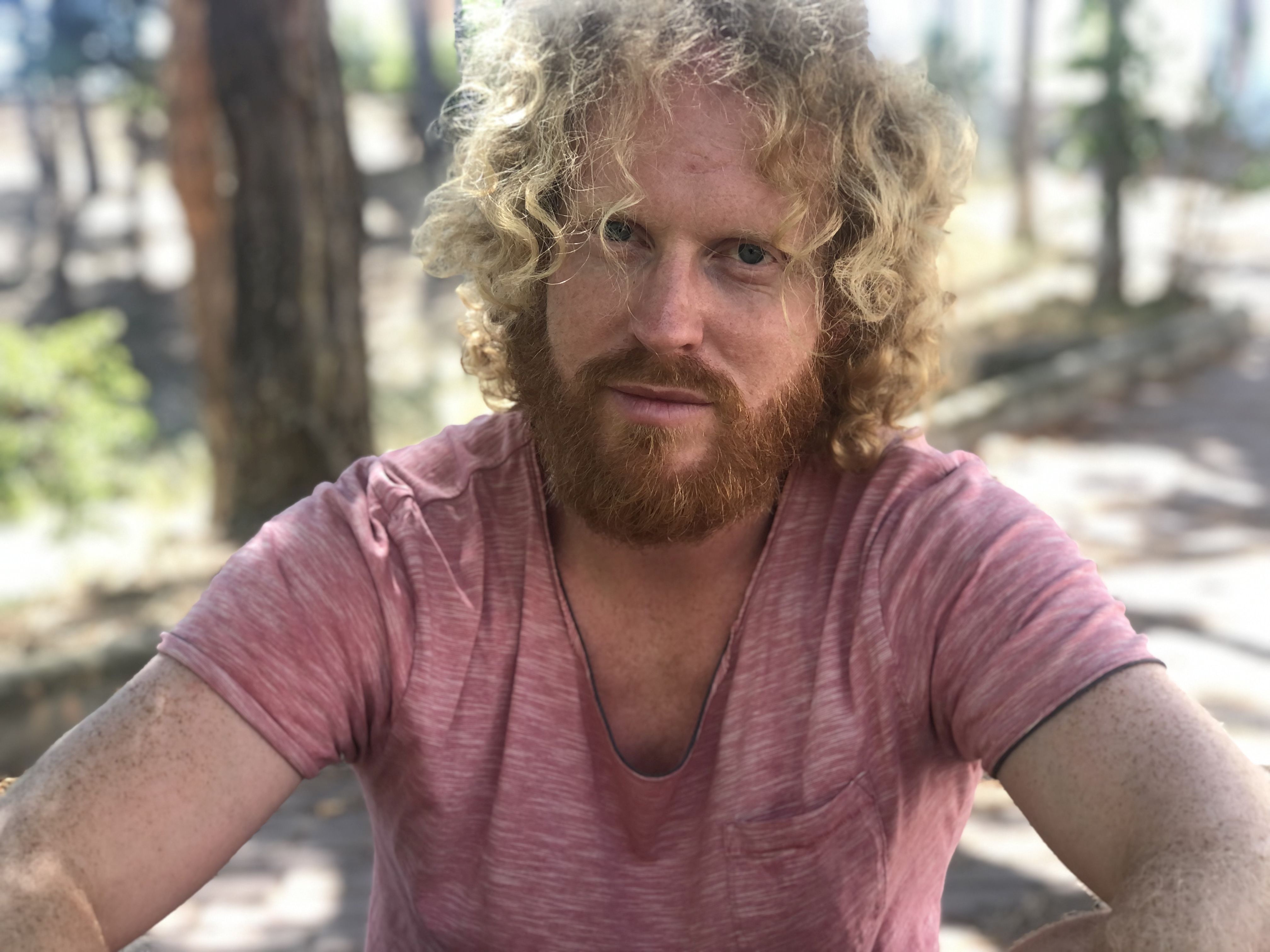 Jono McCleery Interview Image by Marcela Nagel Navarro
"The fit is sometimes more important than the meaning of the words."
Video