Name: Jonathan Enser aka matters unknown
Nationality: British
Occupation: Multi-instrumentalist, composer
Current event: Jonathan Enser is one of the artists appearing at this year's EFG London Jazz Festival. The event will take place 15-24 November 2024 and feature artists such as Anohni, Imelda May, the Crosscurrents Trio, Charles Tolliver, Veronica Swift, Brandee Younger, Ill Considered, Tashi Wada, Yazz Ahmed, Spencer Zahn, Melike Şahin, Fabiano Do Nascimento, Belle Chen, Helena Kay, Tami Weis, the Neil Cowley Trio, Matters Unknown, Mark Kavuma, Avishai Cohen, Tigran Hamasyan, and Fran & Flora.
For tickets, head over to the festival's official website.
[Read our Ill Considered interview]
[Read our Tashi Wada interview]
[Read our Yazz Ahmed interview]
[Read our Melike Şahin interview]
[Read our Fabiano Do Nascimento interview]
[Read our Belle Chen interview]
[Read our Neil Cowley interview]
[Read our Matters Unknown interview]
[Read our Mark Kavuma interview]
[Read our Tigran Hamasyan interview]
[Read our Fran & Flora interview]
[Read our Anouar Brahem interview]
[Read our Dawn Richard interview]
[Read our Tami Weis interview]
[Read our Helena Kay interview]
[Read our Avishai Cohen interview]
If you enjoyed these thoughts by Jonathan Enser and would like to stay up to date with his music, visit matters unknown on Instagram, and Facebook.
For a deeper dive, read our matters unknown interview. For the thoughts of one of the groups Jonathan is part of, read our Nubiyan Twist interview.
The London Jazz Festival is just around the corner. Can you tell me a little about your performance at the festival?
I am thrilled to be performing at the iconic South Bank Centre's Purcell Room as part of a double headliner with the incredibly talented Renato Paris. I'll present a unique set with a six-piece ensemble for the first time in two years, primarily featuring instrumental compositions, including harp for the first time. This performance will debut selections from my two upcoming releases.
The ensemble includes:
Jonathan Enser (Nubiyan Twist) - Trumpet, Tuba, Vocals, Samples
Matthew Davies (Noya Rao, Werkha) - Drums, Electronics
Rosie Turton (Nerija) - Trombone
Lyle Barton (Emma Jean Thackray, Nubya Garcia, Nala Sinephro) - Keys and Synthesizer
Alec Hewes (Allysha Joy) - Double Bass, Electric Bass
Rachel Kitchlew (Sholto, HotChip, Jasmine Myra) – Harp
[Read our Emma Jean Thackray interview]
[Read our Nubya Garcia interview]
[Read our Jasmine Myra interview]
How are your live performances and recording projects connected? How do they influence each other?
My studio work has been deeply shaped by my time in rural Oxfordshire during my rehabilitation from a right leg amputation over the last year and a half. This experience has sculpted the sound of my upcoming releases, which differ from my earlier material that was developed in larger ensemble live settings.
I've enjoyed the creative control over arrangements, but I also recognize the need to surrender some of that control in live contexts to embrace the cooperative and reciprocal nature of live music-making. This aligns with the band’s ethos of trance, rapture, and communal resonance.
For the first time, I’m exploring new technology to enhance the live experience, as I often perform with smaller ensembles due to economic factors. This shift is also informed by my newly developed skills as a producer.
What is your view of the London jazz scene?
London's jazz scene is uniquely fertile, thanks to its vibrant metropolitan atmosphere, continuous growth, and rich diaspora communities which shape its sound.
The city’s musical education significantly impacts the next generation of artists. Having been involved in mentorship for over a decade, I believe London’s infrastructure is one of the best places globally for young artists to develop, provided they seek out the right opportunities.
However, the term “London Jazz Scene” doesn’t fully capture the diverse influences, cultures, and genres that contribute to its cultural prominence.
With music becoming more global, do you think city scenes still have unique sounds? What binds these communities together?
Music is a form of spiritual alchemy, rooted in the relationships between people, place, time, and ancestry. It’s unproductive to claim that one place is more capable of this than another; all cultures and musical relationships hold intrinsic value.
I have forged lasting friendships with musicians in places like Cuba, New Orleans, Chicago, Berlin, Leeds and many others. Each location has its own cultural influences and is always open to new ideas.
What does the term jazz mean today?
The term "jazz" has become antiquated and was originally used as a racial slur in the 1940s. Being rooted in white supremacy and exploitation. I prefer not to use it to describe my music, which draws from blues, psychedelic soul, improvised music, bebop, various West African traditions and salsa. Majoritively Black American and Afro-Caribbean musical forms.
‘Jazz’ has often been used to market Black music, pigeonholing it rather than acknowledging its role in embodying freedom and intellectual expression. It encompassed fusion at its very genesis and has grown a lot since those roots.
As of 2024, what materials do you find particularly transformable and stimulating?
I am drawn to electronic music, psychedelic soul, blues, folk, and roots music.
Thanks to technology, collaboration has become easier. What is your view on collaboration in your music?
While I often write music in isolation, collaboration brings my compositions to life through the musicians I’ve played with for years.
I can play all the instruments in my band except for electric and double bass, which is why I chose this instrumentation. However, I believe my band members bring a level of emotional integrity to their instruments that I cannot achieve. Our studio sessions are collaborative, informed by how we all perceive a piece’s direction, making the process reciprocal.
On the upcoming record, I feature collaborations with artists from different parts of the African Diaspora, reflecting a commentary on de-colonial practice also inspired by my journey confronting disability.
How do you compare making music in the same room versus file-sharing, and live concerts versus live streams?
Music is the artistic expression of the moment in sound that resonates with everyone present.
After two years of live streams and pre-recorded videos, I view those experiences as formative rather than as ideal artistic expressions. I would never conduct recording sessions without being in the room with the artists. Online recording sessions during COVID were challenging, but we adapted, even recording trombone on 3 tracks virtually due to illness.
I love working one-on-one with artists in a production style, which allows for more focused development of concepts rather than always managing a full band, which can be overstimulating at times.
How does the energy in the room influence your performance?
Performing can be incredibly vulnerable. When the crowd engages with the music, it boosts my confidence and allows me to reach beyond my expectations.
As a band leader, I strive to create a dynamic environment on stage, ensuring each artist has their moment to shine while guiding the ensemble toward communal resonance. The audience’s energy plays a crucial role in creating that trance-like experience.
How has the role of improvisation changed in jazz?
My approach to improvisation mirrors my compositional style. I aim to project and propel the tradition, a lifelong pursuit.
Improvisation has developed through various frameworks and is inherently cross-cultural, exploring diverse instruments and tonalities. It represents freedom and liberation and has providing a voice for marginalised communities.
However, like all cultural practices, it can become stale if not nurtured at its roots. This is why mentorship is so important.
What key ideas underpin your approach to improvisation?
Melody, rapture, listening, and groove.
How would you describe your relationship with your instrument?
It encompasses all of the above—an extension of myself, a companion, a creative catalyst, and a challenge. My relationship with my instruments is ever-evolving.
I’m poly amorous, so enjoy playing multiple instruments, as each has its own identity and qualities.
Does your improvisation reflect parts of your identity that other musical approaches do not? If so, how?
As a disabled queer man, I face many challenges. While it can be easy to focus on limitations, recognising them can lead to liberation, improving perspectives for myself and others.
I was drawn to improvised music when I first heard Louis Armstrong—a voice of love, energy and freedom. My music may be moodier, but I seek to explore those themes.
Growing up with an invisible disability, I encountered a lot of abuse and manipulation, so music has always been a refuge for me, calming my nervous system and allowing me to express creativity.
Do you have recommendations for “how to listen” to improvisation?
I don’t believe anyone should be forced to appreciate art in a particular way. However, I encourage listeners to engage all their senses during my concerts.
I aim to create a ceremonial atmosphere, but ultimately, beauty is subjective. I love to move people’s minds, spirits, and bodies, so don’t hesitate to let loose.
When an improvisation ends, is it truly gone, or does it live on in some form?
I performed a sold-out show for 420 people in 2021, featuring one set of Donald Byrd’s music and one of my own, arranged for a 15-piece orchestra. I still encounter people who congratulate me on that performance.
The human mind is remarkable; while ‘the moment’ is fleeting, it motivates me to fully meet it.

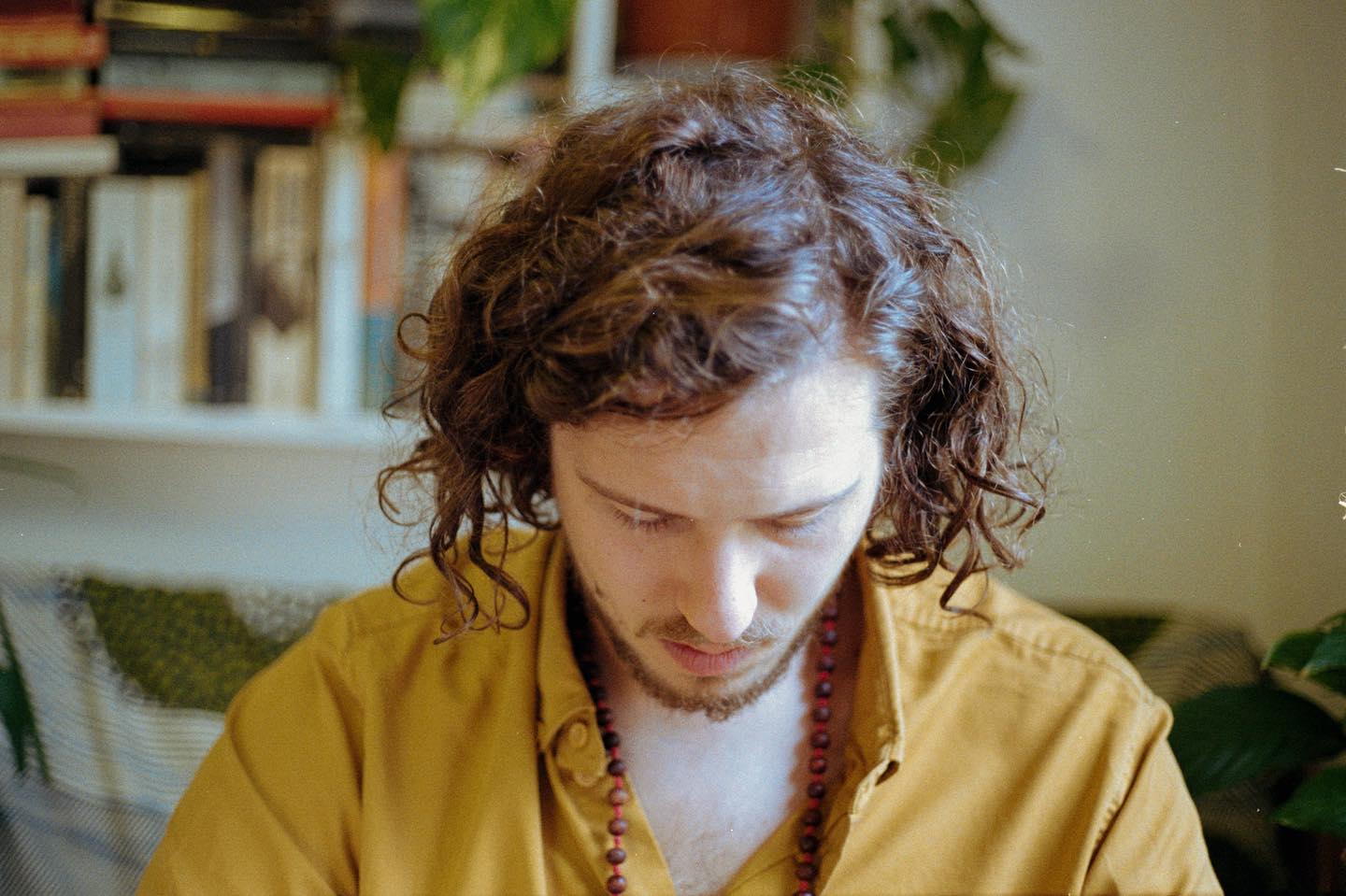 Jonathan Enser Interview Image by Peter Gavin
“Growing up with an invisible disability, I encountered a lot of abuse and manipulation. Music has always been a refuge for me.“
Video