Name: Jonas Sorgenfrei
Nationality: German
Occupation: Drummer, composer, improviser, educator
Current Release: Jonas Sorgenfrei's new album Cracks in the Silence is out via unit. Alongside Jonas himself on drums and live electronics, the band comprises of Florian Trübsbach (alto- & soprano saxophone), Rainer Böhm (piano), Philipp Brämswig (guitar), Matthias Akeo Nowak (bass), and Wanja Slavin (synthesizer).
Recommendations for Nuremberg, Germany: I’d say, flexitarian or not, you really have to try a traditional Franconian Schäufele when you’re in town. For restaurant recommendations, just reach out to me!
[Read our Wanja Slavin interview]
If you enjoyed this Jonas Sorgenfrei interview and would like to know more about his music or catch him live in concert, visit his official homepage. He is also on Facebook, and bandcamp.
What were some of the musical experiences which planted a seed for your interest in jazz?
I grew up with a very wide range of music. At home we listened to bands like The Beatles or Genesis, but also a lot of classical music and traditional folk music.
Jazz wasn’t very present at first, mainly because I grew up in a rural area in the Upper Palatinate in Bavaria, where there simply weren’t many opportunities to hear or play jazz live at the time. During that period, I was playing a lot of drums in local pop and rock bands, and at home I would play along to bands like Rush, Yes, Metallica, Dream Theater, Red Hot Chili Peppers, or Blink-182.
My first steps toward jazz came through the school big band and through private teachers at local music schools. Later on, being part of the Landesjugendjazzorchester Bayern also played an important role in shaping my jazz vocabulary.
I remember my first real experience with improvisational jazz drumming through lessons with one of my teachers at the time, Ivan Audes. Since he’s also a jazz pianist, we often played together as a duo—he on piano and me on drums—jamming on jazz and fusion standards. Through that experience I discovered jazz in a very direct and practical way, simply by playing music together.
Often I didn’t even know the tunes—we would just start playing whatever he began on the piano, and I would jump in and figure things out along the way. It was a lot of fun.
What does the term jazz mean today, would you say?
That’s a very interesting question, and something I’ve actually been thinking about quite a lot recently. For me, the term jazz is much harder to define today than it might have been in the past. I feel that genre labels in general are becoming less meaningful, especially when we talk about improvised music or artistic expression.
Instead of defining music through genres, I find it more interesting to describe it through its aesthetics, its emotional impact, and the artistic intention behind it. For me, the term “contemporary jazz” often feels more like a label that comes from academic or institutional contexts.
At the same time, jazz has a very strong historical, political, and social background. At its core, it has always been about musicians expressing their time, experiences, and identity through music. So today I tend to think of jazz more as an attitude or an approach: an authentic and individual form of expression through improvisation, regardless of the musical context I’m working in.
With that being said, it might even make more sense not to focus too much on genre labels anymore, and to leave the categorization of music to future generations looking back at our time.
Tell me a bit about the sounds & creative directions, artists & communities, as well as the colleagues & creative hotspots of your current hometown, please. How do they influence your music?
I actually came to Nuremberg for my master’s degree, quite by chance. I did my bachelor’s in Würzburg and had originally planned to continue my studies for a master´s degree in New York City, after a study trip in 2015.
Then I met Rainer Böhm, a key mentor and close friend of mine over the past few years. Together we designed a flexible master’s program in Nuremberg, where he teaches. This allowed me to focus intensively on expanding my musical vocabulary and skills - playing with him every week, jamming with friends and colleagues in Cologne and Nuremberg, and working on my own compositions.
During that time, I also started working on my first quartet release as a bandleader, Elephants Marching On, which we released in 2021. That’s how I ended up living in Nuremberg right now – and looking back, I would say it was probably one of the most formative decisions of my life.
I was already familiar with the city from my time at the music vocational school, and I’ve always really liked it. Nuremberg offers a great balance of quality of life, a manageable size, and a vibrant artistic scene. So far, connecting with people and finding support for my projects in the city and the local club scene has felt really easy and effortless.
I’m still in the process of building my network here. Currently, I'm involved with the artist collective “Metropolmusik e. V.”, I’ve started my own small concert series over the past year, and this year I also joined the jazz committee of the “Tonkünstlerverband Bayern”, aiming to help strengthen the support system for jazz musicians in Bavaria.
What role do electronic tools and instruments play for your creative process?
For many years, I’ve been experimenting with acoustic percussion elements, toys, and other gadgets to shape and alter the sound of my drum kit, and to develop my own individual approach and expression. For the past three to four years, I’ve also been using Sensory Percussion – since version 2, purchased by Evans – which continues to inspire me in every session.
I combine my acoustic kit, various percussion instruments, and toys with electronic triggers, constantly exploring new hybrid sounds. I now use Sensory Percussion both live and in the studio, for example on my latest release Cracks in the Silence (January 2026), Pathways (July 2025), and in a duo project with Nuremberg-based sound artist Paul Bießmann (our latest project is called Soft Entropy).
For me, Sensory Percussion is one of the most innovative electronic tools for drummers in recent years. I would highly recommend it to any drummer interested in exploring, as it offers a very intuitive and effortless way to dive into the electronic side of music.
Jazz has always had an interesting relationship between honouring its roots and exploring the unknown. What does the balance between these two poles look like in your music?
For me, it’s very important that any musical innovation is rooted in tradition. Before exploring something completely new, I believe a musician should immerse themselves in the vocabulary and styles of the tradition, even if they later use it consciously or unconsciously.
Especially in free improvisation, you can immediately hear whether a musician has that depth and knowledge of the roots. For me, tradition is a foundation from which inspiration for contemporary music can emerge, creating authenticity and sustainable artistic growth.
I’ve always tried to engage with a wide range of musical styles—from classical music and folk, to rock, pop, and metal, and then through big band, swing, and all different currents of jazz. All these experiences inform my improvisations, compositions and projects today.
For many artists, life-changing musical experiences take place live. How do you see that yourself?
I would definitely agree with that. For me, music comes alive primarily in a live performance setting. Rehearsals and preparing a program are important, but the real magic happens on stage, in interaction with fellow musicians and with the audience.
Experiencing music, whether as a performer or as a listener, is something very special and creates a value that can hardly be replicated in any other way. I believe that’s why live music in any context remains essential for both musicians and audiences, especially in times of AI and digital productions.
What, would you say, are the key ideas behind your approach to improvisation?
For me, improvisation is a reflection of my whole self in the moment. It brings together all my musical experiences, life experiences, and personal attitudes into the musical dialogue. The key is to be authentic – to be yourself, and ideally, for everyone else in the ensemble to do the same.
I don’t see improvisation as something purely academic or intellectual. Knowledge can certainly enrich your improvisational vocabulary, but it doesn’t automatically make someone a more expressive improviser. Sometimes too much focus on concepts can even distance you from the playful, intuitive flow of the music.
Music is a language, a form of communication, almost like a child learning to speak—natural, immediate, and accessible. For me, it’s about being present in the moment, letting the music happen together, and communicating authentically, without hiding behind personas or complex conceptual frameworks.
The Montreux Festival intends to preserve its archive of recordings for future generations. Do you personally feel it's important that everything should remain available forever - or is there something to be said for letting beautiful moments pass and linger in the memories of those that experienced them?
Personally, I think it’s very positive that music is being archived and preserved for the future. Archives allow special live moments to be captured and made accessible to everyone, contributing to the democratization of music and knowledge. I would say that’s one of the great achievements of our time.
At the same time, we need to find a better way to protect the rights of artists and creators than what is currently being done.

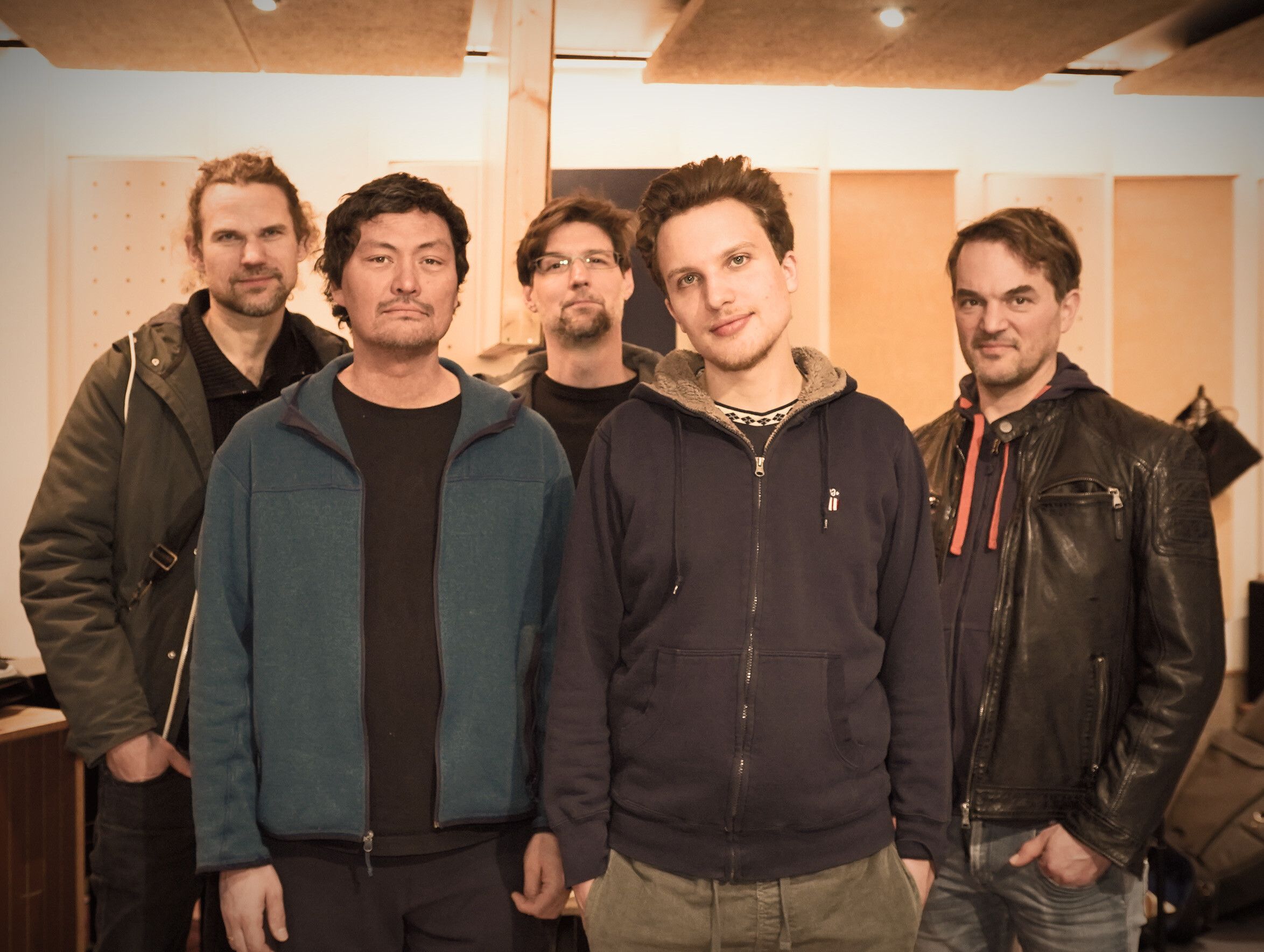 Jonas Sorgenfrei Quintet Interview Image by Paul Biessmann
"Rehearsals and preparing a program are important. But the real magic happens on stage, in interaction with fellow musicians and with the audience."
Video